Life Beyond Earth’s Rules: Astrobiology’s Quest for Extreme Lifeforms in the Cosmos
Explore Astro-Biology Extreme Life and its quest to uncover extraordinary organisms defying Earth's natural boundaries in the vast cosmos.
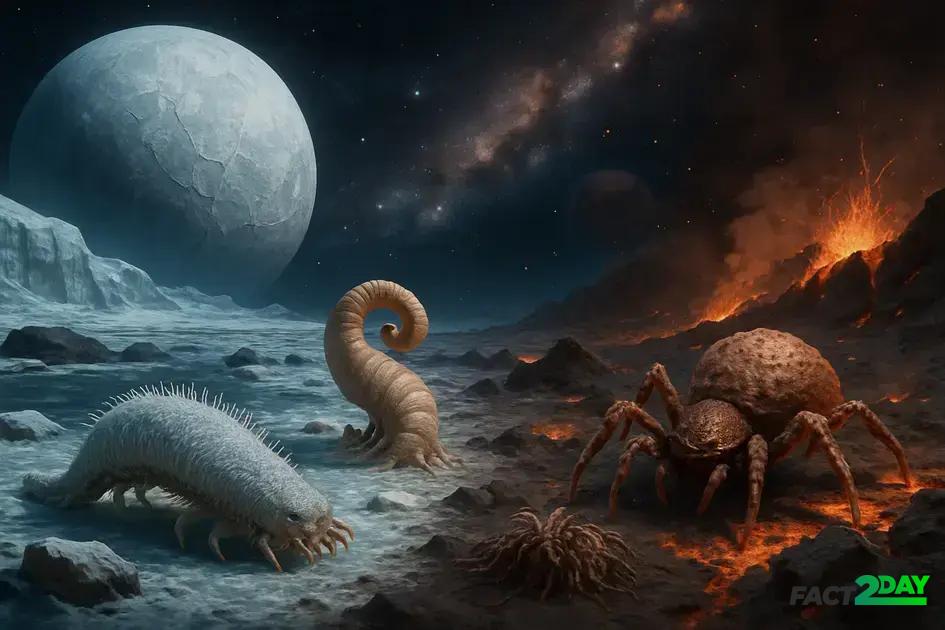
Astrobiology’s quest for extreme life explores organisms thriving in harsh cosmic environments, revealing nature’s adaptability and expanding our understanding of life beyond Earth’s known limits.
Have you ever wondered about life that exists outside Earth’s familiar rules? Astro-Biology Extreme Life delves into the fascinating search for organisms thriving where we least expect them—in the extreme corners of the cosmos. Let’s explore this thrilling frontier together.
What is Astrobiology and Why It Matters
Astrobiology is the scientific study of life in the universe beyond Earth. It combines biology, chemistry, geology, and astronomy to understand how life originates, evolves, and survives in different cosmic environments. This field seeks to answer some of the most profound questions: Are we alone? How does life adapt to extreme conditions? What forms could alien life take?
Astrobiologists explore environments on Earth known as extreme habitats, like deep-sea vents and acidic lakes, to learn how life can exist under harsh conditions. These studies guide the search on other planets and moons, where conditions might be very different but could still support life.
Understanding astrobiology is important because it helps us grasp the broader picture of life’s potential diversity and resilience. It impacts fields such as medicine, ecology, and even philosophy, by challenging our ideas about life’s boundaries and origins.
Technological advances in telescopes, space missions, and lab experiments allow us to detect signs of life beyond Earth, making astrobiology a cutting-edge science full of discovery and hope.
Significance of Astrobiology
- Universal Life: Studies how life originates, evolves, and survives beyond Earth.
- Fundamental Questions: Addresses if we are alone and how life adapts to extreme conditions.
- Extreme Habitats: Uses Earth’s harsh environments to guide extraterrestrial search.
- Broad Impact: Influences medicine, ecology, and philosophy.
- Technological Advancement: Drives innovation in space missions and lab experiments.
Defining Extreme Life Forms Beyond Earth
Extreme life forms, or extremophiles, are organisms that live in conditions considered hostile for most life on Earth. These include environments with extreme temperatures, acidity, pressure, radiation, and lack of water. When discussing life beyond Earth, astrobiologists focus on defining what types of organisms might survive in such harsh cosmic settings.
Unlike typical Earth life, which thrives in moderate climates, extreme life forms have adapted special mechanisms to endure. For example, some microbes can survive intense radiation or acidic oceans. These adaptations may hint at what alien life might look like in hostile environments such as Mars’ frozen deserts or the deep oceans beneath Europa’s ice.
Biological characteristics of extreme life forms often include unique enzymes, protective coatings, and metabolic pathways that sustain them. These features allow them to repair damage quickly, maintain stability, and extract energy from unconventional sources.
By studying these life forms, scientists expand the traditional definition of habitable zones and challenge our understanding of life’s limits. This helps to inform where and how to search for life beyond Earth, focusing on environments once deemed unlivable.
Characteristics of Extremophiles
- Hostile Conditions: Thrive in extreme temperatures, acidity, pressure, radiation, and lack of water.
- Unique Adaptations: Special mechanisms for survival, e.g., protective coatings, unique enzymes.
- Biological Features: Metabolic pathways to sustain life in harsh environments.
- Cosmic Implications: Hints at potential alien life forms in similar conditions on other planets.
- Expanded Habitability: Challenges traditional definitions of habitable zones.
Environmental Extremes Where Life Thrives
Life on Earth thrives in a remarkable range of environments that would seem impossible to support living organisms. These environmental extremes include scorching deserts, freezing polar regions, deep ocean trenches, and highly acidic or alkaline waters. Studying these places helps scientists understand the limits of life and look for similar conditions in space.
Some extremophiles survive in temperatures near boiling, like those found around hydrothermal vents on the ocean floor. Others endure intense cold in Arctic and Antarctic ice, where liquid water exists only beneath the surface. These organisms have special proteins and cell structures that protect them from damage.
Types of Environmental Extremes Life Can Survive
- Temperature Extremes: From boiling hot springs to freezing glaciers.
- High Pressure: Deep under the ocean or underground.
- Radiation: Environments exposed to strong UV or cosmic rays.
- Salinity: Salty lakes and brine pools.
- pH Extremes: Acidic or alkaline waters hostile to most life.
Adaptations to Extreme Environments
- Unique Proteins: Protect cell structures from damage.
- Protective Pigments: Against radiation (e.g., UV).
- DNA Repair Mechanisms: Quickly fix genetic damage.
- Resilience Clues: Provide insights for life beyond Earth, e.g., Europa’s oceans.
- Widened Understanding: Expands concept of habitable environments in the cosmos.
Techniques to Detect Life in Hostile Environments
Detecting life in hostile environments requires advanced techniques that can identify even the smallest signs of life. Scientists use a combination of remote sensing, robotic exploration, and laboratory analyses to search for microbial life or chemical signatures in places where direct observation is difficult.
One key method is spectroscopy, which analyzes the light reflected or emitted by surfaces to detect organic molecules and gases related to biological activity. This can be done from orbiters around planets or moons.
Robotic landers and rovers equipped with drills, cameras, and chemical analyzers explore harsh terrains like Mars. They collect soil and rock samples, searching for biosignatures such as amino acids, methane, or complex organics.
In addition, scientists simulate hostile conditions in labs to test how life might appear and adapt. Instruments like mass spectrometers and gas chromatographs analyze samples for precise chemical compositions.
Remote Sensing and Imaging for Life Detection
High-resolution cameras and sensors help map environments and identify habitats where life is more likely. Thermal imaging can reveal heat produced by living organisms beneath ice or soil.
Key Detection Techniques
- Spectroscopy: Analyzes light to detect organic molecules and biological gases from orbit.
- Robotic Landers & Rovers: Collects and analyzes soil/rock samples for biosignatures (amino acids, methane, organics).
- Laboratory Simulations: Tests life adaptation to hostile conditions using instruments like mass spectrometers.
- High-Resolution Imaging: Maps environments and identifies potential habitats.
- Thermal Imaging: Detects heat from organisms beneath surfaces.
The Search for Extremophiles on Mars
Mars is one of the prime targets in the search for extremophiles beyond Earth. This interest comes from evidence that ancient Mars had water, a key ingredient for life. Scientists focus on finding signs of microbial life that could survive in its harsh conditions today.
Despite its cold, dry surface and thin atmosphere, Mars may still host life in protected niches. Underground water-ice or briny liquid water pockets could offer habitats where extremophiles might thrive. These microbes would need to withstand high radiation, oxidizing soil, and extreme temperature fluctuations.
Robotic missions like NASA’s Perseverance rover are equipped with advanced instruments to search for biosignatures. Tools onboard analyze rock samples for organic molecules and signs of past or present life.
Potential Habitats on Mars
- Cave Systems: Shield life from radiation.
- Subsurface Aquifers: Offer liquid water.
- Salt-Rich Soils: Preserve microbial activity.
Research and Implications
- Simulated Conditions: Laboratory tests on Earth mimic Martian environments.
- Revolutionary Discovery: Finding extremophiles on Mars would expand understanding of life’s resilience.
Life in Icy Worlds: Europa and Enceladus
The icy moons Europa and Enceladus are fascinating targets in the search for life beyond Earth. Both moons have thick ice crusts covering vast oceans beneath, which may harbor the right conditions for life. These hidden oceans are kept warm by tidal heating, caused by gravitational pull from their parent planets.
Europa’s ocean is believed to be salty and deep, potentially interacting with the moon’s rocky mantle, which could provide essential chemicals for life. Similarly, Enceladus emits plumes of water vapor and icy particles through cracks in its surface, directly suggesting a subsurface ocean with hydrothermal activity.
Conditions Supporting Life in Icy Worlds
- Liquid Water: Essential water beneath thick ice crusts.
- Chemical Energy Sources: From hydrothermal vents or chemical reactions interacting with rocky mantle.
- Protected Environment: Ice shields life from harmful space radiation.
Exploration and Understanding
- Extremophilic Life: Potential for life thriving without sunlight, relying on chemical energy.
- Future Missions: Aim to study surfaces and plumes for biosignatures.
- Expanded Knowledge: Broadens understanding of where life might exist in the cosmos.
How Radiation Shapes Cosmic Life Forms
Cosmic radiation is a powerful force shaping the evolution of life forms beyond Earth. In space and on planetary surfaces without strong atmospheres, living organisms face high levels of ionizing radiation, including ultraviolet rays, gamma rays, and cosmic rays. These rays can damage DNA and cellular structures, posing a huge challenge for life.
Adaptations to radiation are key for survival in such environments. Some extremophiles produce protective pigments, like melanin, that absorb radiation and reduce damage. Others have highly efficient DNA repair mechanisms that fix mutations quickly.
Radiation Effects on Life
- Mutation Generation: High radiation increases mutation rates, leading to evolutionary changes or fatal damage.
- Selection Pressure: Only radiation-resistant organisms survive, shaping life’s traits.
- Energy Source: Some microbes can even use radiation to drive metabolic processes.
Implications for Astrobiology
- Life Persistence: Helps understand how life can exist on planets with thin atmospheres (e.g., Mars) or exposed surfaces.
- Search Guidance: Informs the search for life in deep space.
- Habitat Design: Guides the design of habitats for astronauts.
- Evolutionary Driver: Radiation acts as both a threat and an innovation driver for cosmic life.
Possible Biochemistries Alien Life May Use
Alien life may use biochemistries that are very different from those on Earth. While life here is carbon-based and relies heavily on water, scientists consider other possibilities that could support life in the vast variety of cosmic environments.
Alternative genetic materials might exist, such as molecules similar to DNA or RNA but built from different elements or structures. These could store and transmit genetic information in novel ways.
Non-Water Solvents and Energy Sources
Water is essential for life on Earth, but other liquids like ammonia, methane, or ethane might act as solvents in alien biochemistries. For example, the Titan moon of Saturn has lakes of liquid methane, which could provide a medium for life processes under extremely cold conditions.
Alien organisms might use energy sources unfamiliar to us, such as harnessing radiation, chemical reactions involving sulfur or iron, or even exotic compounds. Metabolic pathways could function in ways that challenge our Earth-centric perspective.
Broadening the Search for Life
- Alternative Genetic Materials: Molecules similar to DNA/RNA but with different elements/structures.
- Non-Water Solvents: Ammonia, methane, ethane as potential life mediums.
- Unconventional Energy Sources: Harnessing radiation, sulfur/iron reactions, exotic compounds.
- Metabolic Diversity: Pathways functioning in ways challenging Earth-centric views.
- Search Directives: Highlights new environments and chemical signatures for investigation.
Challenges in Studying Life Beyond Earth
Studying life beyond Earth poses a set of complex challenges. One major difficulty is the vast distances involved, which limit our ability to directly explore many planets and moons in detail. Space missions must be carefully planned with advanced technology that can survive harsh conditions.
Contamination risks are another issue. Both forward contamination (carrying Earth life to other planets) and backward contamination (bringing alien organisms to Earth) must be strictly controlled to protect ecosystems and ensure study integrity.
Technical and Scientific Challenges
- Sensitive Instrument Development: Creating tools for detecting subtle biosignatures remotely or on-site.
- Ambiguous Signal Interpretation: Deciphering complex extraterrestrial environmental data.
- Limited Samples: Difficulties in obtaining uncontaminated specimens and small sample sizes.
- Method Adaptation: Adjusting life-detection methods for unknown life chemistries and forms.
Overcoming Obstacles
- Funding & Duration: Limits on exploration efforts due to high costs and long mission times.
- Technological Advances: Robotics, spectroscopy, and planetary science continuously improve search capabilities.
Role of Space Missions in Astrobiology Discoveries
Space missions play a crucial role in advancing astrobiology by providing direct data from other worlds. These missions send orbiters, landers, and rovers to planets and moons to observe environments, analyze samples, and search for signs of life.
NASA’s Mars rovers, for example, have been instrumental in studying the planet’s geology and surface chemistry, revealing conditions that might have once supported life. Instruments onboard analyze rock and soil, detecting organic molecules and other biosignatures.
Key Contributions of Space Missions
- Remote Sensing: Orbiters collect high-resolution images and spectra to map potential habitats.
- In Situ Analysis: Landers and rovers perform chemical and biological tests directly on planetary surfaces.
- Sample Return: Future missions aim to bring extraterrestrial material back to Earth for detailed examination.
Expanding Understanding of Life
- Icy Moon Exploration: Missions like Europa Clipper investigate subsurface oceans for life potential.
- Bridging Gap: Connects Earth-based studies with realities of alien worlds.
- Scientific Inspiration: Fuels new discoveries and generates new scientific questions.
The Impact of Extreme Life Discoveries on Science
Discoveries of extreme life forms have revolutionized scientific understanding in many fields. These findings prove that life can thrive in environments once thought uninhabitable, expanding the known limits of biology.
Impact on biology and ecology: Extremophiles show how organisms adapt to stress, inspiring new research in genetics, biochemistry, and resilience mechanisms. This helps scientists understand Earth’s ecosystems and their stability.
Impact on astrobiology: Discovering extreme life has broadened the search for extraterrestrial life, guiding missions toward harsh environments like Mars, Europa, and icy moons where similar life might exist.
Technological and Medical Advances
Enzymes from extremophiles are used in biotechnology, medicine, and industry. For example, heat-tolerant enzymes improve DNA analysis in labs around the world.
Broader Implications of Extreme Life
- Expanded Biological Limits: Proves life thrives in previously uninhabitable environments.
- Biological & Ecological Insights: Inspires research into stress adaptation, genetics, resilience.
- Astrobiology Guidance: Directs search for extraterrestrial life to harsh environments.
- Technological & Medical Use: Extremophile enzymes used in biotechnology and DNA analysis.
- Philosophical & Ethical Questions: Challenges ideas on life’s origins, diversity, and habitability.
Astrobiology’s Contributions to Earth Biology
Astrobiology provides valuable insights that extend beyond the search for life in space, offering important contributions to the field of Earth biology. By studying extremophiles and life under harsh conditions, astrobiology deepens our understanding of biological limits and adaptations.
Research into organisms that survive intense radiation, extreme temperatures, or high acidity on Earth helps scientists develop new models of cellular repair, metabolism, and genetic resilience. These models have applications in medicine, agriculture, and environmental science.
Practical Applications for Earth Biology
- New Therapeutics: Development of new antibiotics and enzymes from extremophile strategies.
- Bioremediation: Improved techniques using microbes adapted to toxic environments.
- Climate Resilience: Insights into life’s adaptability in the face of climate change.
Interdisciplinary Benefits
- Collaboration Promotion: Fosters interdisciplinary work across microbiology, geology, chemistry.
- Innovation Driver: Benefits Earth sciences by fostering innovative research and technology.
- Enhanced Knowledge: Deepens understanding of life’s versatility for health and sustainability.
Ethical Considerations in Cosmic Life Exploration
Ethical considerations play a crucial role in the exploration of cosmic life. As we search for extraterrestrial organisms, scientists and policymakers must ensure that missions do not harm potential alien ecosystems or contaminate other worlds.
One key ethical concern is planetary protection. This involves preventing forward contamination, which is introducing Earth microbes to other planets or moons, and backward contamination, which means bringing unknown alien organisms back to Earth. Both could have serious consequences for native ecosystems and human health.
Responsibility and Respect for Potential Life
Exploring alien environments requires a respectful approach, acknowledging that life—if it exists—has intrinsic value. This means avoiding destruction of habitats and considering the rights of potential life forms.
There are also legal and policy frameworks guiding cosmic exploration, such as international treaties that regulate activities on celestial bodies. These frameworks strive to balance scientific discovery with ethical responsibilities.
As technology advances, debates continue on how to handle findings of extraterrestrial life, including questions about communication, prevention of exploitation, and long-term consequences for humanity and the cosmos.
Key Ethical Considerations
- Planetary Protection: Preventing forward (Earth to space) and backward (space to Earth) contamination.
- Ecosystem Integrity: Avoiding harm to potential alien ecosystems.
- Intrinsic Value: Respecting the inherent worth of potential extraterrestrial life.
- Habitat Preservation: Avoiding destruction of alien environments.
- Legal Frameworks: Adhering to international treaties for responsible exploration.
- Future Debates: Questions on communication, exploitation, and long-term consequences.
Future Prospects in Astrobiology Research
Astrobiology research is rapidly evolving, with exciting future prospects on the horizon. Advances in technology and exploration methods promise to deepen our understanding of life beyond Earth and its possibilities.
Upcoming space missions, like those to Europa, Titan, and Mars, aim to directly search for signs of life in previously unexplored environments. These missions will carry more sensitive instruments capable of detecting subtle biosignatures and chemical clues.
Emerging Technologies and Interdisciplinary Studies
New developments in genomics, remote sensing, and artificial intelligence are enhancing data analysis and enabling novel approaches to studying extreme environments and potential extraterrestrial habitats.
Moreover, collaborations across biology, chemistry, geology, and planetary science are fostering a more integrated approach to astrobiology, leading to innovative theories and experiments.
Citizen science and global initiatives may also play a growing role, allowing wider participation in data collection and analysis, which accelerates discovery and public engagement.
These prospects offer the hope of breakthrough discoveries that could transform our understanding of life’s origins, diversity, and distribution in the universe.
Key Future Directions
- Advanced Missions: Direct search for life on Europa, Titan, Mars with sensitive instruments.
- Technological Enhancements: Genomics, remote sensing, AI for data analysis and new study approaches.
- Integrated Approach: Interdisciplinary collaborations across various sciences.
- Citizen Science: Growing role in data collection, analysis, and public engagement.
- Transformative Discoveries: Potential breakthroughs in understanding life’s origins and distribution.
Exploring Life Beyond Earth’s Boundaries
The search for extreme life in the cosmos opens up incredible possibilities about where and how life might exist. Astrobiology teaches us that life is resilient and adaptable, thriving in conditions once thought impossible.
By studying extreme environments on Earth and exploring other worlds, scientists continue to push the limits of our knowledge and imagination. Future research and missions hold great promise to answer fundamental questions about life’s diversity and origins.
This journey not only expands our understanding of the universe but also offers new insights into life here on Earth. As we explore the cosmos, we embrace the exciting quest to find out if we are truly alone or part of a greater living universe.