Ants That Practice Fungus Farming Like Tiny Gardeners
Discover the fascinating world of ant fungus farming, where ants tend fungi like tiny gardeners nurturing their hidden gardens underground.
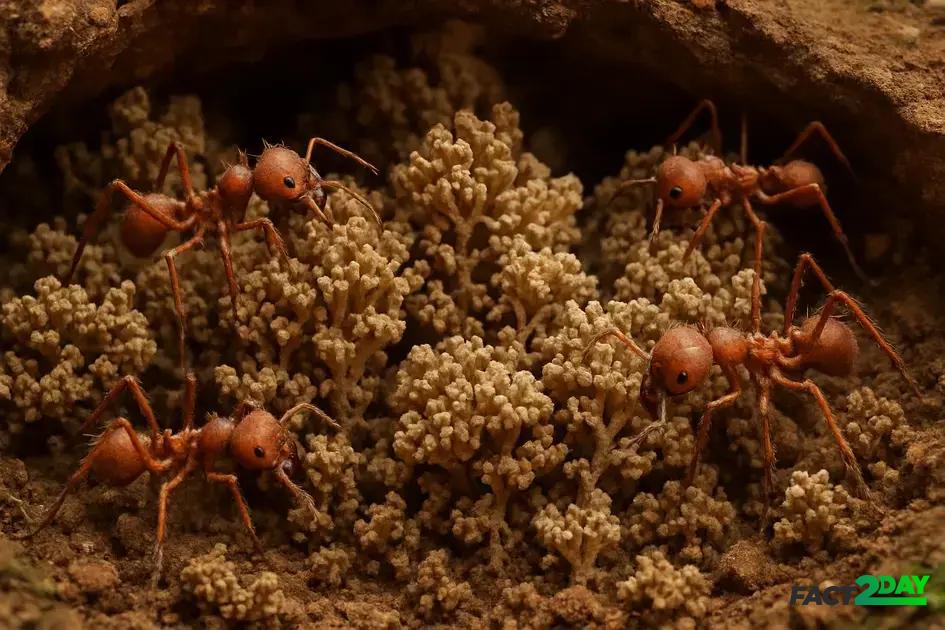
Ant fungus farming is a natural agricultural process where ants cultivate fungi by collecting plant material, tend their fungal gardens with care, protect them from pests using antibiotics from bacteria, and maintain environmental conditions, demonstrating a sustainable and cooperative ecosystem.
Have you ever noticed how some ants seem to act like tiny gardeners? Ant fungus farming is a remarkable behavior where ants cultivate fungi for food, creating a hidden world of cooperation and care beneath our feet.
the unique relationship between ants and fungi
The relationship between ants and fungi is truly unique and fascinating. Certain ant species, like the leafcutter ants, have developed a specialized bond with fungi, farming them as their primary food source. These ants actively collect leaves and other plant material to create perfect conditions for the fungus to grow inside their nests. The ants feed on the fungus, and in return, the fungus gets a steady supply of fresh substrate and protection from pests.
This symbiotic partnership is delicate; ants must carefully manage the fungus gardens, removing harmful molds and unwanted microbes to keep their crops healthy. The fungi, which cannot survive outside the nest, depend completely on the ants for propagation and care, making this a highly interdependent relationship.
Mutual benefits
While ants provide food and protection, the fungi break down tough plant fibers into digestible nutrients for the ants. This mutual benefit enables the colony to sustain large populations and access nutrients they otherwise couldn’t digest.
Understanding this unique relationship gives us insight into complex ecosystems, where species can evolve intricate cooperation strategies for survival.
how ants cultivate their fungus gardens
Ants that practice fungus farming use a fascinating method to cultivate their gardens underground. First, they collect fresh leaves, flowers, and other plant materials, which they chew into a soft, mulch-like substance. This serves as the perfect substrate or soil for the fungi to grow. The ants carefully place this substrate in special chambers inside their nests, where conditions like temperature and humidity are tightly controlled.
Once the substrate is prepared, the ants inoculate it with fungal spores or bits of existing fungus from their gardens. This allows the fungi to start growing and spreading quickly. The ants constantly tend to their gardens, pruning the fungus, removing contaminants, and ensuring pests are kept away.
Farming techniques and maintenance
Leafcutter ants, for example, have specialized workers dedicated to cutting leaves, while others focus entirely on caring for the fungus. This division of labor ensures the fungus gets the best care possible. Some ant species also produce antibiotic substances to suppress harmful microbes and protect their fungal crops.
The fungus acts as both a food source and a vital part of the ant colony’s survival strategy. By cultivating these gardens with precision and care, ants achieve an impressive form of agriculture on a tiny scale deep in the ground.
the ecological impact of fungus farming ants
Fungus farming ants play a crucial role in their ecosystems. By collecting leaves and plant material to nourish their fungal gardens, they actively influence nutrient cycling in the soil. This process helps break down tough plant matter that would otherwise decompose slowly, enriching the soil with organic material.
These ants also shape plant communities by selectively harvesting certain leaves, which can affect plant growth and competition. Their activities promote biodiversity by creating microhabitats within the soil and leaf litter, supporting various other organisms.
Soil aeration and nutrient cycling
The tunnels and chambers built by these ants improve soil aeration and water infiltration. This enhances the soil’s fertility, benefiting nearby plants and other animals. Fungus farming ants act as natural gardeners for their environment, maintaining balance and health in forest ecosystems.
Moreover, the waste produced by the fungus gardens contributes additional nutrients, further aiding plant growth. Understanding their ecological impact reveals how small creatures can have outsized effects on their habitats.
mechanisms ants use to protect their crops
Ants that farm fungi have developed sophisticated mechanisms to protect their crops from pests, diseases, and competing fungi. One key method involves grooming the fungus regularly to remove mold spores and other contaminants. Worker ants use their mouthparts to carefully clean both the fungal gardens and their nest environment.
Another defense is the use of beneficial bacteria that live on the ants’ bodies. These bacteria produce antibiotics that suppress harmful microbes threatening the fungus. This natural form of pest control helps keep the gardens healthy without chemicals.
Behavioral adaptations
Some ant species also enforce strict quarantine measures. When a foreign or infected ant enters the nest, workers may isolate or remove it to prevent pathogens from spreading. Additionally, the ants maintain precise humidity and temperature levels, creating an environment less favorable to unwanted organisms.
These combined strategies demonstrate how ants actively care for and protect their delicate fungal crops, ensuring the survival of their entire colony.
comparison between ant fungus farming and human agriculture
Ant fungus farming and human agriculture share remarkable similarities despite vast differences in scale and complexity. Both involve the cultivation of crops to provide a reliable food source. Ants collect raw materials, primarily leaves, and prepare them as a substrate for growing their fungal crops. Humans similarly prepare soil and plant seeds to grow food.
In both systems, pest management is crucial. Ants use natural antibiotics produced by bacteria on their bodies to protect their fungus, while humans use various methods such as pesticides, crop rotation, and biological control to manage pests and diseases.
Division of labor and specialization
Ant colonies have specialized workers for tasks like cutting leaves, tending the fungus, and defending the nest. Likewise, human agriculture involves roles such as planting, irrigating, and harvesting, often split among different people or machines.
Both ants and humans rely on careful environmental control. Ants maintain humidity and temperature in their underground nests, while farmers regulate irrigation, fertilization, and climate conditions to maximize yields.
Yet, ant fungus farming evolved as a natural, sustainable system over millions of years, showing lessons in efficiency and balance that modern agriculture can learn from, especially in areas like sustainability and coexistence with the environment.
challenges ants face in maintaining their fungus farms
Maintaining fungus farms underground presents several challenges for ants. One major issue is contamination by unwanted fungi and bacteria that can overtake or damage their carefully cultivated crops. The ants must constantly monitor their gardens, removing infected parts to stop the spread of disease.
Environmental factors like changes in humidity or temperature also threaten the delicate balance needed for fungal growth. Ants work hard to regulate nest conditions, but extreme weather or disturbances can disrupt their farming.
Predators and parasites
Predators such as parasitic insects or other animals may invade the nest, attacking the ants or their fungus. Additionally, some parasitic fungi specifically target the fungal gardens, posing a direct threat to the food source.
Resource scarcity is another concern. If the surrounding vegetation fails or if the ants cannot collect enough fresh leaves, their fungus farms may suffer from insufficient nutrition, impacting colony survival.
Despite these obstacles, ants have evolved complex behavior and biological strategies to adapt and protect their invaluable crops, highlighting their resilience and the delicate balance of their ecosystem.
recent scientific discoveries about ant fungus farming
Recent scientific studies have uncovered fascinating insights into ant fungus farming, revealing complex interactions within this ancient agricultural system. Researchers found that ants use symbiotic bacteria on their bodies which produce natural antibiotics to protect their fungal crops from harmful pathogens.
Advanced genetic analysis has also shown that the fungi cultivated by ants have evolved alongside the ants for millions of years. This co-evolution highlights an extraordinary mutual dependence where neither species can survive without the other.
Innovative discoveries in ant behavior
Scientists observed that some ant species can identify and remove infected or unproductive fungus sections quickly, preventing spoilage. This level of garden management is surprisingly sophisticated and mirrors human farming techniques.
Moreover, recent research points to ants’ ability to adapt their fungal cultivation practices based on environmental conditions, showing a degree of agricultural flexibility that was unexpected in insects.
what ant fungus farming teaches us about sustainability
Ant fungus farming offers valuable lessons about sustainability that humans can learn from. These ants have developed a method of agriculture that is highly efficient and balanced with nature. They use renewable resources, like leaves, without overharvesting and manage their fungal crops carefully to avoid depletion.
Their system emphasizes recycling and waste management. Dead fungus and plant material are recycled back into the nest, enriching the soil and supporting future growth. This closed-loop system minimizes waste and maintains long-term productivity.
Cooperation and resource management
Ants show how cooperation within a community can lead to resilient ecosystems. Each ant has a specific role that contributes to the health of the fungus farm, showing that collective effort supports sustainability.
By maintaining their environment and preventing pests without harmful chemicals, ants demonstrate natural ways to protect crops and promote biodiversity. This can inspire sustainable agricultural practices that are eco-friendly and support ecosystem health.
Understanding Ant Fungus Farming and Its Lessons
Ant fungus farming is a remarkable natural system that shows how cooperation and care can create a thriving and sustainable agricultural practice. By studying ants and their methods, we learn the importance of balance, resource management, and protecting our environment.
This tiny-scale farming demonstrates that even the smallest creatures can teach us valuable lessons about working with nature, not against it. As we face challenges in human agriculture, looking to ants may inspire new, eco-friendly approaches to sustainability.
Embracing these ideas could help us build a healthier planet for future generations.