The Real-Life Superheroes: Animals That Can Regrow Lost Body Parts
Animals that regenerate amaze us by regrowing lost parts, revealing nature’s quiet miracles and surprising adaptability up close.
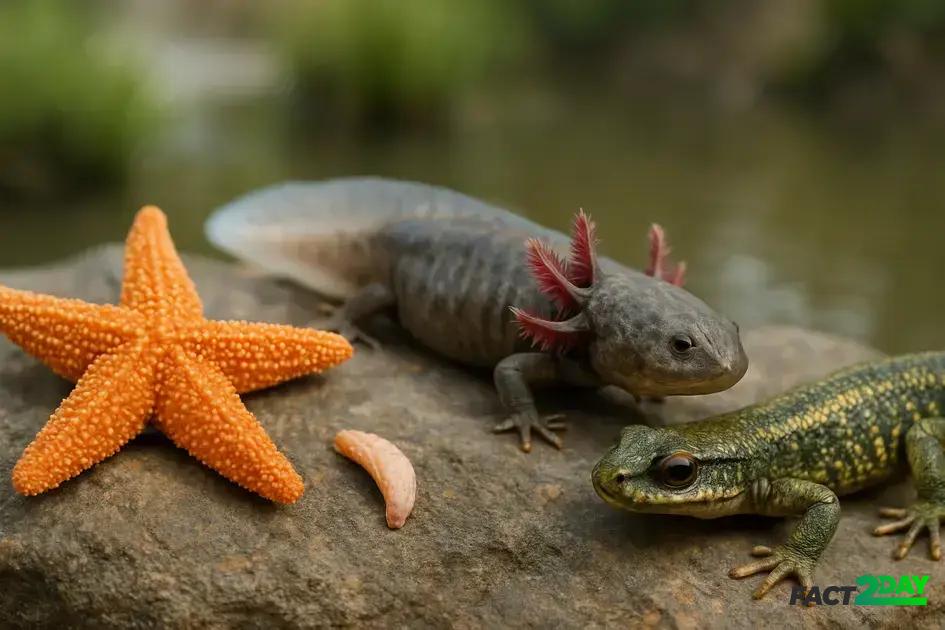
Animals that regenerate can regrow lost body parts through processes like blastema formation and cellular dedifferentiation, with species like salamanders, starfish, and axolotls demonstrating remarkable regenerative abilities.
Animals that regenerate can regrow lost parts in ways that seem almost magical. Have you noticed how some creatures recover as if they have a second chance? Let’s explore these real-life superheroes and their secrets.
how animals regenerate lost body parts
Many animals possess remarkable abilities to regenerate lost body parts. This process varies among species but serves as a crucial survival mechanism. For instance, starfish can regrow entire arms, while certain lizards regenerate their tails after shedding them to escape predators.
Regeneration starts with wound healing, followed by cellular activation. Specialized cells called blastema form at the injury site, where they multiply and differentiate to rebuild the missing structures. This regeneration can include skin, muscles, nerves, and even bones.
Not all animals regenerate equally; amphibians like salamanders are famous for their strong regenerative powers, capable of restoring limbs and even parts of their hearts. In contrast, mammals generally have limited regenerative abilities, usually restricted to skin and liver tissue.
Understanding how animals regenerate lost body parts opens new doors for scientific research and potential medical breakthroughs in tissue repair and healing.
the science behind regeneration
The science behind regeneration involves complex biological processes that allow animals to replace lost or damaged tissues. When an injury occurs, the body triggers cellular responses that lead to tissue repair and regrowth.
Key Processes in Regeneration
Cellular dedifferentiation plays a crucial role. Specialized cells revert to a more primitive state, forming a mass of cells called a blastema at the injury site. These cells then divide and specialize to reconstruct the missing body parts.
Another vital aspect is the role of growth factors and signaling pathways. Chemical signals guide cells on when to grow, divide, or become specific tissues such as skin, muscle, or bone.
Variations Across Species
Regeneration varies widely among animals. Amphibians like salamanders have a high capacity, activating genes that remain silent in less regenerative animals. Mammals, including humans, have limited regeneration, mostly restricted to organs like the liver or skin repair.
Studying these biological mechanisms advances regenerative medicine, with hopes to one day improve healing and organ regrowth in humans.
examples of animals with regenerative abilities
Several animals across different groups show amazing regenerative abilities. For example, the axolotl, a type of salamander, can regrow entire limbs, parts of its heart, and even parts of its brain without scarring.
Starfish are also well-known for regeneration. They can regrow lost arms, and sometimes an entire new starfish can form from a single arm if part of the central body is attached.
Lizards like the green anole can shed and regrow their tails to escape predators. The new tail is not always an exact replica but restores much of the function.
Even some mammals have limited regenerative powers. Deer can regrow their antlers annually, which is a unique example of complex tissue regeneration in mammals.
Unique Regenerative Traits
Sea cucumbers can expel and regenerate internal organs to evade threats, while planarian flatworms can regenerate any part of their body, making them a favorite subject for scientific studies.
These examples highlight the incredible diversity of regeneration in the animal kingdom and provide insights into potential medical advances.
Understanding the Power of Regeneration in Animals
Animals that regenerate lost body parts show us nature’s incredible ability to heal and adapt. From salamanders regrowing limbs to starfish replacing arms, these abilities inspire scientific research and hope for medical advances.
Learning about how regeneration works and the variety of animals that can do it helps us appreciate the complexity of life. It also opens the door to new treatments in tissue repair and healing for humans.
Exploring these real-life superheroes encourages us to look closer at nature’s secrets and consider what possibilities the future may hold.