Animals That Invent Tools
Explore the fascinating world of animal tool use, discovering how different species shape and use tools in surprising ways to interact with their environment.
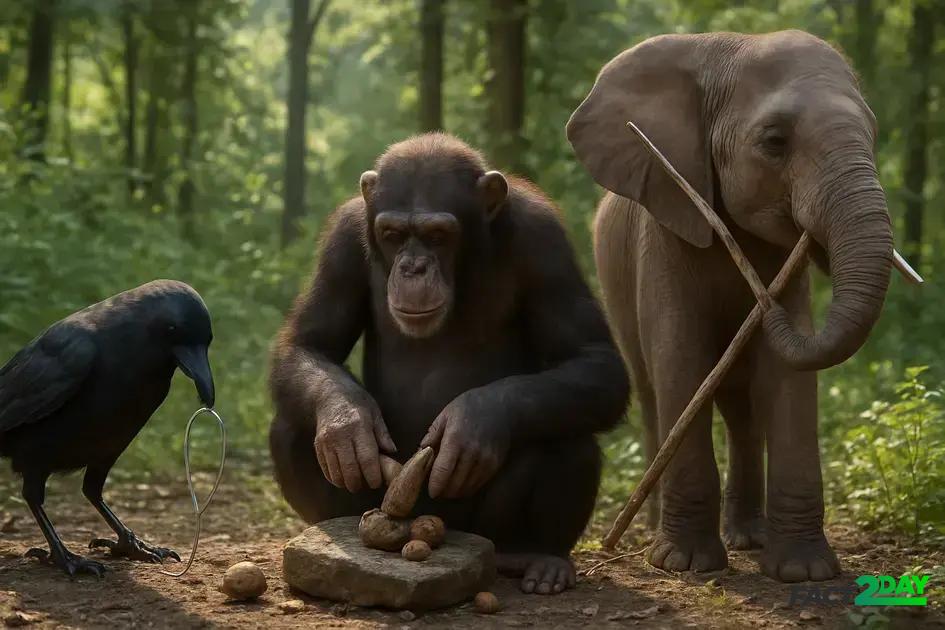
Animal tool use involves various species inventing and employing objects like sticks and stones to solve problems, demonstrating advanced cognition, learning, and evolutionary adaptation.
Have you ever wondered about animal tool use and what it reveals about the minds of creatures around us? This phenomenon shows surprising creativity in nature, inviting us to look closer at the world beyond human hands.
Understanding animal tool use: basics and significance
Animal tool use refers to the ability of animals to create, select, and use objects from their environment to achieve a specific goal. This behavior is important because it demonstrates a level of problem-solving and intelligence beyond instinct. For example, some birds use sticks to extract insects from tree bark, while primates may use stones to crack open nuts.
Basics of Animal Tool Use
Tool use involves intentional actions where animals understand the relationship between the tool and the goal. The tools can be modified by the animals or used directly, showing adaptability. This behavior requires memory, planning, and fine motor skills.
Significance of Tool Use in Animals
Understanding tool use helps scientists learn about animal intelligence and evolution. It also reveals how animals adapt to changing environments and solve challenges. Observing these behaviors expands our knowledge of how cognition works across species.
By studying animal tool use, researchers gain insights into the origins of human technology and intelligence, showing that these abilities may have deeper evolutionary roots than previously thought.
Examples of animals that invent and use tools
Several animal species are known for their remarkable ability to invent and use tools to solve problems. One well-known example is the New Caledonian crow, which crafts hooks from twigs to extract insects from tree bark. This shows advanced planning and tool modification.
Primates and Their Tool Skills
Chimpanzees use sticks to fish termites out of mounds and stones to crack nuts. These behaviors are passed down through generations, highlighting cultural learning in animals. Orangutans have also been observed shaping leaves as umbrellas during rain.
Other Noteworthy Examples
Sea otters use rocks to break open shellfish while floating on their backs. Elephants have been seen using branches to scratch hard-to-reach places on their bodies. Some dolphins use marine sponges to protect their noses while foraging on rough seafloors.
These instances illustrate the diversity of tool use in the animal kingdom and the creative ways animals adapt to their environment through invention and use of tools.
How tool use affects animal survival and behavior
Tool use plays a crucial role in animal survival and behavior by enabling animals to access food, defend themselves, and communicate more effectively. For example, using tools can help animals reach difficult food sources, such as insects hidden deep in tree bark or nuts cracked open with stones.
Enhancing Foraging and Feeding
Many animals improve their ability to find and consume food through tool use. Sea otters use rocks to break open shells, increasing their diet options. Birds like woodpecker finches use sticks to extract insects, greatly expanding their feeding capabilities.
Defense and Protection
Some animals use tools to protect themselves or their territory. For instance, chimpanzees have been observed using sharp sticks to fend off predators or intruders. The ability to manipulate tools can provide a survival advantage in hostile environments.
Impact on Social Behavior
Tool use often requires learning and teaching within social groups, influencing animal behavior. Young primates watch and imitate adults to learn tool-related skills, which promotes social bonding and cultural transmission. This shared knowledge shapes group dynamics and cooperation.
Overall, tool use enhances animals’ adaptability, improves their chances of survival, and affects their social structures in significant ways.
The intelligence behind tool invention in nature
The intelligence behind tool invention in animals reveals complex cognitive abilities. Many animals show problem-solving skills, foresight, and creativity when they create or modify tools for specific uses. This behavior goes beyond instinct, indicating advanced mental processes.
Problem Solving and Creativity
Animals like chimpanzees and crows demonstrate creative thinking by shaping sticks or leaves to better fit their needs. This requires understanding cause and effect, as well as the ability to plan ahead.
Memory and Learning
Successful tool invention relies on strong memory and learning capacity. Animals often observe others or experiment on their own, refining their techniques over time. This ability to learn and adapt suggests a form of intelligence similar to early human cognition.
Brain Structure and Cognition
Studies show that animals using tools have well-developed brain areas related to motor control and problem-solving. For example, primates have large frontal lobes that aid in decision-making, while crows have a high brain-to-body size ratio, supporting complex behaviors.
Understanding the intelligence behind tool invention helps us appreciate the mental capabilities of animals and the evolutionary paths that led to human ingenuity.
Research methods in studying animal tool use
Studying animal tool use involves various research methods that help scientists understand how and why animals create and use tools. Observational studies in natural habitats are common, allowing researchers to watch animals interact with their environment without interference.
Field Observations
Researchers spend time in the wild recording behaviors, noting which tools are used and how animals handle them. This method provides real-world insights into tool use, including social learning and environmental effects.
Experimental Studies
Controlled experiments in labs or semi-natural settings allow scientists to test specific questions about cognitive abilities. For example, presenting animals with problem-solving tasks can reveal their understanding of tool functions.
Technology in Research
Modern tools like video recordings, motion sensors, and drones enhance data collection. These technologies capture detailed behaviors invisible to the naked eye, helping analyze tool use patterns more accurately.
Combining these methods offers a comprehensive view of tool use, deepening our understanding of animal intelligence and evolution.
Implications for understanding animal cognition and evolution
The study of animal tool use offers valuable insights into animal cognition and the evolutionary processes that shape intelligence. Observing how animals invent and utilize tools reveals their problem-solving skills, memory, and learning abilities.
Advancing Understanding of Cognition
Tool use shows that many animals think beyond instinct. They demonstrate planning, foresight, and creativity, which are signs of advanced mental capacity. This challenges earlier ideas that only humans possess complex intelligence.
Evolutionary Perspectives
By examining tool-related behaviors, scientists can trace how intelligence evolved across species. Tool use likely provided survival advantages, influencing natural selection. This helps explain the development of brains and behavior in both animals and humans.
Cultural Transmission and Learning
Many species pass down tool-use skills through social learning, creating cultural traditions. This shared knowledge supports group cohesion and adaptation to changing environments, revealing important aspects of animal societies.
These implications underscore the connection between tool use, cognition, and evolution, expanding our appreciation of the intelligence found throughout the animal kingdom.
Understanding animal tool use deepens our connection with nature
Animals that invent and use tools show impressive intelligence and creativity. Their ability to solve problems and adapt to their surroundings reveals much about cognition beyond humans.
Studying these behaviors helps us learn about evolution and how intelligence developed over time. It also highlights the importance of social learning and culture among animals.
By appreciating animal tool use, we gain a greater respect for the natural world and the remarkable minds of creatures around us.