Beyond Human Perception: Animals with Extraordinary Senses You Didn’t Know Existed
Animal Super Senses reveal how creatures perceive the world in extraordinary ways, opening a window into nature's hidden wonders.
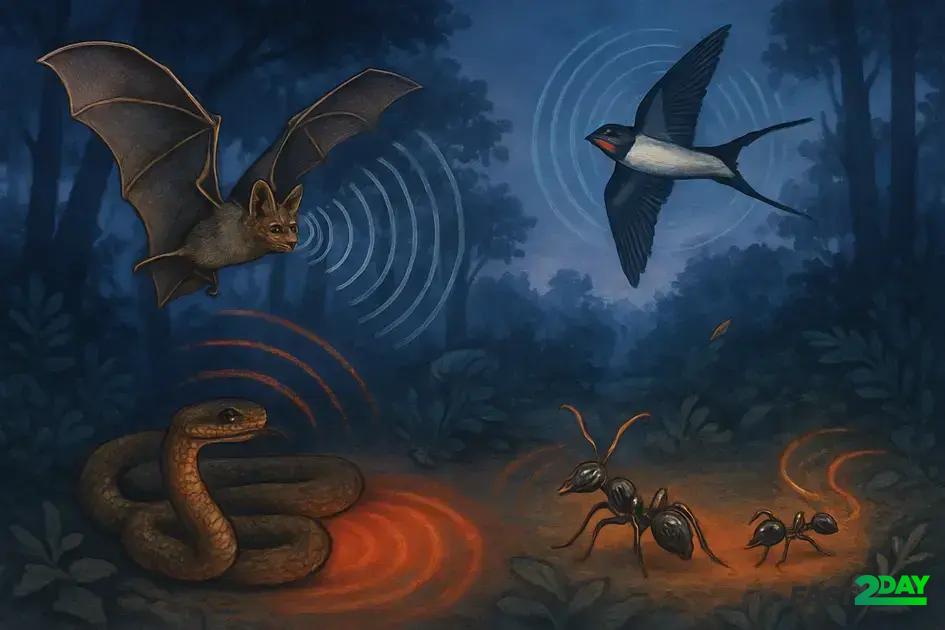
Animal super senses are specialized abilities like echolocation, magnetoreception, and ultraviolet vision that enable animals to perceive their environment beyond human senses, enhancing their survival, navigation, and communication.
Have you ever wondered what it feels like to perceive the world beyond human limits? Animal Super Senses unlock a realm where creatures experience sounds, smells, and sights unimaginable to us. Let’s explore these hidden gifts nature has crafted.
the unseen world: how animals perceive beyond human senses
Animals experience the world in ways far beyond human capability. They rely on senses that detect stimuli invisible to us, such as ultraviolet light, ultrasonic sounds, or magnetic fields. The unseen world they perceive is filled with information that helps them find food, avoid predators, and communicate.
For example, many birds can see ultraviolet patterns on flowers or feathers, which are completely hidden from human eyes. These patterns act like signals for mating or feeding. Similarly, some insects can detect polarized light, helping them navigate across vast distances even when the sun isn’t visible.
Ultrasonic sounds are another realm beyond human hearing. Bats and dolphins use echolocation to “see” their surroundings through sound waves at frequencies we can’t hear. This extraordinary ability lets them hunt and avoid obstacles in complete darkness or murky water.
Moreover, certain animals sense the Earth’s magnetic field to guide their migration routes. This magnetoreception is a sixth sense unfamiliar to most humans but critical to the survival of many species.
Understanding how these senses work not only reveals the complexity of the animal kingdom but also inspires new technologies in navigation, communication, and sensory devices.
echolocation: nature’s sonar in action
Echolocation is a remarkable natural ability that some animals use to navigate and hunt in environments where vision is limited. Bats are the most well-known example, emitting high-frequency sound waves that bounce off objects and return as echoes. These echoes provide detailed information about the location, size, and even texture of nearby objects.
How echolocation works: Animals produce sounds—often ultrasonic—and listen closely to the returning echoes. Their brains then interpret this data to create a mental map of their surroundings. This allows them to fly through complete darkness or find prey hidden under leaves or water.
Dolphins also use echolocation to navigate murky waters. They emit clicks and listen for echoes to detect fish, obstacles, and even communicate with other dolphins. This skill is essential for their survival underwater where visibility is often poor.
Echolocation demonstrates the incredible adaptations animals have developed. It reveals how nature solves challenges in clever ways, extending perception beyond simple sight and sound. Animals using echolocation rely on this ability to explore, hunt, and avoid danger effectively.
magnetic navigation: animals guided by earth’s invisible fields
Many animals have developed the ability to sense Earth’s magnetic field, allowing them to navigate long distances with impressive accuracy. This skill is known as magnetoreception, and it acts like an internal compass guiding creatures during migration or daily travel.
Birds such as homing pigeons and migratory species rely on this sense to find their way across continents and oceans. They detect magnetic fields through specialized cells in their eyes or brains, which help them determine direction even when visual cues are absent.
Sea turtles also use magnetic navigation to return to the beaches where they were born. Their ability to detect subtle magnetic changes in the ocean helps them swim thousands of miles in open water, ensuring they reach the right nesting sites.
Research suggests that some mammals and insects may possess a similar magnetic sense, aiding their movement and survival. This incredible adaptation allows animals to travel with precision, relying on invisible forces around them.
The study of magnetic navigation continues to reveal new insights about animal behavior and may inspire advances in technology for navigation and robotics.
pheromones and chemical signals: the silent language
Many animals communicate using chemical signals called pheromones. These invisible messages play a crucial role in everything from mating to marking territory. Pheromones are secreted by one animal and detected by another, triggering specific behaviors or physiological changes.
Insects like ants use pheromones to create trails leading to food sources. This chemical guidance system ensures the entire colony can find resources efficiently. Bees also release pheromones to alert the hive about threats or to help maintain social order.
Mammals, including dogs and deer, rely on scent marks full of pheromones to communicate. These signals can indicate reproductive status, individual identity, or dominance. Animals have specialized organs, such as the vomeronasal organ, that detect these subtle chemical clues.
The silent language of pheromones is powerful because it works without words or sounds. It connects animals in ways we often cannot perceive but are essential for their survival and social interactions.
infrared and ultraviolet vision: colors beyond our sight
Some animals can see light wavelengths that humans cannot, such as infrared and ultraviolet. This ability lets them detect patterns and heat signatures invisible to us, giving them an edge in hunting, navigation, and communication.
Infrared vision allows animals like snakes to sense heat emitted by warm-blooded prey. Pit vipers, for example, have specialized pits that function as infrared sensors, helping them strike accurately even in complete darkness.
Ultraviolet (UV) vision is found in many birds and insects. Birds use UV patterns on feathers to attract mates, which remain hidden from predators without this sense. Bees see UV light to find nectar guides on flowers, improving their pollination efficiency.
This expanded color perception reveals a world beyond human sight, where animals rely on unique visual cues to survive and thrive. Their eyes are natural tools for detecting information that would otherwise be lost in our visible spectrum.
the role of super senses in animal survival and adaptation
Animals’ super senses are vital for their survival and adaptation in diverse environments. These enhanced abilities help them find food, avoid predators, and reproduce successfully. Without such keen senses, many species would struggle to thrive.
Sensory adaptations often evolve to match the specific needs of an animal’s habitat. For example, nocturnal animals rely on heightened hearing or smell to navigate in the dark, while aquatic creatures use echolocation to hunt in murky waters.
Super senses also play a key role in communication and social behavior. Chemical signals like pheromones let animals mark territories, attract mates, or warn others of danger without making a sound.
In harsh environments, these abilities increase an animal’s chances of survival by improving efficiency in detecting threats and resources. Over time, species with better senses adapt more effectively to changing conditions.
The role of super senses showcases nature’s incredible creativity in helping animals overcome challenges and maintain balance in ecosystems worldwide.
Understanding the power of animal super senses
Animals with extraordinary senses have developed unique ways to interact with the world around them. These abilities are essential for survival, helping them find food, avoid dangers, and communicate effectively.
By studying these super senses, we gain a deeper appreciation of nature’s complexity and innovation. It also inspires new technologies that mimic these remarkable adaptations.
Recognizing the importance of animal super senses reminds us how much there is to learn about the world beyond human perception.