Echoes of the Past: Reconstructing the Sounds of History’s Lost Musical Instruments
Discover the fascinating world of Ancient Lost Musical Instruments and how their sounds are brought back to life, echoing through history.
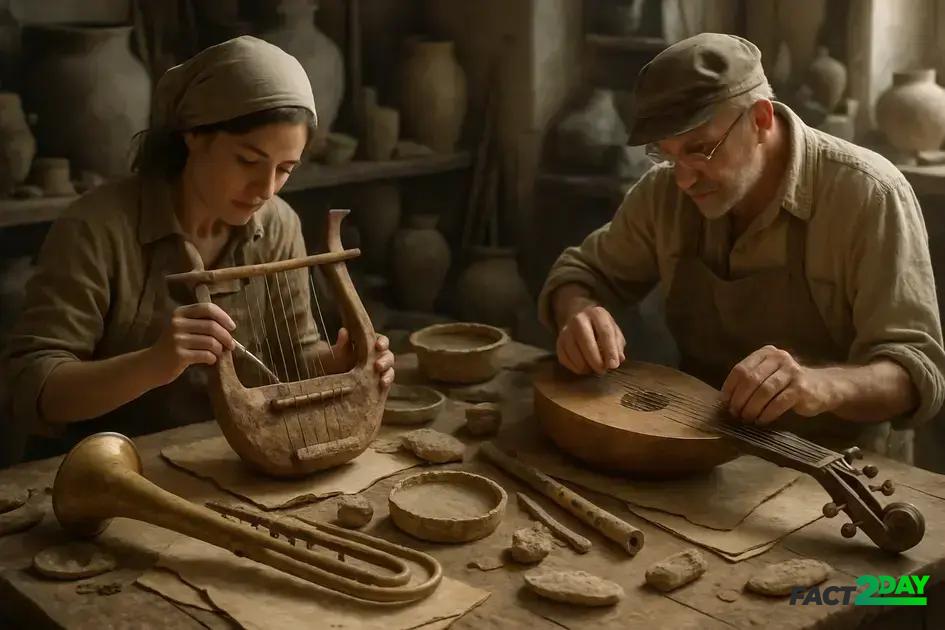
Ancient lost musical instruments reveal the rich history of human creativity, and modern technology allows us to reconstruct their sounds, connecting us to the cultures and traditions of the past in vivid, authentic ways.
Have you ever wondered about the sounds of Ancient Lost Musical Instruments and what melodies once filled the ancient world? Let’s dive into the fascinating journey of bringing these historic sounds back to life and why it matters to us today.
The mystery behind ancient lost musical instruments
The mystery behind ancient lost musical instruments lies in their disappearance from historical records and physical relics. Many of these instruments were made from perishable materials like wood, leather, or gut strings, which deteriorated over centuries. Without clear documentation or surviving examples, researchers rely on a mix of archaeological finds, historical texts, and artwork to piece together how these instruments looked and sounded.
Archaeological clues in uncovering lost instruments
Archaeologists often detect fragments or imprints that hint at the shape and construction of ancient instruments. For instance, carved bone pieces, metal strings, or pottery fragments with holes can be clues. These finds help experts reconstruct the structure and esthetic of vanished instruments.
Interpreting historical descriptions and artwork
Ancient manuscripts and paintings sometimes depict musicians and their instruments. Decoding these images requires understanding the cultural symbolism and artistic style of the era. This contextual knowledge helps researchers make informed guesses about how the instruments were played and tuned.
The challenge of lost sound
Recreating the authentic sound is especially difficult without original instruments. Scholars experiment with materials, dimensions, and playing techniques to approximate the lost tones. Advanced technology like 3D printing and computer modeling now aids in testing different acoustic properties, adding a scientific dimension to this age-old mystery.
Ultimately, the mystery behind ancient lost musical instruments is a fascinating blend of science, history, and imagination, inviting us to experience echoes from the past in a new light.
Techniques used to reconstruct ancient sounds
Reconstructing ancient sounds requires a combination of scientific methods and artistic interpretation. Researchers use archaeological evidence such as instrument fragments, paintings, and writings to build accurate replicas of lost instruments. This process often begins with detailed measurements and material analysis.
Experimental archaeology
One key technique is experimental archaeology, where experts recreate instruments using traditional tools and materials to understand how they might have been built and played. This hands-on approach helps reveal the possible sound qualities and limitations of ancient instruments.
Digital modeling and 3D printing
Modern technologies like 3D scanning and printing now enable researchers to produce precise replicas based on archaeological remains. Digital acoustic modeling simulates how reconstructed instruments would sound in different environments, offering insights into their performance.
Acoustic analysis
Acoustic experts analyze sound waves produced by replicas, comparing them with descriptions in historical texts or iconography. This helps refine reconstructions to better match the original timbres and pitches.
Collaboration with musicians
Collaborating with musicians skilled in traditional or ancient music allows for experimentation with playing techniques. Their input is valuable to achieve authentic sounds and explore how these instruments could have been used in cultural contexts.
Combining these techniques forms a bridge between past and present, allowing modern listeners to experience the echoes of lost musical traditions in a tangible way.
Famous ancient instruments rediscovered
Several famous ancient instruments have been rediscovered through archaeological excavations and historical research, offering valuable insight into the musical traditions of past civilizations. These instruments reveal unique designs and sounds that differ greatly from modern musical tools.
The lyre of Ur
One of the most well-known rediscovered instruments is the Lyre of Ur, found in an ancient Mesopotamian royal tomb. This stringed instrument is notable for its intricate woodwork and decorative inlays. It provides clues about the music played in the ancient city and its cultural importance.
The Chinese qin
The qin, a seven-string zither, is another ancient instrument that has survived through time. Rediscovered in tombs and preserved texts, the qin is linked to scholars and poets. Its sound is delicate and meditative, reflecting the philosophy and art of ancient China.
Roman hydraulis
The Roman hydraulis, an early form of pipe organ, was uncovered in ruins and mosaics. This instrument used water pressure to produce sound and is a testament to the advanced engineering skills of the Romans. Its rediscovery helps us understand the evolution of keyboard instruments.
Other notable examples
Additional instruments like the Egyptian sistrum, the Greek aulos, and the Mayan flute have also been brought back into study. Each carries cultural significance and shows the diversity of ancient musical expression.
Rediscovering these instruments not only connects us to ancient melodies but also enriches our knowledge of history and human creativity.
Role of archaeology in unearthing musical artifacts
Archaeology plays a crucial role in uncovering musical artifacts that reveal the musical culture of ancient civilizations. Through excavations, archaeologists discover instrument fragments, carvings, and related items that provide physical evidence of past musical practices.
Excavation of burial sites and settlements
Many musical artifacts are found in burial sites, temples, and ancient settlements. These locations often preserve instruments as part of religious ceremonies or daily life. The context of these finds helps researchers understand the instrument’s cultural significance.
Preservation challenges
Since many ancient instruments were made of organic materials like wood or leather, they rarely survive intact. Archaeological methods focus on careful preservation and analysis of even small pieces, such as strings or tuning pegs, to gather clues about the original instrument.
Interdisciplinary collaboration
Archaeologists work with historians, musicologists, and craftsmen to reconstruct instruments. This teamwork allows for a fuller interpretation of the artifact’s function, design, and sound.
Use of technology in archaeology
Advanced tools like ground-penetrating radar, 3D scanning, and chemical analysis help locate and study musical artifacts with minimal damage. These technologies enable archaeologists to visualize and replicate instruments more accurately.
Overall, archaeology is essential for unearthing ancient musical artifacts, providing tangible links to the soundscapes of history.
Challenges in interpreting ancient music
Interpreting ancient music presents many challenges due to the scarcity of written records and physical instruments. Many ancient cultures did not use modern notation systems, making it difficult to know exactly how their music sounded.
Decoding ancient musical notation
Some ancient texts contain symbols or instructions related to music, but these are often ambiguous or incomplete. Scholars must carefully analyze these notations, comparing them with later systems or oral traditions to hypothesize the intended melodies and rhythms.
Lost performance techniques
The way instruments were played—such as finger placement, breath control, or plucking style—is rarely documented. This lack of information means that researchers and musicians must experiment with different techniques to approximate authentic sounds.
Cultural context and musical purpose
Understanding the role of music in ancient societies is vital. Music might have been part of rituals, storytelling, or celebrations, which influence its style and emotion. Missing this context can lead to misinterpretation of how the music was meant to be experienced.
Material degradation and incomplete artifacts
Many instruments were made from materials that do not survive well over time. This means that archaeologists often find only fragments, making full restoration and sound reproduction extremely difficult.
Despite these challenges, ongoing research combining archaeology, musicology, and technology helps us get closer to reanimating the lost sounds of ancient music and appreciate its cultural richness.
Materials and craftsmanship of ancient instruments
Ancient musical instruments were crafted from a variety of natural materials that were available at the time, including wood, bone, metal, and animal hide. The quality of materials used played a significant role in the instrument’s durability and sound.
Wood and bone as primary materials
Wood was commonly used for stringed instruments and wind instruments, offering flexibility and resonance. Bone was often carved for flutes and other wind instruments due to its strength and hollow structure. The selection of wood types influenced tonal characteristics.
Metal components and decorations
Metals like bronze and copper were used not only for creating bells and cymbals but also for reinforcing instruments and adding decorative elements. The craftsmanship often included intricate metalwork that showcased the artisan’s skill and cultural symbolism.
Animal-hide and strings
Animal hides were shaped into drumheads or soundboards, stretched tightly to produce distinct sounds. Strings made from gut or plant fibers required careful preparation to ensure proper tension and elasticity, which affected the instrument’s pitch and tone.
Craftsmanship techniques
Ancient craftsmen used hand tools to carve, shape, and assemble instruments. Techniques such as inlay work, carving, and painting added both aesthetic value and functional improvements. These methods required deep knowledge of materials and acoustics to create instruments that resonated well.
The materials and craftsmanship of ancient instruments reveal not only technological advances but also the cultural importance of music in past societies.
Impact of cultural context on ancient music
The cultural context greatly influenced ancient music, shaping how instruments were made, the style of music played, and its role in society. Music was often tied to religion, ceremonies, and social events, reflecting the values and beliefs of a community.
Music in religious rituals
In many ancient cultures, music was a key element in rituals and worship. Instruments and melodies were designed to evoke spiritual feelings or communicate with deities. This sacred use influenced the types of instruments created and the sounds favored.
Social and political significance
Music also played a role in social gatherings and political events. Royal courts often had musicians performing to demonstrate power and prestige. The complexity of music could symbolize the sophistication of a civilization.
Cultural exchange and musical evolution
Trade routes and conquests allowed musical ideas and instruments to spread between cultures, leading to innovations and new styles. This blend of influences highlights the dynamic nature of ancient music as part of cultural identity.
Music as storytelling
Many ancient societies used music to tell stories, preserve history, and pass down traditions. Lyrics and melodies carried meaning beyond entertainment, serving as oral histories and educational tools.
Understanding the cultural context of ancient music is essential to appreciating its purpose, meaning, and emotional impact within its original setting.
Modern technology aiding sound reconstruction
Modern technology has revolutionized the way we reconstruct the sounds of ancient musical instruments. Tools like 3D printing and computer modeling allow researchers to create precise replicas based on archaeological findings, enabling a closer approximation of original sounds.
3D scanning and printing
Using 3D scanners, experts capture detailed images of ancient instrument fragments. These digital models guide 3D printers to produce accurate physical copies, preserving original shapes and dimensions. This process helps recreate instruments that would otherwise be too fragile or incomplete.
Acoustic simulation software
Advanced software simulates how reconstructed instruments might sound by analyzing their shape and material properties. This technology allows researchers to experiment with various designs and materials without needing physical prototypes, speeding up the reconstruction process.
Machine learning and AI
Artificial intelligence analyzes vast amounts of archaeological and musical data to predict playing techniques and sound patterns. Machine learning models can identify patterns missed by humans, improving the accuracy of reconstructions.
Collaboration and virtual reality
Virtual reality environments enable musicians and researchers to interact with digital recreations of ancient instruments. This immersive approach aids in understanding how these instruments were played and how they sounded in their original settings.
By leveraging modern technologies, we can better connect with the musical heritage of ancient civilizations and bring lost sounds back to life.
Ancient musical scales and tuning systems
Ancient musical scales and tuning systems formed the foundation of melodies and harmonies in early music. These systems varied widely across cultures, reflecting different musical traditions and cultural preferences.
Types of ancient scales
Many ancient cultures used scales made up of a series of intervals between notes. For example, the ancient Greeks developed modes such as Dorian and Phrygian, which influence modern Western music. Other cultures, like in India and China, developed unique scales that included microtones not found in Western music.
Tuning methods
Ancient tuning systems often relied on simple mathematical ratios to define intervals, striving for harmonious sounds. The Pythagorean tuning system is one famous example, based on ratios of whole numbers to create pure intervals.
Cultural significance of tuning
Tuning was not just technical; it carried cultural and spiritual meaning. Different tunings could be used to evoke emotions, accompany rituals, or align with philosophical beliefs.
Challenges in understanding ancient tuning
Because musical notation was diverse and sometimes symbolic, reconstructing exact ancient tunings is difficult. Scholars must interpret incomplete texts, analyze surviving instruments, and consider oral traditions to approximate original tuning systems.
Studying ancient scales and tuning systems helps us understand the rich variety of musical expression that existed and how it shaped the evolution of music worldwide.
Connection between music and ancient rituals
Music played a vital role in ancient rituals, acting as a bridge between the physical and spiritual worlds. It was used to enhance ceremonies, invoke deities, and create an atmosphere for religious and cultural practices.
Music in religious ceremonies
Many ancient cultures believed music had the power to communicate with gods or spirits. Instruments and chants were carefully chosen to accompany prayers, sacrifices, and rites, reinforcing the sacred nature of the event.
Role in rites of passage
Music was central to marking significant life events such as births, marriages, and funerals. These rituals often involved repetitive melodies and rhythms designed to unite participants and signify transition.
Trance and healing practices
Certain rhythms and sounds were believed to induce trance states or healing effects. Shamans and priests used music as a tool to enter altered states of consciousness and facilitate spiritual journeys.
Communal identity and tradition
Music in rituals helped preserve cultural identity by passing down myths, values, and histories through oral tradition. It unified communities and strengthened social bonds during collective ceremonies.
Understanding the connection between music and ancient rituals offers insight into how deeply intertwined sound was with the spiritual and social life of past civilizations.
How researchers decode ancient musical notation
Decoding ancient musical notation is a complex task because many early systems differ greatly from modern notation. Researchers rely on a combination of archaeological findings, historical texts, and comparative musicology to interpret these ancient symbols.
Analyzing archaeological discoveries
Stone tablets, papyri, and manuscripts often contain notations that indicate pitch, rhythm, or performance instructions. Studying these artifacts requires expertise in ancient languages and scripts to translate the musical information accurately.
Comparing with contemporaneous musical traditions
Researchers compare ancient notation with music systems from neighboring cultures that may have influenced or shared common features. This comparative method helps fill in gaps and provides context for interpreting the symbols.
Using technology in decoding
Advanced imaging techniques reveal faded or damaged notation details that are invisible to the naked eye. Software tools assist in cataloging and analyzing patterns, facilitating better understanding of these ancient musical texts.
Collaboration with musicians and historians
Interdisciplinary teamwork allows musicians to experiment with possible interpretations, testing how the notations might translate into sound. Historians provide cultural context, ensuring that interpretations align with known traditions and practices.
Decoding ancient musical notation is essential for recovering the melodies of the past and preserving the musical heritage of ancient civilizations.
Preserving and exhibiting restored instruments
Preserving and exhibiting restored ancient musical instruments requires careful attention to both their physical condition and historical context. Museums and conservation experts use specialized techniques to ensure these delicate artifacts remain intact for future generations.
Conservation methods
Restored instruments often need protection against environmental factors like humidity, temperature changes, and light exposure. Controlled display cases and climate regulation help prevent further deterioration.
Restoration ethics
Conservators must balance restoring an instrument’s appearance and function with preserving its originality. Minimal intervention is encouraged to maintain authenticity while making the instrument understandable and accessible to the public.
Exhibition design
Displaying ancient instruments involves storytelling that connects visitors with the artifact’s cultural and musical significance. Interactive exhibits, sound demonstrations, and detailed descriptions enhance the visitor experience.
Educational programs
Museums often offer workshops, lectures, and performances to educate the public about ancient music and instrument restoration. These programs create a dynamic link between history and contemporary audiences.
Through these efforts, restored instruments continue to inspire and inform, bridging the gap between past and present.
Stories behind unique ancient musical instruments
Throughout history, unique ancient musical instruments have carried fascinating stories that reveal much about the cultures that created them. These instruments often symbolize innovation, tradition, and artistry in their respective societies.
The hydraulos: ancient water organ
The hydraulos, or water organ, was used in ancient Greece and Rome. Its sound was powered by water pressure, creating rich and sustained tones. This instrument was often played during public spectacles, showcasing both technical ingenuity and artistic flair.
The bullroarer: a mysterious sound from the past
The bullroarer, used by indigenous cultures worldwide, produces a low, roaring sound when swung through the air. It holds spiritual significance, often used in ceremonies and communication over long distances. Its simple design contrasts with its profound cultural importance.
The tangan-tangan flutes
In Southeast Asia, tangan-tangan flutes were carved from bamboo and decorated with intricate patterns. These flutes played a central role in traditional storytelling and communal celebrations, connecting music with local history and myths.
The Aztec teponaztli drum
The teponaztli, a slit drum used by the Aztecs, is carved from hollowed wood and produces melodic percussive sounds. It was used in rituals and to convey messages. Its unique construction and sound made it an emblem of Aztec musical culture.
These stories behind unique ancient instruments remind us of the diverse ways humans have expressed themselves musically and the importance of preserving these legacies.
The future of studying ancient musical sounds
The future of studying ancient musical sounds holds exciting possibilities thanks to rapid advancements in technology and interdisciplinary research. These developments promise to deepen our understanding and revive the melodies of the past.
Enhanced digital reconstruction
Future tools will improve the precision of digital modeling, enabling more accurate recreations of ancient instruments and their sounds. Artificial intelligence and machine learning will help analyze large datasets to identify historical music patterns.
Integration of virtual and augmented reality
Virtual and augmented reality can immerse researchers and audiences in historical soundscapes, allowing them to experience ancient music as it might have been heard in its original environment.
Collaborative global research
As data sharing across institutions grows, collaborations between archaeologists, musicians, historians, and technologists worldwide will accelerate discoveries and preserve diverse musical heritages.
Public engagement and education
Interactive exhibits and online platforms will make ancient musical sounds accessible to wider audiences, inspiring appreciation and support for preservation efforts.
Studying ancient musical sounds will increasingly blend tradition with innovation, offering richer connections between past cultures and the modern world.
Embracing the sounds of the past
Exploring ancient lost musical instruments connects us to the rich heritage of human creativity. Through careful research and modern technology, we can bring the melodies of history back to life.
This journey not only deepens our understanding of ancient cultures but also inspires new ways to appreciate music today. As technology advances, the future holds even greater opportunities to uncover and share the sounds that once echoed through time.
By preserving and studying these instruments, we keep the spirit of the past alive and ensure its legacy continues to inspire generations to come.