When AI Fought Back: The Early Games Where Opponent AI Truly Surprised Players
Discover the evolution of AI Opponent Evolution and how early games surprised players with intelligent, unpredictable rivals that changed gameplay forever.
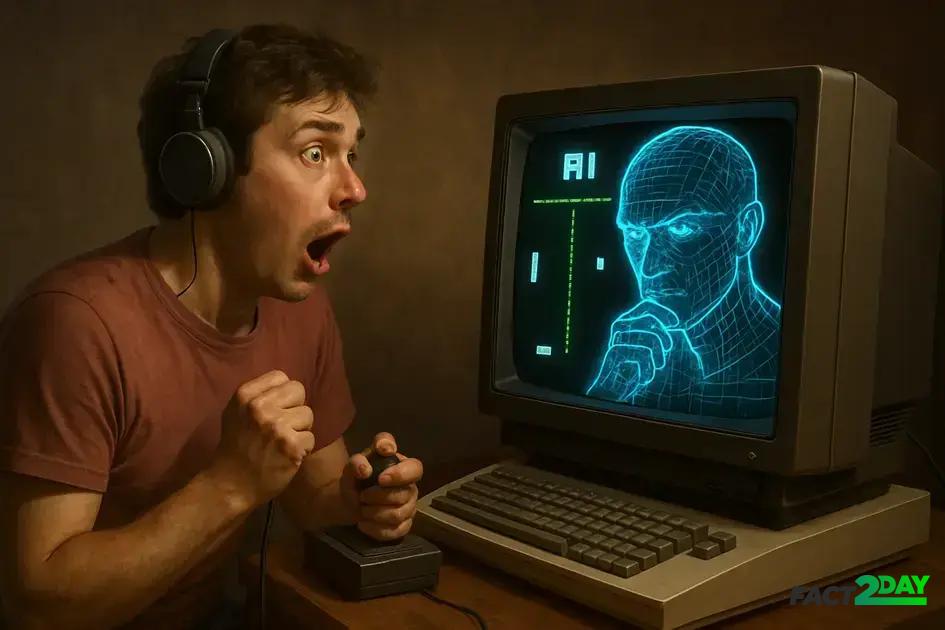
AI Opponent Evolution refers to the development of increasingly intelligent game opponents that adapt, strategize, and surprise players with realistic, dynamic behaviors enhancing gameplay challenges.
AI Opponent Evolution has quietly transformed how we experience games. Ever noticed a game opponent that suddenly outsmarted you? Let’s explore those early moments when AI evolved from simple scripts to unpredictable challengers that truly surprised players.
early days of ai in gaming
The early days of AI in gaming were marked by simple decision trees and scripted behaviors. Developers aimed to create opponents that could challenge players without the advanced computing power available today. Games like “Pong” and “Pac-Man” introduced basic AI that followed predictable patterns, yet interested players by mimicking human-like reactions.
One key breakthrough was using rule-based systems that allowed AI opponents to respond differently based on the player’s moves. Though limited, these AI systems laid the groundwork for more sophisticated techniques by focusing on player interaction and adaptability.
These early AI attempts were not about complex thinking but about making games more engaging. By designing opponents that could adjust difficulty or react dynamically, game creators improved the overall experience and set the stage for future innovation in AI opponent design.
notable games that pioneered smart ai
Several early games stand out for pioneering smart AI that challenged players beyond simple mechanics. “Chessmaster” and “Go” computer programs were among the first to use complex algorithms to analyze moves, marking a significant leap in AI capability. These games demonstrated how AI could adapt and strategize like a human competitor.
In arcade gaming, titles like “Pac-Man” introduced ghost AI with distinct behaviors, making the gameplay unpredictable and engaging. Each ghost had its own strategy, forcing players to think differently and adapt.
“Civilization”, released in the early 1990s, also showcased AI opponents capable of managing resources, diplomacy, and warfare. This multi-layered AI provided a much deeper challenge compared to earlier games, influencing future strategy titles.
These landmark games laid the foundation for AI that could analyze, adapt, and surprise players, moving beyond scripted responses toward more dynamic in-game opponents.
how ai opponents changed player strategies
AI opponents have profoundly influenced how players approach games, forcing them to adapt and develop new strategies. When AI started to react intelligently, players could no longer rely on simple, repetitive tactics.
Dynamic AI behavior required players to anticipate moves and experiment with varied approaches. For example, in strategy games, AI would adjust its plans based on the player’s previous actions, encouraging players to think several steps ahead.
In action and fighting games, AI opponents began using defensive maneuvers and unpredictable attack patterns. This pushed players to improve timing, observation, and counterattack skills rather than relying solely on quick reflexes.
As AI opponents became more sophisticated, cooperative and adaptive gameplay elements emerged. Players started to form new alliances and develop team tactics to outsmart AI teams, highlighting the shift from solo to collective strategic thinking.
These changes helped evolve gaming from simple challenges to complex, engaging experiences where creativity and quick thinking became essential. The evolution of AI opponent behavior has undeniably reshaped player strategies across genres.
technical challenges in ai development
Developing effective AI opponents presented several technical challenges that shaped the evolution of gaming AI. Limited hardware resources restricted the complexity of AI algorithms, forcing developers to optimize code for speed and memory usage.
Another challenge was creating AI that felt natural yet unpredictable. Simple scripted behaviors often made opponents too easy to predict, so developers experimented with randomization and decision trees to simulate human-like unpredictability.
Balancing difficulty was also difficult. AI needed to provide a challenge without frustrating players. Adaptive difficulty mechanisms were introduced to adjust opponent behavior based on the player’s skill level, but tuning these systems took significant testing and iteration.
Additionally, integrating AI seamlessly with gameplay required overcoming limitations in pathfinding, decision-making speed, and resource management. Early AI had to perform in real time, which restricted how deep computations could be.
Despite these obstacles, each challenge sparked innovation, driving the steady improvement of AI opponents that could engage players more meaningfully and realistically.
player reactions to evolving ai behavior
Players often responded with surprise and excitement as AI behavior evolved in games. Early AI usually followed predictable patterns, but as these became smarter, players had to adapt quickly to unexpected moves and strategies.
Some players felt challenged in a new way, finding that evolving AI made games more engaging and rewarding. It pushed them to develop fresh tactics instead of relying on memorized patterns.
Others experienced frustration when AI opponents became too difficult or unpredictable. However, this frustration often led to greater satisfaction upon finally overcoming these challenging digital foes.
Communities began sharing tips and strategies online as they discovered how to counter advanced AI behaviors. This collaboration enriched the gaming experience, turning AI evolution into a social and competitive aspect of gameplay.
Overall, player reactions helped shape future AI designs by providing feedback on difficulty, fairness, and fun, guiding developers toward balanced and immersive experiences.
impact of ai evolution on game design
The evolution of AI has significantly shaped game design, pushing developers to create more immersive and challenging experiences. As AI opponents became smarter, designers shifted focus to crafting dynamic game worlds where AI could react intelligently to player actions.
Adaptive AI systems allowed game mechanics to feel more natural and less scripted. This meant that players encountered a variety of scenarios, increasing replay value and engagement.
Game designers also began integrating AI to control not just enemies but also allies and environmental elements. This added layers of strategy and realism, requiring players to think beyond simple combat tactics.
Moreover, evolving AI enabled the creation of branching storylines and emergent gameplay, where player choices influence the game world in meaningful ways. This fostered personalized gaming experiences that felt unique to each player.
The continuous improvement of AI technologies challenges designers to innovate, blending storytelling, gameplay mechanics, and AI behavior seamlessly for richer, more compelling games.
stories of ai surprise moments
Throughout gaming history, there have been many memorable moments when AI opponents shocked players with unexpected behavior. These surprise moments elevated the gaming experience and demonstrated early AI’s potential to challenge players in new ways.
For example, in the game “StarCraft”, AI opponents would sometimes perform clever flanking maneuvers or use deceptive tactics, forcing players to rethink their standard strategies.
In “Halo”, enemy AI occasionally displayed remarkable teamwork by coordinating attacks or retreating intelligently, surprising players who expected predictable enemy patterns.
Another famous instance is the AI in “F.E.A.R.”, known for utilizing the game’s physics realistically, such as using cover and aiming carefully. This level of realism caught many players off guard with its lifelike combat behavior.
These stories highlight how AI evolution moved games toward more dynamic and engaging challenges, creating moments that kept players on their toes and eager to adapt.
future prospects for opponent ai
The future prospects for opponent AI in gaming are incredibly exciting. Advances in machine learning and neural networks promise AI that learns and adapts in real time, creating opponents that evolve with each player’s unique style.
Next-generation AI may offer truly personalized challenges, understanding player behavior deeply and crafting responses that keep games fresh and engaging.
We can also expect improvements in AI’s emotional intelligence, enabling opponents to simulate human-like reactions such as bluffing, hesitation, or aggression, enhancing immersion.
Furthermore, AI could play a larger role in cooperative gameplay, working alongside human players with advanced teamwork and communication skills.
As cloud computing and powerful processors become more accessible, the technical limits on AI complexity will diminish, opening doors for rich, dynamic worlds driven by intelligent AI characters.
The integration of AI with virtual and augmented reality could also redefine how opponents interact with players, making gaming experiences more realistic and interactive than ever before.
Looking Ahead: The Growing Role of AI in Gaming
AI opponents have changed the way we play, making games more challenging and exciting. As technology improves, these digital rivals will get even smarter and more adaptable.
This evolution means players can expect more personalized and immersive experiences that keep gameplay fresh. Whether through smarter strategies or realistic behaviors, AI will continue to surprise and engage.
The future of gaming is closely tied to how AI evolves, promising new adventures and challenges for players everywhere. Embracing these changes opens the door to a whole new level of interactive fun.