From Error to Genius: The Most Incredible Inventions That Arose by Sheer Accident in History
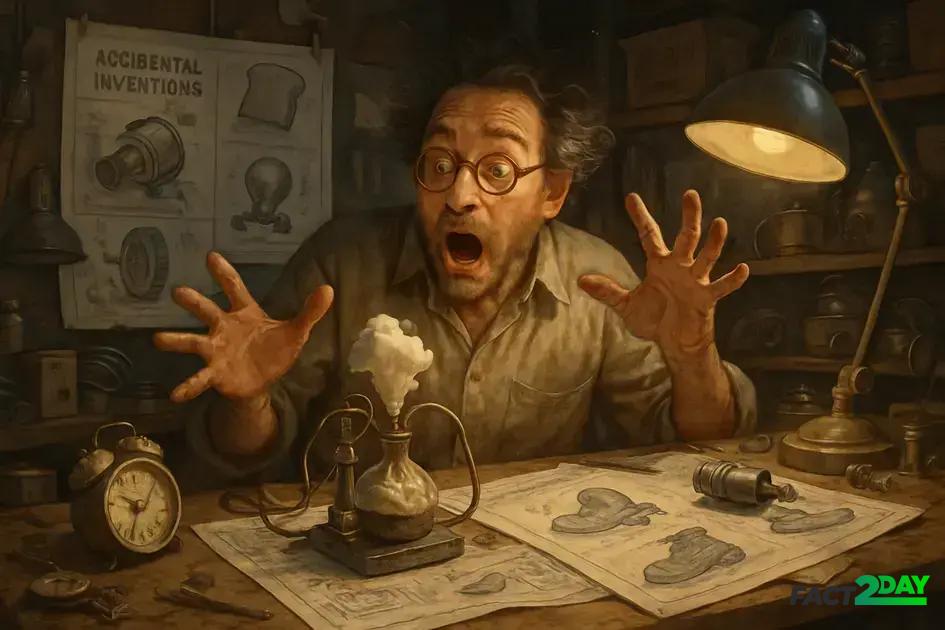
Discover the fascinating world of Accidental Inventions History, exploring how unexpected errors sparked some of history's greatest breakthroughs.
Imagine a courtroom where the defendant is not a person, but an animal. This strange scenario was common in medieval Europe, where animals were actually put on trial for crimes. From pigs accused of murder to insects blamed for destroying crops, animals were held responsible and given legal representation just like humans.
These trials reveal a unique view of justice where animals were seen as moral beings capable of wrongdoing. People believed animals could be punished or forgiven, showing how closely law and religion were connected at the time.
What animal trials tell us about history
These unusual cases show us how society once struggled with ideas of blame and responsibility, even for creatures without reason or speech. It reflects a time when moral laws extended beyond humans, highlighting changing views about the natural world and legal rights.
Though strange to us today, animal trials remind us that ideas about justice, law, and personhood continue to evolve. They challenge us to think about how we judge and treat others—human or not—in surprising ways.
Consider for a moment the curious twists that have shaped progress: Accidental Inventions History invites us to explore how unintended mistakes gave rise to some of the most ingenious creations. What surprises might lie hidden in errors past and present?
The allure of accidental inventions: why mistakes matter
Accidental inventions often capture our imagination because they show that mistakes can lead to unexpected breakthroughs. Many inventions we rely on today were discovered without planning, simply because someone was curious or willing to explore an error. This unpredictability is part of what makes innovation exciting, demonstrating that not all progress comes from strict plans or formulas.
When a mistake happens, it opens a door to new possibilities, encouraging inventors to look beyond failure and identify potential uses for these surprises. Instead of seeing errors as setbacks, many successful creators view them as opportunities for discovery. This mindset has led to game-changing inventions in science, technology, medicine, and beyond.
The value of embracing mistakes
By valuing mistakes, inventors nurture creativity and foster an environment where experimentation is encouraged. This can lead to unexpected solutions that solve problems in ways no one predicted. Accidental inventions remind us that progress is often nonlinear and that persistence combined with an open mind can turn errors into genius.
Famous accidental inventions that changed the world
Many inventions that have transformed the world were not planned but happened by chance. For example, the invention of penicillin by Alexander Fleming in 1928 was a result of accidentally discovering a mold that killed bacteria. This accidental finding led to the development of lifesaving antibiotics.
Another famous case is the microwave oven, invented when Percy Spencer noticed a chocolate bar melted in his pocket while working with radar waves. His curiosity turned that mistake into a kitchen revolution. The Post-it Note is also a product of an accidental invention, created when Spencer Silver, a scientist at 3M, developed a weak adhesive that didn’t stick strongly but became perfect for removable notes.
Other notable accidental inventions
Velcro came from observing how burrs stuck to clothes, and the X-ray was discovered by Wilhelm Röntgen while experimenting with cathode rays. These inventions show that accidents can lead to discoveries that change daily life, technology, and medicine forever.
Understanding these stories encourages us to embrace failure and stay open to unexpected results. Often, curiosity combined with accidental discoveries creates opportunities to innovate in ways never imagined.
The role of serendipity in scientific discoveries
Serendipity plays a critical role in many scientific discoveries, allowing researchers to find valuable things they weren’t actively seeking. This happy accident often occurs when scientists remain open to unexpected results and are willing to investigate surprising data rather than dismiss it as error.
Throughout history, serendipitous moments have led to breakthroughs that changed science forever. For example, the discovery of penicillin happened because Alexander Fleming noticed mold killing bacteria in his petri dish, even though he wasn’t aiming to find antibiotics.
How serendipity influences research
Scientists who embrace serendipity tend to stay curious and flexible. They carefully observe anomalies, which might seem like mistakes at first, but often unlock new paths of inquiry. This mindset encourages exploration beyond rigid hypotheses and can lead to innovations in medicine, physics, and technology.
Serendipity also rewards persistence and creativity. It teaches us that while planning is important, unexpected findings can be just as powerful in driving progress. Being open to chance events can multiply opportunities for breakthrough discoveries.
How failed experiments led to unexpected successes
Failed experiments are often seen as setbacks, but they can lead to unexpected successes when researchers analyze and learn from them. Many inventions originated because someone persisted through trial and error, discovering something valuable when things didn’t go as planned.
Thomas Edison’s work on the light bulb is a classic example. He tested thousands of materials before finding the right filament, turning numerous failures into a bright success. This persistence highlights the importance of embracing failure as a step toward innovation.
Turning mistakes into breakthroughs
Failed experiments can reveal hidden opportunities. For instance, the invention of Teflon came from a chemical reaction that did not work as expected but resulted in a substance with useful nonstick properties. Such outcomes encourage scientists to look beyond their original goals.
By documenting and studying failed attempts, inventors can identify patterns and insights that help them improve their work. This approach fosters creativity and advances knowledge, showing that failure is not the end but rather part of the journey to success.
The story behind penicillin: a lifesaving accident
The story behind penicillin is a remarkable example of a lifesaving accident that changed medicine forever. In 1928, Alexander Fleming returned from vacation to find that a mold called Penicillium notatum had contaminated his petri dishes. Instead of discarding these, he noticed the mold killed the bacteria around it.
Fleming’s curiosity turned this accident into a groundbreaking discovery. He realized that the mold produced a substance capable of fighting bacterial infections, which led to the development of penicillin, the first true antibiotic.
Impact of penicillin on medicine
Penicillin revolutionized healthcare by saving millions of lives from previously deadly infections. It opened doors for modern antibiotics and transformed the way doctors treat bacterial diseases.
This story highlights the importance of observation and open-mindedness in scientific research. Sometimes, great discoveries come from unexpected mistakes, and penicillin remains a perfect example of turning chance into cure.
Accidental inventions in technology and computing
Many key inventions in technology and computing came about by accident. One famous example is the discovery of the microwave oven, when engineer Percy Spencer noticed that radar waves melted a chocolate bar in his pocket. This accident led to a new way of cooking food quickly using microwaves.
Another important accidental invention is the computer mouse, created by Douglas Engelbart. While working on interactive computing systems, he developed a device to navigate computer displays, which was initially just an experimental prototype but changed how we interact with computers.
Unexpected innovations in computing
The post-it note technology also has ties to computing, as it was invented by a chemist at 3M trying to develop a strong adhesive but ended up with a sticky, reusable one instead. This kind of accidental discovery shows how unplanned outcomes can benefit many fields, including office technology.
These stories remind us that curiosity and openness to unexpected results are critical in technology innovation. Accidents in the lab or workshop often lead to breakthroughs that transform everyday life and drive progress forward.
Everyday objects born from unexpected mistakes
Many everyday objects we use daily were born from unexpected mistakes. These inventions show how accidents can lead to useful and practical items that improve our lives without us even realizing their surprising origins.
One example is the potato chip, which came about when a chef sliced potatoes too thin and fried them until crisp. This mistake created a snack highly popular worldwide. Similarly, corn flakes were invented by accident when a batch of cooked wheat was left out and became stale, leading to the discovery of crisp flakes perfect for breakfast.
How mistakes shaped common items
The discovery of silly putty also started as an attempt to create synthetic rubber during World War II. Instead, it turned into a fun, stretchy toy that kids still enjoy today. Another item, the playdough, originally was developed as a wallpaper cleaner but became a beloved children’s craft material.
These stories remind us that unexpected mistakes often spark creativity and innovation, turning simple errors into inventions with lasting impact on our daily routines.
The psychology behind accidental innovation
The psychology behind accidental innovation reveals how mindset and perception play vital roles in turning mistakes into breakthroughs. Inventors who recognize value in errors often possess curiosity and openness to new experiences, allowing them to see beyond the immediate failure.
Creative thinking helps individuals interpret unexpected results as opportunities rather than setbacks. This ability to reframe problems is often linked to cognitive flexibility, which encourages exploring alternative solutions and remaining adaptable.
Why some people succeed with accidents
People who succeed in accidental innovation also tend to have a growth mindset, believing that skills and intelligence can improve through effort. This attitude helps them persist through failures and keep experimenting.
Additionally, the environment can influence innovation psychology. Supportive settings that encourage risk-taking and tolerate mistakes foster accidental discoveries by reducing fear of failure and promoting exploration.
Lessons from history: embracing failure in invention
History teaches us that embracing failure is often key to invention. Many famous inventors faced repeated setbacks but remained determined. Their failures were stepping stones to success, highlighting the importance of persistence and learning from mistakes.
Thomas Edison famously said, “I have not failed. I’ve just found 10,000 ways that won’t work,” showing how positive attitude towards failure helps inventors keep trying until they succeed.
Why failure matters in innovation
Failure provides valuable feedback and insights that guide improvements. It encourages creative problem-solving and helps inventors refine their ideas. Accepting failure as part of the process reduces fear, motivating risk-taking and experimentation.
Supportive environments that tolerate mistakes foster innovation by allowing inventors and scientists to explore new concepts without fear of criticism. This culture increases the chances of accidental discoveries and breakthroughs that reshape industries.
The impact of accidents on medical advancements
Accidents have played a significant role in medical advancements throughout history. Many life-saving treatments and devices were discovered when researchers noticed unexpected results during experiments or clinical trials. These chance events have often led to breakthroughs that transformed healthcare.
The discovery of X-rays by Wilhelm Röntgen in 1895 is a classic example. While experimenting with cathode rays, he observed a glow emanating from a nearby fluorescent screen, leading to a revolutionary imaging technology that changed diagnostics forever.
Accidental medical discoveries
Similarly, the development of insulin as a treatment for diabetes resulted from unexpected findings in pancreas research. Accidental observations and careful follow-up research paved the way for therapies that save millions of lives today.
These incidents highlight the importance of openness and curiosity in medical research. By paying close attention to the unexpected, scientists and doctors continue to innovate and improve patient care in remarkable ways.
Creative processes and the unpredictable role of chance
Creative processes often involve a mix of skill, knowledge, and the unpredictable role of chance. While planning and expertise are important, many breakthroughs happen unexpectedly during experimentation or by following surprising results.
Chance plays a significant role in innovation, as it can introduce new perspectives or ideas that were not part of the original plan. This randomness can spark creativity and open doors to unexplored possibilities.
How unpredictability fuels creativity
When creators embrace uncertainty, they become more adaptable and open to new experiences. This mindset fosters serendipitous discoveries where accidental findings lead to innovations beyond the initial goal.
The mix of deliberate effort and chance allows for creative solutions that might never arise from a strict, linear approach. Recognizing the value of unpredictability helps inventors and artists alike harness unexpected opportunities to push boundaries.
Accidental inventions in the food and beverage industry
The food and beverage industry has witnessed numerous accidental inventions that have become household favorites. These accidents often occurred in kitchens or labs where cooks and scientists were experimenting with ingredients and techniques.
Chocolate chip cookies were invented when Ruth Wakefield added broken chocolate pieces to her cookie dough, expecting them to melt. Instead, the chocolate retained its shape, creating a new, delicious treat.
Other surprising food innovations
Champagne is another example of a happy accident. It was discovered when sparkling wine unexpectedly fermented a second time in the bottle, producing bubbles that delighted drinkers. Similarly, cheese likely originated from milk accidentally curdling, which turned out to be tasty and preservable.
These stories remind us how curiosity and openness to mistakes have led to some of the most beloved food and drink products, showing that accidents can be a recipe for success.
How businesses benefit from accidental discoveries
Businesses often benefit from accidental discoveries by turning unexpected outcomes into profitable products or services. These discoveries can open new markets or improve existing offerings, boosting growth and innovation.
Companies that embrace accidents tend to foster a culture of experimentation where employees feel safe to explore and learn from mistakes. This openness can lead to innovative ideas and unique solutions that competitors might overlook.
Examples of business benefits from accidents
For instance, 3M’s development of the Post-it Note came from a failed attempt to create a super-strong adhesive. Instead, they created a low-tack adhesive perfect for temporary notes, which became a staple office product worldwide.
Accidental discoveries can also lead to reduced costs or new revenue streams. By quickly adapting to unexpected results, businesses can capitalize on opportunities others might miss and stay ahead in competitive markets.
Cultivating curiosity to harness accidental genius
Curiosity is the driving force behind many accidental geniuses who turn mistakes into breakthroughs. By cultivating a mindset that welcomes exploration and questions the status quo, individuals increase their chances of making unexpected discoveries.
Encouraging curiosity involves asking questions, experimenting freely, and staying open to new ideas. This attitude allows inventors and scientists to notice details others might overlook and to find value in surprising results.
How to foster curiosity for innovation
Creating environments that support creative thinking and reduce fear of failure helps people embrace accidents as learning opportunities. Schools, businesses, and research labs that promote curiosity tend to produce more innovations and accidental inventions.
When curiosity is combined with persistence and critical thinking, it becomes a powerful tool for harnessing accidental genius. This approach not only benefits individuals but also drives progress across industries and society as a whole.
Embracing Accidental Discoveries for Innovation
Accidental inventions have played a crucial role in shaping the world we live in. By staying curious, open-minded, and persistent, individuals and businesses can turn unexpected mistakes into powerful breakthroughs.
History shows that many great innovations come from accidents combined with a willingness to explore and learn. Cultivating a mindset that embraces failure and values curiosity can unlock new opportunities and drive progress.
Ultimately, understanding and harnessing the power of accidental genius can lead to remarkable advances that benefit society and inspire future discoveries.