Beyond the Controls: The Rise of Accessible Esports and Inclusive Competitive Gaming
Accessibility in Esports is transforming competitive gaming by removing barriers and creating inclusive opportunities for all players.
Imagine a courtroom filled with judges, jurors, and lawyers—but instead of a human defendant, an animal stands accused. This strange reality was common in medieval Europe, where animals like pigs and beetles faced trials much like people. These animals had legal representatives, witnesses, and could even appeal decisions.
This unusual practice reveals how people once saw animals as moral beings who could be blamed and punished for crimes. Animals were not just property; they were thought to understand right and wrong. This shows how laws and beliefs were closely linked to religion and morality at the time.
Though it seems odd today, animal trials help us think about how ideas of justice and responsibility have changed. They remind us that the way we judge others—including animals—has a long and surprising history. This strange chapter in legal history invites us to reconsider the meaning of fairness and who deserves it, even beyond human beings.
Consider for a moment the world of Accessibility in Esports, where the thrill of competition meets the imperative of inclusivity. What unfolds when barriers to participation are dismantled, and gaming becomes a truly welcoming arena for all?
Understanding accessibility challenges in esports
Esports presents unique accessibility challenges that can affect players with disabilities in many ways. Limited hardware options, such as standard controllers not designed for all physical capabilities, often exclude gamers with motor impairments. Visual and auditory elements in games can also create obstacles for players with sensory disabilities. For instance, fast-paced visuals and complex sound cues might be hard to follow for those with impaired vision or hearing.
Network and communication barriers also play a role, as esports often require quick coordination and precise input, which may disadvantage players with slower reaction times or cognitive disabilities. Additionally, many games lack customizable settings that adapt to diverse needs, limiting the inclusivity of competitive play.
The competitive nature of esports sometimes overlooks the importance of accessible design, while social stigma and lack of awareness can further isolate players with disabilities from participating fully. Understanding these challenges is the first step toward creating a more inclusive environment that values skill and passion over physical ability.
Technological innovations enabling accessible esports
Technological innovations have opened new doors in making esports more accessible to everyone. Advances in adaptive hardware, such as customizable controllers and eye-tracking devices, allow players with limited mobility to participate competitively. Voice recognition technology further helps those unable to use traditional input methods, enabling hands-free gameplay.
Software developments also play a crucial role. Games now often incorporate customizable accessibility settings like colorblind modes, adjustable text sizes, and simplified control schemes. Many platforms support cross-device compatibility, letting players use assistive technologies seamlessly.
Artificial intelligence and machine learning are beginning to be applied to personalize gaming experiences, adjusting difficulty and control options based on individual needs. These innovations not only enhance the inclusivity of esports but also improve user engagement for all players by offering more tailored interactions.
Adaptive controllers and hardware customization
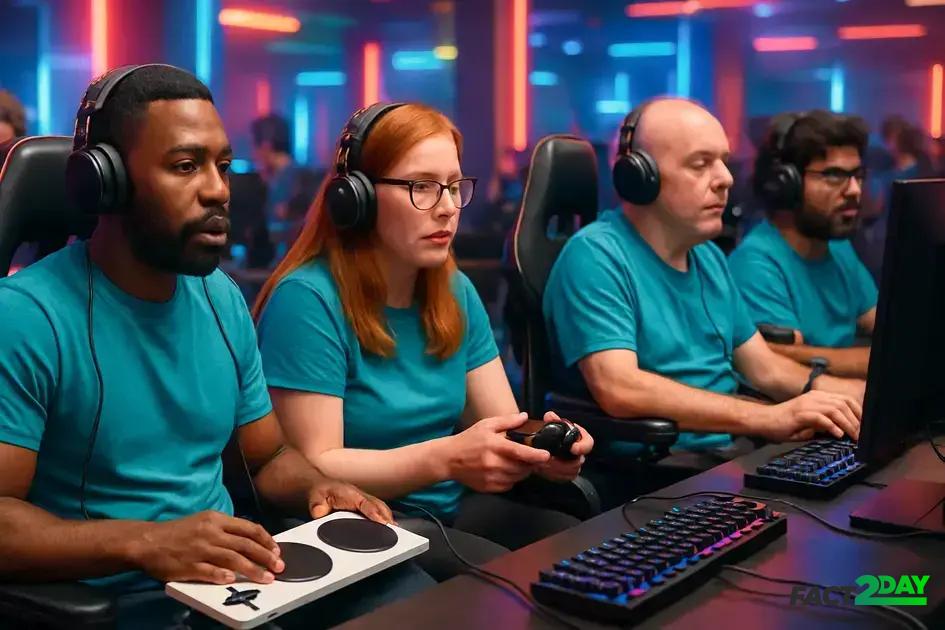
Adaptive controllers have revolutionized how players with disabilities experience esports. These devices are designed to be highly customizable, allowing gamers to tailor controls to their specific needs. For example, button layouts can be rearranged and sensitivity adjusted to accommodate limited mobility or dexterity. Microsoft’s Xbox Adaptive Controller is a notable example, featuring large programmable buttons and multiple input ports for various assistive devices.
Hardware customization also includes specialized peripherals like one-handed keyboards, foot pedals, and eye-tracking systems, helping players interact with games in alternative ways. These options empower gamers to compete at higher levels and enjoy a richer gaming experience.
Many esports organizations and hardware manufacturers actively collaborate to improve accessibility. This has led to increased awareness and a growing market for adaptive gear. Customizable hardware not only levels the playing field but also fosters a more diverse and inclusive gaming community where everyone can thrive.
The role of game design in inclusivity
Game design plays a crucial role in making esports more inclusive and accessible. Developers can include features that allow customization of controls, visual settings, and difficulty levels to fit different players’ needs. For example, adjustable font sizes, colorblind modes, and simplified interfaces help players with visual or cognitive challenges.
Inclusive game mechanics enable diverse play styles and strategies, allowing players of varying skill levels and abilities to compete fairly. Games that avoid requiring extreme reflexes or complex button combinations reduce barriers for those with motor impairments.
Collaboration between designers and accessibility consultants has led to better integration of assistive features from the start, rather than as afterthoughts. Additionally, clear tutorials and supportive in-game communication tools help players feel welcomed and confident.
Community-driven efforts to promote accessibility
Community-driven efforts have become a powerful force in promoting accessibility within esports. Many grassroots organizations and player groups advocate for inclusive practices and support players with disabilities. These communities often organize tournaments, workshops, and forums focused on accessibility issues.
Peer support and knowledge sharing help raise awareness about the challenges faced by disabled gamers and possible solutions. Volunteer developers and modders work on creating accessibility mods and custom tools, increasing the number of options available to players.
Social media platforms and online forums serve as hubs where advocates collaborate with game developers and hardware manufacturers to push for more inclusive design. Events led by community members showcase the talents of disabled players, proving that esports can be a welcoming space for everyone.
Benefits of inclusive esports for players and organizers
Inclusive esports offer numerous benefits for both players and organizers. For players, accessibility means fair opportunities to compete and enjoy gaming regardless of physical or cognitive abilities. Inclusion promotes diversity, bringing fresh perspectives and talents into the esports community.
Organizers benefit by expanding their audience and participant pool, which can lead to greater event attendance and sponsorships. Inclusive events often foster stronger community bonds and positive reputations, attracting players and fans who value equality and respect.
Creating accessible tournaments and platforms also helps comply with legal standards and social expectations. This commitment can drive innovation in game design and hardware, benefiting the broader esports ecosystem beyond just accessibility.
Regulatory and policy developments supporting accessibility
Regulatory and policy developments are increasingly supporting accessibility in esports by setting standards to ensure inclusive participation. Governments and industry bodies have introduced guidelines that require gaming companies to provide accessible features, such as subtitles, customizable controls, and screen reader compatibility.
Legal frameworks like the Americans with Disabilities Act (ADA) and similar laws globally influence esports organizers to make tournaments physically and digitally accessible. These regulations help prevent discrimination and promote equal opportunities for all gamers.
In addition, some esports federations and organizations are adopting their own accessibility policies. These include mandating accessible venues, providing assistive technology, and enforcing inclusive community codes of conduct. Such measures help create safer and more welcoming environments.
Policy developments also encourage collaboration between developers, hardware makers, and advocacy groups to innovate solutions that improve accessibility. This ongoing progress ensures that accessibility becomes a core consideration in the future growth of esports.
Accessibility training for esports professionals
Accessibility training for esports professionals is vital to building a more inclusive gaming environment. This training focuses on educating players, coaches, organizers, and developers about the challenges faced by gamers with disabilities and the best practices to support them.
Training programs often cover the use of adaptive technologies, communication strategies, and sensitivity towards diverse needs. They promote understanding of how to implement accessible game settings and inclusive event management.
Developers trained in accessibility standards can design games that naturally include customizable options and assistive features. Event organizers benefit by learning how to set up accessible venues and provide necessary accommodations, ensuring everyone can participate comfortably.
By investing in accessibility education, the esports community fosters respect, reduces barriers, and encourages sustained participation from players of all backgrounds.
Stories of gamers overcoming barriers
Many gamers have overcome significant barriers to compete in esports, inspiring others and highlighting the importance of accessibility. Stories of players who use adaptive controllers or eye-tracking technology show how innovation can break down physical limitations. These gamers demonstrate resilience and passion, often advocating for broader inclusion within the community.
One famous example is a player who, despite limited mobility, mastered competitive gaming using a customized setup, proving that skill is not limited by disability. Others have raised awareness about mental health and neurodiversity, emphasizing the need for supportive environments in esports.
These stories fuel change by encouraging developers and organizers to prioritize accessibility. They also create role models for aspiring players facing their own challenges, showing that esports is a space where everyone can thrive.
Cross-platform accessibility advancements
Cross-platform accessibility advancements allow gamers to compete and connect regardless of the device they use. This means players on consoles, PCs, and mobile devices can participate in esports under more equal conditions. Such advancements reduce hardware barriers and open competitive gaming to a wider audience.
Developers are creating games with synchronized controls and shared settings across platforms, allowing players to customize accessibility options like subtitles, button remapping, and visual aids consistently. Cloud gaming technology also supports cross-platform play by enabling access to high-performance gaming without expensive devices.
In addition, communication tools and matchmaking systems are optimized to support players with different needs, ensuring smooth interaction and fair competition. These improvements help build a truly inclusive esports ecosystem, where technical limitations do not exclude talented gamers.
Future trends in accessible competitive gaming
Future trends in accessible competitive gaming focus on integrating advanced technology to make esports more inclusive. Artificial intelligence and machine learning will personalize gaming experiences, adapting difficulty and controls to individual player needs. Augmented reality (AR) and virtual reality (VR) promise immersive environments with customizable accessibility options.
Wearable tech and brain-computer interfaces are also emerging, offering control methods beyond traditional inputs. These innovations could help players with severe physical disabilities compete effectively.
Furthermore, ongoing collaboration between developers, accessibility experts, and the esports community will drive standards for universal design. This will encourage games and platforms to include built-in accessibility features from launch, rather than as add-ons.
Inclusive matchmaking, improved communication tools, and more diverse representation are expected to foster supportive communities, making esports truly accessible to all players in the near future.
How to get involved in inclusive esports initiatives
Getting involved in inclusive esports initiatives is easier than ever and can make a big difference. Start by joining local or online communities focused on accessibility in gaming. These groups often organize events, share resources, and offer support for players of all abilities.
Volunteering at inclusive tournaments or advocacy groups helps raise awareness and contributes to creating welcoming spaces. Additionally, learning about adaptive technology and encouraging developers to implement accessible features can boost inclusivity.
Following and supporting esports organizations that prioritize accessibility sends a strong message to the industry. You can also participate in workshops and training sessions to better understand the challenges and solutions in accessible competitive gaming.
By actively engaging with these initiatives, you become part of a growing movement that values diversity and equal opportunity in esports.
Embracing Accessibility in Esports
Accessibility in esports is transforming the way games are played and experienced by making competitive gaming open to all. With technological advances, community support, and inclusive policies, barriers are being broken down daily. Players and organizers alike benefit from a more diverse and vibrant esports scene.
Getting involved in inclusive initiatives and supporting accessible game design helps ensure that esports continues to grow as a welcoming space for everyone. By embracing these changes, the future of competitive gaming looks brighter and more inclusive than ever before.