Playing for a Cause: The Strange History of Video Games Used for Propaganda and Political Messages
Explore how games as propaganda have been subtly shaping political views and public opinion throughout history in unexpected ways.
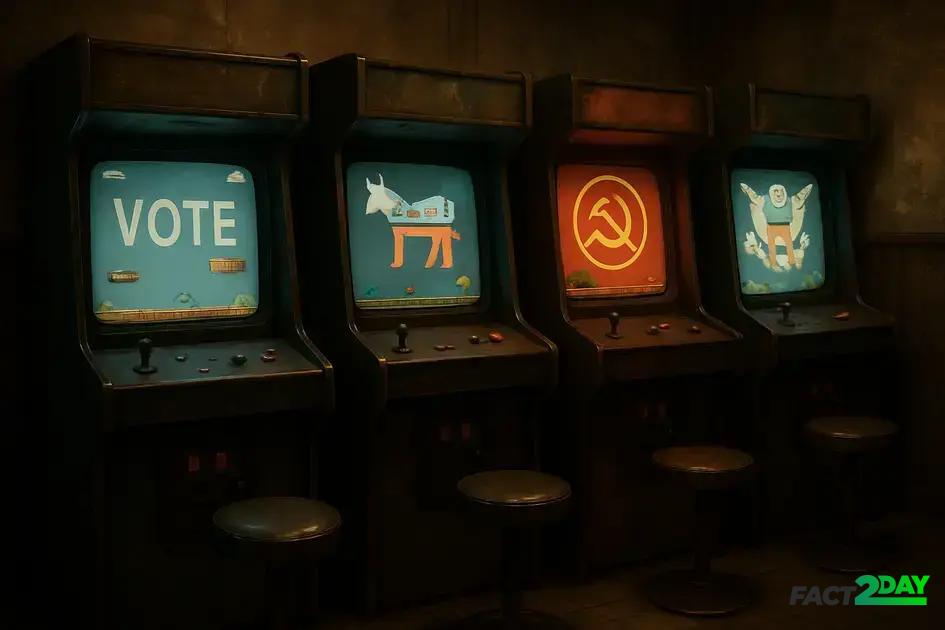
Games as propaganda use interactive storytelling and immersive experiences to influence political views, promote ideologies, and shape public opinion through engaging narratives and social interaction.
Games as propaganda have a curious history that often goes unnoticed. Have you ever paused a game and wondered what stories or messages lie beneath the fun? This article invites you to uncover the surprising ways video games have carried political messages and influenced minds.
the origins of video games as propaganda tools
Video games as propaganda tools have roots that trace back to the early days of digital entertainment. During World War II and the Cold War, governments began exploring new mediums to influence public opinion and morale. The earliest propaganda games often featured simple mechanics but carried strong political messages aimed at promoting national values or demonizing enemies.
For example, in the 1980s, games developed in the US, USSR, and other countries incorporated elements that subtly reinforced ideological beliefs. These games were sometimes distributed officially or circulated informally, serving as a form of soft power.
Early examples include training simulations for soldiers and public awareness campaigns that used game-like scenarios to educate citizens about political events or cooperation. Although primitive by today’s standards, they laid the groundwork for a complex relationship between gaming and propaganda.
The rise of arcade and console propaganda games
As arcade and console gaming grew in popularity, propaganda took on more creative forms. Developers embedded political themes into storyline-driven games, making propaganda more engaging and less obvious. Such games could influence younger generations by mixing entertainment with ideology.
These origins reveal how video games have long been more than just fun; they’ve been tools reflecting the culture and politics of their time. Recognizing this history helps us understand the power behind modern games in shaping ideas.
how games influence political perspectives
Games influence political perspectives in subtle and direct ways. They act as platforms for storytelling, shaping players’ views by immersing them in narratives that often reflect real-world ideologies. Through gameplay, players can experience different political scenarios first-hand, which may reinforce or challenge their beliefs.
Interactive storytelling in games allows users to engage with political concepts actively rather than passively consuming information. This engagement can create empathy and a deeper understanding of complex political issues.
Representation and bias in games
How characters, events, and nations are represented can influence opinions. Some games intentionally highlight one-sided views to promote certain political agendas, while others strive for balanced portrayals. Recognizing these biases helps players think critically about the messages they receive.
Moreover, games can spread propaganda by simplifying conflicts and assigning clear heroes and villains. This can lead to oversimplified worldviews, especially among younger audiences who may not yet have strong critical thinking skills.
Community and discourse
Multiplayer and online games create communities where political ideas often surface and spread. Discussions, debates, and shared experiences can reinforce group identities and perspectives, sometimes influencing players’ real-life political opinions.
In summary, video games play an important role in shaping political perspectives by combining engaging mechanics with powerful narratives and social interaction, making them a unique tool for both education and persuasion.
notable examples of propaganda games
There are several notable examples of propaganda games that illustrate how video games have been used to promote political messages. One of the early and famous examples is “America’s Army,” a game developed by the U.S. Army to recruit and educate players about military life. It presents a positive image of the armed forces and encourages patriotism.
Another example is “Peacemaker,” a game that simulates the Israeli-Palestinian conflict, designed to encourage players to understand the complexities and strive for peace rather than violence. It uses gameplay mechanics to show that diplomatic solutions can be more rewarding than conflict.
Additionally, games like “Command & Conquer: Red Alert” have been noted for their Cold War propaganda undertones, portraying certain factions with clear ideological messages. These games often blur entertainment and ideological influence.
International propaganda games
Beyond the United States, other countries have used games as propaganda tools. For example, North Korea has developed games promoting its regime’s ideology, while Russia has released games that reflect nationalistic narratives.
Educational and training games also serve as propaganda by shaping attitudes toward government policies or historical events. They often focus on strengthening identity and loyalty among citizens.
These examples show how propaganda games can vary widely in form, from recruitment tools to nuanced political simulations, but all share the goal of influencing player beliefs and perceptions.
the psychological impact of political messages in games
Political messages in games can have powerful psychological effects on players. Through immersive experiences, games engage emotions, memory, and decision-making, making political content more impactful than traditional media. The interactive nature of games allows players to actively participate in scenarios, which can subtly influence their attitudes and beliefs.
Emotional engagement is a key factor. Games often use storylines and characters to create empathy or opposition, encouraging players to see issues from a particular viewpoint. This emotional connection can strengthen the message and make it more memorable.
Cognitive effects
Games can shape how players think about political issues by simplifying complex topics into choices and consequences that are easy to understand. However, this simplification may lead to biased or one-sided views if the game does not present multiple perspectives.
Repeated exposure to specific political messages may reinforce certain ideas, leading to confirmation bias where players seek information that supports their existing beliefs.
Behavioral influence
Some studies suggest that political games can affect player behavior outside the game, influencing real-world opinions and actions, such as voting or activism. The immersive experience can motivate players to become more politically aware or engaged.
However, the impact varies depending on individual differences like age, prior knowledge, and critical thinking skills. Not everyone will be influenced in the same way.
games as a modern platform for activism
Today, video games serve as a modern platform for activism, allowing creators and players to engage with social and political issues in unique ways. Games can raise awareness, inspire change, and mobilize communities through interactive experiences that highlight causes and challenges.
Game developers increasingly incorporate themes like environmentalism, human rights, and social justice into their stories and mechanics. These games invite players to think critically and actively participate in activism through decision-making and consequences within the game world.
Player-driven activism
Multiplayer and online games offer spaces for players to organize and discuss political issues. Movements have emerged within gaming communities, using virtual worlds as rallying points for real-world causes and fundraising efforts.
Examples of activist games include titles like “This War of Mine,” which sheds light on civilian hardships during conflict, and “Papers, Please,” which explores immigration and moral dilemmas. These games encourage empathy and awareness through immersive storytelling.
Additionally, some games have been used to promote voter registration and education, demonstrating the medium’s capacity to influence civic engagement.
As technology advances, games continue to evolve as tools for activism, blending entertainment with meaningful messages and participation.
ethical questions around propaganda in gaming
Propaganda in gaming raises important ethical questions about influence and responsibility. When games present political messages, there is a risk of manipulating players’ opinions without full awareness. This use of entertainment for persuasion blurs the line between education and propaganda.
Transparency and consent
One key ethical concern is whether players know they are being exposed to propaganda. Games that embed political messages without clear disclosure challenge players’ ability to make informed choices. Transparency about a game’s purpose and content is essential to respect player autonomy.
Impact on vulnerable audiences
Young players and those with limited critical thinking skills may be more susceptible to influence. Ethical game design should consider how propaganda affects different audiences and avoid exploiting these vulnerabilities.
Balancing creativity and responsibility
Developers face the challenge of expressing political views while maintaining fair representation. Games with one-sided narratives can reinforce biases instead of fostering understanding. Ethical games strive to present multiple perspectives and encourage critical engagement.
Ultimately, the ethics of propaganda in gaming call for careful consideration of intent, transparency, and impact, ensuring that games remain a space for open dialogue rather than manipulation.
predicting the future of games and political messaging
The future of games and political messaging is likely to be more immersive and influential. As technology advances, games will use virtual reality, artificial intelligence, and more sophisticated storytelling to create deeper connections with players. This will make political messages harder to ignore and easier to engage with.
Personalized content powered by AI could tailor political narratives to individual players, increasing the impact of messages by aligning with their beliefs and preferences.
Increased interactivity and immersion
Virtual and augmented reality will allow players to experience political scenarios firsthand, making complex issues more relatable. This immersive approach could foster empathy but also poses risks of manipulation if used unethically.
Games might also integrate real-time data and social media, creating dynamic content that responds to current events and player actions.
The role of regulation and ethics
As political messaging in games grows, regulations may emerge to ensure transparency and fairness. Ethical considerations will become more critical to avoid misuse of games as propaganda tools.
Community-driven content may also rise, where players contribute to political narratives, making games a participatory platform for political discourse.
The intersection of technology, creativity, and politics promises a future where games are powerful forces in shaping public opinion and civic participation.
Looking Ahead: The Power of Games in Politics
Video games have evolved into powerful platforms for sharing political messages and shaping opinions. As technology grows, games will offer even more immersive and personalized experiences that connect players with complex political ideas.
While this opens up new opportunities for education and activism, it also brings challenges around ethics and transparency. It’s important for developers and players alike to stay aware and think critically about the messages within games.
In the end, the future of games and political messaging holds great promise to influence society positively if handled responsibly and thoughtfully.