Beyond the Surface: Exploring Earth’s Hidden Oceans Beneath Continents and Deep Crusts
Discover the mysteries of Earth's hidden oceans beneath continents and deep crusts, revealing secrets of our planet's unseen watery worlds.
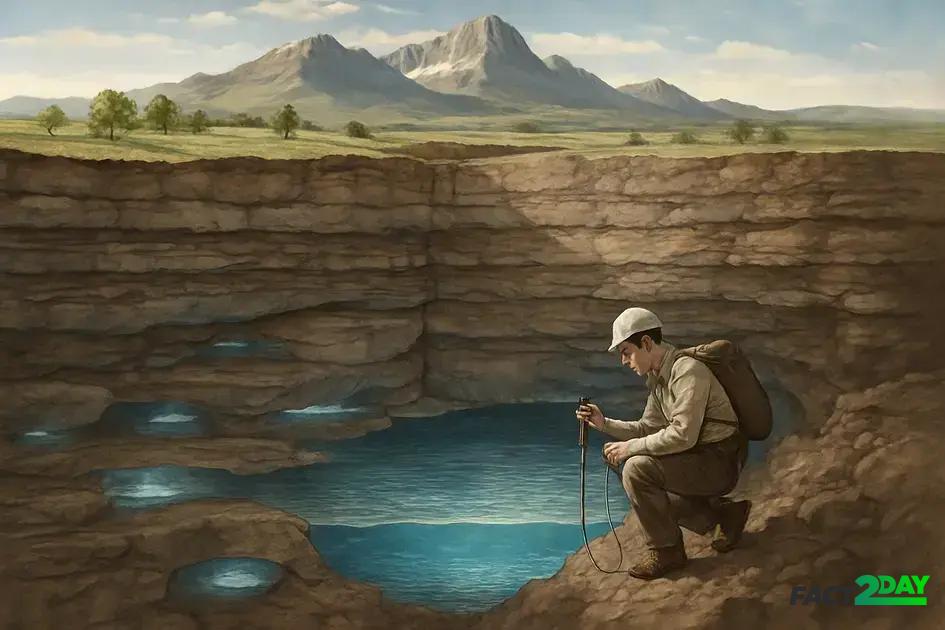
Earth’s hidden oceans are massive underground reservoirs trapped beneath continents and deep crusts, influencing geology, climate, and supporting unique subterranean ecosystems through complex interactions with Earth’s internal processes.
Have you ever wondered about the vast Earth’s Hidden Oceans that exist far beneath the continents and crust? These concealed waters shape much of our planet’s story, yet remain largely a mystery. Let’s explore the secret worlds beneath our feet together.
Understanding Earth’s hidden oceans: an introduction
Earth’s hidden oceans refer to vast bodies of water trapped beneath the continents and deep within the Earth’s crust. Unlike the familiar surface oceans, these subterranean waters are concealed in porous rocks, fractures, and cavities far below the land we live on. Scientists have discovered these hidden reservoirs by studying seismic waves and analyzing mineral deposits that only form in the presence of water.
What makes hidden oceans important?
These underground water sources play a unique role in shaping the geology and climate of our planet. They influence the movement of tectonic plates by lubricating faults, which can affect earthquake activity. Additionally, water stored deep underground can impact volcanic activity by interacting with molten rock.
Where are these hidden oceans located?
They are often found kilometers beneath the surface, within the Earth’s crust and sometimes even in the upper mantle. Regions with porous rock formations, like large sedimentary basins or ancient fault zones, tend to hold these waters. Though invisible to us, these hidden oceans can be enormous, containing volumes of water comparable to or even exceeding our surface oceans.
How do scientists explore hidden oceans?
Exploration involves advanced technologies such as seismic imaging, which uses sound waves to create maps of underground formations. Deep drilling projects also retrieve rock and water samples from great depths, helping researchers understand the composition and conditions of these waters. This research uncovers clues about Earth’s history and helps predict natural processes.
By learning about Earth’s hidden oceans, we gain insight into the planet’s internal systems and the vast, unseen environment beneath our feet that influences life on the surface.
The role of subsurface water in continental geology
Subsurface water plays a crucial role in shaping continental geology by influencing rock formations, mineral deposits, and tectonic activity. Water locked beneath the Earth’s surface seeps through cracks and porous rocks, interacting with minerals and altering the chemical and physical properties of the surrounding materials.
Impact on rock weathering and mineral cycles
When subsurface water circulates in the crust, it contributes to the breakdown of rocks through chemical weathering. This process releases essential minerals and nutrients that are transported and redeposited elsewhere, creating diverse geological features.
Effects on tectonic movements
Water acts as a natural lubricant along fault lines and tectonic plate boundaries. Its presence can reduce friction, making it easier for plates to move. This interaction may influence the frequency and intensity of earthquakes. Additionally, water under high pressure can trigger changes in rock structures, contributing to geological shifts.
Formation of unique geological features
Subsurface water helps create caves, sinkholes, and mineral veins by dissolving soluble rocks like limestone over long periods. These hidden processes shape landscapes and provide habitats for specialized ecosystems.
Understanding the role of subsurface water provides insight into how continents evolve and why certain geologic phenomena occur beneath our feet.
How hidden oceans influence Earth’s climate and ecosystems
Hidden oceans beneath the Earth’s surface play a subtle yet significant role in influencing the planet’s climate and ecosystems. These underground reservoirs store and cycle vast amounts of water, which affects surface water availability and atmospheric moisture levels.
Impact on climate regulation
Water from hidden oceans can slowly return to the surface or atmosphere through processes like volcanic activity and spring flows. This gradual release helps regulate global temperatures and humidity by contributing to the water cycle over long time scales.
Contribution to ecosystem sustainability
Subsurface water supports ecosystems by maintaining groundwater levels that feed rivers and wetlands. These water sources are critical during dry periods, sustaining plants, animals, and human communities.
Influence on carbon cycling
Interactions between hidden oceans and surrounding rocks can impact the storage and release of carbon. Water underground can carry dissolved carbon compounds, playing a role in natural carbon sequestration that helps moderate greenhouse gases.
Understanding these hidden water systems highlights their importance in maintaining the delicate balance of Earth’s climate and life-supporting ecosystems.
Methods used to discover and study hidden underground oceans
Scientists use various advanced methods to discover and study hidden underground oceans. These techniques help reveal the extent and nature of water trapped beneath the Earth’s surface without direct observation.
Seismic imaging
This technique uses sound waves to map underground structures. When seismic waves travel through different materials, they change speed and direction. By analyzing these changes, scientists can infer where water is likely located deep beneath the surface.
Deep drilling projects
In some cases, researchers drill into the Earth’s crust to collect samples of rock and fluids. These core samples provide direct evidence of water presence and help study its chemical composition and temperature.
Electromagnetic surveys
These surveys detect underground water by measuring how the Earth’s layers conduct electricity. Since water conducts electricity differently than dry rock, this method helps pinpoint underground water reservoirs.
Laboratory analysis and modeling
Samples and data collected are analyzed to understand the physical and chemical environment of hidden oceans. Computer models simulate water movement and interactions within the crust to predict where more hidden water may exist.
Combining these methods advances our knowledge of hidden oceans and their impact on Earth’s geology and hydrology.
The significance of deep crustal water for life and geology
Deep crustal water is essential for both geological processes and the sustenance of life in extreme environments beneath the Earth’s surface. This water exists far below the soil and rock layers, often under immense pressure and at high temperatures.
Influence on geological activity
Water deep in the crust affects how rocks behave during earthquakes and volcanic eruptions. It acts as a lubricant along fault lines, reducing friction and making it easier for tectonic plates to move. It also participates in the formation of minerals by facilitating chemical reactions at high pressure and temperature.
Support for subterranean life
Deep crustal water hosts unique ecosystems of microbes that survive without sunlight. These microorganisms rely on chemical energy from reactions between water and rock, showing that life can thrive in conditions once thought uninhabitable.
Role in Earth’s water cycle
Though hidden, crustal water slowly exchanges with surface waters through natural processes like volcanic eruptions and groundwater flows. This exchange helps maintain Earth’s overall water balance and may influence long-term climate trends.
Studying deep crustal water reveals how interconnected geological and biological systems are, even miles below the Earth’s surface.
Challenges in exploring and mapping hidden oceans beneath continents
Exploring and mapping hidden oceans beneath continents poses many challenges due to their depth, inaccessibility, and the complex geology of the Earth’s crust. These difficulties make it hard for scientists to gather accurate data and understand these underground water systems fully.
Depth and pressure limitations
The extreme depths at which hidden oceans exist mean that drilling equipment must withstand high pressure and temperature. This makes deep drilling expensive and technically demanding.
Complex geological structures
The Earth’s crust is made of diverse rock formations, fractures, and faults. These complex structures interfere with seismic and electromagnetic signals used to detect underground water, often complicating interpretation.
Sampling constraints
Obtaining direct samples of water and rock from hidden oceans is rare and difficult. Most data comes from indirect methods, which can leave room for uncertainty.
Technological and financial hurdles
Advanced technology required for exploration, such as deep drilling rigs and precise imaging tools, demands significant funding and expertise, limiting widespread study.
Despite these obstacles, ongoing advancements in technology continue to improve our understanding of these elusive underwater reservoirs beneath continents.
Future prospects: technology and the quest to unveil Earth’s secret waters
Emerging technologies are shaping the future of exploring and understanding Earth’s secret waters hidden deep beneath continents. Innovations in sensing, data analysis, and drilling promise to reveal new insights into these elusive underground oceans.
Advanced geophysical imaging
Techniques such as 3D seismic tomography and electromagnetic imaging are improving resolution and depth penetration. These methods allow scientists to create clearer maps of subsurface water reservoirs and their geological environments.
Robotic drilling and deep borehole instruments
Automated drilling systems and smart sensors can withstand harsh underground conditions, enabling longer and deeper boreholes. These tools collect real-time data on water chemistry, temperature, and rock interactions.
AI and data modeling
Artificial intelligence helps analyze complex datasets collected from various sensors, identifying patterns and predicting water flow and storage areas. Machine learning models accelerate discoveries that were once too time-consuming.
Satellite and remote sensing integration
Satellite technologies combined with surface measurements offer indirect methods to infer underground water presence by observing surface deformations and gravitational changes.
With these technological advances, humanity moves closer to unveiling the mysteries of hidden oceans beneath Earth’s surface, impacting fields from geology to climate science.
Understanding the importance of Earth’s hidden oceans
Exploring the vast and secret waters beneath our planet helps us uncover crucial information about Earth’s geology, climate, and life. These hidden oceans affect natural processes from earthquakes to supporting unique ecosystems deep underground.
Thanks to new technologies, scientists are making great strides in mapping and studying these concealed water reservoirs. This knowledge not only deepens our understanding of Earth’s past but also guides us in protecting its future.
Continuing to explore and learn about these hidden waters will reveal more about our planet’s complex systems and how they support life on the surface.