The Dawn of Logic: The Ancient Minds Behind the World’s First Algorithms
Explore the fascinating world of First Algorithms History and discover the ancient thinkers who shaped modern logic and computation.
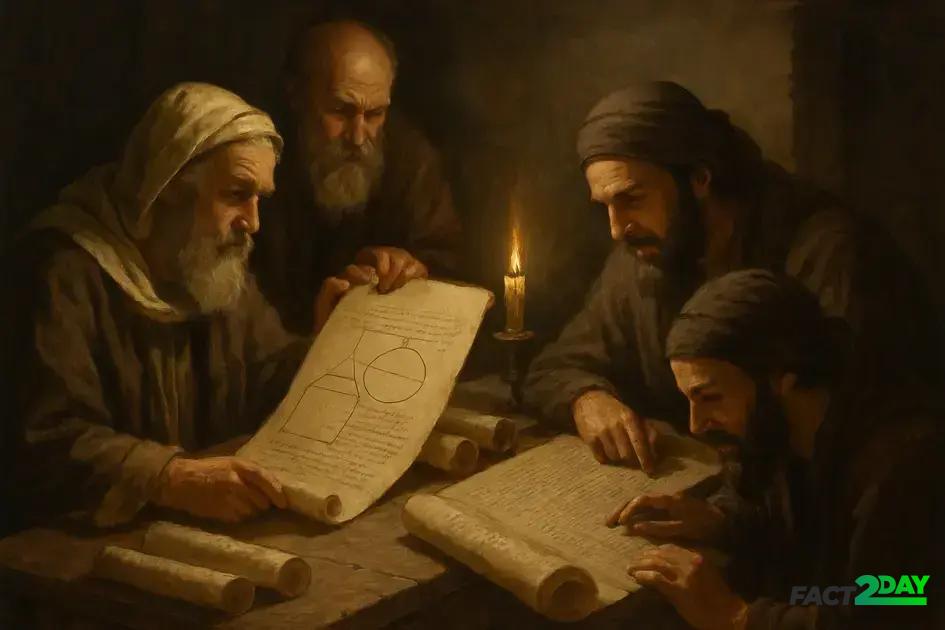
First algorithms history traces back to ancient civilizations where pioneers like Euclid and Al-Khwarizmi developed foundational step-by-step methods that shaped modern logic, mathematics, and computing.
Have you ever wondered about the roots of the algorithms shaping our daily lives? The story of First Algorithms History invites us to explore the brilliant minds of ancient times who laid the groundwork for modern computation. Let’s uncover these early logic puzzles and their lasting footprints.
Understanding the origins of algorithms in ancient civilizations
Algorithms, at their core, are step-by-step procedures used to solve problems or perform tasks. The origins of algorithms trace back to ancient civilizations such as Mesopotamia, Egypt, and India, where scholars developed early methods for calculation and problem-solving. These societies used systematic approaches for tasks like land measurement, trade, and astronomy.
Mesopotamian Contributions
The Mesopotamians created some of the earliest recorded algorithmic methods, particularly in arithmetic and geometry. Clay tablets reveal techniques for multiplication and division that resemble modern algorithms. Their practical needs for managing resources fueled these advancements.
Ancient Egyptian Techniques
In Egypt, algorithms were applied in building pyramids and surveying lands. The Egyptians used fixed rules for calculations involving fractions and geometry, which were crucial for their architectural achievements. These rules followed logical sequences akin to algorithmic thinking.
Indian Mathematical Foundations
Ancient Indian scholars developed sophisticated algorithms for arithmetic operations, including early concepts of zero and place value. The famous mathematician Pingala wrote about binary numerical systems and recursive patterns, ideas fundamental to computer science today.
Understanding the origins of algorithms in these ancient cultures highlights human ingenuity in tackling complex problems with logic and structure, laying the groundwork for modern computing.
The role of ancient mathematicians in developing algorithms
Ancient mathematicians played a crucial role in shaping the foundation of algorithms. These thinkers systematically explored numbers and patterns, developing methods to solve practical problems in trade, astronomy, and land division. Their work reflected early algorithmic thinking through detailed procedures and formulas.
Contributions from Babylonian Mathematicians
The Babylonians created advanced math techniques involving algebra and geometry. They used step-by-step processes to solve quadratic equations, which can be seen as primitive algorithms. Their clay tablets reveal meticulous records of these calculations.
Greek Influence on Algorithmic Thought
Greek mathematicians like Euclid and Pythagoras influenced the evolution of algorithms by formalizing logic and systematic problem solving. Euclid’s “Elements” introduced algorithmic procedures for finding the greatest common divisor, a fundamental process still taught today.
Contributions from Indian Scholars
Indian mathematicians developed recursive and combinatorial algorithms centuries ago. Aspects of their work, including concepts of zero and positional notation, were revolutionary and influenced later computational methods.
These early mathematicians did not just solve equations; they created general methods applicable to various problems, setting the stage for the algorithms we rely on in modern technology.
How early algorithms influenced modern computing
Early algorithms laid the foundation for the modern computing systems we use today. These initial step-by-step methods showed how to solve problems systematically, a principle that remains central in computer programming and software design.
Inspiration for Computer Science
Many concepts from ancient algorithms, like recursion and iteration, inspired the development of programming languages. The logical structures found in early algorithms helped shape the way computers process instructions.
From Mathematical Procedures to Code
The transition from manual calculation to automated computing was possible because early algorithms demonstrated clear, repeatable processes. This clarity allowed engineers to convert algorithms into machine-executable code.
Impact on Modern Technologies
Today’s technologies, from search engines to artificial intelligence, rely on algorithmic processes rooted in early designs. Understanding these roots provides valuable insight into how complex modern systems function.
In essence, early algorithms established the rules and logic that modern computing expands upon, making them crucial to today’s tech landscape.
Key figures behind the first known algorithms
Several key figures in history contributed significantly to the development of the first known algorithms. Their work laid the foundation for modern computing and algorithmic thinking.
Euclid
Euclid, an ancient Greek mathematician, is famous for Euclid’s algorithm, a method to find the greatest common divisor of two numbers. This simple yet powerful algorithm remains a cornerstone in number theory and computer science.
Al-Khwarizmi
Known as the “father of algebra,” Al-Khwarizmi was a Persian mathematician whose book introduced systematic approaches to solving linear and quadratic equations. His name inspired the term “algorithm,” reflecting his lasting impact.
Pingala
Pingala, an ancient Indian scholar, created early work on binary numbers and combinatorial mathematics. His insights are considered a precursor to modern computer science concepts like binary code.
Other Influential Thinkers
Beyond these, mathematicians from Babylon, China, and other ancient civilizations contributed important ideas. Their collective work helped build the framework of logic and procedure that supports today’s algorithms.
The connection between logic and algorithmic thinking
Logic forms the backbone of algorithmic thinking, guiding the process of designing clear, structured methods to solve problems. It ensures each step follows reason and that outcomes are predictable and verifiable.
Foundations of Logical Thinking
Logical principles like deduction, induction, and conditional reasoning play key roles in algorithm design. They help break down complex problems into smaller parts that can be methodically addressed.
Algorithmic Thinking as Applied Logic
Algorithmic thinking applies logic to create sequences of instructions that computers or humans can follow. Each step depends on the previous one, creating a flow that resembles a logical argument or proof.
Role in Computer Science
Modern programming languages and systems rely heavily on logical operators and structures such as loops and conditionals. These are direct applications of classical logic, embedded within algorithms to handle decision-making and repetition.
Recognizing the connection between logic and algorithms helps us appreciate how problem-solving evolved from philosophical reasoning to practical computational methods.
Examples of ancient algorithms still relevant today
Many ancient algorithms still hold significant value and are used in various forms today. They demonstrate timeless logic and problem-solving techniques that continue to influence modern computation.
Euclid’s Algorithm
Euclid’s algorithm for finding the greatest common divisor (GCD) is one of the oldest and most efficient algorithms still widely used in number theory and cryptography.
The Sieve of Eratosthenes
This ancient method efficiently finds all prime numbers up to a certain limit. Modern applications use variations of this algorithm in cryptography and computer science.
Recursive Algorithms from Pingala
Pingala’s work on binary numbers and recursive patterns inspired algorithms in modern computing, especially in data encoding and compression.
Algorithm for Square Roots
Methods for approximating square roots, developed in ancient times, paved the way for numerical algorithms that are fundamental in scientific computing today.
These ancient algorithms reflect how early thinkers developed elegant solutions that still support today’s technology and mathematical challenges.
Cultural impacts of algorithm development through history
Algorithm development has shaped cultures throughout history, influencing how societies solve problems and share knowledge. These impacts reach beyond mathematics, touching education, technology, and communication.
Spread of Knowledge
Early algorithms were recorded on clay tablets, papyrus, and manuscripts, enabling knowledge transfer across regions. This sharing of ideas sparked innovation and connected diverse cultures.
Influence on Education
Algorithms helped create structured learning methods in ancient schools. They taught logic, mathematics, and reasoning, forming the basis for formal education systems worldwide.
Advancement of Technology
Algorithmic thinking drove inventions in tools, engineering, and later computing. Cultures that embraced these ideas often gained technological advantages, advancing their economies and societies.
Cultural Exchange and Adaptation
As algorithms traveled between civilizations, they adapted to fit local needs and contexts. This cross-cultural exchange enriched algorithms, making them more versatile and powerful.
Understanding the cultural impacts of algorithm development reveals how interconnected human progress is, built upon shared logic and problem-solving traditions across time and place.
Lessons from ancient algorithms for today’s problem-solving
Ancient algorithms teach us valuable lessons for solving problems in today’s complex world. Their careful design and logical steps provide a blueprint for effective decision-making and innovation.
Emphasizing Simplicity and Clarity
One key lesson is the power of simplicity. Ancient algorithms are often straightforward and easy to follow, which helps avoid confusion and errors during execution.
Step-by-Step Problem Solving
Breaking problems into smaller, manageable steps remains a vital strategy. This approach makes complicated challenges easier to tackle, aligning well with modern project management and coding practices.
Adaptability Across Contexts
Ancient algorithms were adapted across cultures and tasks, demonstrating flexibility. Today, we benefit from designing solutions that can be adjusted to fit different needs and environments.
The Importance of Logical Foundations
Building solutions on solid logical principles ensures reliability and predictability. This foundation supports innovations like artificial intelligence and data analysis.
By applying these timeless lessons, we can enhance problem-solving skills and develop efficient, effective solutions in various fields.
Wrapping Up the Legacy of Ancient Algorithms
Ancient algorithms have left a lasting mark on how we solve problems today. Their clear logic and step-by-step methods teach us the importance of simplicity and structure.
By learning from these early techniques, we can create adaptable and reliable solutions that fit modern challenges. Understanding their roots not only honors past thinkers but also inspires future innovations.
Embracing the lessons from ancient algorithms helps us improve problem-solving skills and build smarter technologies for tomorrow.