Worms That Emit Light Beneath Antarctic Ice
Discover the enchanting world of glowing ice worms beneath Antarctic ice, revealing nature's surprising light in the coldest places on Earth.
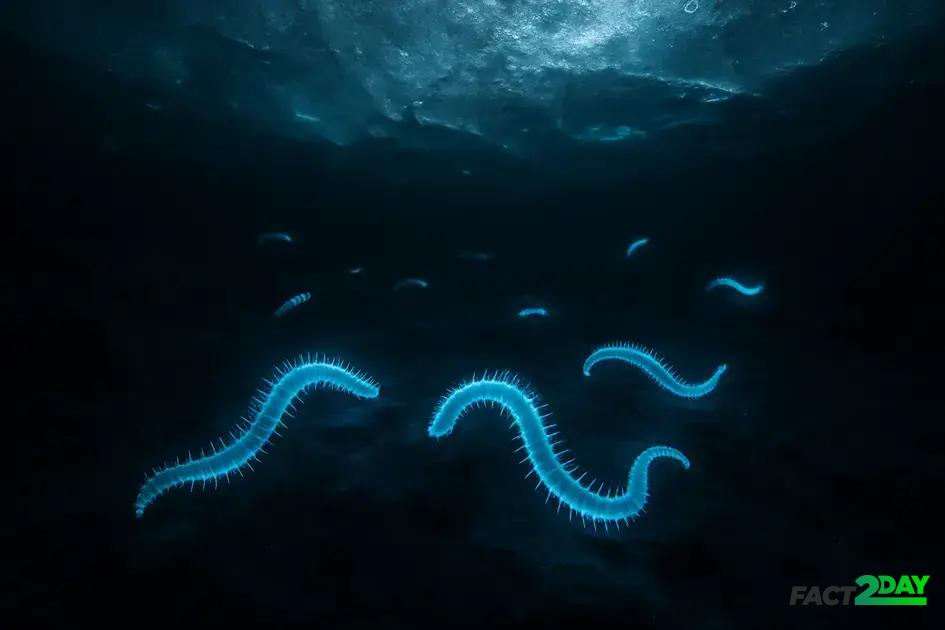
Glowing ice worms are bioluminescent creatures living beneath Antarctic ice, adapted to extreme cold by producing antifreeze proteins and emitting light to survive and communicate in the dark, harsh environment.
Glowing ice worms living beneath Antarctic ice reveal a hidden world of light and life in a place few have truly imagined. Have you ever wondered how creatures survive and even shine in such cold darkness?
The mysterious habitat of glowing ice worms
Glowing ice worms live in the mysterious habitat beneath the thick Antarctic ice sheets, surviving in some of the harshest conditions on Earth. These worms thrive in a cold, dark environment where temperatures hover just below freezing, yet their bodies emit a faint, mesmerizing light. They are usually found in the upper layers of glaciers, where tiny channels of meltwater provide a fragile ecosystem.
The ice worms’ habitat is characterized by extreme cold, limited nutrients, and near-total darkness. Despite this, they have adapted to use bioluminescence either as a defense mechanism or for communication. Their habitat’s unique features include frozen surfaces cracked by the sun’s heat, allowing pockets of water where these worms can move and feed.
Studying these habitats helps scientists understand how life can exist in extreme environments, which may be similar to conditions on icy moons or planets. The worms’ habitat is also vulnerable due to climate changes, making it important to monitor how these ecosystems evolve.
How bioluminescence works in ice worms
Bioluminescence in glowing ice worms is a fascinating natural process where these creatures produce their own light through a chemical reaction. Inside their bodies, a molecule called luciferin reacts with oxygen in the presence of an enzyme called luciferase, creating a soft, blue-green light. This light is not just beautiful but serves specific purposes for the worms.
Function of bioluminescence
The light emitted by ice worms may help them avoid predators by confusing them or signaling that they are toxic. It might also be used to communicate with other worms in the dark ice habitats where sunlight never reaches.
Adaptations for light production
Unlike some other glowing creatures, ice worms have adapted to produce enough light to be visible in the dark but not so much that they attract unwanted attention. Their bioluminescence is adapted perfectly for the deep, cold, and dark environment beneath the Antarctic ice.
Studying this glow helps scientists understand how life can thrive in extreme conditions and may inspire new technologies based on these chemical reactions.
Adaptations that help ice worms survive extreme cold
Ice worms have developed several unique adaptations to survive the extreme cold of the Antarctic environment. Their bodies contain special antifreeze proteins that prevent ice crystals from forming inside their cells, protecting them from freezing.
Physiological adaptations
Their metabolism is adapted to function at temperatures just below freezing, allowing them to remain active when most other creatures cannot. Ice worms also have a flexible outer layer that helps protect against cold and physical damage.
Behavioral strategies
They often stay within tiny tunnels in the ice where temperatures are slightly warmer, and they move slowly to conserve energy. These adaptations help them find food and avoid predators while coping with the harsh environment.
By combining biochemical and behavioral adaptations, ice worms thrive in conditions that would be deadly for most other life forms, making them a remarkable example of survival in nature’s toughest places.
The role of glowing ice worms in their ecosystem
Glowing ice worms play an important role in the fragile Antarctic ecosystem beneath the ice. As part of the food web, they help break down organic matter, recycling nutrients that support other microorganisms. These worms feed on algae and bacteria, preventing overgrowth and maintaining balance.
Ecological interactions
Ice worms serve as food for small predators, linking different levels of the ecosystem despite the extreme environment. Their bioluminescence may also affect behavior patterns of other creatures, influencing how energy flows in the ecosystem.
Their presence indicates a healthy and functioning ecosystem beneath the ice, where life adapts to survive despite limited resources and harsh conditions. Understanding their role helps researchers grasp the complexity of polar environments and the delicate interplay of life forms there.
Scientific discoveries and studies about ice worms
Scientific studies on glowing ice worms have revealed much about how life adapts to extreme environments. Researchers use advanced tools like ice drilling and underwater cameras to observe these worms in their natural habitat without disturbing the fragile ecosystem.
Key discoveries
One major finding is how these worms survive freezing temperatures by producing antifreeze proteins. Studies also show their bioluminescence is unique compared to other glowing organisms, opening new questions about its role and evolution.
Research challenges
Studying ice worms is difficult due to the remote and harsh Antarctic environment. Scientists must work in freezing conditions while preserving the ice’s integrity for accurate observations.
Ongoing research aims to understand the worms’ genetic makeup and how their adaptations might inspire new biotechnologies. These discoveries not only inform us about Antarctic life but about potential life forms on other icy planets.
Comparing ice worms to other bioluminescent creatures
Ice worms share the ability to produce light with many other bioluminescent creatures, but they differ in several important ways. Unlike fireflies or deep-sea fish, ice worms use bioluminescence primarily in the extreme cold and dark of Antarctic ice.
Differences in habitat and light use
While many bioluminescent animals use their light for attracting mates or prey, ice worms may use their glow mainly for protection and survival in their icy habitat. Their light is cooler and dimmer, adapted to avoiding predators without attracting too much attention.
Unique biochemical processes
The chemical reactions in ice worms’ bodies involve different luciferin and luciferase molecules compared to those of other animals. This unique biochemistry allows their light to function effectively in freezing conditions.
By comparing ice worms to other glowing animals, scientists gain insight into how bioluminescence evolved in diverse environments, showing the amazing adaptations life has made to survive and communicate.
Challenges in studying these elusive worms
Studying glowing ice worms presents several challenges due to their remote and extreme Antarctic habitat. The harsh cold, thick ice layers, and unstable weather make accessing their environment difficult and dangerous for researchers.
Technical difficulties
Collecting samples requires specialized ice drilling equipment and careful handling to avoid damaging the fragile ecosystem. Maintaining live specimens for study also demands precise temperature control in laboratories.
Environmental concerns
Scientists must minimize their impact on this delicate habitat to avoid disrupting the worms’ natural behavior and the broader ice environment. This limits the scale and methods of research that can be conducted.
Despite these obstacles, ongoing technological advances and international cooperation continue to improve our ability to study these elusive creatures and understand their role in Antarctic ecosystems.
What glowing ice worms teach us about life under ice
Glowing ice worms teach us valuable lessons about how life can adapt and thrive in extreme conditions. Their survival under Antarctic ice shows the resilience of living organisms, even in the coldest, darkest places.
Insights into extremophile life
These worms reveal that life does not always need sunlight to flourish. Their bioluminescence helps us understand alternative ways organisms communicate and protect themselves in darkness.
Implications for biology and astrobiology
Studying ice worms inspires scientists to rethink the limits of life on Earth and beyond. It suggests that similar creatures might exist on icy moons or planets, where underground oceans could support bioluminescent life forms.
The lessons from glowing ice worms encourage ongoing research into ice-covered environments, broadening our knowledge of biodiversity and the potential for life in extreme habitats.
Understanding glowing ice worms helps us appreciate nature’s wonders
These tiny creatures reveal how life can survive and even shine in the coldest, darkest places on Earth. Their unique adaptations and glowing light inspire scientists and expand our knowledge of life’s possibilities.
Studying glowing ice worms not only deepens our understanding of Antarctica’s hidden ecosystems but also opens new doors for exploring life beyond our planet. They remind us that even the most extreme environments can hold surprising secrets.
By continuing to explore and protect these fragile habitats, we learn more about the resilience and creativity of life itself. Glowing ice worms show us that there is still much to discover beneath the ice.