Mutations Caused by Cosmic Rays at High Altitudes
Explore how cosmic ray mutation at high altitudes influences genetic changes, revealing nature's subtle interactions beyond our sight.
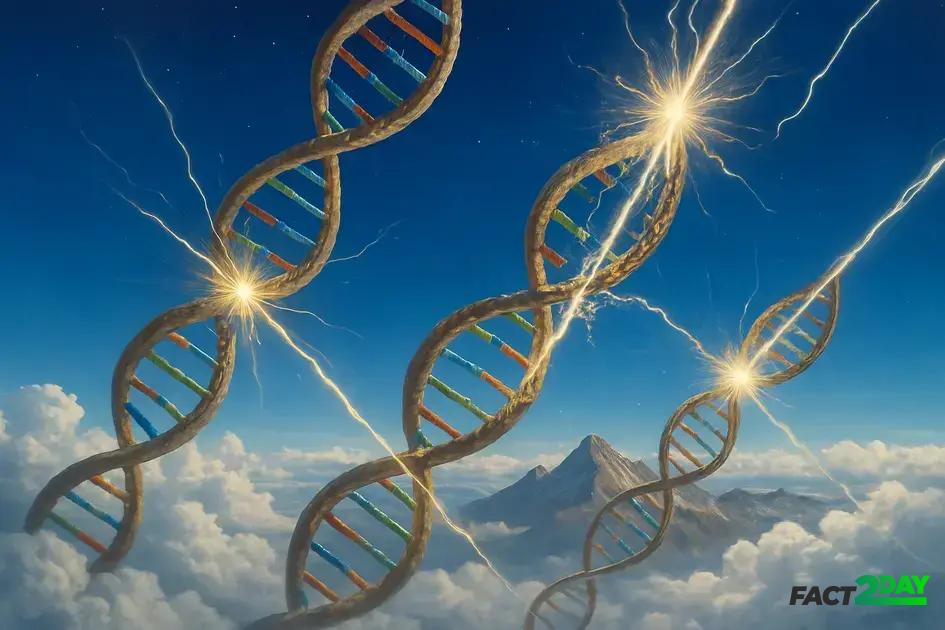
Cosmic ray mutation refers to genetic changes caused by high-energy particles from space interacting with living organisms, especially at high altitudes where radiation exposure is greater, increasing mutation rates and affecting DNA integrity.
Cosmic ray mutation at high altitudes quietly shapes life in ways we rarely notice. Have you ever wondered how particles zipping through the sky may spark tiny changes in DNA? Let’s explore this natural phenomenon together.
understanding cosmic rays and their journey to earth
Cosmic rays are high-energy particles originating from outer space, mainly from exploding stars and other celestial events. These particles travel vast distances through the universe at nearly the speed of light before reaching Earth’s atmosphere. Understanding cosmic rays involves studying their types, which include protons, atomic nuclei, and electrons, as well as their varying energies.
As cosmic rays approach Earth, they encounter the planet’s magnetic field and atmosphere, which influence their path and energy. The magnetic field deflects many charged particles, especially those with lower energies, while the atmosphere acts as a shield, causing cosmic rays to collide with air molecules.
The Journey Through Earth’s Atmosphere
When cosmic rays hit atmospheric particles, they create showers of secondary particles, including muons, neutrons, and pions. This cascade effect spreads out widely, and some particles can penetrate to the ground level, while others dissipate higher up.
This interaction is crucial for studying cosmic rays because it affects how and where mutations caused by cosmic rays might occur, particularly at different altitudes. The particles’ ability to reach high altitudes makes them a significant factor in genetic mutations observed in those environments.
Tools to Detect Cosmic Rays
Scientists use various detectors, such as cloud chambers, scintillation counters, and balloon-borne instruments, to study cosmic rays and their interactions. These tools help map the intensity and composition of cosmic rays, improving our understanding of their journey and effect on Earth’s environment.
how cosmic rays cause mutations at high altitudes
Cosmic rays cause mutations at high altitudes mainly through their interaction with the Earth’s atmosphere and living organisms. When high-energy cosmic particles collide with atmospheric atoms, they produce secondary particles such as neutrons and muons. These particles carry enough energy to penetrate biological tissues and interact with DNA, potentially causing mutations.
The high altitudes, such as those found on mountain peaks or in the upper atmosphere, receive a greater flux of these secondary cosmic particles. This increased exposure raises the likelihood of radiation-induced changes in the genetic material of plants, animals, and even microbial life that inhabit or traverse these regions.
Mechanism of Mutation Induction
When cosmic ray particles pass through living cells, they can break DNA strands or alter the chemical structure of nucleotides. Such damage can result in the insertion, deletion, or substitution of base pairs during DNA replication, leading to mutations. Some of these mutations might lead to adaptations, while others could be harmful or neutral.
Factors Affecting Mutation Rate
The intensity of cosmic ray-induced mutations depends on altitude, magnetic latitude, and atmospheric conditions. Areas with thinner atmosphere and weaker magnetic shielding see higher cosmic ray intensity, which correlates to elevated mutation rates. Additionally, living organisms with faster reproduction cycles may show mutations more rapidly.
Understanding how cosmic rays cause mutations helps in assessing their role in evolution and environmental adaptation, especially for life forms at high altitudes.
differences between mutations at ground level and high altitudes
Mutations caused by cosmic rays vary significantly between ground level and high altitudes due to differences in radiation exposure and atmospheric shielding. At ground level, the Earth’s thick atmosphere absorbs most high-energy cosmic rays, reducing their intensity and thus minimizing the rate of mutations induced by them.
At high altitudes, such as in mountains or the upper atmosphere, there is less atmospheric protection. This allows more cosmic rays and their secondary particles to reach living organisms, increasing mutation rates. The higher radiation dose at altitude can lead to more frequent DNA damage and genetic changes.
Radiation Intensity and Mutation Frequency
The intensity of cosmic radiation increases with altitude by several times compared to sea level. This elevated intensity causes higher mutation frequencies in plants, animals, and microorganisms found or passing through these regions.
Types of Mutations
While the nature of mutations—such as point mutations, deletions, and insertions—remains similar, the rate at which they occur is higher at high altitudes. Additionally, high-energy particles at altitude can cause double-strand breaks in DNA more often, potentially leading to more severe genetic alterations.
Understanding these differences helps in assessing ecological impacts and evolutionary processes related to cosmic ray exposure in diverse environments.
impact of cosmic ray mutations on living organisms
Cosmic ray mutations impact living organisms by introducing changes in their DNA. These mutations can alter the genetic code, potentially affecting the organism’s traits, health, and survival. While some mutations are harmful, leading to diseases or reduced fitness, others may be neutral or even beneficial, driving evolution through natural selection.
Effects on Different Organisms
In plants, cosmic ray mutations might cause variations in leaf shape, growth rate, or resistance to environmental stress. Animals exposed at high altitudes can experience genetic changes that affect reproduction or physical traits. Microorganisms may mutate rapidly, adapting to harsh conditions.
Mutation and Evolution
Mutations caused by cosmic rays contribute to the genetic diversity essential for evolution. Over generations, these changes can help species adapt to new environments or challenges. However, the extent of cosmic ray influence varies based on altitude, species, and exposure.
Health and Environmental Implications
Increased mutation rates can pose risks to high-altitude populations, including humans, by raising the likelihood of genetic disorders or cancer. On the other hand, understanding these effects can aid in developing protective measures for those exposed to higher cosmic radiation.
Overall, cosmic ray mutations play a complex role in shaping life, balancing between harm and potential benefit in ecosystems.
methods to study cosmic ray induced mutations
Studying cosmic ray-induced mutations requires precise and advanced methods to detect and analyze genetic changes caused by high-energy particles. Scientists use a combination of field measurements, laboratory experiments, and computational models to understand these mutations.
Field Studies
Researchers collect samples from high-altitude regions such as mountain peaks and stratospheric balloons. These samples include plants, microorganisms, and even human cells exposed to elevated cosmic radiation. Measuring mutation rates in these samples helps assess the natural impact of cosmic rays.
Laboratory Experiments
In controlled environments, cells or organisms are exposed to particle accelerators that simulate cosmic radiation. This allows scientists to observe DNA damage and mutation formation under repeatable conditions, which helps clarify the specific effects of different types of cosmic rays.
Genetic Sequencing and Analysis
Advanced sequencing techniques identify mutations at the molecular level. Comparing genetic sequences from exposed and unexposed organisms reveals mutation patterns and frequencies directly linked to cosmic ray exposure.
Computational Models
Scientists build computer models to simulate cosmic ray interactions with biological tissues. These models predict mutation risks based on altitude, radiation intensity, and organism type, improving our capacity to estimate real-world effects.
Combining these methods provides a comprehensive view of how cosmic ray mutations occur and their potential consequences for life at high altitudes.
potential implications for human health and the environment
Cosmic ray mutations have notable implications for both human health and the environment, especially at high altitudes where radiation exposure increases. For humans, extended exposure to high levels of cosmic radiation can damage DNA, potentially leading to increased risks of cancer and other genetic disorders.
Health Risks for High-Altitude Populations
People who live, work, or travel frequently at high elevations, such as pilots, astronauts, and mountain communities, face greater exposure. This makes monitoring and protecting against radiation effects critical. Protective measures include limiting exposure times and using shielding technologies.
Environmental Impact
In ecosystems at high altitudes, cosmic ray-induced mutations can affect the genetic diversity of plants and animals. While mutations can drive adaptation and evolution, excessive mutation rates may disrupt populations by causing harmful genetic changes.
Broader Ecological Concerns
Changes in mutation rates may alter species interactions and ecosystem stability. For example, mutations affecting plant growth or reproduction can impact food chains and habitat conditions, influencing biodiversity at high elevations.
Understanding these impacts guides efforts to balance human activity and conservation in sensitive environments exposed to cosmic radiation.
Understanding cosmic ray mutations at high altitudes
Cosmic ray mutations play an important role in shaping life, especially at high altitudes where radiation exposure is higher. These mutations can influence evolution and genetic diversity, but they also pose risks to human health and ecosystems.
By studying how cosmic rays interact with living organisms and developing methods to measure their effects, scientists can better understand and manage these impacts. Awareness and protective strategies are key to minimizing risks for people exposed to higher levels of cosmic radiation.
Overall, exploring cosmic ray mutations offers valuable insights into the delicate balance between nature’s forces and life on Earth, helping us protect both human health and the environment in changing conditions.