The Moon Is Swept by Invisible Plasma Winds
Discover the mysterious dance of lunar plasma storms that invisibly sweep the Moon, shaping its quiet and ever-changing surface environment.
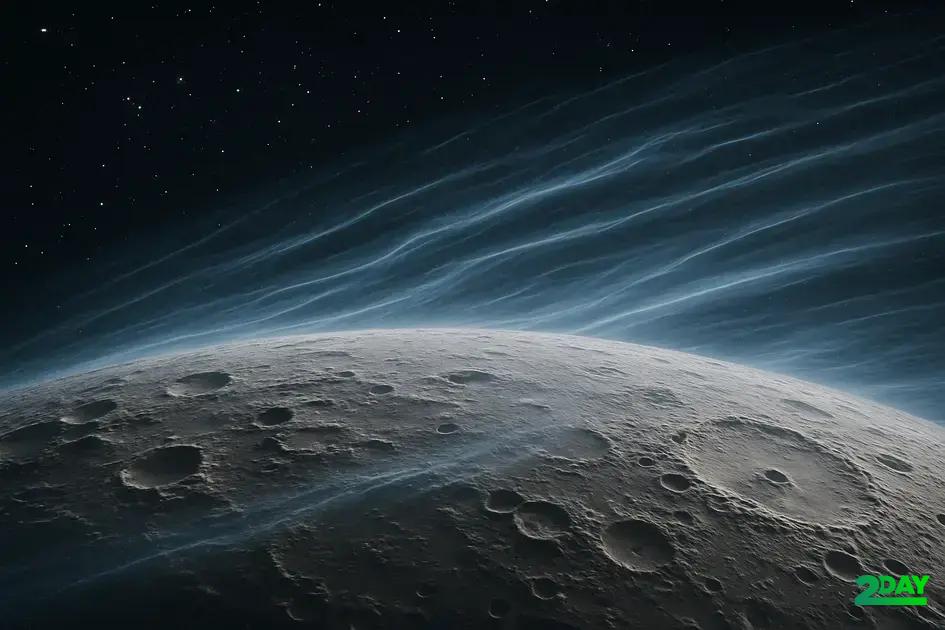
Lunar plasma storms are invisible winds of charged particles from the solar wind that directly impact the Moon’s surface, influencing dust movement, surface chemistry, and posing challenges for exploration and equipment.
Have you ever wondered about the unseen forces shaping the Moon? Lunar plasma storms are invisible winds, sweeping across the lunar surface, quietly remodeling it in ways we are just beginning to understand. Let’s explore this ethereal lunar dance together.
what are lunar plasma storms and how do they form
Lunar plasma storms are powerful gusts of charged particles that flow over the Moon’s surface. Unlike Earth, the Moon lacks a global magnetic field and thick atmosphere, making it vulnerable to these invisible plasma winds. These storms originate from the solar wind—a constant stream of charged particles emitted by the Sun.
When the solar wind reaches the Moon, it interacts directly with the lunar surface. This interaction creates waves of plasma, or ionized gas, that sweep across the Moon. These plasma storms can vary in intensity depending on solar activity, such as solar flares or coronal mass ejections.
The formation process involves the Sun’s magnetic field lines connecting with the Moon’s surface, allowing plasma to flow freely. This causes the surface to experience electric currents and changes in its environment. As a result, the plasma can stir up dust, create temporary magnetic fields in localized areas, and even impact the behavior of the lunar surface materials.
effects of plasma winds on the lunar surface
The effects of plasma winds on the lunar surface are both subtle and profound. These invisible winds, made of charged particles from the Sun, constantly sweep across the Moon, gradually shaping its environment. Since the Moon lacks a protective atmosphere, its surface directly absorbs these plasma particles.
One significant impact is the disturbance of the lunar dust. Plasma winds can cause this fine dust to become electrically charged, making it float and move above the surface in a process called “dust levitation.” This can create a hazy, shifting environment over the Moon’s landscape.
Additionally, plasma storms can alter the chemical makeup of surface materials. When charged particles collide with the Moon’s soil, or regolith, they can cause sputtering—knocking atoms off the surface—slowly changing its texture and composition. This process contributes to space weathering, which darkens and matures the lunar surface over time.
Localized magnetic fields can also arise briefly when plasma interacts with certain areas, creating temporary mini-magnetospheres. These fields can shield small surface patches from solar wind, creating variations in how the surface experiences space weather.
Understanding these effects is crucial for preparing future lunar missions, as plasma winds can impact equipment, astronaut health, and surface operations.
the science behind detecting invisible plasma winds
Detecting the invisible plasma winds that sweep across the lunar surface requires advanced scientific instruments and techniques. Since plasma is made up of charged particles, scientists rely on sensors that can measure electric and magnetic fields, plasma density, and particle velocity.
One common approach uses spacecraft equipped with magnetometers and particle detectors to fly near or orbit the Moon. These instruments capture data on the solar wind’s interaction with the lunar environment. By analyzing changes in magnetic fields and ion flows, researchers can map how plasma winds move and behave.
Remote sensing via ultraviolet and X-ray imaging also helps detect plasma effects indirectly. For example, scientists observe how the lunar surface reflects or emits specific wavelengths when struck by charged particles, revealing plasma activity patterns.
Ground-based observations using radio waves and photometers supplement in-situ measurements. Combining all these data sources allows researchers to build detailed models of plasma dynamics near the Moon.
These methods are vital for understanding space weather, planning lunar missions, and protecting equipment from plasma-related damage.
impacts on lunar exploration and human activity
Plasma storms on the Moon can have significant impacts on lunar exploration and human activity. These charged particle winds can interfere with spacecraft electronics, causing temporary malfunctions or long-term damage. Designing equipment to withstand such harsh space weather is a critical challenge for lunar missions.
Astronauts on the Moon may face health risks from exposure to plasma particles. Without Earth’s magnetic shield, the lunar surface is bombarded with radiation that plasma storms can intensify. Effective protective suits and habitats must be developed to reduce this exposure.
Plasma winds may also affect communication systems by disrupting radio signals between the Moon and Earth. This can complicate mission control and data transfer, requiring robust communication technologies.
Surface operations such as rover movements or setting up instruments must consider the effects of plasma storms on dust behavior. Charged dust can become airborne, potentially damaging equipment and reducing visibility.
Understanding these impacts helps space agencies plan safer, more efficient missions. Future lunar bases will need to integrate plasma weather monitoring and protection measures to ensure successful human presence on the Moon.
how plasma storms compare with solar wind phenomena
Plasma storms on the Moon are closely related to solar wind phenomena, but they have distinct characteristics due to the Moon’s unique environment. The solar wind is a steady flow of charged particles released by the Sun, traveling through space and interacting with planets and moons.
On Earth, the solar wind is mostly deflected by our strong magnetic field, but the Moon has no global magnetosphere. This means the Moon’s surface is directly exposed to solar wind plasma. When variations in solar wind intensity occur, such as during solar flares or coronal mass ejections, these changes result in what we call lunar plasma storms—intense bursts of charged particles sweeping across the lunar surface.
Unlike solar wind, which affects entire planetary systems, plasma storms on the Moon are localized effects caused by interactions between the solar wind and the Moon’s crust and scattered magnetic anomalies.
The key difference lies in the impact: solar wind shapes space weather broadly, while lunar plasma storms specifically influence the Moon’s surface environment and create unique conditions like dust levitation and electric currents.
Studying these interactions helps scientists understand the behavior of charged particles in space and protects future lunar missions from radiation and equipment damage.
technologies used to study lunar plasma storms
Studying lunar plasma storms requires advanced technologies designed to measure and analyze the charged particles and electromagnetic fields around the Moon. Spacecraft and landers equipped with specialized instruments play a crucial role in this research.
Magnetometers detect magnetic fields created by plasma interactions. These sensors help scientists understand how solar winds affect the lunar surface and how temporary magnetic anomalies form.
Particle detectors measure the energy, speed, and density of charged particles in the plasma storms. These tools can distinguish between different types of particles, such as electrons and ions.
In addition, spectrometers analyze the composition of lunar soil and atmosphere changes caused by plasma impacts. This information is essential for understanding how plasma storms alter the Moon’s environment.
Remote sensing technologies, like ultraviolet and X-ray imagers aboard orbiters, provide visual data on plasma activity. These tools capture glowing emissions caused by interactions between solar particles and the lunar surface.
Combining data from multiple instruments on satellites, landers, and rovers creates comprehensive models of plasma storms, helping researchers predict their behavior and effects.
potential future research directions in lunar plasma weather
Future research on lunar plasma weather aims to deepen our understanding of how plasma storms affect the Moon and its environment. Scientists plan to enhance monitoring technologies to gather more detailed data on plasma particle behavior and their impact on the lunar surface.
One key direction is the development of more sensitive and compact instruments for lunar orbiters and landers. These devices will help track fluctuations in plasma density and energy during solar events with higher precision.
Researchers are also exploring the role of localized magnetic fields on the Moon. Understanding how these fields form and interact with plasma storms can reveal new information about the Moon’s geology and its response to space weather.
Simulating plasma interactions using advanced computer models is another focus. These models can predict how plasma storms evolve and affect lunar dust, which is crucial for planning safe human missions.
Collaboration between international space agencies will expand lunar plasma research, enabling longer missions and sharing of data. This cooperation will accelerate the development of technologies to protect astronauts and equipment from plasma-related hazards.
lessons the Moon teaches us about space weather
The Moon teaches us valuable lessons about space weather and its effects. Without a thick atmosphere or global magnetic field, the Moon acts as a natural laboratory to study how solar wind and plasma storms interact with a bare surface.
One lesson is how charged particles can change surface materials over time. Plasma storms cause space weathering, which alters the color and texture of lunar soil. This helps scientists understand similar processes on other airless bodies like asteroids.
The Moon also shows how plasma can charge and move dust particles. This knowledge is crucial because dust can affect human activities and equipment on the Moon, and possibly Mars or other planets without strong atmospheres.
Studying lunar plasma interactions improves our understanding of radiation hazards astronauts face. The Moon’s environment reveals how space weather conditions can vary and what protective measures are needed.
Overall, the Moon offers a clearer picture of space weather’s impact in environments lacking Earth’s protections, guiding the design of future missions and technologies for exploring the solar system.
Understanding the power of lunar plasma storms
Lunar plasma storms reveal a fascinating side of the Moon that is invisible to the naked eye but highly impactful. By studying these invisible winds, scientists gain insights into space weather and its effects on airless worlds.
These storms affect the lunar surface, human exploration, and future missions, making it vital to understand and monitor them closely. The Moon serves as an important natural laboratory, teaching us valuable lessons about how to prepare for the challenges of space weather in our journey beyond Earth.
Continuing research and technology improvements will help protect astronauts and equipment, ensuring successful exploration of the Moon and beyond.