The Pope Who Dug Up a Corpse to Put It on Trial
Explore the curious story of the posthumous pope trial, where a dead pontiff faced judgment many years after his death.
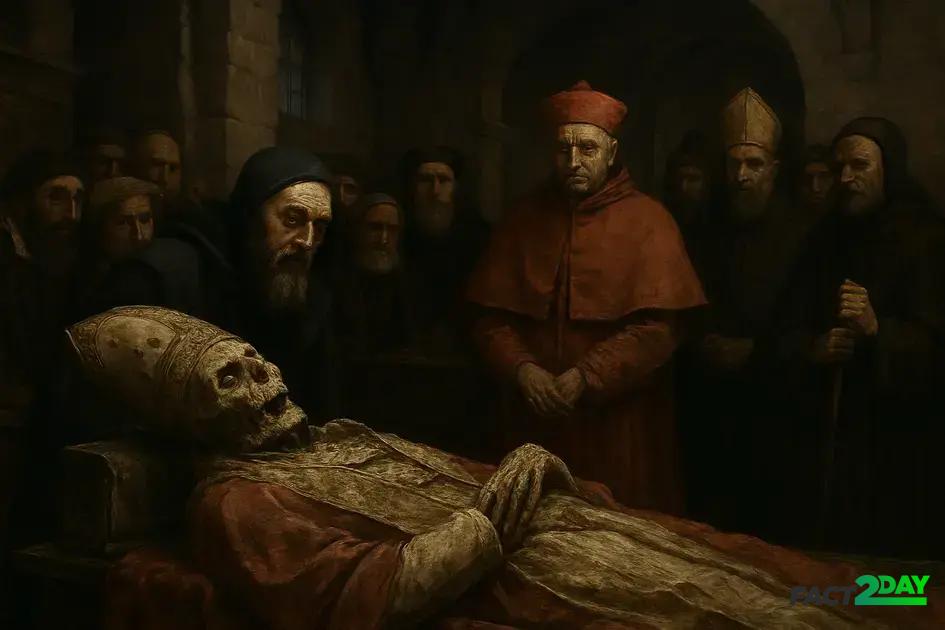
The posthumous pope trial, known as the Cadaver Synod, involved exhuming Pope Formosus’s corpse to face charges post-death, highlighting extreme political conflicts within the medieval Catholic Church.
Have you ever heard of the posthumous pope trial? It’s a fascinating tale where a pope was put on trial long after his death. Let’s dive into this unusual moment in history and uncover what led to such a remarkable event.
The historical context of the posthumous pope trial
The posthumous pope trial occurred in a unique historical period where the authority of the Catholic Church and royal powers often clashed. This trial took place during the 9th century, a time marked by political instability and the struggle for control between secular leaders and the church. The trial targeted Pope Formosus, who had died in 896 AD, but his legacy was fiercely contested afterward.
During this era, the church was deeply involved in worldly affairs, influencing kings and shaping political decisions. The practice of holding trials after death was extremely rare but served as a tool to undermine opponents and rewrite history. The posthumous trial was meant to invalidate Formosus’ papacy by accusing him of unlawful actions during his lifetime.
Political and Religious Tensions
Understanding the political tension of the period helps explain why such an extraordinary event occurred. The church was not only a spiritual institution but also a powerful political entity. Rival factions within Rome sought to control the papacy to advance their interests, leading to acts like the trial of a dead pope.
This context reveals how power, faith, and politics intertwined, setting the stage for a trial that challenged the norms of justice and ecclesiastical authority. The posthumous trial was an attempt to settle political scores and send a message to supporters and enemies alike.
Details of the exhumation and trial process
The exhumation and trial process of Pope Formosus was unlike any typical legal proceeding. His body was dug up from its tomb, dressed in papal vestments, and placed on a throne in the courtroom to face charges. This extraordinary act, known as the “Cadaver Synod,” shocked many and symbolized the intense political struggle of the time.
The Exhumation
Formosus’ corpse was exhumed by order of Pope Stephen VI, his successor and rival. The body was reportedly in a state of decay, yet it was propped up and presented as the accused. This macabre scene was filled with symbolism, aiming to publicly discredit Formosus and annul his acts as pope.
The Trial
The trial accused Formosus of perjury and illegally assuming the papacy. A deacon was appointed to speak on behalf of the deceased pope. Witnesses and officials debated the charges, marking an unprecedented legal spectacle. Ultimately, the corpse was found guilty, and the pope’s decrees were declared invalid.
Aftermath included the mutilation of the corpse and the stripping of papal garments. This trial revealed the deep divisions within the church and how legal procedures could be manipulated for political ends.
The reasons behind exhuming a deceased pope
The reasons behind exhuming a deceased pope were rooted in political power struggles and religious disputes during the late 9th century. Pope Formosus had many enemies who questioned the legitimacy of his papacy. After his death, his opponents sought to tarnish his legacy and weaken his supporters by putting him on trial posthumously.
Political Motives
Exhuming Formosus served as a dramatic way to discredit him and to cancel all of his decisions as pope. Rival factions in Rome wanted to control the papacy and used this extreme measure to send a strong message. By invalidating Formosus’ acts, they could justify appointing their own candidates.
Religious Justifications
Some accused Formosus of breaking church laws, such as unlawfully accepting the papal office. The trial aimed to prove these charges. This also reflected deeper conflicts over church rules and authority. The exhumation was a public display of power, emphasizing the church’s dominance in both spiritual and political matters.
This event was not just about a person but the intense battle for control within the medieval church. It shows how political maneuvering influenced religious decisions in this turbulent era.
Reactions from contemporaries and the church
The reactions from contemporaries and the church to the posthumous trial of Pope Formosus were mixed and intense. Many were shocked and disturbed by the unusual spectacle of a dead pope being put on trial, which challenged traditional views about respect for the deceased and the sanctity of the papal office.
Public Response
The general public and many clergy members saw the trial as macabre and disrespectful. Some considered it a political stunt rather than a legitimate judicial proceeding. This event caused fear and confusion among the people, as it suggested that even death could not protect one from persecution.
Church Officials’ Opinions
Within the church, opinions were divided. Supporters of Pope Stephen VI, who ordered the trial, believed it was necessary to preserve the church’s authority and remove what they considered an illegitimate pope. Opponents viewed the trial as a scandal that endangered the church’s moral standing and unity.
Later popes annulled the results of the trial and condemned the event, signaling its controversial nature. The trial left a lasting mark on the church’s history, illustrating the intense power struggles and the complexities of maintaining religious authority during that era.
Legal and theological implications of posthumous trials
The legal and theological implications of posthumous trials such as that of Pope Formosus are complex and significant. Legally, trying a deceased person challenged established norms, as justice systems generally require the accused to be alive to defend themselves. This case raised questions about fairness and the limits of legal power.
Legal Challenges
Posthumous trials undermined the idea of due process. Since the accused could not participate or respond, the trial was more symbolic than judicial. Such trials could be used as political tools to reshape history or eliminate rivals even after death.
Theological Considerations
From a theological view, the trial was controversial because it disrespected the sanctity of the dead and the spiritual authority of the pope. The church teaches respect for the dead and the belief in divine judgment after death, which conflicted with the idea of earthly judgment of a corpse.
This event forced the church to reflect on its doctrines, eventually leading to condemnation of posthumous trials in later years. It highlighted the tension between earthly power and spiritual beliefs, marking a significant episode in church history.
Legacy and lessons from the posthumous pope trial
The legacy of the posthumous pope trial remains a powerful reminder of the dangers when politics and religion become deeply entangled. This event is remembered as one of the most bizarre in church history, showing how far individuals can go to assert power and control.
Historical Impact
The trial exposed the volatility of the papal office during the medieval period. It showed that the church was vulnerable to manipulation and that legal norms could be twisted for political ends. Later popes took steps to prevent such events from recurring, emphasizing stability and respect for tradition.
Lessons Learned
This episode illustrates the importance of separating spiritual authority from political conflict. It also teaches that justice should be fair and transparent, respecting both the living and the dead. The church’s eventual repudiation of the trial reflects an effort to restore dignity and order.
Modern readers can see this story as a cautionary tale about the misuse of power and the need for ethical leadership. It also invites reflection on how history judges controversial actions and the importance of historical memory in shaping the future.
Reflecting on the posthumous pope trial
The trial of Pope Formosus after his death remains one of history’s most unusual and powerful stories about power, politics, and religion. It shows us how conflicts can lead to extreme actions, even beyond the grave.
This event teaches us the importance of fairness, respect, and separating political ambitions from spiritual duties. It also reminds us that justice must be grounded in dignity and truth.
By looking back at such moments, we gain valuable lessons on leadership and the lasting impact of our choices. History often judges us by how we treat others, both in life and after death.