Animals That Can Sense Earth’s Magnetic Field
Discover how magnetic animals sense Earth’s magnetic field to navigate and thrive in the wild. Explore nature’s hidden compass in action.
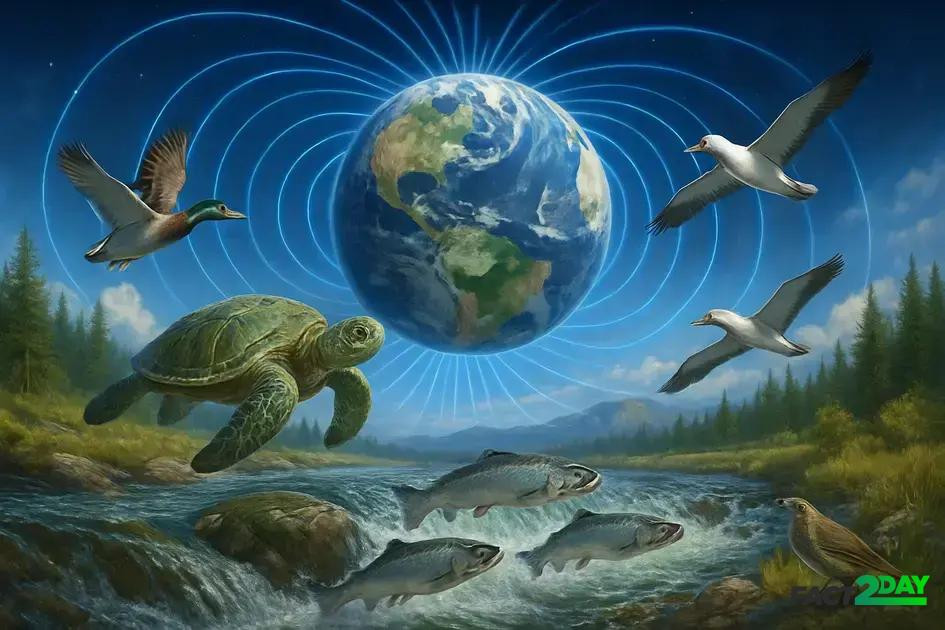
Magnetic animals detect Earth’s magnetic field using specialized cells or proteins to navigate long distances, find food, and return to breeding sites with remarkable accuracy.
Have you ever wondered how some creatures seem to find their way across vast distances? Magnetic animals hold a secret to navigation hidden deep within Earth’s magnetic field. Let’s explore how these fascinating species tune into this invisible guide.
What are magnetic animals and how do they work
Magnetic animals are species that can sense the Earth’s magnetic field, which helps them navigate their environment. This ability, known as magnetoreception, allows these animals to detect magnetic forces, providing them with a natural compass. Unlike human-made compasses, magnetic animals rely on specialized cells or molecules that respond to magnetic fields.
The way these animals sense magnetic fields varies. Some, like migratory birds, have magnetic particles called magnetite in their bodies, which react to Earth’s magnetic field. Others use a protein called cryptochrome in their eyes that reacts to light in a way influenced by magnetic fields.
Magnetoreception plays a crucial role in behaviors such as migration, homing, and hunting. It enables animals to travel thousands of miles, find food sources, or return to breeding grounds with remarkable accuracy. This natural ability is a result of millions of years of evolution, helping species survive in complex and changing environments.
Understanding how magnetic animals work not only reveals nature’s mysteries but also inspires new technologies in navigation and robotics. Scientists continue to study these creatures, using genetics, physiology, and behavior to uncover the secrets behind their magnetic sense.
Species known for sensing Earth’s magnetic field
Many species are known for their ability to sense Earth’s magnetic field, using this unique skill to navigate, hunt, or migrate. Among the most studied are migratory birds like pigeons and warblers. These birds can travel thousands of miles, guided by magnetic cues to reach their breeding or feeding grounds.
Sea turtles also rely on magnetic fields during their long migrations across oceans. Hatchlings imprint on the magnetic signature of their birth beaches, which helps them return years later to lay their own eggs.
Salmon are another example, using magnetoreception to find their way from the ocean back to the rivers where they were born. This precise navigation is critical for their spawning success.
Other animals, such as certain species of sharks and rays, have specialized organs that detect magnetic fields, aiding in hunting and migration. Even some insects like monarch butterflies use Earth’s magnetic field for their long migratory journeys.
Each of these species showcases diverse biological adaptations that allow them to sense magnetic fields, demonstrating the widespread importance of magnetoreception in the animal kingdom.
The biological basis of magnetoreception
The ability of animals to sense Earth’s magnetic field, called magnetoreception, is based on complex biological mechanisms. Scientists have identified two main theories explaining how this sense works.
Magnetite-based mechanism
One theory involves tiny magnetic particles called magnetite, found in the cells of some animals. These particles act like natural compass needles, aligning with the Earth’s magnetic field. When they move, they trigger sensory receptors, allowing the animal to detect direction.
Cryptochrome and radical pair mechanism
Another important mechanism uses a special protein called cryptochrome, located in the eyes of certain animals, like birds. When exposed to light, cryptochrome undergoes chemical reactions influenced by magnetic fields. This process creates signals that the brain interprets to sense magnetic direction.
These two mechanisms might work together or separately in different species, helping animals navigate long distances, find food, or return to specific locations. The biological basis of magnetoreception remains an exciting field of research, shedding light on how animals perceive invisible environmental cues.
How animals use Earth’s magnetic field for navigation
Animals use Earth’s magnetic field as a natural guide for navigation across land, sea, and air. This invisible force helps them maintain direction during long migrations, find their way back to breeding or feeding sites, and explore unfamiliar environments with precision.
Migration and homing
Migratory species, such as birds and sea turtles, depend heavily on Earth’s magnetic cues. By detecting the magnetic field’s strength and angle, these animals can determine their geographic position and correct their routes even when landmarks are missing.
Foraging and daily movement
Some animals use magnetic information for shorter trips, like foraging. Salmon, for instance, sense magnetic fields to navigate rivers or return to their birthplace. This ability ensures they find food reliably and complete life cycles successfully.
Combination with other senses
Magnetoreception often works alongside vision, smell, and the sun’s position to provide a comprehensive navigation system. This integration allows animals to adjust their paths in changing weather or light conditions, increasing survival chances.
Overall, Earth’s magnetic field is a powerful tool that many animals have evolved to use, enabling remarkable journeys and everyday movements with astonishing accuracy.
Challenges in studying magnetic sense in animals
Studying the magnetic sense in animals presents several challenges. One major difficulty is the invisible nature of Earth’s magnetic field. Unlike sights or sounds, magnetic fields cannot be observed directly, making behaviors linked to magnetoreception hard to analyze.
Another challenge lies in the complexity of animal navigation. Many species use multiple senses together, such as vision, smell, and magnetoreception. Isolating magnetic sense effects requires carefully designed experiments that consider these overlapping cues.
Furthermore, the biological mechanisms behind magnetoreception are still not fully understood. Detecting subtle magnetic signals in the lab can be tough due to weak responses and technical limitations in measuring them.
Environmental factors such as electromagnetic pollution can also interfere with animal magnetoreception, complicating field studies. Researchers must account for these variables to ensure accurate data collection.
Despite these obstacles, advances in technology and experimental design continue to shed light on this fascinating sense, offering deeper insights into how animals interpret Earth’s magnetic environment.
Implications of magnetoreception for conservation and science
Magnetoreception holds significant implications for both conservation efforts and scientific research. Understanding how animals sense Earth’s magnetic field can improve tracking and protection strategies for migratory species. By identifying migration routes, conservationists can focus on preserving critical habitats and minimize human impact.
In science, studying magnetoreception unveils new insights into animal behavior and evolution. It also opens doors for biomimicry, where technologies mimic natural magnetic sensing to develop advanced navigation systems or robotics.
Moreover, disruptions in Earth’s magnetic field, possibly caused by human activity like electromagnetic pollution, can affect animals’ ability to navigate. Awareness of these impacts is vital for creating policies that reduce such interference.
Research into magnetoreception also helps in understanding climate change effects on migratory patterns. Changes in magnetic fields or other environmental cues could alter species’ routes, posing challenges for their survival.
Overall, advancing knowledge of magnetoreception supports efforts to protect biodiversity and develop innovative technologies inspired by nature’s mechanisms.
Understanding magnetic animals helps us appreciate nature’s wonders
Animals that sense Earth’s magnetic field use this unique ability to navigate, survive, and thrive in diverse environments. Their magnetic sense shows how life has adapted in incredible ways over time.
Studying magnetoreception not only deepens our knowledge of animal behavior but also guides conservation efforts and inspires new technologies. As we learn more, protecting these remarkable creatures and their habitats becomes even more important.
By recognizing the role of Earth’s magnetic field in animal life, we gain a fresh perspective on the natural world and the invisible forces that shape it.