Making Rain: The Science and Controversy of Cloud Seeding
Cloud seeding offers a hopeful yet debated way to enhance rainfall naturally. Discover how this weather modification technique works and its impacts.
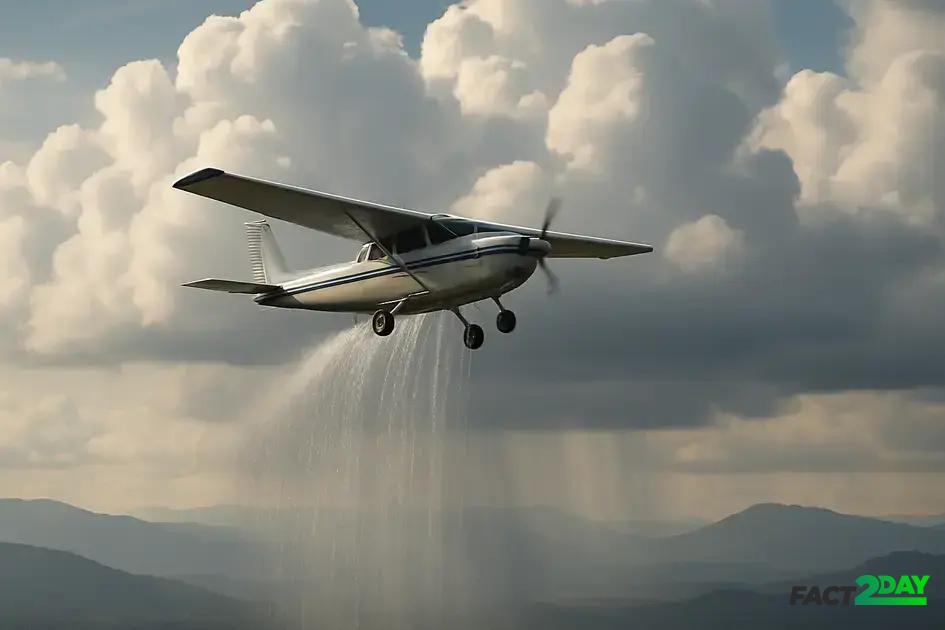
Cloud seeding is a weather modification technique that disperses substances like silver iodide into clouds to stimulate precipitation, enhancing rainfall under suitable atmospheric conditions while facing challenges in effectiveness, ethics, and environmental impact.
Cloud seeding often feels like a simple answer to complex weather problems. But have you ever wondered how it actually tries to coax rain from the sky, and what questions it raises along the way? Let’s explore this intriguing science together.
what is cloud seeding and how it works
Cloud seeding is a weather modification technique designed to encourage precipitation from clouds. It works by introducing substances such as silver iodide or sodium chloride into the atmosphere, which act as cloud condensation or ice nuclei. These particles provide a surface for water vapor to condense or freeze around, helping clouds to produce raindrops or snowflakes more readily.
The process typically involves aircraft or ground-based generators dispersing these agents into suitable clouds. When seeded, these clouds can produce enhanced rainfall, often targeted to alleviate drought conditions or increase water supplies.
How cloud seeding triggers precipitation
Natural clouds contain tiny water droplets that might not be heavy enough to fall as rain. By adding seeding materials, cloud seeding increases the number of droplets or ice crystals, causing them to combine and grow larger. Once these droplets become heavy enough, gravity pulls them down as rain.
There are two main types of cloud seeding: cold cloud seeding, which targets clouds with temperatures below freezing to promote ice formation, and warm cloud seeding, which encourages droplet growth in warmer clouds. Understanding atmospheric conditions is critical to applying the method effectively.
Despite its potential, cloud seeding’s success depends on existing moisture and cloud presence. It cannot create rain from clear skies but enhances natural rainfall processes.
historical developments in cloud seeding
The history of cloud seeding dates back to the late 1940s, when scientists first explored ways to modify weather in a controlled manner. Vincent Schaefer is credited with performing the first successful cloud seeding experiment in 1946, using dry ice to trigger snowfall from a cloud. This breakthrough demonstrated the potential to influence precipitation artificially.
Following this early success, researcher Bernard Vonnegut discovered silver iodide’s ice-nucleating properties in 1947, which became a primary material for cloud seeding due to its chemical similarity to ice. Over the 1950s and 1960s, many countries, especially the United States, China, and the Soviet Union, developed cloud seeding programs to alleviate drought, increase rainfall, or reduce hail damage.
Significant projects and expansion
In the 1960s, large-scale projects like the U.S. Bureau of Reclamation’s efforts in the western states sought to boost water supplies for agriculture through cloud seeding. China began extensive efforts in regions prone to drought, making cloud seeding a strategic tool for water management.
Government interest grew as the technology promised benefits, but results varied. Nevertheless, cloud seeding expanded globally, with research continuing to improve techniques and assess environmental impacts.
The historical development of cloud seeding highlights the evolving understanding of weather modification, from simple beginnings to complex, technology-driven projects with wide-reaching goals.
methods and materials used in cloud seeding
Cloud seeding relies on specific methods and materials to encourage precipitation. One of the most common methods is the airborne release, where aircraft fly through clouds and disperse seeding agents directly into the cloud system. Ground-based generators are another approach, releasing tiny particles into the atmosphere that rise into clouds with the help of wind.
The primary materials used for cloud seeding include silver iodide, potassium iodide, and solid carbon dioxide (dry ice). Silver iodide is favored for its crystal structure, which closely resembles ice and efficiently causes water vapor to freeze and form ice crystals under cold cloud conditions.
How seeding materials function
Dry ice works by cooling the air in clouds, making it easier for water vapor to condense into ice crystals. Salt particles like sodium chloride are often used in warm cloud seeding to enhance the formation of water droplets. These materials act as nuclei around which moisture collects and grows into raindrops or snowflakes.
The choice of method and material depends on multiple factors, including cloud temperature, humidity, and the desired outcome. Weather experts carefully analyze these aspects before deciding the best approach to achieve effective cloud seeding.
Monitoring equipment such as radar and satellites is often used alongside seeding operations to track cloud behavior and measure results, ensuring the process is targeted and efficient.
scientific evidence supporting cloud seeding effectiveness
Scientific studies on cloud seeding effectiveness have produced mixed but insightful results. Research shows that cloud seeding can enhance precipitation by about 10% to 15% under optimal conditions, although precise outcomes vary by location and weather patterns.
Controlled experiments and statistical analyses provide evidence that cloud seeding increases rainfall or snowfall when clouds are naturally present. For instance, randomized cloud seeding trials in regions such as the western United States and Australia have demonstrated measurable increases in precipitation compared to unseeded clouds.
Challenges in measuring effectiveness
One challenge is isolating the effects of seeding from natural weather variability. Weather systems are complex and constantly changing, making it difficult to attribute rainfall increases solely to cloud seeding.
Advanced tools like Doppler radar, satellite imagery, and computer modeling help scientists track seeded clouds and predict which ones will respond to cloud seeding. These technologies improve understanding but results still differ depending on many environmental factors.
Overall, while cloud seeding shows promise, ongoing research is essential to fully understand its true capabilities and limitations.
environmental impacts of cloud seeding
Cloud seeding can impact the environment in various ways, both positive and potentially negative. One major benefit is its ability to increase rainfall, which can support agriculture, refill reservoirs, and reduce drought effects. However, it is important to understand the environmental risks involved.
The materials used in cloud seeding, such as silver iodide, are introduced into the atmosphere in small amounts. Studies show that these particles tend to settle on the ground and water sources, but usually at concentrations considered low and not harmful to ecosystems or human health. Still, long-term environmental effects require more research.
Potential ecological consequences
Cloud seeding could potentially alter natural weather patterns, affecting local and regional ecosystems. For example, uneven rain distribution might lead to flooding in some areas while others remain dry. This disruption could impact plant growth, wildlife habitats, and soil conditions.
Water quality is also monitored carefully in cloud seeding projects to ensure that introduced materials do not accumulate to harmful levels. Responsible regulation and ongoing scientific evaluation help minimize risks.
In summary, cloud seeding offers environmental benefits but also demands careful consideration of its effects. Ongoing studies strive to balance its advantages with the need to protect ecosystems and public health.
ethical debates surrounding weather modification
The ethics of weather modification, especially cloud seeding, involve several important debates. One key concern is the idea of “playing God” with natural weather patterns, which raises questions about human control over the environment and unintended consequences.
Another ethical issue is fairness. Cloud seeding in one area might increase rainfall locally but could reduce precipitation downwind, potentially harming neighboring regions. This distributional effect creates conflicts between different communities or countries over shared weather resources.
Consent and transparency
There are concerns about whether affected populations are properly informed and consulted before cloud seeding projects are implemented. Transparency around the goals, methods, and risks is essential to build public trust and address fears about manipulation.
Environmental justice also plays a role, as decisions about where and when to seed clouds can affect vulnerable ecosystems and disadvantaged communities differently. Ensuring equitable access to water benefits and minimizing harm are critical considerations.
Finally, the lack of comprehensive international regulation on weather modification leaves ethical gaps. Debates continue on how to establish agreements that balance innovation with responsibility.
case studies of cloud seeding projects worldwide
Cloud seeding projects have been carried out worldwide with varying goals and outcomes. One notable case is China’s extensive cloud seeding program, aimed at increasing rainfall in drought-prone regions. Since the 1950s, China has used cloud seeding to support agriculture and supply water to major cities.
In the United States, cloud seeding has been applied in western states like Colorado and California to boost snowpack and water reservoirs. The Colorado River Basin project uses cloud seeding to augment water supplies crucial for millions of people.
International efforts and lessons learned
Australia has also conducted cloud seeding trials, especially in dry inland areas, to improve rainfall and reduce the impact of droughts on farming communities. These projects highlight the importance of careful planning, monitoring, and adapting techniques based on local weather conditions.
In the United Arab Emirates, cloud seeding is part of a national strategy to increase water availability, given the arid climate. By combining cloud seeding with advanced meteorological studies, the UAE seeks to maximize rainfall in targeted zones.
These case studies demonstrate that cloud seeding can be a useful tool for water management when integrated with scientific research and regional cooperation.
technological advances improving cloud seeding
Technological advances have greatly improved the precision and effectiveness of cloud seeding. Modern aircraft equipped with advanced sensors and GPS systems can target specific cloud formations with higher accuracy. This precision ensures that seeding agents are released at the most effective spots in the clouds.
Drones are increasingly used to perform cloud seeding in areas that are difficult for traditional planes to reach. These unmanned vehicles can fly in harsh conditions and collect detailed data about the clouds.
Innovations in seeding materials and monitoring
Research has developed new seeding agents that may be more efficient or environmentally friendly than traditional silver iodide. Nanotechnology is also being explored to design particles that optimize droplet formation.
Satellite imaging and radar technology enable real-time monitoring of clouds and precipitation patterns. These tools help scientists evaluate the success of cloud seeding efforts quickly and adjust operations as needed.
Data analytics and machine learning play growing roles in predicting weather and optimizing cloud seeding timing. By analyzing vast amounts of meteorological data, these technologies provide valuable insights that improve decision-making.
Overall, technological progress makes cloud seeding more targeted, efficient, and adaptable to changing environmental conditions.
climate change and the role of cloud seeding
Climate change has led to altered weather patterns, causing more frequent droughts and water shortages in many parts of the world. In this context, cloud seeding has gained attention as a potential tool to enhance rainfall and help mitigate these effects.
Cloud seeding can support water management by increasing precipitation during dry periods, offering some relief to stressed ecosystems and agricultural lands. However, it is not a standalone solution for climate challenges.
Limitations and concerns
The effectiveness of cloud seeding depends heavily on the presence of suitable clouds and atmospheric conditions, which are themselves affected by climate change. As weather becomes more unpredictable, planning cloud seeding operations becomes more complex.
Moreover, cloud seeding does not reduce greenhouse gas emissions or address the root causes of climate change. It is important to view it as a complementary strategy rather than a replacement for emission reduction and sustainable water practices.
Ethical and environmental considerations must also guide the use of cloud seeding amid climate change. Understanding its impacts on local weather patterns and communities remains essential to ensure responsible deployment.
Overall, cloud seeding offers a promising but limited role in adapting to climate change’s effects on water resources, highlighting the need for integrated approaches.
future prospects and challenges in cloud seeding
The future of cloud seeding holds many prospects but also faces several challenges. Advances in technology and data analysis are expected to improve the precision and reliability of cloud seeding, making it a more effective tool for managing water resources.
Emerging innovations like AI-driven weather prediction and improved seeding materials may increase success rates and reduce environmental risks. Additionally, expanding the use of drones offers the potential to access difficult or dangerous areas.
Ongoing challenges
Despite progress, cloud seeding still depends heavily on suitable weather conditions, which limits its effectiveness. Uncertainty in measuring exact outcomes also complicates assessing its real impact.
Regulatory and ethical issues remain significant hurdles. There is a need for clear international guidelines to govern weather modification efforts and ensure fair use without harming others.
Furthermore, public perception and acceptance of cloud seeding must improve through transparency and education. Trust is key to wider adoption of such interventions.
Balancing innovation with caution will determine cloud seeding’s role in future water and climate strategies. Its potential is promising but requires continued research and responsible management.
Looking Ahead: The Promise and Challenges of Cloud Seeding
Cloud seeding presents exciting possibilities for addressing water scarcity and managing weather impacts. With advancing technology and research, it can become a more effective tool to support agriculture, communities, and ecosystems.
However, cloud seeding is not without its limits and concerns. It requires careful planning, clear regulations, and consideration of ethical and environmental factors to be used responsibly.
As the world faces climate change and growing water demands, cloud seeding offers a promising, though partial, solution. Continued innovation and transparency will help unlock its full potential while minimizing risks.
In the end, balancing science with caution and cooperation will pave the way for cloud seeding’s role in a sustainable future.