Animals That Recognize Themselves in a Mirror
Mirror test animals show a fascinating ability to recognize themselves, revealing surprising insights into animal cognition and self-awareness.
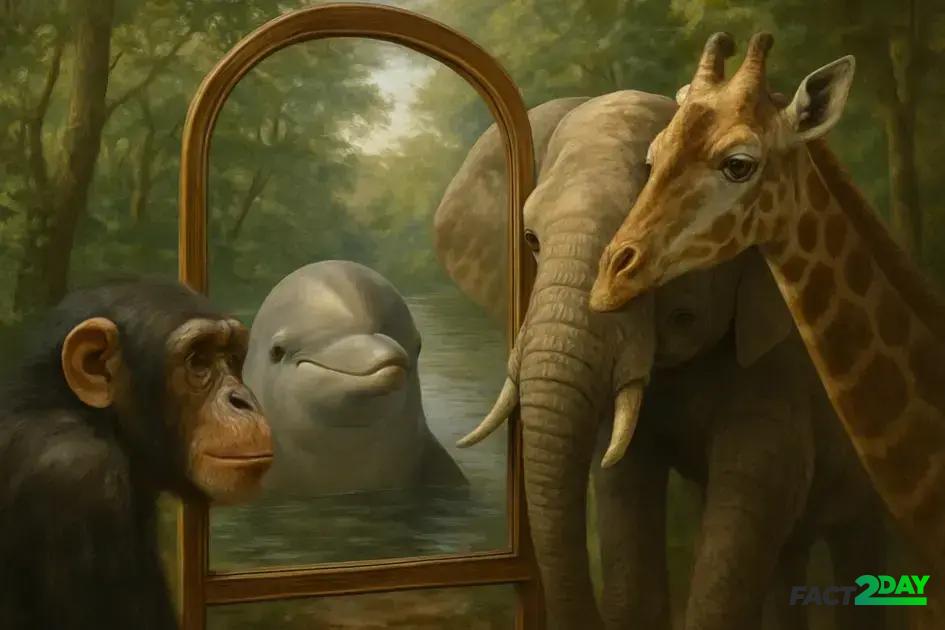
Mirror test animals are species that demonstrate self-recognition by using mirrors to identify marks on their bodies, indicating advanced cognitive abilities and self-awareness.
Mirror test animals reveal a curious ability to see themselves beyond reflection. Have you ever wondered which creatures recognize their own image and what this says about their minds? Let’s explore this intriguing behavior together.
understanding the mirror test and its origins
The mirror test, also known as the mark test, is a behavioral experiment developed in the 1970s by psychologist Gordon Gallup Jr. It was designed to assess whether an animal possesses the ability to recognize itself in a mirror, which is considered a sign of self-awareness.
During the test, an animal is marked with a spot that it cannot see without the aid of a mirror. Researchers observe whether the animal uses the mirror to investigate and possibly touch the mark, indicating self-recognition rather than perceiving the reflection as another individual.
How the test works
The key is to determine if the animal understands the reflection corresponds to its own body. Animals that pass the mirror test typically display behaviors such as looking behind the mirror, using it to inspect parts of their body, or touching the mark directly.
The origins and significance
The mirror test was inspired by studies on human children and primates, aiming to explore cognitive abilities beyond simple perception. It challenges us to consider the complexity of animal minds and their capacity for self-recognition and consciousness.
While originally focused on primates, the test has since been applied to various species to explore the broader scope of intelligence and awareness in the animal kingdom.
species known to pass the mirror test
Several animal species have demonstrated the ability to pass the mirror test, indicating a level of self-awareness once thought unique to humans. Among the most notable are great apes like chimpanzees, bonobos, and orangutans, which often show clear signs of recognizing themselves in their reflections.
Other animals, such as bottlenose dolphins and Asian elephants, have also passed the test by responding to marks on their bodies visible only via a mirror. These species use mirrors to explore parts of their bodies they couldn’t see otherwise, displaying complex cognitive skills.
Additional species showing self-recognition
Some magpies have been observed passing a modified version of the mirror test, touching colored marks on their feathers when they notice their reflection. This challenges earlier assumptions that self-recognition was confined to mammals.
Research continues to explore other species, but so far, the ability to recognize oneself in a mirror remains rare and tied to advanced brain functions.
how animals demonstrate self-recognition
Animals that recognize themselves in a mirror often display unique behaviors that indicate self-awareness. These behaviors include touching or investigating marks on their bodies that can only be seen with the help of a mirror. Observing these actions helps scientists confirm that an animal understands the reflection is of itself, not another creature.
Self-directed behaviors are key indicators. For instance, a chimpanzee might use the mirror to groom parts of its body it can’t see otherwise. Dolphins have been known to perform unusual body movements or bubble play while looking at their reflection, suggesting curiosity and recognition.
Testing with marks
To confirm self-recognition, researchers place a mark on an animal’s body in a spot only visible through a mirror. Animals passing the test will touch or try to remove the mark after seeing it in the mirror. This response is considered strong evidence of self-awareness across species.
Other behaviors include looking behind the mirror to find the “other” animal or using the reflection to explore objects on themselves. These actions show that the animal has a mental image of its body, a remarkable cognitive ability.
the role of intelligence in mirror self-awareness
The ability of animals to recognize themselves in a mirror is closely linked to their intelligence. Mirror self-awareness suggests complex cognitive processes such as memory, problem solving, and an understanding of the self as separate from others.
Intelligent animals often show curiosity and exploratory behavior with mirrors. For example, great apes not only notice marks on their bodies but also use mirrors to inspect hidden parts, demonstrating flexible thinking and planning skills.
Brain structures and cognition
Scientists believe that specific brain structures, like the prefrontal cortex in primates, play a crucial role in self-recognition. This area is responsible for higher-order thinking, self-control, and social cognition, all key for mirror test success.
Other animals that pass the mirror test, such as dolphins and elephants, also have large brains with neural complexity linked to intelligence. This suggests that mirror self-awareness reflects advanced mental abilities, not just visual perception.
Understanding this link helps researchers explore animal intelligence and challenges old ideas about human uniqueness.
implications for animal cognition and ethics
The discovery that some animals can recognize themselves in mirrors has profound implications for how we understand animal cognition and ethics. It suggests that these animals possess a sense of self-awareness, which is a crucial component of consciousness and complex mental life.
Impact on cognition studies
This insight pushes scientists to reconsider the mental capacities of animals, recognizing that intelligence and self-awareness are not solely human traits. It broadens our understanding of animal minds and encourages more compassionate and informed approaches to animal behavior research.
Ethical considerations
Recognizing self-awareness in animals raises important ethical questions about how we treat them. It challenges practices in captivity, experimentation, and habitat destruction, emphasizing the need for better welfare standards and respect for animal rights.
Animals passing the mirror test often show emotions and social behaviors that warrant empathy and protection. This has driven changes in laws and public attitudes toward certain species, promoting conservation and humane treatment.
Ultimately, these findings inspire a deeper connection between humans and animals, prompting us to rethink our responsibilities toward other living beings on the planet.
challenges and debates around the mirror test
The mirror test has been a valuable tool for studying self-awareness but is not without challenges and debates. One major concern is whether the test fairly measures self-recognition across different species. Some animals may rely more on senses other than sight, which can affect their performance.
Limitations of the mirror test
Not all animals respond to mirrors in the same way. Some may ignore the reflection or show aggression, leading to questions about whether failure means lack of self-awareness or simply unfamiliarity with mirrors.
Researchers debate whether the test captures the full complexity of animal consciousness, as it mainly assesses visual self-recognition. Other forms of self-awareness might exist that the mirror test cannot detect.
Ethical and methodological issues
There are also concerns about how the test is conducted, including the placement of marks and the animal’s environment. Stress or fear during testing may influence behavior, complicating interpretations.
Despite these debates, the mirror test remains a useful starting point for understanding animal cognition and continues to inspire new methods to explore self-awareness in diverse species.
Understanding animals and self-recognition
The mirror test has opened a window into the minds of animals, showing us that some can recognize themselves and have a sense of self. This discovery challenges what we thought about animal intelligence and emotions.
While the test has limitations, it encourages us to think more deeply about how animals perceive the world and their place within it. Recognizing self-awareness in animals also raises important ethical questions about how we treat them.
As science advances, we continue to learn more about animal cognition and consciousness, helping us create a more compassionate world for all creatures.