Ciclos Infinitos: Economia Circular Empresas
How Circular Economy Business Models Reduce Waste, Lower Costs, and Create Sustainable Competitive Advantage
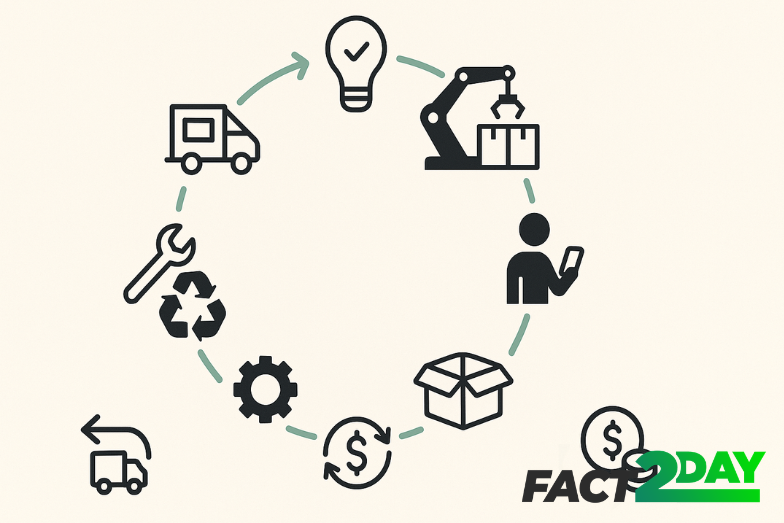
Have you heard of Circular Economy for Business? It’s a concept that’s transforming how companies think about their processes to reduce waste and create sustainable value. Want to know how to apply these infinite cycles to your business? Let’s explore this revolution together!
What Is the Circular Economy and Why It Matters for Businesses
Economy circular is a sustainable model focused on minimizing waste and maximizing resource use by rethinking production and consumption cycles. Unlike the traditional linear model, which follows “take, make, dispose,” the circular economy aims to create closed loops where materials are reused, recycled, or regenerated indefinitely.
For businesses, adopting an economy circular approach is crucial because it reduces costs by lowering resource dependency and waste management expenses. It also creates competitive advantages through innovation, opens new market opportunities, and aligns companies with growing consumer demand for sustainable practices.
Moreover, economy circular helps companies comply with environmental regulations and corporate social responsibility standards, reinforcing their reputation and stakeholder trust. By integrating circular principles, businesses foster resilience against resource scarcity and contribute to a greener economy.
Key Elements of Circular Economy for Businesses
Businesses must focus on designing products for durability, reparability, and recyclability. Emphasizing sharing platforms, product life extension, and material recovery enables cycles that reduce environmental impact while promoting economic growth.
Core Circular Economy Principles in Companies
Businesses adopting the circular economy focus on several key principles that guide sustainable practices and long-term value creation. One of the main principles is designing out waste, which means products and processes are planned to eliminate waste from the start. Materials are chosen for their ability to be reused, repaired, or recycled easily.
Another fundamental principle is to keep products and materials in use as long as possible. This involves strategies like refurbishing, remanufacturing, and sharing services that extend product life cycles, reducing the need for new resource extraction.
Regenerate natural systems
The circular economy encourages businesses to restore and regenerate ecosystems. This can include using renewable energy sources, returning valuable nutrients to the soil, and supporting biodiversity through sustainable practices.
Collaboration and innovation are also vital. Companies must work with suppliers, customers, and even competitors to create new business models and technologies that support circular practices. Transparency and traceability through the supply chain help ensure materials are responsibly sourced and recovered.
Finally, adopting a systemic approach is important. Businesses must understand the broader economic and environmental impacts of their activities and design solutions that create positive cycles instead of linear consumption. This mind-shift helps build resilience and long-term success.
Economic and Environmental Benefits of the Circular Economy
The circular economy offers numerous economic and environmental benefits for companies and society. Economically, it reduces costs by lowering resource consumption and waste disposal expenses. Companies save money by reusing materials and improving operational efficiency.
Environmentally, it helps reduce pollution and greenhouse gas emissions by minimizing waste and encouraging renewable resource use. This contributes to mitigating climate change and preserving ecosystems.
Boosting innovation and competitiveness
Economy circular drives innovation by encouraging new business models such as product-as-a-service and sharing platforms. This can open up new markets and create competitive advantages for early adopters.
Job creation is another benefit, as recycling, repair, and remanufacturing require skilled labor and promote local economies. Socially, adopting circular practices aligns companies with consumer demand for ethical and sustainable products.
Overall, the circular economy fosters a more resilient economic system that supports growth while protecting natural resources.
How to Implement the Circular Economy in Your Business Model
Implementing a circular economy in your business model requires a strategic shift focused on sustainability and resource efficiency. Begin by analyzing your current value chain to identify waste points and opportunities for reuse or recycling. This insight helps pinpoint where circular practices can be most effective.
Next, redesign products and services for durability, easy repair, and recyclability. Consider adopting product-as-a-service models that encourage longevity and sharing rather than ownership. This approach reduces resource consumption and creates ongoing customer relationships.
Building strong partnerships
Collaborate with suppliers and customers to establish take-back programs and closed-loop systems. Transparent communication about materials and processes fosters trust and innovation.
Invest in technology that supports circular processes such as resource tracking, waste management, and remanufacturing. Training employees to adopt circular principles in operations is vital for success.
Lastly, measure the impact of circular initiatives with clear metrics like resource savings, waste reduction, and financial performance to continuously improve and demonstrate value.
Real Business Examples of Successful Circular Economy Adoption
Many businesses worldwide have successfully embraced the circular economy, showcasing its potential to transform industries. Patagonia, for example, has a robust program encouraging customers to repair, reuse, and recycle outdoor clothing. Their Worn Wear initiative extends product life and reduces waste.
Interface, a global carpet manufacturer, redesigned its production process to use recycled materials, reducing carbon footprint and waste significantly. Their approach includes take-back programs and designing for disassembly.
Innovative business models
Loop offers consumer goods in reusable packaging, collected, cleaned, and refilled, promoting a circular supply chain. Similarly, Fairphone designs modular smartphones for easy repair and upgrade, minimizing electronic waste.
These examples highlight how companies from various sectors apply circular principles to reduce environmental impact, improve customer loyalty, and drive economic benefits. Their success stories inspire others to innovate and transition towards sustainable business models.
The Role of Technological Innovation in the Circular Economy
Technological innovation plays a critical role in advancing the circular economy by enabling new methods of resource management and product lifecycle extension. Technologies such as Internet of Things (IoT), artificial intelligence, and blockchain help track materials, optimize supply chains, and enhance transparency.
Smart resource management
The use of IoT sensors allows businesses to monitor the condition and usage of products in real time. This data enables predictive maintenance and efficient reuse, reducing waste and extending product life.
Artificial intelligence supports better decision-making by analyzing large datasets to identify opportunities for recycling and remanufacturing. AI algorithms can optimize production processes to minimize material use and energy consumption.
Blockchain for transparency
Blockchain technology creates secure and transparent records of material flows, which is essential for building trust in circular supply chains. It ensures that recycled materials meet quality standards and helps verify sustainable sourcing.
Innovations in 3D printing also contribute by allowing on-demand production and easy repair parts, reducing inventory waste and transportation emissions.
Together, these technological advances empower businesses to adopt more efficient and sustainable circular economy practices that benefit both the environment and the bottom line.
Common Challenges When Adopting the Circular Economy
Adopting a circular economy poses several common challenges for businesses. One major hurdle is changing established mindsets. Many organizations are used to linear processes, and shifting to circular models requires new ways of thinking and operation.
Another difficulty is the initial investment cost. Transitioning to sustainable materials, redesigning products, and implementing new supply chains can demand significant financial resources, which may deter some companies.
Supply chain complexity
Circular economy requires close collaboration with suppliers and customers. Managing these relationships and ensuring material traceability can be complicated and time-consuming.
Regulatory uncertainty is also a barrier, as policies related to circular practices vary by region and continue to evolve. Companies must stay informed and adaptable to comply with changing regulations.
Additionally, measuring the impact of circular initiatives can be challenging due to lack of standardized metrics. This makes it harder to justify investments and demonstrate value to stakeholders.
Overcoming these challenges requires strong leadership, innovation, and a commitment to sustainable development across all levels of the organization.
Reverse Logistics and Material Reuse Explained
Reverse logistics is a fundamental process in the circular economy that focuses on the return of products and materials from consumers back to manufacturers or recycling centers. It helps extend the life cycle of products by enabling reuse, refurbishment, and recycling.
Effective reverse logistics involves coordinating collection, transportation, and processing activities to minimize costs and environmental impact. Customers play a key role through take-back programs and drop-off points.
Material recovery and reuse
After collection, materials undergo sorting and processing to recover valuable components. These materials can then be reintegrated into production chains, reducing the need for virgin resources.
Technologies such as automated sorting systems and chemical recycling improve efficiency and material quality, making reuse more viable. Companies adopting these practices reduce waste and energy consumption significantly.
Reverse logistics also supports compliance with environmental regulations and enhances corporate responsibility by promoting sustainable product life cycles.
How the Circular Economy Reduces Operational Costs
Implementing a circular economy approach can significantly reduce operational costs for businesses. By focusing on resource efficiency, companies decrease the need for raw materials, which often represent a large portion of expenses.
Waste reduction and material reuse
Reusing materials within the production process lowers procurement costs and waste disposal fees. This approach also minimizes downtime associated with sourcing new materials.
Energy efficiency is another key factor. Circular practices often involve using renewable energy sources and optimizing processes to reduce consumption, leading to lower utility bills.
Maintenance and product life extension also play critical roles. Designing products for durability and easy repair reduces replacement costs and inventory needs.
Additionally, circular supply chains promote local sourcing and shorter transport routes, cutting logistics expenses and associated emissions.
Overall, the circular economy helps turn sustainability into a driver of financial performance, making businesses leaner and more competitive.
How the Circular Economy Shapes Product Design
The circular economy deeply influences product design by encouraging materials and processes that support reuse, repair, and recycling. Designers focus on creating products that are durable and easy to disassemble, making it simpler to recover valuable components at the end of a product’s life.
Design for longevity and modularity
Products are crafted to last longer through higher quality materials and construction techniques. Modular designs enable consumers to replace or upgrade parts without discarding the whole item.
Designers also prioritize using recyclable and renewable materials to minimize environmental impact. This reduces waste and dependency on virgin resources.
Ease of repair and maintenance is another key aspect. Clear guidelines and accessible spare parts empower users and repair services to extend product lifespan.
By integrating these principles early, companies not only reduce costs but also meet growing consumer demand for sustainable products, fostering a competitive advantage.
Policies and Incentives That Support the Circular Economy
Government policies and incentives play a vital role in promoting the adoption of the circular economy. Many countries offer tax benefits, subsidies, or grants to businesses that invest in sustainable practices and resource efficiency.
Regulatory frameworks
Environmental regulations often set standards for waste reduction, recycling rates, and the use of recycled materials. Compliance with these laws encourages companies to develop circular strategies.
Public procurement policies can favor products and services from circular economy models, creating market demand and encouraging innovation.
Financial incentives like low-interest loans and green bonds provide capital for circular projects. These help businesses overcome initial investment barriers.
Collaborations between governments, industry, and research institutions further drive development of circular technologies and business models.
Overall, supportive policies and incentives create a favorable environment where circular economy can thrive, benefiting both the economy and the planet.
Sustainability vs Circular Economy: Differences and Synergies
Sustainability and the circular economy are closely related but have distinct focuses. Sustainability is a broad concept aimed at meeting present needs without compromising the ability of future generations to meet theirs. It encompasses environmental, social, and economic dimensions.
The circular economy specifically targets resource efficiency by designing systems where products, materials, and resources are kept in use for as long as possible through recycling, reuse, and regeneration.
Key differences
Sustainability covers wider goals like social equity and economic development, while circular economy mainly concentrates on transforming production and consumption patterns. Sustainability can include practices outside of circular principles, such as conservation and renewable energy use.
Synergies between the two exist because circular economy strategies directly support sustainability goals by reducing waste, lowering emissions, and conserving resources.
Adopting circular practices helps companies achieve sustainability targets more efficiently and fosters innovation in product design, supply chains, and business models.
When integrated, these approaches create resilient, responsible businesses that contribute positively to the environment and society.
Future Circular Economy Trends Across Industries
Future trends in the circular economy point to widespread adoption across various industries as businesses seek sustainability and resilience. One major trend is the integration of digital technologies like AI, IoT, and blockchain to enhance tracking, transparency, and efficiency in resource management.
Increased focus on renewable materials
Many sectors are moving towards using bio-based and recyclable materials to replace finite resources, reducing environmental impact and dependence on non-renewables.
Another growing trend is the rise of product-as-a-service models, where customers pay for usage rather than ownership. This promotes sharing and extends product life cycles.
Collaboration and partnerships among businesses, governments, and consumers are becoming essential to build circular value chains that cross traditional industry borders.
The circular economy is also expanding in sectors like construction, fashion, and electronics, spurring innovation in design, manufacturing, and end-of-life management.
These trends highlight how circular principles are shaping a more sustainable and competitive future across different industries.
How to Measure Circular Economy Success in Your Business
Measuring the success of the circular economy in your business requires tracking various key performance indicators (KPIs) that reflect resource efficiency, waste reduction, and economic value.
Material flow analysis
Monitor the amount of raw materials used, recycled, and waste generated. This helps identify how efficiently resources are managed and circular processes implemented.
Carbon footprint and energy consumption are important environmental metrics to assess the impact of circular initiatives on reducing emissions and optimizing energy use.
Financial performance indicators such as cost savings from waste reduction, revenue from refurbished products, and investment returns provide insight into economic benefits.
Customer and stakeholder engagement metrics, including satisfaction with sustainable practices and participation in take-back programs, indicate social acceptance and market impact.
Regularly analyzing these metrics using reliable data and benchmarking against industry standards ensures continual improvement and demonstrates the value of circular economy efforts.
Understanding and Measuring Circular Economy Success
Measuring your business’s progress in the circular economy is key to making meaningful improvements. Tracking resource use, waste reduction, and financial gains helps you see what works best.
By focusing on clear metrics and listening to customers, your company can grow more sustainable and competitive. Regular reviews keep your efforts on track and show the real value of circular practices.
Embracing these measurement tools ensures your business not only helps the environment but also gains economic benefits for a stronger future.