Echoes of Giants: Unraveling the Engineering Secrets of Ancient Megastructures
Explore the fascinating world of Ancient Megastructures Engineering and uncover the mysteries behind colossal constructions that defy time.
Exoplanets are planets orbiting stars beyond our solar system, discovered through techniques like transit photometry, revealing the vast diversity of worlds and expanding our understanding of the universe.
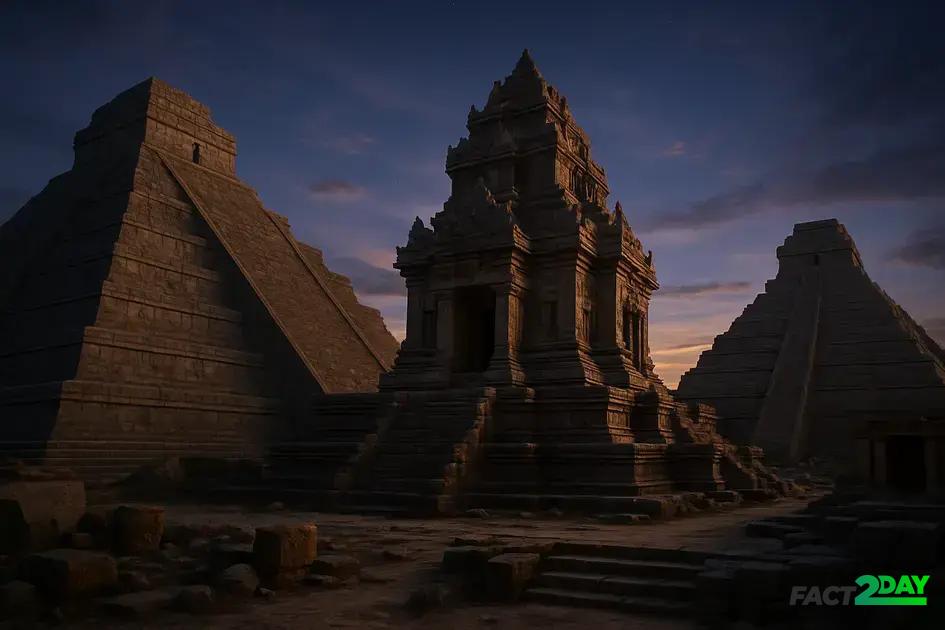
Ancient Megastructures Engineering invites us to journey back to monumental creations that continue to baffle and inspire. Ever wondered how ancient civilizations built such colossal structures with limited technology? Let’s explore their secrets together.
Understanding ancient megastructures and their cultural significance
Ancient megastructures stand as testaments to the ingenuity and cultural values of early civilizations. These massive constructions were more than just architectural feats; they held deep cultural significance, often linked to religion, power, or societal organization. Understanding ancient megastructures requires exploring their roles as ceremonial centers, symbols of divine authority, or tools for astronomical observation.
For example, the Great Pyramids of Egypt were built as tombs, yet they also demonstrated the pharaoh’s connection to the gods and the afterlife. Similarly, Stonehenge served as a ceremonial site aligned with celestial events, indicating advanced knowledge of astronomy. These structures embodied the beliefs and priorities of their people, uniting communities through shared rituals and traditions.
In many cases, these megastructures functioned to legitimize rulers or connect humans with spiritual realms. Their sheer scale and complexity reveal a society’s resources, organization, and technological skill, while offering insights into the cultural narratives that shaped their world.
Exploring the materials and techniques used in ancient engineering
Ancient engineers used a variety of materials that were locally available but incredibly durable, such as stone, mud bricks, wood, and metals like bronze and copper. These materials were carefully chosen for their strength and longevity to withstand the test of time. Exploring the materials and techniques used in ancient engineering reveals clever methods that allowed these civilizations to build massive structures without modern machinery.
Stone cutting and shaping were fundamental techniques. Ancient builders used copper and bronze tools to carve blocks precisely, then transported and assembled them with extraordinary skill. Techniques like mortise and tenon joints, which locked stones together, improved stability without mortar.
Construction techniques
Many ancient projects involved complex planning. For example, ramps, sledges, and levers helped move heavy blocks. Some civilizations, like the Romans, mastered the use of concrete, allowing them to create arches, domes, and aqueducts that still stand today.
Water management was another important technique. Systems of canals and drainage kept sites dry and preserved the integrity of foundations. These methods show the combination of practical knowledge and ingenuity underpinning ancient engineering.
The role of astronomy and mathematics in ancient construction
The role of astronomy and mathematics in ancient construction was crucial for aligning structures with celestial events and ensuring precise measurements. Ancient engineers used mathematical concepts to plan layouts, calculate angles, and create harmonious proportions. Astronomy helped them orient buildings to the sun, moon, or stars, often reflecting religious or agricultural calendars.
Mathematical precision in design
Many ancient structures, like the pyramids and stone circles, showcase an understanding of geometry and measurement. Builders applied ratios and symmetry, which helped create stable and aesthetically balanced megastructures.
Astronomical alignment
Sites like Stonehenge align with solstices, marking important seasonal changes. The Mayan and Egyptian civilizations incorporated star positions to track time and plan ceremonies, connecting the cosmos with earthly architecture.
This interplay of astronomy and mathematics allowed ancient builders to create monuments that were functional, symbolic, and closely linked to the natural world and their cultural beliefs.
Major ancient megastructures around the world and their features
Major ancient megastructures around the world reveal the diverse architectural styles and engineering feats of past civilizations. These structures vary in purpose, design, and materials, yet all share impressive scale and longevity. Exploring their features helps us appreciate the creativity and technical skills of ancient builders.
The Great Pyramid of Giza
Located in Egypt, this pyramid is a masterpiece of precision and scale, originally built as a tomb for Pharaoh Khufu. It features perfectly aligned massive limestone blocks and complex internal passageways.
Stonehenge
This prehistoric monument in England is known for its massive stone circle, carefully positioned to align with the solstices, reflecting advanced astronomical knowledge.
Machu Picchu
High in the Andes of Peru, Machu Picchu combines stone terraces, temples, and palaces, designed to blend seamlessly with the natural landscape and withstand earthquakes.
The Great Wall of China
Stretching thousands of miles, the wall was built using stone, brick, and earth to protect against invasions, showcasing durability and extensive planning.
These megastructures stand as testaments to the engineering genius of ancient peoples, highlighting innovation adapted to their environment and cultural needs.
Challenges faced by ancient engineers and how they overcame them
Ancient engineers faced numerous challenges, from transporting massive materials to ensuring structural stability without modern tools. Overcoming these obstacles required innovative thinking and resourcefulness. They had to design systems to move heavy stones, sometimes weighing several tons, using ramps, sledges, and rollers.
Labor organization and technology
Coordinating large workforces was essential. Ancient builders developed hierarchical labor systems and used simple machines like pulleys and levers to reduce physical strain and increase efficiency.
Precision and planning
Without advanced measuring devices, engineers used geometry, sighting rods, and water levels to maintain accurate alignments and elevations. Planning also included adapting designs to local geography and climate.
Material limitations pushed engineers to innovate with what was available, sometimes combining materials like wood and stone for durability. Their ability to solve these problems speaks to their deep understanding of physics, teamwork, and creativity.
Theories about the purpose and symbolism of megastructures
Many ancient megastructures are shrouded in mystery, leading to various theories about their purpose and symbolism. Scholars believe these towering constructions were more than mere buildings; they likely held spiritual, political, or astronomical significance.
Religious and spiritual meanings
Many megastructures served as temples or tombs, symbolizing connections to gods or the afterlife. For instance, pyramids were often seen as stairways to heaven, reflecting beliefs about immortality.
Political power and social order
Building massive structures demonstrated a leader’s power and the society’s organization, reinforcing social hierarchies. The ability to mobilize resources and labor showed strength and stability.
Astronomical and calendrical purposes
Some megastructures align with celestial events, acting as ancient observatories or calendars. This helped societies track seasons for agriculture and rituals.
These theories highlight the deep cultural and symbolic layers embedded in megastructures, making them key to understanding ancient civilizations’ worldviews.
Modern technology’s role in uncovering ancient engineering secrets
Modern technology has revolutionized the way we uncover and understand ancient engineering secrets. Tools like 3D scanning, ground-penetrating radar, and satellite imaging allow archaeologists to explore and analyze megastructures without invasive digging. These technologies provide detailed visuals and data that reveal hidden chambers, construction techniques, and structural details previously impossible to study.
3D scanning and modeling
High-resolution 3D scans create precise digital models of ancient structures. These models help researchers study architectural features, simulate structural stresses, and plan preservation efforts.
Remote sensing technologies
Ground-penetrating radar and LiDAR can detect subsurface structures, map landscapes, and uncover buried ruins. Satellite imagery offers a broad perspective, identifying patterns and alignments across vast areas.
By combining these technologies, experts can piece together the engineering mysteries of ancient megastructures with greater accuracy and less damage to precious sites.
Comparing ancient and modern engineering methods
Comparing ancient and modern engineering methods reveals both the evolution of technology and the timeless principles of design. Ancient builders relied on manual labor, simple machines, and keen observation, while today’s engineers use advanced tools like computer modeling, robotics, and modern materials. Despite these differences, the foundation of engineering—problem-solving and creativity—remains constant.
Ancient engineering methods
Early engineers used tools like levers, pulleys, ramps, and chisels to shape and move heavy materials. Their knowledge of geometry and physics was practical and observational, allowing them to construct stable, long-lasting structures without modern calculations.
Modern engineering methods
Today, engineers employ digital simulations to test designs and optimize materials for strength and efficiency. Technologies like 3D printing and computer-aided design (CAD) accelerate construction processes and improve precision.
The blend of ancient wisdom with modern innovation highlights how timeless problem-solving skills can be enhanced by technology, leading to even greater achievements in engineering and construction.
Preserving ancient megastructures for future generations
Preserving ancient megastructures is vital to protect cultural heritage and historical knowledge. These structures face threats from natural weathering, human activity, and environmental changes. Efforts to conserve them combine modern science with respect for traditional materials and techniques.
Conservation techniques
Specialized materials and methods are used to strengthen and stabilize structures without altering their original appearance. Experts conduct careful surveys to monitor damage and prevent further deterioration.
Role of technology
Digital tools like 3D scanning and modeling help document conditions and plan restoration precisely. Monitoring systems detect shifts and structural stress early, allowing prompt intervention.
Public education and sustainable tourism also play a critical role in raising awareness and funding preservation initiatives. By balancing protection with accessibility, societies ensure these wonders endure for future generations to study and admire.
Emotional and cultural impact of ancient engineering marvels
Ancient engineering marvels carry deep emotional and cultural significance that resonates with people even today. These structures represent more than technical skill; they embody the values, beliefs, and aspirations of the civilizations that built them. They inspire awe and wonder, connecting us to our past.
Cultural identity and pride
Many cultures regard their megastructures as symbols of national or regional identity. They serve as reminders of ancestors’ achievements and cultural heritage.
Emotional connection
The scale and craftsmanship evoke strong feelings of admiration and respect. Visitors often report a sense of mystery and spiritual reflection when experiencing these ancient sites.
By preserving and studying these monuments, we not only honor our history but also create a bridge that connects generations, fostering cultural continuity and collective memory.
Inspiring future generations through ancient engineering achievements
Ancient engineering achievements continue to inspire future generations by showcasing human creativity, innovation, and determination. These structures remind us that with vision and teamwork, remarkable feats are possible regardless of the era. Studying these marvels encourages young minds to pursue careers in science, technology, engineering, and mathematics (STEM).
Encouraging innovation and learning
Ancient megastructures demonstrate problem-solving skills and creative thinking. Schools and universities use them as examples to teach principles of engineering, architecture, and history.
Building a legacy
By preserving and celebrating ancient achievements, societies instill pride and motivation in future generations, inspiring them to create their own lasting legacies.
These remarkable constructions serve as powerful symbols of human potential, reinforcing the idea that knowledge and perseverance can transform challenges into monumental success.
Understanding ancient megastructures helps us appreciate human creativity
Ancient megastructures showcase the incredible skills and knowledge of past civilizations. They inspire us to learn from history and innovate for the future.
By studying these engineering marvels, we gain insights into culture, technology, and the human spirit. Preserving and exploring these sites connects us to our shared heritage.
Whether through modern technology or timeless wisdom, ancient megastructures remind us that with determination and teamwork, we can achieve extraordinary things.
Let these giants of the past encourage us to dream big and build a better tomorrow.