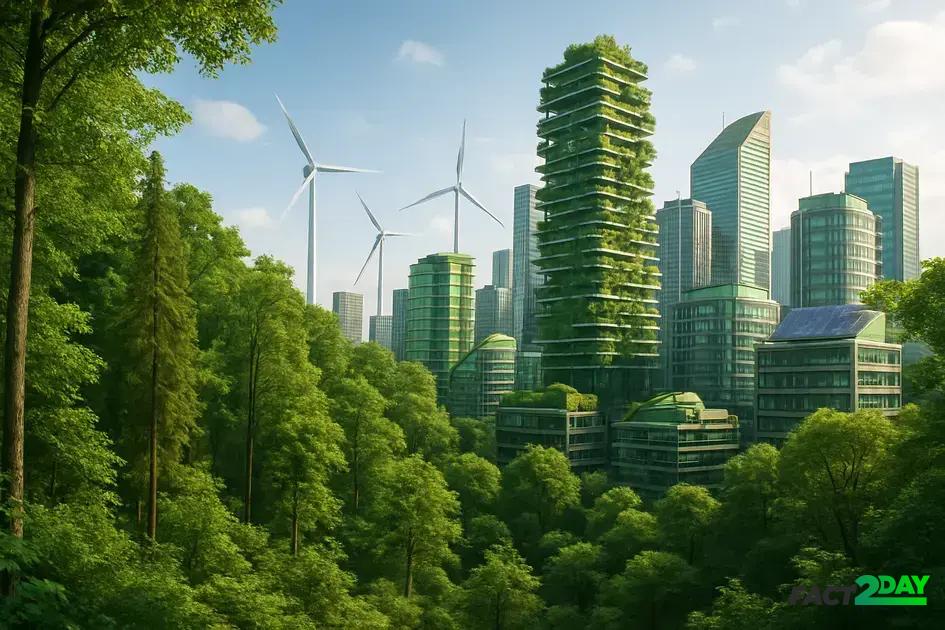
Nature’s Genius: How Biomimicry is Inspiring Innovative Solutions to Climate Change
Biomimicry for Climate Solutions reveals nature-inspired innovations tackling global warming, sparking fresh ideas to protect our planet.
Frisson, the pleasurable chill or goosebumps experienced during music, occurs when the brain’s reward and fear systems activate simultaneously, creating a powerful emotional response.
Have you ever noticed how nature solves problems effortlessly? The concept of Biomimicry for Climate Solutions invites us to look at these natural tricks and apply them to our fight against climate change. Curious what inventive ideas this could spark?
Understanding biomimicry and its principles
Biomimicry is the practice of learning from and mimicking nature’s designs and processes to solve human challenges. Instead of inventing solutions from scratch, it looks to the natural world, which has refined its strategies over billions of years. This approach encourages us to see nature as a mentor for sustainable innovation.
Key principles of biomimicry
First, it involves emulating nature’s models, such as the way plants manage water or how animals regulate temperature. Second, it focuses on creating environmentally friendly solutions that integrate well with Earth’s ecosystems. Finally, biomimicry pushes for designs that are both efficient and resilient.
By studying how ecosystems thrive and adapt, we can uncover ideas that reduce waste, save energy, and promote sustainability. Using nature’s wisdom can inspire new technologies in energy, materials, architecture, and more. This method helps address climate issues by shaping solutions that work in harmony with the environment.
Understanding biomimicry means appreciating how intertwined life forms and their habitats are. It teaches us to respect natural cycles and apply them to improve human life without harming the planet.
How nature inspires climate change solutions
Nature offers countless examples of adaptation and resilience that can inspire effective climate change solutions. Organisms have evolved unique strategies to conserve energy, manage resources, and withstand harsh environments.
Energy efficiency from natural designs
For instance, leaves optimize sunlight absorption while minimizing water loss. This balance can guide the development of solar panels and energy-efficient buildings that reduce environmental impact.
Water management inspired by ecosystems
Wetlands filter pollutants and store water, teaching us ways to design urban drainage systems that reduce runoff and improve water quality. Mimicking these systems helps cities better manage stormwater and floods.
Climate resilience in plants and animals
Certain plants survive droughts by entering dormant states, signaling innovation in creating materials or infrastructure that adapt to changing climates. Animals’ insulation and ventilation methods also inspire sustainable building techniques.
Nature’s wisdom encourages us to design with flexibility, sustainability, and balance, ensuring that solutions to climate change are both innovative and respectful to our environment.
Examples of biomimicry in renewable energy
Renewable energy has seen remarkable advances inspired by nature’s designs. One example is wind turbines modeled after humpback whale fins. The bumps on whale fins, called tubercles, improve lift and reduce drag, making turbines more efficient and quieter.
Solar energy inspired by leaves
Solar panels mimic the structure of leaves to optimize light absorption. Innovations include flexible panels that follow the sun’s path and designs that reduce dust accumulation, inspired by the self-cleaning surfaces of certain plants.
Wave energy and shark skin
Wave energy converters take inspiration from shark skin, which reduces drag with its unique texture. Applying this concept to underwater turbines enhances energy capture and minimizes maintenance.
Biomimicry in renewable energy demonstrates how observing nature’s perfected systems can lead to smarter, sustainable technologies that support a cleaner future.
Water conservation through natural design
Water conservation is critical, and nature offers remarkable designs that efficiently manage water resources. Many plants and animals have evolved ways to collect, store, and use water with minimal waste.
Leaf structures that collect water
For example, certain desert plants have curved leaves or spines that funnel dew and rain towards their roots. This principle has inspired technologies such as water-harvesting surfaces in dry regions.
Animal adaptations for water saving
Some animals have skin or fur that repels water or condenses moisture from the air. These adaptations inspire materials that capture and recycle water in urban settings.
Natural water filtration
Wetlands purify water by filtering pollutants through soil and plants. Biomimicry applies this concept to create eco-friendly water treatment systems that mimic natural filtration.
Natural designs for water conservation remind us that sustainable solutions often come from observing how living beings thrive with limited resources.
Biomimicry’s role in carbon capture
Biomimicry plays an important role in developing effective carbon capture methods by learning from natural processes that absorb and store carbon dioxide. Trees, plants, and oceans naturally capture carbon, inspiring technologies that aim to replicate these functions.
Natural carbon absorption
Trees use photosynthesis to convert CO2 into oxygen and biomass, a process that inspires artificial systems designed to capture carbon from the air. Scientists study leaf structures and metabolic pathways for clues on how to improve efficiency in carbon capture devices.
Carbon storage in ecosystems
Wetlands and soils act as carbon sinks, storing carbon for long periods. These systems have influenced the design of technologies that trap carbon underground or in stable solids, helping to reduce greenhouse gases.
Bio-inspired materials for carbon capture
Materials inspired by mollusk shells and coral skeletons offer strong, porous structures that can absorb CO2 effectively. These bio-inspired materials may be used in filters and membranes to improve carbon capture performance.
Leveraging biomimicry in carbon capture could accelerate climate change mitigation by offering sustainable and efficient solutions that work in harmony with nature.
Sustainable architecture inspired by nature
Sustainable architecture inspired by nature applies biomimicry to design buildings that are energy-efficient, eco-friendly, and harmonious with their environment. Architects look to natural forms, systems, and materials to create structures that reduce waste and resource use.
Designs based on natural forms
For example, buildings modeled after termite mounds use natural ventilation techniques to regulate temperature without relying heavily on air conditioning. These structures feature passive cooling that mimics how termites maintain steady temperatures.
Materials inspired by nature
Bio-based materials, such as bamboo and mycelium, provide alternatives to traditional construction inputs. These materials are renewable, biodegradable, and often stronger or lighter than conventional options.
Energy efficiency and water management
Architectural designs also incorporate water recycling and energy harvesting systems inspired by ecosystems. Green roofs, inspired by natural landscapes, improve insulation and support biodiversity within urban areas.
Nature-inspired sustainable architecture not only reduces environmental impact but also enhances occupant well-being by connecting buildings with natural surroundings.
Innovations in agriculture using biomimicry
Biomimicry is transforming agriculture by introducing natural methods that boost productivity while reducing environmental harm. Farmers and researchers study ecosystems to create innovative farming techniques.
Natural pest control
Using predator-prey relationships found in nature, such as ladybugs controlling aphids, helps reduce reliance on chemical pesticides. This approach promotes balanced ecosystems and healthier crops.
Soil health and nutrient cycling
Techniques inspired by forest floor processes improve soil fertility. Cover cropping and crop rotation mimic natural nutrient cycles, maintaining soil structure and reducing erosion.
Water management in farming
Inspired by desert plants and their water retention, agricultural systems now use efficient irrigation methods like drip systems and moisture sensors to conserve water.
Innovations in agriculture using biomimicry offer sustainable solutions that help farmers grow food more efficiently while protecting natural resources.
Reducing pollution with natural models
Natural models provide smart ways to reduce pollution by mimicking ecosystems that clean air, water, and soil. These systems have evolved to maintain balance and remove toxins efficiently.
Plant-based air purification
Certain plants absorb pollutants through their leaves and roots, a process known as phytoremediation. Indoor gardens and green walls use these natural filters to improve air quality in urban areas.
Water purification using wetlands
Wetlands act as natural water purifiers by breaking down pollutants with the help of microbes and plants. Constructed wetlands are designed to treat wastewater sustainably.
Soil detoxification with microbes
Soil microorganisms can degrade harmful chemicals, turning pollutants into harmless substances. This natural process inspires bioremediation technologies that clean contaminated sites.
Reducing pollution with natural models illustrates how aligning with nature’s processes can create cleaner environments and healthier communities.
The connection between biodiversity and climate solutions
Biodiversity is deeply connected to climate solutions because diverse ecosystems are better at regulating the climate and adapting to changes. Healthy ecosystems store carbon, protect water supplies, and support species that help maintain balance in nature.
Role of diverse forests in carbon storage
Forests with many different plant and animal species capture more carbon dioxide than less diverse forests. This makes them strong allies in fighting climate change by lowering greenhouse gas levels.
Pollinators and ecosystem health
Bees, butterflies, and other pollinators support the growth of plants that absorb carbon and provide food and habitat for many species. Losing these pollinators can disrupt ecosystems and reduce nature’s ability to mitigate climate effects.
Resilience through biodiversity
Ecosystems rich in species are more resilient to extreme weather and changing conditions. This resilience helps communities relying on nature to adapt to climate impacts while sustaining their livelihoods.
Protecting biodiversity is not just about saving species—it’s a critical part of creating effective and lasting climate solutions that benefit the planet and humanity.
Challenges in applying biomimicry at scale
Applying biomimicry at scale faces several challenges that involve science, technology, and social factors. Although nature offers brilliant solutions, replicating them in industries and cities is complex.
Scientific and technical limitations
It can be difficult to fully understand and mimic natural systems, which are often very intricate. Translating biological processes into workable technologies requires significant research and innovation.
Cost and resources
Developing biomimetic solutions sometimes requires new materials or manufacturing methods that may be expensive initially. Scaling these technologies while keeping costs reasonable is a major hurdle.
Cultural and regulatory barriers
Businesses and governments may be slow to adopt unfamiliar biomimicry designs. There can be resistance due to established practices, regulation, or lack of awareness about biomimicry’s benefits.
Integration with existing infrastructure
Incorporating nature-inspired solutions into current systems such as buildings and energy grids demands careful planning and adaptation. This complexity can slow down deployment.
Overcoming these challenges requires collaboration across disciplines, public education, and investment in research to unlock biomimicry’s full potential for climate solutions.
The future of biomimicry and climate resilience
The future of biomimicry holds great promise for advancing climate resilience by developing solutions that are sustainable, adaptive, and efficient. As technology and biological sciences progress, biomimicry will play a key role in shaping how we respond to climate challenges.
Integration of advanced technologies
Combining biomimicry with AI, robotics, and materials science will lead to smart, nature-inspired systems that monitor and react to environmental changes in real time. These innovations enhance our ability to build resilient infrastructure.
Adaptive design for changing environments
Future biomimetic designs will be more flexible, able to adjust to shifting climates and extreme weather. Learning from nature’s adaptability will help develop structures and technologies that thrive despite uncertainty.
Promoting circular economy and sustainability
Biomimicry supports closed-loop systems that reuse resources and minimize waste, aligning with climate resilience goals. This will foster economies that operate in harmony with ecosystems.
The future of biomimicry promises deeper collaboration between nature and human innovation, creating climate solutions that protect our planet and future generations.
Community involvement in nature-inspired solutions
Community involvement is essential for the success of nature-inspired solutions. When local people participate, projects are better adapted to real needs and gain stronger support.
Engaging local knowledge
Communities often have deep understanding of their environment, which can guide biomimicry projects. Involving locals helps ensure solutions respect cultural values and ecosystems.
Collaborative design and implementation
Working together with community members to design and build nature-based solutions fosters ownership and sustainability. This cooperation also sparks innovation through shared ideas.
Education and awareness
Raising awareness about the benefits of biomimicry empowers communities to adopt sustainable practices. Educational programs can inspire future generations to care for the environment.
Active community engagement strengthens the impact and reach of nature-inspired climate solutions, making them more effective and lasting.
How to start using biomimicry in your projects
Starting to use biomimicry in your projects involves observing nature closely and identifying problems your project can solve by learning from natural models. Begin by researching how plants, animals, and ecosystems address similar challenges.
Step 1: Identify the challenge
Clearly define the problem you want to address, whether it’s energy efficiency, water management, or sustainable materials. This step focuses your biomimicry efforts on relevant solutions.
Step 2: Research natural strategies
Explore how nature solves this problem. Use resources such as scientific papers, biomimicry databases, and case studies. Look for patterns, shapes, and processes that can inspire innovation.
Step 3: Brainstorm and prototype
Brainstorm ideas inspired by natural strategies and test small models or prototypes. This helps you refine your design and understand what works best in your context.
Step 4: Collaborate and iterate
Work with experts in biology, design, and engineering to improve your ideas. Iteration is key to creating effective biomimicry solutions.
Embracing biomimicry early on can lead to creative, sustainable projects that align with nature’s wisdom while solving real-world problems.
Embracing biomimicry for a sustainable future
Biomimicry offers powerful tools to solve our toughest challenges by learning from nature’s proven designs. Starting small and collaborating with experts can help you create innovative and eco-friendly solutions.
By following nature’s wisdom, we can build projects that are not only efficient but also sustainable, benefiting both people and the planet.
As we face climate change and environmental pressures, biomimicry will be an essential part of crafting a resilient and thriving future.