Play for the Planet: How Video Games Are Turning Players into Real-World Scientists
Gamification of Citizen Science transforms gaming into a powerful tool where players contribute to real scientific discoveries while having fun.
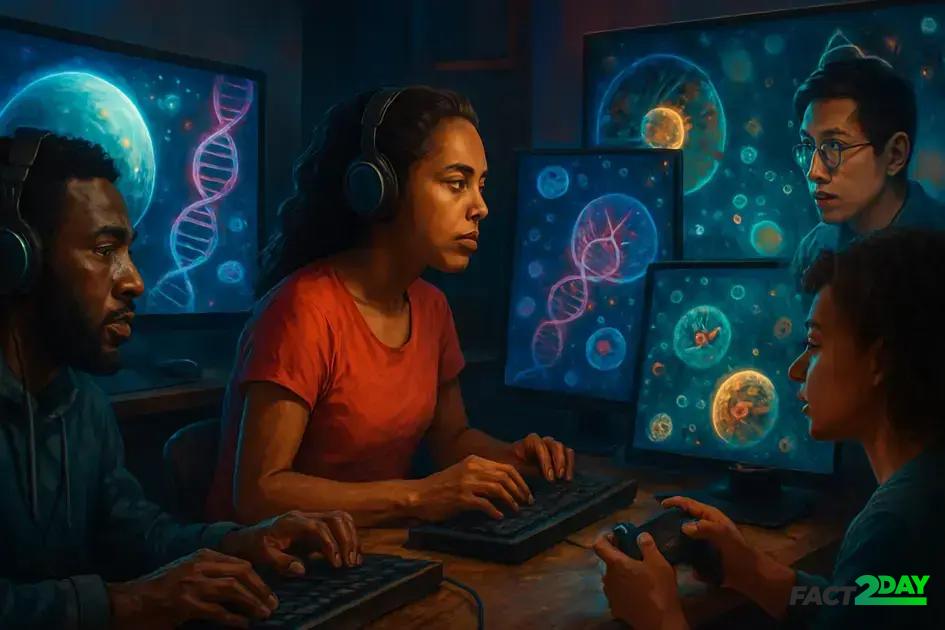
Gamification of citizen science harnesses the engagement and problem-solving skills of gamers worldwide to accelerate real scientific discoveries through interactive, collaborative gameplay.
Gamification of Citizen Science is a fascinating way games transform us from players into contributors to real scientific quests. Ever wondered how your gaming skills could help solve world mysteries? Let’s dive into this cosmic blend of fun and discovery.
Understanding gamification in citizen science
Gamification in citizen science involves using game design elements to engage people in scientific research. It turns complex tasks into fun challenges, encouraging participation from individuals of all ages and backgrounds. Games create interactive environments where players can collect data, solve puzzles, or simulate experiments.
By incorporating points, levels, and rewards, gamification motivates users to contribute consistently and accurately. This approach also fosters a sense of community, as players often collaborate and compete, sharing their progress and discoveries.
Educational benefits are significant, as players learn scientific concepts while actively participating. This hands-on involvement makes science more accessible and exciting, especially for younger audiences.
Overall, gamification transforms citizen science from a passive observation to an engaging, interactive experience, helping to crowdsource valuable data that would be difficult for researchers to collect alone.
The impact of video games on scientific research
Video games have become powerful tools in advancing scientific research by turning complex problems into engaging activities. Through gamified platforms, researchers tap into the cognitive skills of millions of players worldwide, accelerating data analysis and problem-solving.
Games like Foldit and EVE Online challenge players to fold proteins or explore virtual ecosystems, generating valuable insights that contribute directly to real-world studies. This interaction combines entertainment with meaningful scientific contribution.
Player creativity and diverse approaches often lead to unexpected solutions, expanding the boundaries of traditional research. Additionally, the vast amount of data collected through gameplay provides rich datasets for machine learning and analysis.
The collaborative nature of gaming communities fosters communication and sharing of strategies, which further enhances the quality of scientific outcomes. This integration of gaming and research is transforming how science is conducted, making it more inclusive and innovative.
How players contribute to real-world data collection
Players contribute to real-world data collection by performing tasks that generate valuable scientific information during gameplay. These tasks may include identifying patterns, sorting images, or solving puzzles based on real data sets. Game developers integrate these activities seamlessly into the game mechanics, making data collection a natural part of play.
Citizen scientists help process large volumes of data faster than traditional methods, accelerating research progress. For example, in games like Eyewire, players map neural connections in the brain by coloring cells, which assists neuroscientists in understanding brain structures.
Many games also crowdsource environmental data, such as tracking wildlife or monitoring climate changes, where players report sightings or classify species. This collaborative effort harnesses the power of crowds to gather diverse and extensive datasets.
Quality control is maintained through game design, where multiple players verify data inputs, reducing errors. This method ensures that the collected information is reliable and useful to researchers worldwide.
Popular games that use scientific challenges
Several popular games integrate scientific challenges that invite players to contribute directly to research while enjoying immersive gameplay. Foldit is a groundbreaking puzzle game where players fold proteins to help scientists understand diseases and develop new treatments.
Another well-known example is Eyewire, which turns mapping neurons in the brain into an engaging activity. Players color and map cells, providing vital data for neuroscience research.
EVE Online also supports scientific initiatives by using its vast player base to simulate complex ecological and economic systems, indirectly aiding modeling studies.
Games like Sea Hero Quest gather spatial navigation data to study dementia, while Climate Mission focuses on environmental awareness through interactive challenges.
These games showcase how entertainment can merge with science, making research accessible and engaging to a global audience while accelerating the pace of discovery.
Benefits for players and scientists alike
Gamification in citizen science offers numerous benefits for both players and scientists. For players, it transforms scientific tasks into engaging challenges, providing a sense of achievement through rewards, points, and recognition. This promotes continuous participation and learning about real-world science.
Players also gain new skills like critical thinking, data analysis, and problem-solving, which can be valuable beyond the game environment. The social aspect of gaming fosters teamwork and community building among participants worldwide.
From a scientist’s perspective, gamification helps collect large amounts of data quickly and accurately. Crowdsourcing data through games taps into the cognitive abilities of millions, making it possible to analyze complex problems that traditional methods cannot address efficiently.
Collaboration between players and researchers can lead to unexpected discoveries and innovations. This dynamic interaction also raises public awareness about scientific issues and fosters greater support for research efforts.
The role of community and collaboration
The role of community and collaboration is essential in gamified citizen science projects. Players often work together, sharing strategies and insights to solve scientific challenges more efficiently. Social interaction within these communities fosters motivation and sustained engagement.
Many games include features like chat rooms, forums, and leaderboards, encouraging communication and friendly competition. This collaborative spirit helps maintain player interest and improves data accuracy through peer verification.
Researchers benefit from the diverse perspectives and skills brought by a global, engaged community. This collective intelligence often leads to innovative problem-solving methods that may not emerge in traditional research settings.
Community-driven projects also promote science education and public awareness, creating a sense of belonging and shared purpose among participants. This connection between players and scientists strengthens the impact and reach of citizen science initiatives.
Technologies behind gamified citizen science
Gamified citizen science relies on various advanced technologies to create engaging and effective platforms. Artificial intelligence (AI) plays a key role by analyzing player input and validating data quality in real time. Machine learning algorithms help detect patterns and improve accuracy over time.
Cloud computing enables the storage and processing of vast amounts of data generated by millions of players worldwide. This scalable infrastructure supports collaborative research and instant access to game updates and scientific resources.
Game development tools and graphics engines create immersive, interactive experiences that motivate players. Mobile technology allows games to reach broader audiences by providing easy access on smartphones and tablets.
Augmented reality (AR) and virtual reality (VR) are increasingly being integrated to enhance engagement by placing players directly into simulated scientific environments. These technologies make complex scientific concepts more accessible and understandable.
Overall, these technologies work together to create a seamless blend of gaming and science, driving participation and high-quality research outcomes.
Case studies of successful projects
Several case studies highlight the success of gamification in citizen science. Foldit is a notable example where players solved the structure of an important enzyme related to AIDS, accelerating research that took scientists years. This success demonstrated the power of human intuition combined with gaming.
Eyewire engaged players in mapping neural connections in the retina. The game’s community helped create detailed 3D maps, contributing valuable data for neuroscience research.
Sea Hero Quest collected spatial navigation data from millions of players worldwide. This data is used to study dementia and brain health, showing how games can generate critical health research insights at scale.
Other projects like Galaxy Zoo have leveraged citizen astronomers to classify galaxies, enabling faster discoveries about the universe.
These case studies prove that gamified citizen science projects can produce real scientific breakthroughs by combining the engagement of games with the power of the crowd.
Challenges and limitations of gamification
Gamification in citizen science faces several challenges and limitations. One key issue is maintaining data quality, as game mechanics must balance fun with accuracy. Players may make errors or take shortcuts that affect research outcomes.
Another challenge is engagement retention. While gamification initially attracts players, keeping them motivated over time requires continuous updates, varied challenges, and meaningful rewards.
Technical barriers, like access to devices or reliable internet, can limit participation, especially in underserved communities. Additionally, designing games that appeal to a wide demographic without oversimplifying complex science is difficult.
Ethical concerns arise regarding data privacy and informed consent, as players may not fully understand how their inputs will be used. Transparency and trust are essential to address these issues.
Despite these limitations, ongoing development and thoughtful design can help overcome obstacles and improve the impact of gamified citizen science.
Future trends in citizen science gaming
Future trends in citizen science gaming point towards more immersive and personalized experiences using advanced technologies. Virtual reality (VR) and augmented reality (AR) will play major roles by placing players directly inside scientific environments, enhancing understanding and engagement.
Artificial intelligence will help tailor challenges to individual skill levels, providing adaptive gameplay that maintains motivation and improves learning outcomes. This personalization makes citizen science accessible to broader audiences.
Blockchain technology may be used to securely track player contributions and reward participation with digital assets or tokens, fostering transparency and ownership.
Games will also incorporate more real-time data collection and integration with scientific instruments, allowing players to interact with ongoing experiments and contribute to live research.
Collaborative platforms will expand, enabling global communities to solve complex scientific puzzles together, making citizen science gaming a truly worldwide effort that accelerates discovery and education.
Engaging youth through game-based science
Engaging youth through game-based science taps into natural curiosity and love for play. Games make learning about science fun and interactive, which helps capture the attention of younger audiences. Game mechanics like challenges, rewards, and storytelling create a compelling way to explore scientific concepts.
Many educational games incorporate real-world science problems, encouraging players to think critically and solve puzzles. This hands-on approach not only boosts understanding but also fosters creativity and collaboration among peers.
By making science accessible and entertaining, these games help inspire the next generation of scientists. They provide opportunities for youth to contribute to actual research, motivating them to see the impact of their work beyond the screen.
Schools and informal learning centers are increasingly using gamified science tools to complement traditional teaching methods. This blend of entertainment and education supports diverse learning styles, making science more inclusive and engaging for all students.
The psychology behind gamification and motivation
The psychology behind gamification and motivation explains why game elements are so effective at engaging people in citizen science. Reward systems such as points, badges, and leaderboards tap into the brain’s dopamine pathways, making players feel a sense of achievement and encouraging continued participation.
Goal-setting and progress tracking provide clear objectives, which help maintain focus and drive. When players see their improvement, it boosts their confidence and desire to keep contributing.
Social factors also play a crucial role. Friendly competition and collaboration stimulate motivation by fostering a sense of community and belonging. Recognition from peers further enhances engagement and satisfaction.
Moreover, gamification leverages intrinsic motivation by making activities enjoyable and meaningful. Players feel their efforts contribute to real scientific discoveries, adding purpose beyond just winning the game.
How to get involved as a citizen scientist gamer
Getting involved as a citizen scientist gamer is easy and rewarding. Start by choosing games focused on scientific challenges that interest you, such as protein folding, wildlife observation, or space exploration. These games are often free and available on various platforms including PCs, consoles, and mobile devices.
Create an account to track your progress and join the community. Many games have forums or social media groups where you can share experiences, learn tips, and collaborate with other players.
Set realistic goals and dedicate regular time to play. Consistent participation helps generate valuable data and improves your skills. Don’t hesitate to explore tutorials or guides provided by the game to enhance your impact.
Engaging in citizen science gaming also means respecting data integrity and following the game rules to ensure your contributions are valid and useful to researchers.
Lastly, share your enthusiasm with others to grow the community and multiply the scientific discoveries made through gaming.
The global impact of gamification on research
The global impact of gamification on research is profound and growing. Gamified citizen science projects tap into the collective intelligence of people worldwide, enabling researchers to gather vast, diverse data sets that would be impossible to collect alone.
Cross-cultural collaboration fosters innovation by bringing together varied perspectives and problem-solving approaches. This diversity enhances the quality and applicability of scientific findings.
Gamification also democratizes science, allowing individuals from different backgrounds and regions to contribute regardless of formal education or location. This inclusivity broadens participation and raises public awareness about important scientific issues.
The accelerated pace of data collection through games leads to faster discoveries, benefiting fields like medicine, environmental science, and astronomy. Governments and organizations increasingly support these initiatives as cost-effective methods for advancing research.
Overall, gamification helps create a worldwide community united by the common goal of scientific progress, illustrating the power of play in tackling global challenges.
Bringing it all together: the power of gamification in citizen science
Gamification turns science into an exciting adventure that anyone can join. By blending gameplay with real research, it opens doors for people worldwide to make meaningful contributions.
This approach not only speeds up discoveries but also educates and inspires players of all ages. Whether you’re a casual gamer or a science enthusiast, gamified citizen science offers a unique chance to be part of something bigger.
As technology and communities grow, the impact of this fusion will continue to expand, making science more inclusive and accessible than ever before.
So, why not play for the planet and be a real-world scientist?