The Lag Battle: Innovative Tech Solving the Latency Challenge in Cloud Gaming
Cloud Gaming Latency Solutions are revolutionizing how gamers experience online play, reducing delays and keeping the action smooth and thrilling.
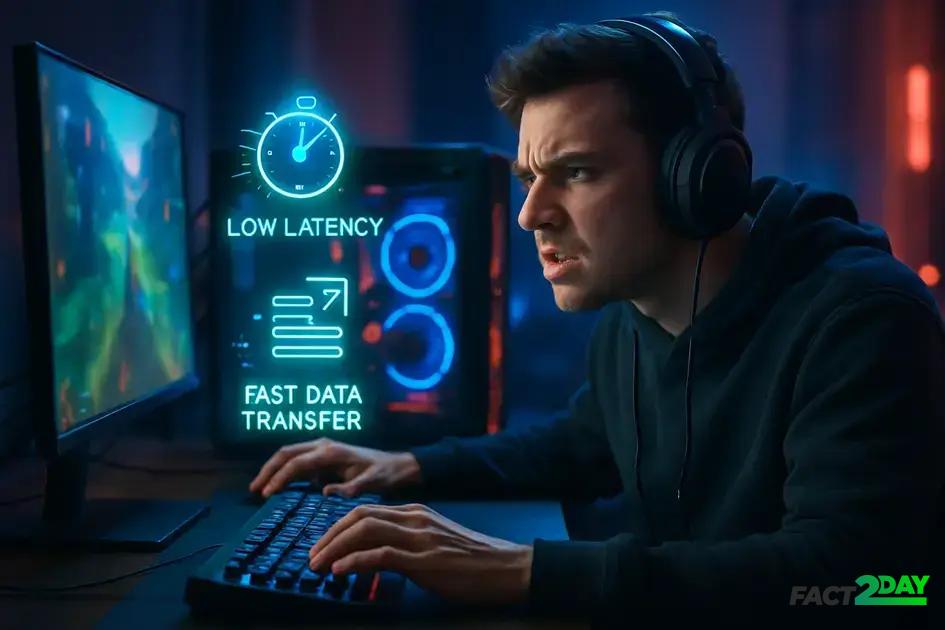
Cloud gaming latency solutions employ technologies like edge computing, 5G, and predictive algorithms to minimize delay and deliver smoother, more responsive gameplay experiences worldwide.
Cloud Gaming Latency Solutions are at the heart of transforming how we enjoy games remotely. Ever wondered why sometimes the game lags or feels delayed? Let’s explore the innovative tech fighting this invisible enemy and making gameplay smoother than ever!
Understanding latency in cloud gaming
Latency in cloud gaming refers to the delay between a player’s input and the game’s response displayed on the screen. This delay occurs because the game runs on remote servers, and data must travel back and forth over the internet. High latency can make games feel unresponsive, ruining the experience, especially in fast-paced genres like first-person shooters or racing games.
Understanding latency starts with recognizing its main sources: network transmission, server processing, and rendering time. Network latency depends on your internet speed and the distance between you and the game servers. Server processing time can vary based on the server’s power and how many players are sharing it.
To keep gameplay smooth, cloud gaming platforms work hard to reduce latency by using edge computing, placing servers closer to players, and optimizing data compression techniques. Knowing these factors helps gamers appreciate the tech challenges in delivering real-time, responsive play through the cloud.
How latency affects gameplay experience
Latency can seriously impact the gameplay experience by causing noticeable delays between player actions and game responses. This delay can lead to missed opportunities, slower reactions, and a generally frustrating experience, especially in competitive games.
When latency is high, players might see characters or objects move in a jerky way or experience input lag, where controls feel sluggish or unresponsive. This disrupts the flow, making it harder to aim, dodge, or time moves correctly.
Multiplayer games are particularly sensitive to latency because players compete in real time. If one player has low latency and others have high, it creates an uneven playing field. This can ruin fairness and reduce enjoyment for everyone involved.
Game developers and platform providers work hard to minimize latency effects using techniques like client-side prediction and lag compensation. Still, understanding how latency shapes gameplay helps players set realistic expectations and choose services that best fit their needs.
Current technologies tackling latency
Several technologies are being used to address latency in cloud gaming, making gameplay smoother and more responsive. One key approach is edge computing, where game data is processed on servers located closer to players. This reduces the distance data must travel, cutting down transmission delays significantly.
Another important technology is content delivery networks (CDNs). CDNs distribute game data across multiple global servers, ensuring players connect to the nearest available server to lower latency.
Advanced data compression techniques also play a role by minimizing the size of data packets sent over networks, speeding up transmission without sacrificing game quality.
Adaptive streaming adjusts video quality in real time based on network conditions to prevent lag spikes. Additionally, some platforms use machine learning algorithms to predict player inputs and movements, helping to mask latency and provide a seamless experience.
Finally, improvements in network protocols aim to optimize how data travels between players and servers, reducing unnecessary delays.
Role of edge computing in reducing lag
Edge computing plays a crucial role in reducing lag by processing game data closer to players. Instead of sending information all the way to a distant central server, edge servers located near the player’s location handle data locally. This cuts down travel time for game commands, reducing latency significantly.
By distributing the workload among many edge nodes, cloud gaming platforms reduce network congestion and speed up response times. This is especially important for games that require quick reflexes and real-time interaction.
Edge computing also supports scalability. As more players join, edge servers can handle increased demand locally without overloading central servers, maintaining consistent performance.
Additionally, edge computing enables faster updates and smoother streaming by caching frequently accessed content near the user. Overall, edge computing brings cloud gaming closer to the player, making gameplay more responsive and enjoyable.
Importance of high-speed internet connections
High-speed internet connections are essential for cloud gaming because they ensure fast and stable data transfer between the player and the game servers. Without sufficient speed, players can experience buffering, lag, and frequent disconnections.
Internet speed affects both upload and download rates. Fast downloads help stream game visuals smoothly, while fast uploads ensure player actions quickly reach the server.
Latency is also directly influenced by internet quality. A robust connection reduces packet loss and jitter, providing consistent gameplay without sudden delays or disruptions.
Many cloud gaming providers recommend minimum speeds of 20 Mbps, but higher speeds offer a better experience, especially for games in HD or 4K resolutions.
Using wired connections like Ethernet or high-quality Wi-Fi can make a significant difference by lowering interference and improving stability.
Impact of 5G networks on cloud gaming
5G networks offer faster speeds and lower latency compared to previous wireless technologies, making them a game-changer for cloud gaming. With 5G, data travels more quickly between players and servers, resulting in smoother gameplay and reduced lag.
The improved bandwidth of 5G supports higher quality streams, including 4K and VR gaming, without buffering or delays. This means gamers can enjoy richer visuals and more immersive experiences.
5G also enables greater mobility, allowing players to access cloud games on the go with minimal latency, which was harder to achieve with older networks.
Its low latency feature is vital for fast-paced, competitive games where real-time response can impact performance and enjoyment.
However, widespread adoption depends on 5G coverage and the infrastructure’s maturity, but as it grows, it promises to revolutionize cloud gaming experiences.
Server locations and their influence on latency
Server locations have a major impact on latency in cloud gaming. The physical distance between players and game servers affects how quickly data travels back and forth. The farther away the server, the longer the delay.
To lower latency, cloud gaming platforms place servers in multiple locations worldwide, a strategy known as geographical distribution. This means players connect to the nearest server, which helps reduce lag and improves gameplay responsiveness.
Choosing the right server region is critical, especially for multiplayer games where split-second timing matters. Playing on a server too far away can cause input delays and desync issues, where game events do not match what the player sees.
Many providers use dynamic server allocation, which automatically connects players to the best available server based on location, load, and network conditions. This helps maintain consistent performance even during peak times.
Understanding the role of server location helps gamers appreciate the infrastructure behind cloud gaming and why some platforms offer smoother experiences than others.
Adaptive bitrate streaming and latency management
Adaptive bitrate streaming is a technique that adjusts the quality of a video stream in real time based on a user’s internet speed and network conditions. This helps manage latency in cloud gaming by preventing buffering and reducing lag spikes.
When the network is strong, the streaming quality increases, providing sharper graphics and smoother gameplay. If the connection weakens, the system lowers the bitrate, decreasing data size and allowing the game to continue without interruption.
This dynamic adjustment maintains a balance between visual quality and latency, ensuring the player experiences the best possible performance under varying conditions.
Latency management involves monitoring network delays and reacting quickly to changes. Adaptive streaming is one of the main tools used to mask latency by keeping the game responsive even when network speed fluctuates.
Developers often combine adaptive bitrate streaming with other technologies like buffering strategies and pre-loading assets to enhance the overall gaming experience.
Predictive algorithms to minimize lag
Predictive algorithms use advanced data analysis and machine learning to guess player actions before they happen. By anticipating movements or commands, cloud gaming platforms can reduce perceived lag, making gameplay feel more responsive.
These algorithms analyze patterns such as input timing and player behavior, allowing the system to prepare game data accordingly. When the actual input arrives, the game is already one step ahead, minimizing delays.
Client-side prediction is a common technique where the player’s device temporarily simulates the predicted action to maintain smooth gameplay, while the server confirms the actual results.
This approach helps offset network delays and ensures interactions feel fluid, especially in fast-paced or competitive games where every millisecond counts.
Combined with other latency reduction methods, predictive algorithms form a vital part of creating seamless cloud gaming experiences.
Hardware advancements supporting low latency
Hardware advancements play a key role in supporting low latency for cloud gaming. Modern devices now come equipped with powerful processors and faster memory that reduce the time needed to process inputs and render game frames.
Specialized graphics processing units (GPUs) optimize rendering tasks, ensuring smooth and high-quality visuals without delay. On the player’s end, input devices like low-latency controllers and keyboards improve responsiveness.
On the server side, advancements include faster CPUs, solid-state drives (SSDs), and high-speed networking components that help reduce processing bottlenecks.
Network interface cards (NICs) with advanced features also enhance data transfer speeds, reducing delays between servers and players.
Together, these hardware improvements reduce the overall lag, allowing gamers to enjoy more responsive and immersive experiences in cloud gaming environments.
Cloud infrastructure improvements
Cloud infrastructure improvements have been pivotal in lowering latency for cloud gaming. Modern data centers use cutting-edge hardware, including fast processors and high-capacity memory, to handle large volumes of game data efficiently.
Upgraded network connections within data centers, such as high-speed fiber optics, reduce internal delays and speed up communication between servers.
Many providers employ scalable infrastructure that can dynamically allocate resources based on demand, preventing overloads that cause lag.
Technologies like containerization and virtualization allow efficient management of game instances, ensuring consistent performance even during high traffic periods.
Overall, continuous enhancements in cloud infrastructure support smoother and more reliable cloud gaming experiences by reducing processing and transmission delays.
Challenges in latency reduction
Reducing latency in cloud gaming faces several challenges. One major issue is the physical distance between players and data centers. Data must travel through multiple network points, which always introduces some delay.
Another challenge is network congestion, especially during peak hours when many users connect simultaneously. This can slow down data transmission and increase lag.
Hardware limitations on both server and player devices can also contribute to latency. Older or less powerful equipment may struggle to process game data quickly.
Additionally, unpredictable internet quality such as packet loss, jitter, and bandwidth fluctuations make it difficult to maintain consistent low latency for all users.
Cloud gaming providers must balance cost and infrastructure investments with latency demands, which adds complexity to delivering smooth gameplay worldwide.
Future trends in cloud gaming latency solutions
Future trends in cloud gaming latency solutions focus on creating even more seamless and responsive experiences. One major development is the expansion of edge computing with more localized servers, bringing game data closer to players to cut down delays.
Advancements in AI and machine learning will improve predictive algorithms, allowing systems to better anticipate player actions and further reduce perceptible lag.
5G and beyond networks will expand, providing faster, more reliable wireless connections that support high-quality cloud gaming on mobile devices anywhere.
New network protocols are being designed to optimize data transmission and reduce packet loss, jitter, and overall latency.
Finally, the integration of quantum computing and innovative hardware could revolutionize processing speeds, minimizing delay to near zero in cloud gaming environments.
Wrapping up the fight against latency in cloud gaming
Latency remains one of the biggest challenges in delivering smooth cloud gaming experiences. However, thanks to rapid advancements in technology like edge computing, 5G networks, and predictive algorithms, the lag battle is being won.
By reducing delays and improving responsiveness, these innovative solutions help gamers enjoy real-time action without disruptions. As cloud gaming continues to grow, ongoing improvements will make playing anywhere faster and more immersive.
Understanding these latency solutions empowers gamers to choose the best platforms and setups, ensuring an exciting, lag-free gaming experience. The future holds even more promise for cloud gamers seeking seamless, high-quality play.