The Human Odyssey: Tracing Our Ancestors’ Epic Migrations Through Genetic Footprints
Explore how History of Human Migration Genetics unravels the epic journey of our ancestors through DNA clues and migrations revealed.
Music triggers goosebumps through frisson, a simultaneous activation of the brain’s reward and fear systems, creating a powerful emotional thrill that signals significance.
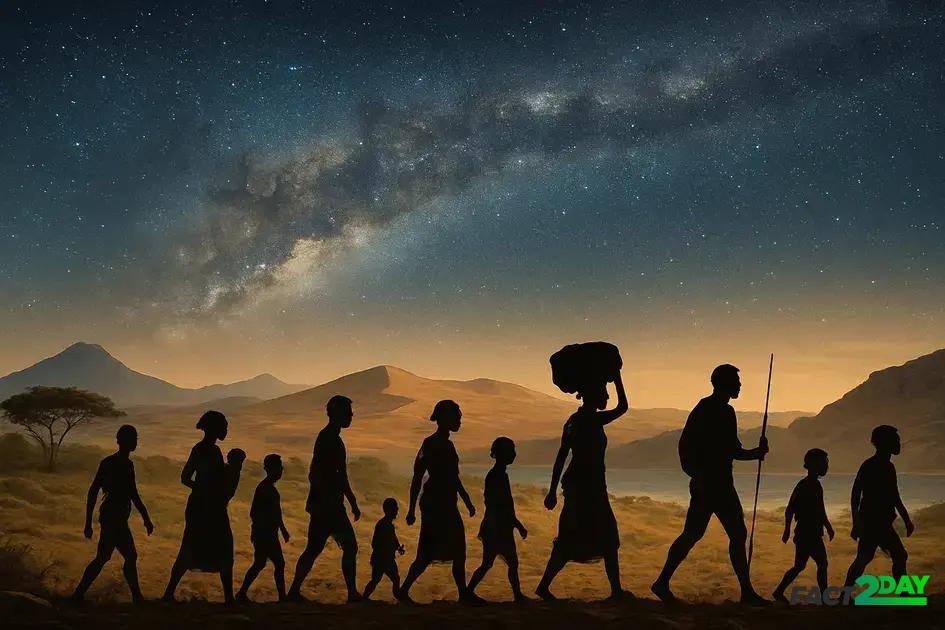
Have you ever wondered how our ancestors traveled across the globe? The History of Human Migration Genetics opens a fascinating window into these epic journeys, traced through our DNA. Let’s dive into this genetic odyssey together.
Understanding human migration genetics
Human migration genetics explores the movement of populations across the globe by analyzing genetic variations between groups. Genetic markers such as mitochondrial DNA and Y-chromosome data reveal patterns of migration and ancestral origins. These markers pass from generation to generation, holding clues about where our ancestors traveled and settled.
Scientists use these genetic clues to map migration routes and timelines, giving insight into how early humans spread from Africa to the rest of the world. Understanding these genetic footprints helps reveal connections among diverse populations and highlights the complex web of human history.
Key genetic tools in migration studies
Mitochondrial DNA is passed maternally and provides information about maternal lineages, while Y-chromosome DNA traces paternal lineages. Together, they offer a dual perspective on migration patterns. Advances in genome sequencing have enhanced our ability to study these markers with high precision.
Through comparing genetic data with archaeological findings, researchers build a clearer picture of how humans adapted to new environments and mixed with other groups. This interdisciplinary approach enriches our understanding of the human journey over tens of thousands of years.
Origins of human migration patterns
The origins of human migration patterns trace back tens of thousands of years, beginning with early Homo sapiens in Africa. These migrations were driven by climate changes, resource availability, and population pressures. Archaeological evidence and genetic data together show how waves of migration spread humans across continents.
The initial migration out of Africa is considered a major milestone, where small groups ventured into new territories, eventually populating Europe, Asia, and beyond. These movements created distinct genetic lineages, which scientists can track today.
Factors influencing early migration
Environmental shifts like ice ages opened new routes or forced populations to relocate. Human groups adapted to different climates and landscapes, sometimes mixing with local populations, shaping migration patterns further. Over millennia, multiple migration events occurred, not just a single exodus.
Understanding these early patterns helps clarify modern genetic diversity and shows that human migration is a dynamic, ongoing process influenced by many interconnected factors.
Tracing ancestry through mitochondrial DNA
Mitochondrial DNA (mtDNA) is a type of genetic material inherited only from the mother. It plays a crucial role in tracing ancestry because it changes very slowly over generations. By studying mtDNA, scientists can track maternal lineages and uncover migration patterns of human populations throughout history.
This genetic material is especially valuable for understanding ancient migrations because it remains relatively stable and does not recombine like nuclear DNA. Researchers compare mtDNA sequences from different populations to identify common ancestors and migration routes dating back tens of thousands of years.
Applications of mitochondrial DNA in migration studies
Using mtDNA, scientists have traced the African origins of modern humans and mapped how they spread into Europe, Asia, and the Americas. It also reveals how populations mixed and separated, giving insight into human diversity.
By analyzing mutations in mtDNA, researchers estimate the timing of various migration events and reconstruct the demographic history of populations. These findings help us better understand how our ancestors moved, adapted, and evolved across different environments over millennia.
Y-chromosome insights in migration studies
The Y-chromosome is passed down from father to son, making it a valuable tool to trace paternal ancestry. Unlike mitochondrial DNA, which follows the maternal line, the Y-chromosome helps researchers understand male migration patterns and population histories.
Geneticists study specific markers called Y-STRs (short tandem repeats) and SNPs (single nucleotide polymorphisms) on the Y-chromosome. These markers help identify unique lineages and map how different populations are related through male ancestors.
Applications of Y-chromosome analysis in migration
By analyzing Y-chromosome data, scientists have uncovered migration routes that men took during ancient human expansions. This includes insights into the settlement of Europe, Asia, and the Americas, and even hints at population mixing events brought on by invasions or trade.
The study of the Y-chromosome illuminates how human societies evolved and dispersed, revealing migrations that shaped the genetic makeup of modern populations around the world.
Role of ancient DNA in migration research
Ancient DNA (aDNA) is genetic material extracted from fossilized human remains, offering direct evidence of past populations. It provides a unique window into migration events that occurred thousands of years ago, often filling gaps left by archaeology and modern genetics.
By sequencing aDNA, researchers can identify genetic relationships between extinct groups and present-day populations. This helps reconstruct migration routes, population replacements, and interbreeding events with other hominins like Neanderthals.
Significance of ancient DNA in migration studies
aDNA has revealed unexpected links, such as the mixing of early humans with Neanderthals and Denisovans. It also helps track how populations moved, adapted, and changed over time in response to environmental and cultural shifts.
With advances in technology, analyzing aDNA has become more accurate and accessible, allowing scientists to trace the deep history of human migration and better understand our shared ancestry across the globe.
Impact of climate on migration routes
Climate has played a significant role in shaping human migration routes throughout history. Changes in temperature, rainfall, and sea levels influenced where and when populations could move and settle. Periods of ice ages and warming created new pathways or barriers for migration.
During colder periods, glaciers expanded, blocking certain routes and forcing humans to seek alternative paths. In contrast, warmer climates often opened up fertile lands and coastal routes, encouraging expansion and growth.
How climate influenced ancient migrations
Shifts in climate affected resource availability, prompting groups to relocate to survive. For example, droughts could make regions uninhabitable, while rising sea levels changed coastlines, impacting migration corridors.
Understanding the connection between climate and migration helps explain patterns of human dispersal and adaptation. It highlights how environmental changes were a driving force behind the epic journeys of our ancestors across the globe.
Genetic markers and population diversity
Genetic markers are specific sequences in DNA that vary between individuals and populations. They serve as crucial tools for studying population diversity and tracing human migration patterns. These markers include single nucleotide polymorphisms (SNPs), microsatellites, and haplogroups.
By analyzing genetic markers, scientists can identify relationships between different populations, revealing how groups have diverged or mixed over time. This helps map the movement and expansion of humans across various regions.
Population diversity and migration
Different populations often show unique patterns of genetic markers due to isolation, adaptation, or interbreeding. These variations shed light on migration routes, population bottlenecks, and expansions, illustrating the rich tapestry of human history.
Studying genetic markers not only informs us about our ancestors but also helps understand current human diversity, disease susceptibility, and adaptation to diverse environments.
Migration and human adaptation
Human migration is closely linked to adaptation. As populations moved into new environments, they encountered different climates, diets, and challenges. These changes drove genetic adaptations that helped humans survive and thrive in diverse conditions.
For example, populations in colder regions developed adaptations for managing cold temperatures, such as changes in metabolic rates or body fat distribution. Similarly, people living at high altitudes evolved traits to cope with low oxygen levels.
How migration influences genetic adaptation
Migration brings populations into contact with new environments and sometimes other human groups. This can lead to genetic mixing, which increases diversity and the potential for beneficial adaptations.
Natural selection favors traits that improve survival in a given environment, gradually shaping the genetic makeup of populations. Migration plays a crucial role in exposing humans to different pressures that guide this process.
Studying these adaptations helps scientists understand the dynamic relationship between movement and evolution in human history.
Interpreting genetic drift in populations
Genetic drift is a natural process where random changes in gene frequencies occur in a population. It is especially influential in small groups and can lead to significant genetic differences over time, independent of natural selection.
This process can cause certain genetic traits to become more common or disappear due to chance events like natural disasters or population bottlenecks. Genetic drift therefore shapes the genetic makeup of populations by random fluctuations.
Effects of genetic drift on human populations
In migration contexts, genetic drift can amplify differences between isolated groups. When a small group migrates and becomes separated, genetic drift can lead to unique genetic signatures that distinguish them from their original population.
Understanding genetic drift helps scientists interpret patterns of genetic diversity and migration history, revealing how populations change over time through both chance and adaptation.
Modern technology advancing genetic studies
Modern technology has revolutionized the study of genetics, enabling scientists to analyze DNA with greater speed and accuracy. Techniques like next-generation sequencing (NGS) allow researchers to decode entire genomes quickly, opening new doors in migration genetics.
Advanced computational tools help interpret vast amounts of genetic data, revealing complex patterns of human movement and ancestry. These technologies also enable the study of ancient DNA, linking past populations with modern humans.
Key technologies driving genetic research
High-throughput sequencing, bioinformatics, and machine learning are among the cutting-edge methods transforming genetic studies. These tools improve the resolution of migration timelines and enhance our understanding of genetic diversity.
As technology continues to evolve, the field of human migration genetics is poised for even more discoveries, helping us connect the dots of our shared history like never before.
Ethical considerations in migration genetics
Ethical considerations in migration genetics are crucial because this field studies human populations and their ancestral histories. Respecting privacy, obtaining informed consent, and avoiding misuse of genetic data are key ethical principles.
There is concern about genetic discrimination and stigmatization based on ancestry information. Researchers must ensure data is handled responsibly and participants understand how their genetic information will be used.
Challenges in migration genetics ethics
Another challenge is balancing scientific discovery with cultural sensitivities. Some indigenous groups may object to genetic studies that reveal information about their origins or relationships with other populations.
Furthermore, it is important to communicate findings accurately to avoid misinterpretation or misuse in political or social contexts. Ethical frameworks guide researchers to conduct studies responsibly, respecting both individuals and communities.
Case studies of key migrations
Studying key migrations through case studies reveals fascinating insights into human history and genetics. One well-known example is the Out of Africa migration, where modern humans left Africa around 60,000 years ago, spreading across the globe and replacing earlier hominins.
Another important case is the peopling of the Americas, believed to have occurred about 15,000 years ago, when populations crossed the Bering Land Bridge from Siberia. Genetic markers validate these movements and highlight the diversity of indigenous groups.
Insights from migration case studies
Genetic research on the Austronesian expansion shows how populations spread across the Pacific islands, carrying distinct markers that trace their journey. Similarly, migration patterns in Europe reflect waves of movement from the Eurasian steppes.
These case studies demonstrate how genetics enriches our understanding of migration routes, timing, and interactions among populations throughout history.
Future directions in migration genetics
The field of migration genetics is rapidly evolving, with exciting future directions on the horizon. Advances in genome sequencing and bioinformatics promise deeper insights into human history and migration patterns.
Emerging technologies like single-cell sequencing and improved ancient DNA recovery will allow more detailed analysis of past populations and their movements. Integrating genetic data with archaeological and environmental evidence is expected to create richer, multi-disciplinary narratives.
New frontiers in migration genetic research
Machine learning and AI are enhancing our ability to interpret complex genetic information, uncovering subtle migration events, genetic adaptations, and interactions between ancient populations. These tools may also improve predictions about how humans adapt to future environmental changes.
Continued ethical attention and collaboration with diverse communities will be essential as the field grows, ensuring research respects cultural sensitivities while driving scientific discovery.
How genetics reshapes our view of human history
Genetics has fundamentally reshaped our understanding of human history by providing direct evidence of where and how our ancestors migrated and interacted. Through DNA analysis, researchers can trace lineages and uncover previously unknown connections between populations.
Genetic studies have revealed that human history is complex, filled with multiple migration waves, interbreeding events, and adaptations. For example, genetics showed that modern humans interbred with Neanderthals and Denisovans, altering the narrative of human evolution.
The impact of genetic discoveries on history
Genetic data challenges earlier models based solely on archaeology or linguistics, offering precise timelines and migration routes. It uncovers hidden histories of marginalized groups and refines our picture of human diversity across continents.
Overall, genetics enriches the story of humanity, highlighting our shared origins and the intricate web of migrations that continue to shape us today.
Wrapping up our journey through migration genetics
Genetics has opened a window to our past, allowing us to see the paths our ancestors took and the interactions they had along the way. These discoveries give us a clearer picture of human history, filled with movement, adaptation, and connection.
By understanding how genetics reveals migration patterns, we learn not only about where we come from but also about the shared bonds that unite us all. As technology advances, our knowledge will only deepen, enriching our story as humans.
Exploring human migration genetics helps us appreciate the diversity and complexity of our species and reminds us that our history is truly a global odyssey.