The Secret Language: From Ancient Ciphers to Modern Enigma, The History of Codes and Espionage
History of Cryptography Espionage unveils the evolution of secret codes and their vital role in global espionage throughout time.
Reflecting on the strange world of animal trials
Animal trials may seem bizarre today, but they reveal a lot about medieval views on justice and morality. Treating animals as moral agents shows how deeply people once believed in a world where law and spirit were closely linked.
This curious chapter in legal history helps us think about how ideas of blame and fairness have changed over time. It reminds us that justice is shaped by the culture and values of its time, even when applied to unlikely defendants like animals.
Looking back at these trials opens a window into the past and encourages us to question how our own legal and moral systems continue to evolve in surprising ways.
Consider for a moment the History of Cryptography Espionage, a world where secret codes have shaped wars and diplomacy alike. What tales lie behind these shadowy communications? Let’s explore this fascinating narrative together.
Origins of cryptography in ancient civilizations
Cryptography dates back thousands of years to ancient civilizations like Egypt, Mesopotamia, and Greece. These societies used simple ciphers and symbols to protect messages from unwanted eyes. For example, the Caesar cipher, developed by Julius Caesar, shifted letters in the alphabet to create secret messages readable only by those who knew the key.
In Egypt, hieroglyphs sometimes served more than artistic or religious purposes—they also concealed meanings to safeguard information. Similarly, Mesopotamian civilizations used substitution techniques in clay tablets to maintain secrecy.
Ancient cryptography often relied on basic techniques like letter substitution and transposition. Although they seem simple today, these methods laid the groundwork for complex encryption used in modern espionage and communications.
Understanding these origins reveals how humans have long valued protecting information through coded language. These early ciphers illustrate a timeless desire: keeping secrets safe in a world filled with threats.
The role of cryptography in medieval espionage
During the medieval period, cryptography played a critical role in espionage and communication between kingdoms and military leaders. Secret messages had to be carefully encoded to prevent rivals from intercepting sensitive information. Simple ciphers like substitution and transposition were widely used to protect diplomatic correspondence and battlefield plans.
Medieval spies and messengers often relied on coded letters disguised as ordinary writing. These codes sometimes included hidden meanings, invisible inks, or uncommon symbols to evade detection. For example, the use of steganography—concealing a message within an image or text—helped ensure that vital secrets remained safe during transit.
Church officials and nobles also utilized cryptographic methods to maintain political power and control. Their knowledge of secret codes could spell the difference between victory and defeat. This era marked a shift from simple secret writings to more organized and strategic uses of cryptography in espionage.
Overall, medieval cryptography laid essential groundwork for sophisticated intelligence practices, demonstrating how secret communication evolved to match the era’s complex political landscape.
Development of cipher machines in the 19th century
The 19th century marked a major leap in cryptography with the invention of mechanical cipher machines. These devices automated the process of encrypting and decrypting messages, making secret communication faster and more reliable. One of the earliest examples is the Jefferson disk, invented by Thomas Jefferson, which used rotating disks to scramble letters into secret codes.
Another significant development was the Vigenère cipher machine, which applied a polyalphabetic cipher to increase encryption complexity. Unlike simple substitution ciphers, these devices allowed for multiple cipher alphabets, greatly enhancing security.
These machines became valuable tools for governments and the military, especially as international diplomacy and warfare grew more complex. Mechanical ciphers allowed messages to be encoded with less human error and helped keep vital information secret during conflicts.
The rise of these machines also set the stage for more advanced encryption devices in the 20th century, including the famous Enigma machine used during World War II.
World War I: the rise of codebreaking efforts
World War I marked a turning point in the use of cryptography, as both sides realized the power of codebreaking in gaining military advantage. Encrypted messages were widely used to coordinate troop movements and strategies. However, many governments began investing heavily in cryptanalysis, the science of breaking codes.
The British established the famous Room 40, a secret unit devoted to intercepting and decoding enemy communications. Their success in cracking the German naval codes helped in winning key battles, including the crucial interception of the Zimmerman Telegram, which influenced the United States to join the conflict.
Codebreakers used a mix of linguistic knowledge, mathematical analysis, and early computing devices to decrypt messages. This period saw the rise of innovative techniques like frequency analysis and pattern recognition that laid the foundation for modern cryptology.
The immense efforts dedicated to codebreaking during World War I demonstrated how vital encrypted communications and their interception had become in modern warfare.
World War II and the Enigma machine
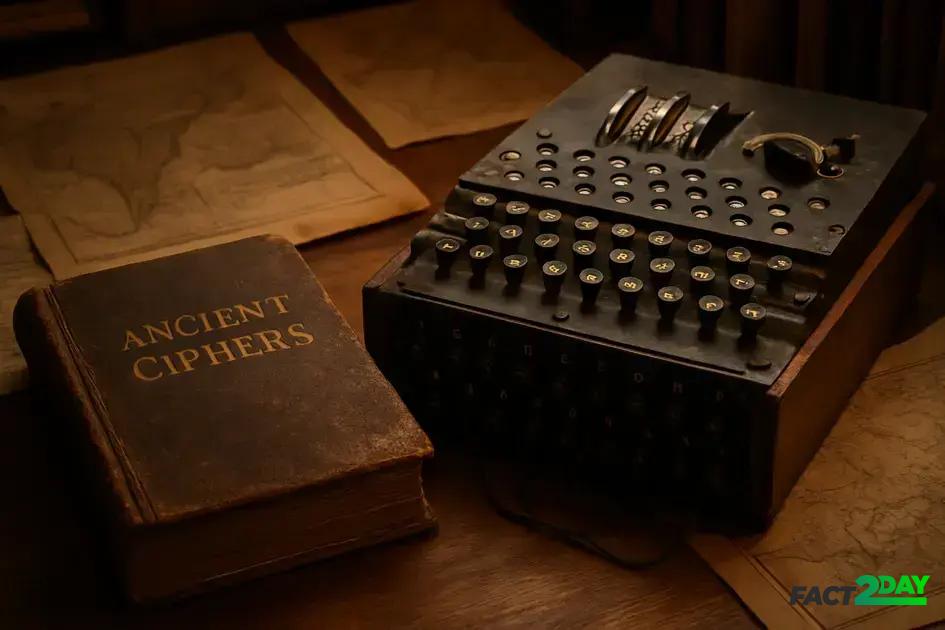
The Enigma machine was a sophisticated encryption device used by Nazi Germany during World War II to send secret military messages. It used a series of rotating wheels to scramble letters, creating millions of possible combinations. This made the encrypted messages extremely difficult to break without knowing the machine’s settings.
Breaking the Enigma code became a top priority for the Allies. The British government established Bletchley Park, where a team of skilled cryptanalysts, including Alan Turing, developed techniques and early computers to crack Enigma-encrypted messages.
The successful decryption of Enigma communications gave the Allies critical information about German plans, significantly influencing the course of the war. This achievement showcased the power of combining human intelligence and technology in cryptanalysis.
The Enigma machine story highlights how cryptography and espionage are intertwined, with codebreaking efforts changing the outcomes of major historical events.
Cold War espionage and cryptographic advancements
The Cold War was a period marked by intense espionage between the United States and the Soviet Union. Cryptography advanced rapidly as both sides sought to protect their communications and intercept the opponent’s secrets. Governments invested in sophisticated encryption methods and secret listening devices.
One major development was the use of public key cryptography, which allowed secure communication without the need to share a secret key beforehand. This breakthrough improved the safety and efficiency of encrypted messages.
Spy agencies like the CIA and KGB employed encrypted radios and coded messages embedded in everyday communications to maintain secrecy. They also worked to crack enemy codes, using early computers and cryptanalytic techniques.
The Cold War era showcased how cryptography and espionage were deeply linked, constantly driving each other forward in a high-stakes battle for information and power.
Modern digital cryptography and surveillance
Modern digital cryptography is the backbone of secure communication in today’s connected world. It uses complex mathematical algorithms to encrypt data, ensuring privacy and integrity across the internet, banking, and government systems. Public key infrastructure (PKI) allows people to exchange information safely even if they have never shared a secret key before.
With the rise of the internet, surveillance technologies have also advanced. Governments and organizations use encryption to protect data but also develop tools to monitor digital communications for security reasons. This creates a delicate balance between maintaining privacy and ensuring safety.
Encryption protocols like SSL/TLS secure websites, while cryptocurrencies use cryptography to authenticate transactions and maintain anonymity. At the same time, debates around encryption backdoors highlight the ongoing tension between privacy advocates and law enforcement.
As technology evolves, so do the methods to break and defend cryptographic systems, making modern digital cryptography an ever-changing and crucial field.
Famous spies and their cryptographic exploits
Throughout history, many famous spies have used cryptography to carry out daring missions and protect vital secrets. One notable figure is Josephine Baker, who used secret invisible inks and coded messages during World War II to help the French Resistance.
Another example is Richard Sorge, a Soviet spy who used encrypted radio transmissions to send intelligence from Japan to Moscow, significantly impacting the outcome of World War II.
Elizabeth Bentley, a spy during the Cold War, used sophisticated cipher techniques to encode information she passed to the Soviet Union. Her capture highlighted the importance of cryptography in espionage and security.
Many spies relied on advanced encryption methods combined with clever disguise and misdirection to evade detection. These cryptographic exploits reveal how critical secret codes were to intelligence success and survival.
The impact of cryptography on international relations
Cryptography has played a significant role in shaping international relations. By enabling secure communication between countries, it has allowed leaders to negotiate sensitive treaties and exchange intelligence without fear of interception. This has helped maintain strategic advantages and foster diplomatic trust.
However, cryptography has also created tension. For instance, when countries discover covert surveillance or codebreaking efforts, it can lead to diplomatic crises. The Snowden revelations exposed widespread government spying, impacting relationships between major powers.
Strong encryption standards have become part of international agreements regulating technology exports, as governments aim to control access to powerful cryptographic tools. This balance between privacy and security often reflects broader geopolitical goals.
Overall, cryptography’s impact extends beyond technology, influencing power dynamics, alliances, and conflicts among nations in the modern world.
Ethics and legal issues in cryptography and espionage
Cryptography and espionage raise complex ethical and legal issues. While encryption protects privacy and secures data, it can also shield illegal activities. Governments often struggle to balance individual rights with national security concerns.
The use of mass surveillance and secret data collection has sparked debates on whether such practices violate civil liberties. Laws governing encryption vary worldwide, with some countries demanding backdoors for law enforcement access, raising fears of abuse.
Whistleblowers and hackers challenge the boundaries between exposing wrongdoing and breaking the law. The ethics of espionage itself are questioned, especially when spying involves allies or innocent parties.
International agreements attempt to regulate cryptographic technologies, but rapid advances often outpace legislation, making ongoing discussions crucial to ensure that trust, security, and privacy coexist.
Future trends in cryptography and intelligence gathering
The future of cryptography and intelligence gathering is shaped by breakthroughs in technology and growing cybersecurity demands. Quantum computing promises to both challenge existing encryption methods and enable new ones that are virtually unbreakable.
Post-quantum cryptography is emerging as a critical field, aiming to develop algorithms that can resist attacks from future quantum computers. This ensures secure communication well into the future.
Artificial intelligence and machine learning are also transforming intelligence gathering. They allow faster analysis of vast amounts of data, helping agencies detect threats and decode encrypted messages more efficiently.
Privacy concerns will continue to influence cryptographic development. Balancing strong security with individual rights will remain a key challenge as surveillance technologies grow more powerful.
Continued innovation and ethical considerations will guide how cryptography and espionage evolve to meet the demands of an increasingly digital and interconnected world.
Understanding the lasting impact of cryptography and espionage
Cryptography has been a vital tool throughout history, shaping wars, diplomacy, and intelligence gathering. From ancient ciphers to modern digital encryption, the need to protect information has driven powerful innovations.
Espionage relies heavily on these secret codes, with spies and governments constantly adapting to new methods. As technology evolves, so does the complexity and importance of cryptographic techniques.
Looking ahead, future trends like quantum computing and AI will continue to transform how secrets are kept and discovered. Balancing security, privacy, and ethics will remain crucial in this ongoing battle.
Understanding the history and future of cryptography helps us appreciate the hidden language that has shaped global events and continues to impact our world today.