Ashes of Knowledge: The Catastrophic Loss and Enduring Impact of History’s Greatest Burned and Lost Libraries
Explore the profound Lost Libraries Global Impact that shaped history through tragic destruction and ongoing cultural loss worldwide.
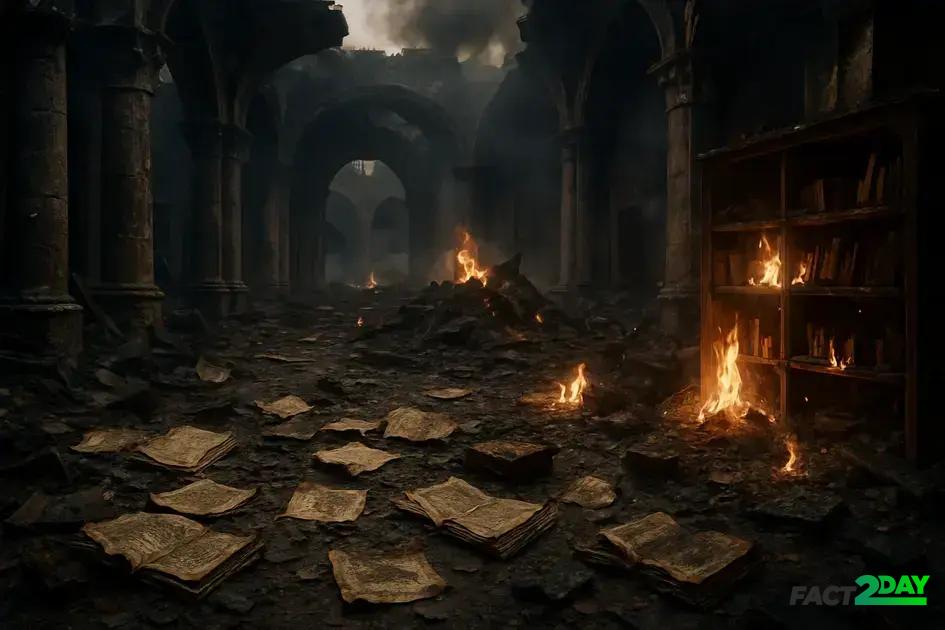
Lost libraries have dramatically shaped human history by erasing invaluable knowledge and culture, highlighting the urgent need for preservation, restoration, and digital safeguarding to protect our shared heritage.
Have you ever wondered about the Lost Libraries Global Impact on our world? These devastating events shaped the course of history, erasing countless treasures of human knowledge and culture. Let’s dive into how these losses still echo today.
The history of famous lost libraries
Throughout history, libraries have stood as beacons of knowledge and progress, yet many famous institutions have been lost to time through war, disaster, or neglect. The history of famous lost libraries reveals a story of cultural treasures destroyed and irreplaceable manuscripts lost forever. One of the most well-known is the Library of Alexandria, which once housed thousands of scrolls and texts from ancient civilizations. Its destruction remains a symbol of lost wisdom and the fragility of human heritage.
Other notable lost libraries include the ancient Nalanda University Library in India, which was a center for Buddhist learning before it was burned down. In the Middle Ages, the destruction of the House of Wisdom in Baghdad resulted in the loss of countless scientific and philosophical works. Each lost library marks a significant gap in human knowledge and highlights the importance of preservation efforts.
Preserving Collective Memory
These libraries were more than books—they were the heart of cultural identity and scientific advancement. The loss teaches us about the vulnerabilities of knowledge storage and the consequences of conflict and neglect. Today, initiatives strive to digitize old manuscripts and recreate lost collections to keep the flame of knowledge alive.
Causes behind library destructions through ages
Libraries throughout history have faced destruction caused by various factors, each leaving a lasting impact on human knowledge and culture. One primary cause is war and conflict, where libraries often become unintended casualties or deliberate targets to erase cultural identity. For example, the burning of the Library of Alexandria and the destruction of the House of Wisdom in Baghdad were results of violent upheavals.
Natural disasters have also played a significant role. Fires, floods, and earthquakes have destroyed countless collections of manuscripts and books. Fire, especially, was a constant threat in ancient times, as many libraries were built with flammable materials and lacked modern safety measures.
Neglect and Decay
Another cause is neglect over time. Without proper care, library materials degrade due to humidity, pests, and aging. In many cases, libraries fell into disuse and were abandoned, leading to gradual deterioration of their collections.
Political and religious censorship has sometimes resulted in the deliberate destruction of knowledge deemed heretical or dangerous. This has led to the loss of countless works across different cultures and eras.
Understanding these causes reminds us of the fragility of knowledge storage and the importance of preservation efforts today.
Impact on cultural heritage and knowledge preservation
The impact on cultural heritage and knowledge preservation due to the loss of libraries is profound and far-reaching. Libraries are repositories of history, art, science, and literature, and their destruction means losing access to irreplaceable treasures. When these collections vanish, entire cultures face gaps in their historical record and identity.
Many ancient texts contained unique knowledge about medicine, philosophy, and technology, often not recorded anywhere else. Their loss hampers not only our understanding of the past but also limits future discoveries. These vanished works represented the collective wisdom of generations and shaped civilizations around the world.
The Ripple Effect on Preservation
Losses drive urgency in cultural preservation. Modern efforts focus on digitizing fragile documents and creating backups to prevent irreversible damage. Institutions now invest heavily in archival techniques and global collaborations to safeguard surviving collections.
Preserving knowledge is also about valuing diverse perspectives and voices that might otherwise be forgotten. Libraries serve as centers for learning and cultural exchange, and their disappearance affects education and social development.
Ultimately, the destruction of libraries reminds us how vital it is to protect our cultural heritage in all its forms for future generations to learn from and appreciate.
Famous libraries lost to war and conflict
War and conflict have been responsible for the destruction of some of the world’s most famous libraries, causing immense loss to human knowledge and culture. The Library of Alexandria, often considered the most significant ancient library, was destroyed in a series of events linked to military conflicts, wiping out countless manuscripts from antiquity.
During the Mongol invasions, the great libraries of Central Asia suffered severe damage, leading to the loss of many historical texts. Similarly, the House of Wisdom in Baghdad, a center of learning during the Islamic Golden Age, was destroyed during the siege of Baghdad in 1258, erasing a vast collection of scientific, medical, and philosophical works.
The Impact of 20th-Century Conflicts
More recently, World War II led to the destruction or damage of libraries across Europe and Asia. The bombing of libraries in cities like Warsaw and Dresden resulted in irreparable loss of historical archives and literature. Cultural centers in Syria and Iraq have also suffered during recent conflicts, emphasizing how war continues to threaten knowledge preservation.
These examples highlight the vulnerability of cultural heritage during times of strife and underscore the importance of protecting libraries from the ravages of war.
Effects on scientific progress and innovation
The loss of great libraries has had a profound effect on scientific progress and innovation throughout history. Many ancient texts contained pioneering ideas in mathematics, astronomy, medicine, and engineering that formed the foundation for future discoveries. When these libraries were destroyed, much of this knowledge was lost, slowing the pace of scientific advancement.
For example, the destruction of the Library of Alexandria likely erased thousands of manuscripts that could have accelerated understanding in various fields. This setback meant that some knowledge had to be rediscovered centuries later during the Renaissance.
Impact on Innovation
Without access to crucial works, scientists and inventors faced barriers in building upon previous findings. This created gaps in the chain of innovation, leaving cultures less able to solve complex problems or push boundaries scientifically.
In some cases, lost knowledge delayed breakthroughs in medicine and technology that could have saved lives or improved living conditions. The preservation of scientific heritage is therefore essential for ongoing progress and sustainable development today.
Loss of ancient manuscripts and rare texts
Throughout history, the loss of ancient manuscripts and rare texts has meant the disappearance of precious knowledge that once held the keys to understanding past civilizations, cultures, and ideas. These manuscripts often contained unique information on religion, science, literature, and art, making their destruction a significant blow to humanity’s collective memory.
Many of these texts were written on fragile materials like papyrus, parchment, or early paper, making them vulnerable to decay, fire, and war. As a result, when libraries or private collections were destroyed, countless rare works were lost forever, eliminating insights that could have influenced modern scholarship.
The Value of Rare Texts
These rare texts often contained first-hand accounts, original theories, and cultural narratives unavailable elsewhere. Their loss means entire perspectives and knowledge strands vanish from history books, limiting our understanding of the past.
Efforts to protect and preserve remaining manuscripts include careful restoration, digitization, and secure storage. These actions aim to safeguard what remains of our intellectual heritage for future generations to explore and learn from.
The role of oral tradition post-library losses
After the loss of libraries, oral tradition played a crucial role in preserving and passing down knowledge through generations. In many cultures, storytelling, poetry, and songs became powerful tools to keep history, beliefs, and scientific understanding alive when written records were destroyed.
This method relies heavily on memory and communal participation, with elders and storytellers serving as living libraries. Their narratives often included myths, genealogies, laws, and practical knowledge about medicine, agriculture, and technology.
Oral Tradition as a Knowledge Bridge
Because oral tradition is adaptable, stories could evolve over time, sometimes incorporating new insights while keeping core information intact. This helped communities retain a sense of identity and continuity despite the physical loss of written works.
In societies without written language or during times of library destruction, oral traditions ensured the survival of culture and knowledge, filling the gaps left behind by lost manuscripts.
Modern efforts to recover lost knowledge
In recent years, there have been significant modern efforts to recover lost knowledge from burned and destroyed libraries. Scholars and institutions worldwide collaborate to locate, restore, and digitize fragmented manuscripts and texts. These projects aim to piece together scattered information and make it accessible to a global audience.
Technological advances play a major role. Digital imaging, artificial intelligence, and machine learning help reconstruct damaged texts or translate ancient languages, allowing us to recover information previously considered lost forever.
Global Collaborations and Archival Projects
International partnerships have created extensive digital libraries and archives, such as the World Digital Library and initiatives by UNESCO. These platforms preserve cultural heritage and promote education on a large scale.
Additionally, archaeological digs and explorations often lead to new discoveries of ancient texts, which are then carefully preserved and studied to add to our understanding of human history.
These modern efforts highlight the ongoing journey to protect and revive the wisdom contained in history’s greatest burned and lost libraries.
Digital preservation as a response to loss
Digital preservation has emerged as a vital response to the devastating loss of historical libraries and manuscripts. By converting fragile and ancient texts into digital formats, modern technology helps protect knowledge from further damage and destruction caused by physical decay, war, or natural disasters.
Digital archives offer easy access worldwide and allow multiple backups, reducing the risk of permanent loss. Institutions employ advanced scanners and imaging techniques to capture detailed images of manuscripts, ensuring even the smallest details are preserved.
The Power of Digital Access
This technology not only safeguards texts but also democratizes knowledge, making rare and ancient works available to a global audience, including researchers, educators, and the public. Collaboration between libraries, museums, and universities has accelerated these efforts, creating vast digital libraries.
Overall, digital preservation represents a modern beacon of hope in the mission to save humanity’s cultural and intellectual heritage, preventing it from disappearing like the lost libraries of the past.
Historical examples of rebuilding libraries
Throughout history, numerous efforts have been made to rebuild lost libraries as symbols of resilience and cultural preservation. After the destruction of the ancient Library of Alexandria, attempts to revive centers of learning continued in various forms across civilizations, reflecting the deep human desire to restore knowledge.
One notable example is the rebuilding of the Royal Library of Ashurbanipal in ancient Assyria, which became a vast collection of clay tablets recording history and literature. Another is the reconstruction of European libraries after World War II, where devastated institutions were restored with the help of international cooperation.
Modern Rebuilding Initiatives
More recently, efforts to rebuild libraries in war-torn regions like Iraq and Syria show the importance of libraries as cultural pillars. These projects involve restoring damaged buildings, recovering salvaged collections, and creating digital archives for wider access.
Rebuilding libraries is not just about structures but about renewing the spirit of learning, memory, and identity for communities affected by loss.
Impact on collective memory and identity
The destruction of libraries deeply affects collective memory and identity because these institutions store more than just books—they hold shared histories and cultural values. When a library is lost, communities lose access to their stories, traditions, and records that define their identity.
Many ancient manuscripts and texts preserve languages, folklore, and beliefs crucial for understanding a group’s unique culture. The absence of these records can create gaps in how future generations learn about their heritage.
Libraries as Pillars of Identity
Libraries serve as anchors for community memory, fostering a sense of belonging and continuity. They also support education and encourage cultural pride, reinforcing identity through knowledge.
The loss of these centers can lead to cultural amnesia, where vital elements of history are forgotten or distorted. It impacts how societies view themselves and their place in the wider world.
How lost libraries influence literature and arts
The loss of libraries has had a strong influence on literature and the arts by inspiring countless works that reflect on the fragility of knowledge and the consequences of cultural destruction. Writers, poets, and artists often draw upon the idea of lost wisdom and forgotten archives to explore themes of memory, loss, and rebirth.
Many literary works reference the burning of famous libraries such as Alexandria as symbols of tragedy and the impermanence of human achievement. This event, and others like it, fuel narratives about the quest for knowledge and the effort to preserve human culture against all odds.
Artistic Responses to Loss
Visual artists create poignant depictions of ruined libraries and scattered manuscripts to evoke emotional responses and raise awareness about cultural preservation. These works often carry messages about the importance of safeguarding history and learning.
In literature and art, lost libraries serve as metaphors for forgotten histories, the resilience of human creativity, and the urgency to protect our intellectual heritage from destruction.
Lessons learned for future knowledge safeguarding
History teaches us valuable lessons about the importance of future knowledge safeguarding. The destruction of great libraries shows how fragile and vulnerable our cultural heritage can be. To prevent similar losses, we must adopt comprehensive preservation strategies.
Key lessons include the necessity of diverse storage methods like digital archiving combined with traditional physical preservation. Redundancy in backups spread across multiple locations also reduces the risk of total loss from disasters.
Building Resilience Through Collaboration
International cooperation among libraries, governments, and cultural institutions is vital to share resources and expertise. Laws and policies supporting the protection of cultural property during conflicts can help prevent deliberate destruction.
Public awareness and education about the value of knowledge preservation strengthen community support for safeguarding efforts, ensuring ongoing protection for future generations.
By learning from past tragedies, we can design and implement systems that make knowledge more secure and accessible worldwide.
The emotional and societal impact of lost knowledge
The emotional and societal impact of lost knowledge is significant and often deeply felt across communities and generations. When libraries and their collections are destroyed, it results not only in the loss of information but also a profound sense of grief and disconnection from history and culture.
Communities may experience a loss of identity and continuity, as key stories and traditions vanish. This can lead to cultural trauma that affects societal cohesion and self-understanding.
The Role of Memory and Healing
The emotional toll often drives efforts to recover and preserve what remains, highlighting the human need to remember and honor the past. Salvaging fragments of lost knowledge becomes an act of healing and resilience.
Societal impacts include challenges to education and innovation, as foundational knowledge disappears. The loss can widen knowledge gaps and hinder progress in various fields.
Overall, the destruction of libraries and knowledge repositories touches both hearts and minds, reminding us of the irreplaceable value of preserving our collective wisdom.
Preserving Our Heritage for the Future
The loss of great libraries throughout history reminds us of how delicate our shared knowledge truly is. These events have had lasting impacts on culture, science, and society as a whole.
Today, efforts in digital preservation, rebuilding, and global cooperation offer hope that we can protect what remains and recover what was lost. Safeguarding knowledge is not just about saving books but about preserving our identity and heritage for generations to come.
By learning from the past, we can build stronger systems to ensure that the wisdom of humanity endures, inspiring innovation and connection across the world.