Nature’s Fiery Spectacle: The Extreme Science Behind Volcanic Lightning Storms
Volcanic Lightning Phenomena captivate with striking storms born from molten fury. Discover the fierce science behind this rare natural wonder today!
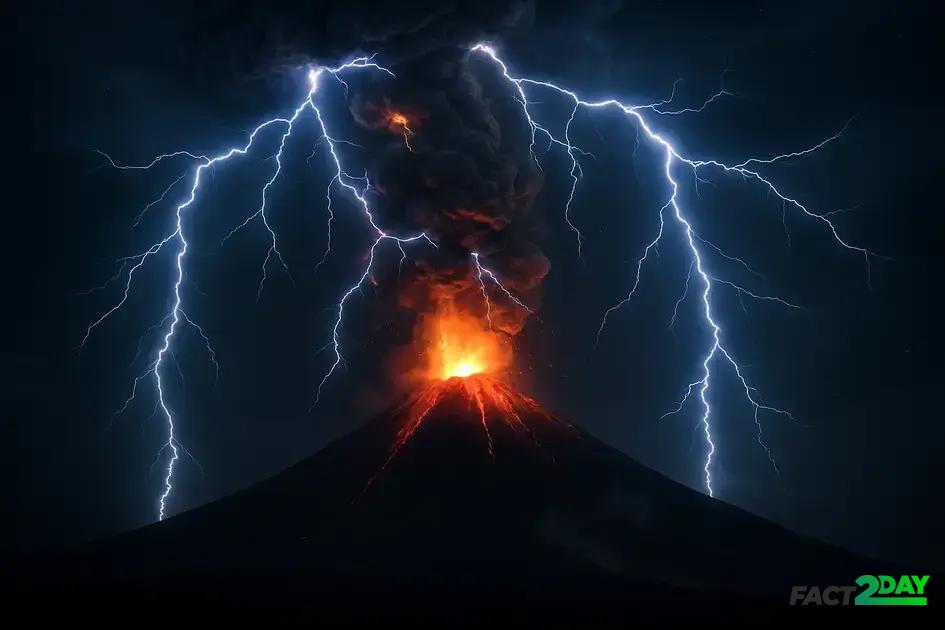
Volcanic lightning phenomena are powerful electrical storms formed when ash particles inside volcanic plumes collide and generate static electricity, creating spectacular lightning displays that reveal critical insights into eruption dynamics and ash behavior.
Have you ever wondered about the mysterious Volcanic Lightning Phenomena? It’s a breathtaking spectacle where fire and electricity dance during eruptions, creating a storm that feels almost otherworldly. Let’s dive into this extraordinary mix of nature’s power and wonder.
What volcanic lightning phenomena are and how they form
Volcanic lightning phenomena occur when electrical discharges take place within the ash clouds produced by volcanic eruptions. These stunning flashes of lightning are not your typical storms but are generated by a unique combination of volcanic material and atmospheric conditions during an eruption.
When a volcano erupts, it releases a vast amount of ash, rock fragments, and hot gases into the atmosphere. These particles collide and rub against each other inside the ash cloud, creating static electricity. This buildup of electrical charge can become so intense that it discharges as lightning bolts inside or around the eruption plume.
How the ash cloud creates lightning
The ash contains fine, jagged particles that generate friction as they move chaotically. Similar to rubbing a balloon on your hair, this friction creates an electrical charge. The charge separates into positive and negative regions within the cloud, producing a large electric field.
Once the electric field becomes strong enough to overcome the insulating properties of air, it causes a lightning strike. These strikes can be several meters long and last only fractions of a second but are incredibly powerful and bright.
Conditions needed for volcanic lightning
Strong eruptions that send ash clouds high into the sky, combined with dry atmospheric conditions, tend to produce the most spectacular volcanic lightning. The turbulence inside the plume helps keep particles suspended and charged, while the presence of ice or water near the volcanic plume can also influence the lightning activity.
Scientists study volcanic lightning not only for its beauty but also because it gives clues about the eruption’s intensity and ash content, which can be critical for aviation safety and monitoring volcanic hazards.
The science behind the electric charge in volcanic ash clouds
The electric charge in volcanic ash clouds is generated through a process called triboelectric charging. This happens when tiny ash particles rub against each other during a volcanic eruption. These collisions transfer electrons between particles, causing some to become positively charged and others negatively charged.
The role of particle collisions
As the volcanic plume rises, ash particles move turbulently and collide at high speeds. These repeated impacts are similar to static electricity you might create by rubbing a balloon on your hair. The friction generates and separates electrical charges throughout the ash cloud.
Charge separation is a key factor for lightning formation. Positively charged particles tend to move upward and negatively charged particles sink or gather at other locations within the plume, creating strong areas of electrical potential difference.
Influence of particle size and moisture
Particle size plays an important role in how charges spread. Smaller particles tend to carry a negative charge, while larger particles often carry a positive charge. Moisture or ice within the ash cloud can also affect the charging process by enabling additional electrical interactions.
These combined factors generate an intense electric field strong enough to cause the air to become conductive, allowing lightning bolts to travel through the ash cloud and create the impressive volcanic lightning phenomena observed by scientists and witnesses.
How volcanic eruptions create perfect conditions for lightning
Volcanic eruptions create perfect conditions for lightning due to several key factors within the ash clouds and atmosphere. When a volcano erupts explosively, it blasts ash, gas, and volcanic material high into the air, creating a dense, turbulent plume.
Turbulence and particle collisions
The violent motion inside the plume causes countless collisions between ash particles and rock fragments. These collisions generate static electricity through friction, charging particles differently.
Charge separation within the plume
As particles move up and down within the cloud, positive and negative charges separate. Larger particles usually fall faster, carrying one type of charge, while smaller ones rise holding the opposite. This separation increases the electric potential inside the plume.
Role of moisture and atmospheric conditions
Moisture, such as water vapor or ice crystals mixed in with the ash, can enhance the electrical activity. It helps transfer charge more effectively and can trigger the air to become conductive. Dry, unstable atmospheric layers also assist in maintaining the strong electric fields needed for lightning to form.
Together, these factors create a powerful natural setup where electrical discharges occur, producing the spectacular lightning bolts that make volcanic eruptions even more dramatic and awe-inspiring.
Differences between volcanic lightning and regular thunderstorms
Volcanic lightning and regular thunderstorms may look similar from afar, but they differ significantly in how and where they form. Regular thunderstorms develop due to atmospheric instability, moisture, and warm air rising, creating clouds with ice particles that collide and generate electrical charges.
Source and environment
Thunderstorms happen in the atmosphere without needing external events like volcanic eruptions. In contrast, volcanic lightning forms directly inside volcanic ash plumes during eruptions, where charged particles come from volcanic material rather than atmospheric moisture.
Charge generation process
In thunderstorms, lightning is produced mainly by collisions between ice particles. These ice collisions separate charges and build large electric fields. Volcanic lightning arises when ash and rock fragments collide and generate static electricity through friction, mainly from solid particles rubbing together.
Duration and location
Thunderstorms can last for hours and cover wide geographical areas. Volcanic lightning usually occurs in a smaller, more confined region near the volcanic plume and often lasts only as long as the eruption is powerful enough to sustain the ash cloud.
Visual differences
Lightning in volcanic plumes often appears as sharp, bright flashes surrounded by dense ash clouds, sometimes with distinct branching patterns. Thunderstorm lightning generally appears broader with longer-lasting bolts lighting up larger cloud masses.
Understanding these differences helps scientists predict volcanic hazards and better interpret electrical activity occurring in different natural events.
Famous recorded cases of volcanic lightning storms
Several famous volcanic eruptions have produced spectacular volcanic lightning storms that were captured by scientists and photographers. One of the most well-known cases occurred during the 2010 eruption of Eyjafjallajökull in Iceland. This eruption sent ash clouds high into the atmosphere and created vivid lightning flashes that lit up the sky, capturing global attention.
The 2014 Mount Ontake eruption
In Japan, Mount Ontake erupted unexpectedly in 2014, generating volcanic lightning storms. This eruption was particularly dangerous and showed how lightning can accompany sudden volcanic activity, helping scientists better understand the eruption’s dynamics.
The 1991 Mount Pinatubo eruption
The powerful eruption of Mount Pinatubo in the Philippines produced massive ash clouds filled with multiple lightning storms. This event helped researchers study the scale and intensity of volcanic lightning and its relationship with eruption magnitude.
Chile’s Calbuco volcano in 2015
Calbuco’s eruption created dramatic volcanic lightning displays visible for miles. The intense lightning provided valuable insight into ash cloud behavior and electrification during explosive eruptions.
These recorded cases continue to advance scientific knowledge and highlight the awe-inspiring power of volcanic lightning phenomena around the world.
The role of volcanic lightning in understanding volcanic activity
Volcanic lightning serves as more than just a spectacular natural display; it plays an important role in helping scientists understand volcanic activity. When lightning occurs during an eruption, it provides clues about the intensity and dynamics of the volcanic plume.
Indicator of eruption strength
The presence and frequency of lightning can indicate how powerful a volcanic eruption is. Strong eruptions produce vast ash clouds filled with charged particles, which create more lightning. Scientists analyze lightning patterns to estimate eruption size and potential hazards.
Tracking ash and plume behavior
Lightning helps researchers track the movement and concentration of ash within the plume. Since electrical charges build up where particles collide, lightning locations can highlight dense areas of ash that may affect air travel and nearby communities.
Real-time monitoring
Modern monitoring stations use lightning detection networks to observe volcanic eruptions remotely. This allows for quick identification of sudden changes in eruption activity, even when direct visual observation is impossible due to weather or darkness.
Understanding volcanic lightning deepens our knowledge of eruption mechanics and improves hazard response strategies, making it a vital tool in volcanology research and public safety.
Technologies used to observe and study volcanic lightning
Scientists use a variety of advanced technologies to observe and study volcanic lightning, helping them understand how these spectacular electrical storms form and behave. One key tool is high-speed cameras, which capture rapid lightning flashes within volcanic ash clouds, revealing details invisible to the naked eye.
Lightning detection networks
Specialized lightning detection systems monitor electrical activity globally. These networks detect electromagnetic signals emitted by lightning strikes, allowing researchers to track volcanic lightning activity in real time, even from remote locations.
Satellite imagery and remote sensing
Satellites equipped with sensors can observe volcanic eruptions from space. They provide valuable data on ash plume height, movement, and electrical discharge. Remote sensing technology helps map eruption extent and lightning occurrence on a large scale.
Ground-based monitoring equipment
Volcanic observatories often deploy sensors near active volcanoes to monitor seismic activity, gas emissions, and electrical discharges. Instruments like electric field meters measure changes in the local electric environment that precede lightning events.
Together, these technologies offer critical insights into volcanic lightning, aiding in eruption prediction and enhancing our understanding of volcanic processes.
Impact of volcanic lightning on nearby ecosystems and communities
Volcanic lightning can have varied impacts on nearby ecosystems and communities. While it is primarily a natural electrical phenomenon, the conditions surrounding these lightning storms often pose risks and challenges.
Effects on ecosystems
Volcanic lightning occurs amid ash clouds that release particles harmful to plant and animal life. The lightning itself can ignite wildfires when it strikes dry vegetation, leading to habitat destruction. Additionally, the ash fall can smother plants and contaminate water sources used by wildlife.
Impacts on human communities
Communities near erupting volcanoes face risks not only from lava and ash but also from lightning strikes that can start fires or damage infrastructure. Lightning-related fires can threaten homes and farmland, increasing the dangers during an eruption.
Air quality and health concerns
The combination of volcanic ash and electrical storms can worsen air quality, causing respiratory issues for people and animals. Ash inhalation, combined with electrical storms, can exacerbate health problems and complicate emergency responses.
Monitoring volcanic lightning helps officials better prepare and warn communities, potentially reducing the impacts on people and the environment.
How volcanic lightning influences volcanic ash behavior
Volcanic lightning can affect the behavior of volcanic ash in several important ways. The electrical activity within the ash cloud influences how ash particles interact, clump, and spread in the atmosphere.
Ash particle aggregation
The electric charges generated by lightning cause ash particles to attract each other and stick together. This aggregation increases the size of ash clusters, which can settle faster from the atmosphere compared to individual fine particles.
Impact on ash dispersion
Larger ash particles, formed through aggregation, tend to fall closer to the volcano, reducing the distance ash travels. This affects aviation safety and ground contamination patterns, as ash clouds may become denser but more localized.
Modification of cloud electrical properties
The strong electric fields that cause lightning also alter how ash clouds interact with atmospheric moisture and electrical charges. This can influence the development of secondary lightning events and changes in cloud dynamics.
Overall, volcanic lightning plays a key role in shaping the physical and electrical characteristics of volcanic ash clouds, affecting both environmental impact and monitoring efforts.
Challenges scientists face in predicting volcanic lightning
Predicting volcanic lightning is a complex challenge for scientists due to the dynamic and rapidly changing nature of volcanic eruptions. Several factors make accurate forecasting difficult.
Unpredictable eruption behavior
Volcanic eruptions can change suddenly, altering ash cloud height, particle concentration, and plume dynamics. These rapid variations affect how and when lightning forms, complicating prediction models.
Limited observation opportunities
Many volcanoes are in remote or dangerous locations, making real-time monitoring a challenge. Poor weather conditions and darkness can also hinder the collection of reliable data on lightning activity during eruptions.
Complex electrical processes
The exact mechanisms that generate electrical charges inside volcanic plumes are not fully understood. Variations in particle size, moisture content, and plume chemistry add layers of complexity to modeling lightning formation.
Improving prediction requires advanced technology, better observational networks, and deeper understanding of volcanic electrification processes, making it an ongoing area of scientific research.
Future research directions and potential discoveries in volcanic lightning
Future research on volcanic lightning aims to deepen our understanding of this electrifying phenomenon and its link to volcanic activity. As technology advances, scientists hope to uncover new details about how lightning forms in volcanic plumes and its broader impacts.
Enhanced monitoring techniques
Developing more sensitive sensors and satellite tools will allow continuous real-time observations of volcanic lightning. These innovations could improve eruption forecasting and hazard assessment.
Deeper study of charge generation
Researchers are working to clarify the specific physical and chemical processes behind the buildup of electric charges inside ash clouds. This knowledge may lead to more accurate models of lightning formation during eruptions.
Impacts on climate and environment
Future studies may explore how volcanic lightning contributes to atmospheric chemistry and the Earth’s electrical system. Understanding its role could reveal new insights into climate effects and environmental changes following eruptions.
Exploring these directions promises not only to expand scientific knowledge but also to enhance safety measures and environmental protection around active volcanoes worldwide.
Understanding the power of volcanic lightning
Volcanic lightning is a stunning and complex natural event that reveals much about the dynamic forces at work during eruptions. By studying this phenomenon, scientists can gain insights into eruption intensity, ash behavior, and environmental impacts.
Advances in technology and ongoing research continue to improve our ability to observe and predict volcanic lightning, helping protect communities and ecosystems near active volcanoes.
As we explore the mysteries of volcanic lightning, we uncover both the beauty and the power of nature in action, reminding us of the need for respect and preparedness in volcanic regions.