Skyscraper Farms: How Vertical Farming is Bringing Fresh Food to the Heart of Cities
Vertical Farming Urban Food offers fresh, sustainable produce straight from skyscrapers, revolutionizing city life and local food access.
Exoplanets are planets outside our solar system, discovered by detecting dimming starlight during their orbit, revealing diverse worlds that expand our understanding of the galaxy and hint at possibilities for life beyond Earth.
Have you ever wondered how Vertical Farming Urban Food can change the way cities eat? Imagine fresh, healthy produce grown right within towering skyscrapers instead of distant fields. It’s a fascinating glimpse into the future of food and urban life.
What is vertical farming and how does it work
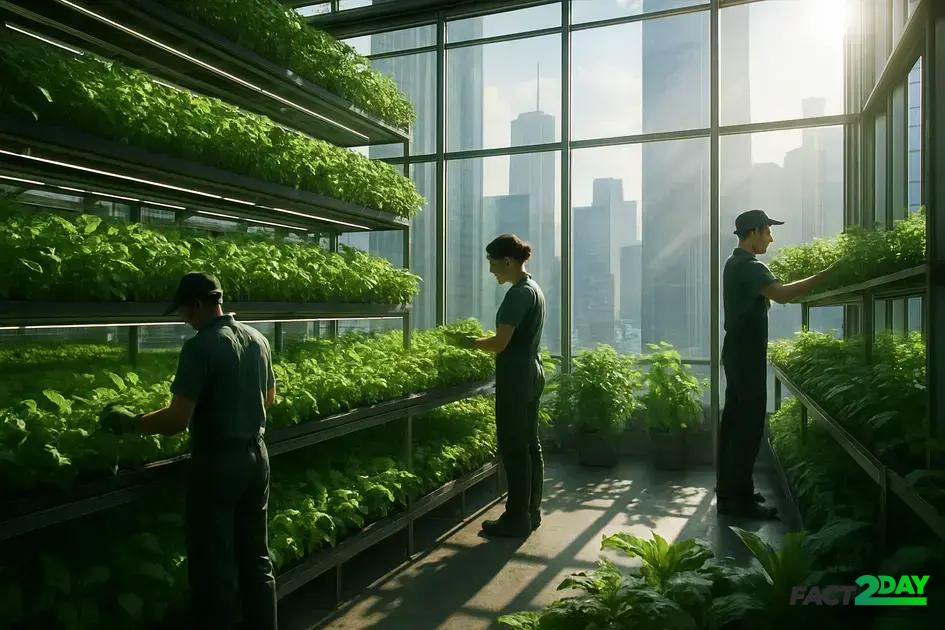
Vertical farming is a method of growing crops in stacked layers, often integrated into structures like skyscrapers or shipping containers. This technique uses controlled environments, including artificial lighting and regulated temperatures, to optimize plant growth throughout the year. Unlike traditional farming, vertical farming consumes significantly less land and water.
How Vertical Farming Works
In vertical farms, plants are grown using soilless methods such as hydroponics, where nutrient-rich water delivers essential minerals directly to the roots, or aeroponics, where roots are misted with nutrients. These systems maximize growth speed and space efficiency.
Controlled conditions allow for precise management of light, humidity, and temperature, reducing the risk of pests and diseases. Farms use LED lights that mimic sunlight, ensuring plants receive the energy needed for photosynthesis, even in urban environments with limited natural light.
Benefits of the System
This approach not only supports sustainable food production by minimizing resource use but also means fresh vegetables and herbs can be grown close to or within city centers, reducing transportation costs and carbon footprints. Vertical farming can produce food year-round, making it a reliable source of fresh produce despite external weather conditions.
Benefits of vertical farming for urban food supply
Vertical farming offers numerous benefits for the urban food supply, making it an innovative solution to growing challenges like food security and sustainability. By producing food close to where people live, it reduces the need for long-distance transportation, which cuts down on carbon emissions and preserves freshness.
Improved Resource Efficiency
These farms use significantly less water compared to traditional agriculture due to closed-loop systems and precise irrigation methods. Energy-efficient LED lighting and climate control systems ensure optimal growth conditions year-round, regardless of outdoor weather.
Maximizing Space in Cities
Vertical farming utilizes vertical space, turning unused urban areas into productive farms. This approach helps cities grow more food locally without requiring additional land, which is often scarce and expensive.
Consistent and Safe Food Production
The controlled environment minimizes risks from pests and diseases, reducing the need for harmful pesticides. This leads to safer, higher-quality produce available throughout the year, improving access to fresh vegetables and herbs in urban communities.
Economic and Social Impact
Vertical farms can create green jobs and educational opportunities in cities. They also strengthen local food systems, increasing resilience to supply chain disruptions and fostering community connections around fresh food production.
How skyscraper farms optimize space in cities
Skyscraper farms make the most of limited urban space by stacking multiple layers of crops vertically, allowing food production without expanding the city’s footprint. These farms transform unused or underutilized high-rise buildings into thriving agricultural hubs, effectively turning city skylines into sources of fresh food.
Vertical Stacking and Modular Design
By using vertical stacking techniques, farms maximize surface area for crops without needing additional land. Modular units can be added or rearranged to fit various building sizes and shapes, making the system adaptable to many urban environments.
Efficient Use of Building Infrastructure
Skyscraper farms often repurpose existing structures, utilizing rooftops, empty floors, or specially designed spaces. This reduces construction costs and integrates agriculture seamlessly with commercial or residential buildings.
Integration of Technology
Advanced technologies such as automated lighting, climate control, and irrigation systems allow precise control over growing conditions in compact spaces. This optimization increases yield per square foot and improves resource efficiency.
Multipurpose Spaces
Some skyscraper farms combine food production with community spaces, education centers, or restaurants, enhancing urban life and fostering local engagement with sustainable food practices.
Technologies driving the future of vertical agriculture
Modern vertical agriculture relies on cutting-edge technologies that make food production efficient and sustainable within urban environments. These innovations include advanced lighting, climate control, automation, and data analytics, all working together to optimize plant growth.
LED Lighting Systems
LED lights are tailored to emit specific wavelengths ideal for photosynthesis, promoting faster and healthier plant development. They consume less energy and produce minimal heat, making them perfect for indoor farming.
Climate Control and Sensors
Sophisticated climate control systems regulate temperature, humidity, and CO2 levels to create ideal conditions year-round. Sensors continuously monitor these variables, allowing real-time adjustments for optimal growth.
Automation and Robotics
Automation technologies handle tasks like planting, watering, and harvesting, reducing labor costs and human error. Robots equipped with artificial intelligence can navigate vertical farms efficiently, improving productivity.
Data Analytics and AI
Big data and AI analyze crop health, predict yields, and optimize resource use. These technologies enable precise decision-making, minimizing waste and enhancing sustainability.
Hydroponics and Aeroponics
Innovative soilless cultivation methods like hydroponics and aeroponics deliver nutrients directly to plants, maximizing growth rates and space utilization. These systems use significantly less water than traditional farming.
Challenges faced by vertical farms in urban settings
Vertical farms face several challenges when operating in urban settings. Space limitations, high startup costs, and technical complexities make it difficult to establish and maintain efficient farms inside cities.
High Initial Investment
Building a vertical farm requires significant upfront spending on infrastructure, technology, and skilled labor. Costs for LED lighting, climate control systems, and automation can be substantial, sometimes deterring potential investors.
Energy Consumption
Maintaining optimal growing conditions year-round demands consistent energy use. Despite advances in energy-efficient technologies, vertical farms can have considerable electricity costs, especially in areas where renewable energy is not widely available.
Space Constraints and Zoning Regulations
Urban spaces are limited and expensive. Finding suitable buildings compliant with zoning laws can be a challenge. Some cities have strict regulations on building usage, which can limit the expansion or location of vertical farms.
Technical Expertise and Maintenance
Operating vertical farms requires knowledge of horticulture, engineering, and technology. Skilled staff are needed to manage automated systems, monitor crop health, and troubleshoot issues, making human resources a critical factor.
Market Acceptance and Distribution
Convincing consumers to trust and buy produce grown in urban skyscrapers can be a hurdle. Additionally, setting up an efficient distribution network within the city to deliver fresh products quickly is essential for success.
Impact of vertical farming on food sustainability
Vertical farming plays a significant role in enhancing food sustainability by promoting efficient resource use and minimizing environmental impact. Its controlled environment reduces water consumption by up to 90% compared to traditional farming methods, making it crucial in addressing water scarcity.
Reduction in Land Use
By growing crops vertically, this farming method uses significantly less land. This efficient use of space helps preserve natural habitats and decreases the need for deforestation linked to expanding agricultural land.
Lower Carbon Footprint
Vertical farms often operate close to urban centers, cutting down on transportation emissions associated with shipping food long distances. Additionally, many farms incorporate renewable energy sources, further reducing their carbon footprint.
Waste Reduction and Food Security
Controlled growth conditions lead to consistent crop quality and reduced spoilage. Vertical farming also enables year-round production, improving food availability and security, especially in urban environments prone to supply chain disruptions.
Support for Local Economies
By creating job opportunities and stimulating urban agriculture markets, vertical farming contributes to sustainable economic growth while promoting community access to fresh, local produce.
Role of hydroponics and aeroponics in skyscraper farms
Hydroponics and aeroponics are two advanced soil-free techniques essential for skyscraper farms. They allow plants to grow efficiently in small spaces by delivering nutrients directly to their roots through water or air mist.
Hydroponics Explained
In hydroponic systems, plants are suspended in nutrient-rich water, which provides all the minerals they need. This method uses up to 90% less water than traditional farming because water is recirculated and reused.
Aeroponics Explained
Aeroponics takes this a step further by suspending plant roots in air and misting them with a nutrient solution. This increases oxygen exposure, accelerating growth rates and improving nutrient absorption.
Benefits in Skyscraper Farms
Both techniques are ideal for vertical farming because they require less space and can be stacked vertically. They also reduce the risks of soil-borne diseases and pests, lowering the need for chemical pesticides.
Resource Efficiency
Water and nutrient use are precisely controlled in these systems, minimizing waste and making skyscraper farms sustainable even in urban areas with limited resources.
Examples of successful vertical farming projects globally
Vertical farming has gained global attention with successful projects showcasing its potential to revolutionize urban food production. These farms demonstrate how technology and innovation can create sustainable food sources in cities worldwide.
Aerofarms, USA
Aerofarms in New Jersey is one of the largest indoor vertical farms, using aeroponics to grow leafy greens with 95% less water than traditional agriculture. They focus on producing pesticide-free, nutritious food year-round in a controlled environment.
Sky Greens, Singapore
Sky Greens uses a unique rotating vertical system to maximize sunlight exposure for crops. This farm emphasizes low energy use and supports Singapore’s goal of increasing local food production despite limited land availability.
Infarm, Germany
Infarm integrates small modular vertical farms directly into supermarkets and restaurants across Europe. Their system includes hydroponic technology, allowing for fresh, locally grown herbs and vegetables to be harvested on-site.
Spread, Japan
Spread uses automated vertical farms with robotic systems to optimize lettuce production. Their advanced technology allows for consistent quality and efficiency, helping meet Japan’s urban food demands sustainably.
Local Roots, USA
Based in California, Local Roots uses container farms equipped with hydroponics and IoT technology. Their mobile farms serve urban areas, promoting fresh produce access and reducing supply chain complexity.
Economic advantages for cities adopting vertical farming
Vertical farming offers significant economic advantages for cities by creating new opportunities for growth, jobs, and sustainability. This innovative approach can transform urban spaces into productive areas, boosting local economies.
Job Creation and Workforce Development
Vertical farms require skilled workers for operation, maintenance, and technology management. This creates a variety of jobs ranging from farm technicians to engineers, contributing to local employment and workforce training.
Reduced Food Costs and Supply Chain Efficiency
By producing food close to consumers, vertical farms lower transportation and storage costs. This can lead to lower prices for fresh produce and reduce waste caused by lengthy supply chains.
Stimulating Local Businesses
Vertical farming supports local entrepreneurs by providing fresh ingredients for restaurants, markets, and grocery stores. This encourages the development of urban agriculture-related businesses and strengthens local food networks.
Attracting Investment and Innovation
The rising interest in sustainable agriculture attracts investors and technology companies to cities with vertical farming initiatives. This influx of capital can foster innovation hubs and smart city projects.
Enhancing Food Security and Resilience
Urban farms reduce dependency on distant food sources, enhancing a city’s resilience against supply disruptions. This economic stability can make cities more attractive for residents and businesses.
How vertical farms reduce food transportation emissions
Vertical farms located within cities greatly reduce the distance food must travel to reach consumers. By growing produce close to where people live, these farms cut down on emissions from transportation, a major contributor to greenhouse gases.
Shortened Supply Chains
Traditional farming often requires transporting food hundreds or thousands of miles from rural farms to urban markets. Vertical farms eliminate much of this journey by producing food directly inside urban centers.
Reduced Use of Fossil Fuels
Less transportation means fewer trucks, ships, and planes are needed to move food, which lowers fossil fuel consumption and carbon emissions. This contributes to cleaner air in cities and helps combat climate change.
Minimized Food Waste
Shorter delivery times mean fresh produce arrives quicker and stays fresher longer, reducing the amount of food that spoils during transit. This efficiency also decreases the resources wasted on growing food that never reaches consumers.
Opportunities for Renewable Energy Integration
Urban vertical farms can incorporate renewable energy sources like solar or wind power, making the entire food production and distribution system more sustainable and less reliant on fossil fuels.
Integration of renewable energy in vertical farming systems
Renewable energy integration is becoming essential for vertical farming systems aiming to reduce their environmental impact and operating costs. Using clean energy sources can make these farms more sustainable and efficient.
Solar Energy
Many vertical farms install solar panels on rooftops or nearby spaces to capture sunlight and convert it into electricity. Solar power helps offset energy use from lighting, climate control, and irrigation systems, lowering reliance on fossil fuels.
Wind Energy
In some urban settings, small wind turbines complement other renewable sources. These turbines generate power that supports farm operations, especially in areas with consistent wind patterns.
Energy Storage and Management
Battery storage systems allow vertical farms to store generated renewable energy for use during peak demand times or at night. Smart energy management ensures efficient distribution and reduces waste.
Benefits of Renewable Energy Integration
Utilizing renewable energy reduces greenhouse gas emissions and operational costs, making vertical farms economically and environmentally sustainable. This integration also aligns with city-level goals for greener urban development.
Community involvement and education in urban farms
Community involvement and education are vital components of successful urban farms. They foster awareness about sustainable food practices and build strong connections between residents and local food sources.
Educational Programs
Urban farms often host workshops and classes to teach people about growing their own food, nutrition, and environmental benefits. These programs empower individuals with practical skills and inspire healthier lifestyles.
Volunteer Opportunities
Many farms offer volunteer roles where community members can participate in planting, harvesting, and maintenance. This hands-on experience encourages active engagement and helps build a sense of ownership.
Partnerships with Schools and Organizations
Collaborations with schools, nonprofits, and local businesses expand the reach of urban farms. School gardens and farm visits provide students with valuable lessons in science and sustainability.
Community Events and Markets
Farmers markets and events hosted on-site promote local produce and foster social interaction. They create vibrant community spaces that support local economies and encourage healthy eating habits.
Future trends shaping vertical farming innovations
Future trends in vertical farming focus on making the technology more efficient, sustainable, and accessible. Innovations will likely transform how cities produce food and how farms operate on a global scale.
Advanced Automation and Robotics
Robots and AI-powered systems are expected to handle more tasks such as planting, monitoring, and harvesting, improving accuracy and reducing labor costs.
Integration with Smart Cities
Vertical farms will become part of broader smart city ecosystems, connected through the Internet of Things (IoT) to optimize resource use, weather data, and energy consumption seamlessly.
Sustainable and Renewable Energy Use
Renewable energy sources like solar and wind will be integrated more deeply, allowing vertical farms to operate with minimal carbon footprints, aligning with global climate goals.
Customized Crop Production
Using data analytics and genetic techniques, farms will tailor crops to nutritional needs and local preferences, enhancing food security and consumer satisfaction.
Modular and Scalable Designs
Innovative modular farm units will allow easy expansion and adaptation to different urban environments, making vertical farming accessible to more communities worldwide.
How vertical farming could transform global food security
Vertical farming has the potential to greatly improve global food security by providing a reliable and efficient way to grow food in urban areas, close to where people live. This can help reduce dependence on traditional agriculture, which is vulnerable to climate change and land availability.
Year-Round Food Production
Controlled environments in vertical farms allow crops to grow year-round, regardless of weather conditions. This consistency helps maintain stable food supplies, especially in regions prone to droughts or extreme weather events.
Efficient Resource Use
Vertical farms use significantly less water and land compared to traditional farming, making them suitable for areas facing resource scarcity. The water recycling and nutrient management techniques used minimize waste and environmental impact.
Reduced Food Waste and Loss
By growing food near urban centers, vertical farming minimizes transportation and storage times. This reduces spoilage and food loss, ensuring that more produce reaches consumers fresh and nutritious.
Support for Growing Urban Populations
As more people move to cities, vertical farming can meet the rising demand for fresh food without expanding farmland. This innovative approach helps cities become more self-sufficient and resilient to global food supply disruptions.
Contribution to Climate Change Mitigation
Vertical farming reduces greenhouse gas emissions by cutting transportation needs and using sustainable energy sources. This not only improves local air quality but also supports global efforts to combat climate change.
The future of food with vertical farming
Vertical farming is changing how we grow and access fresh food in cities. By using less land and water, and growing food year-round, it helps make food supplies more secure and sustainable.
This technology reduces waste and cuts down on harmful emissions by bringing farms closer to where people live. It also supports growing urban populations and helps fight climate change.
As vertical farming continues to evolve, it promises a future where cities can feed their people better, smarter, and greener.