Guardian of Earth: The Science and Engineering Behind Asteroid Diversion Missions
Planetary Defense Asteroid Diversion explores how science and engineering unite to protect Earth from cosmic threats. Discover the mission behind it.
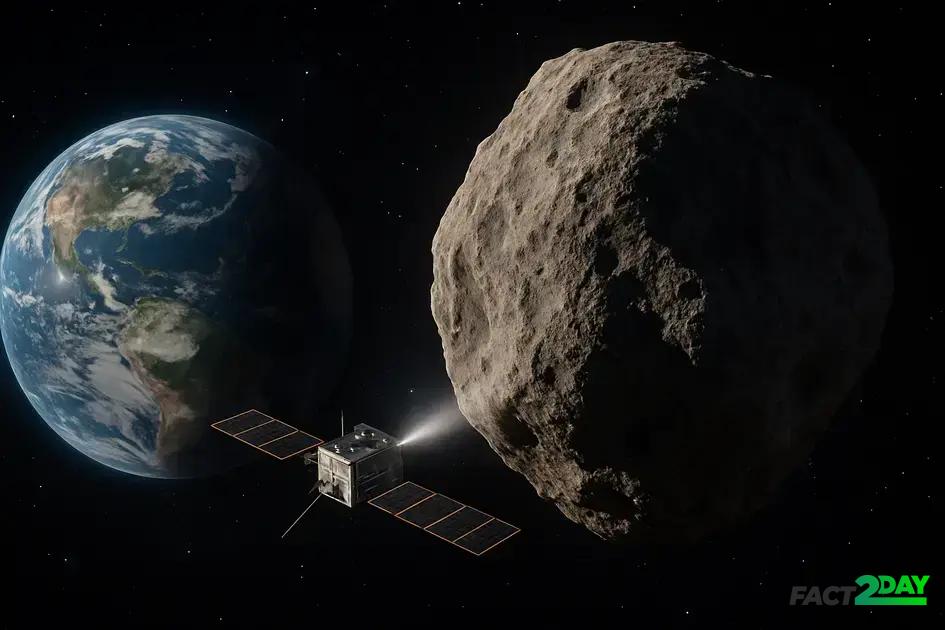
Planetary Defense Asteroid Diversion involves advanced science and engineering techniques designed to detect, track, and alter the paths of asteroids to prevent potential Earth impacts.
Have you ever wondered how we could stop a massive space rock heading towards Earth? The fascinating world of Planetary Defense Asteroid Diversion reveals the science and engineering strategies designed to safeguard our planet from cosmic hazards. Let’s dive into these incredible missions that might one day save us all.
Understanding asteroid threats to Earth
Asteroids are rocky objects orbiting the Sun, and while most remain in the asteroid belt between Mars and Jupiter, some cross paths with Earth. These near-Earth objects (NEOs) pose varying levels of risk depending on their size, speed, and trajectory. Understanding asteroid threats to Earth begins with identifying which objects could potentially collide with our planet.
Smaller asteroids enter Earth’s atmosphere frequently but usually burn up harmlessly as meteors. However, larger ones, those over 140 meters in diameter, can cause significant damage if they impact. These impacts could lead to devastating regional effects such as shockwaves, fires, and even climate changes due to dust clouds in the atmosphere.
Tracking Near-Earth Objects
To assess threats, scientists use telescopes and radar systems worldwide to discover and track NEOs. Organizations like NASA’s Planetary Defense Coordination Office play a critical role in cataloging these objects and predicting their paths years in advance. This data helps estimate impact probabilities and prepare potential defense strategies.
Potential Impact Scenarios
Impact severity depends on asteroid size, speed, angle of entry, and composition. A large, fast-moving asteroid striking Earth could release energy equivalent to thousands of nuclear bombs. Understanding various possible scenarios helps governments and scientists prioritize response plans and develop asteroid diversion technologies.
By studying cosmic threats thoroughly, we gain valuable knowledge that informs how to protect our planet. Awareness and continuous monitoring are the first lines of defense against asteroid hazards.
History of planetary defense efforts
The effort to protect Earth from asteroid impacts has a rich history that dates back decades. Early ideas focused on understanding the threats posed by space objects and whether humans could intervene. History of planetary defense efforts highlights milestones from initial observations to modern, coordinated missions.
Early Awareness and Research
During the mid-20th century, scientists began recognizing the impact craters on Earth and the Moon, linking them to asteroid collisions. This period marked the start of studying NEOs and assessing their risk to our planet.
Formation of Dedicated Programs
The 1990s brought significant steps with NASA launching the Spaceguard Survey to detect potentially hazardous asteroids. Countries across the globe joined efforts, creating tracking systems and databases to catalog NEOs.
International Collaboration
As awareness grew, organizations like the United Nations formed action plans and committees to coordinate global responses. These efforts led to the creation of the International Asteroid Warning Network (IAWN) and the Space Missions Planning Advisory Group (SMPAG).
Recent Technological Advances
Modern times have seen the launch of real asteroid diversion missions, like NASA’s DART (Double Asteroid Redirection Test), which tested kinetic impact technology to change an asteroid’s path. These successes mark a new chapter in planetary defense.
Through decades of research, cooperation, and innovation, planetary defense has evolved into a serious, global scientific priority aimed at ensuring Earth’s safety from cosmic threats.
Technologies used in asteroid detection
Detecting asteroids early is vital to protect Earth. Several advanced technologies used in asteroid detection help scientists identify and track near-Earth objects with great precision.
Ground-Based Telescopes
Large optical telescopes on Earth scan the night sky to spot asteroids moving against the background of stars. These telescopes use sensitive cameras and software to detect faint objects and calculate their orbits. Observatories like Pan-STARRS and the Catalina Sky Survey play key roles in the discovery process.
Radar Astronomy
Radar systems send radio waves to bounce off asteroids and return data about their distance, speed, size, and surface features. This technology provides detailed information about an asteroid’s trajectory and composition, which is essential for planning any diversion mission.
Space-Based Telescopes
Satellites equipped with infrared sensors, like NASA’s NEOWISE mission, detect the heat emitted by asteroids. Operating above the atmosphere, these telescopes avoid interference, allowing more accurate detection of dark or hard-to-see objects.
Automated Survey Programs
Software algorithms automatically process enormous amounts of data from telescopes. These AI-driven programs flag potential asteroids and predict their orbits, improving response time and enabling continuous sky monitoring.
Together, these technologies form a robust early warning system, providing critical data to inform planetary defense strategies.
Methods of diverting potentially hazardous asteroids
Diverting potentially hazardous asteroids is a complex challenge that involves various scientific and engineering methods. These methods of diverting potentially hazardous asteroids are designed to change the asteroid’s trajectory to avoid collision with Earth.
Kinetic Impact
This method involves sending a spacecraft to collide with the asteroid at high speed. The impact transfers momentum, slightly altering the asteroid’s path. NASA’s DART mission successfully tested this approach, marking a significant milestone.
Gravity Tractor
A spacecraft hovers near the asteroid, using its gravitational pull to slowly change the asteroid’s course. Though gradual, this method allows precise control without physically touching the asteroid.
Nuclear Explosives
Using nuclear devices near an asteroid can either push it off course through ablation or break it into smaller pieces. While effective, this method raises concerns due to risks and international regulations.
Solar Sails and Laser Ablation
Solar sails use light pressure from the sun to nudge asteroids over time. Similarly, targeting an asteroid with lasers can vaporize surface material, creating thrust that alters its path.
Choosing the Right Method
The best method depends on factors like asteroid size, composition, warning time, and mission feasibility. Early detection is crucial since some approaches require years to be effective.
Each method brings unique benefits and challenges, and ongoing research is vital to develop reliable strategies for planetary defense.
Engineering challenges of asteroid diversion missions
Asteroid diversion missions face numerous engineering challenges that require innovative solutions. Successfully changing an asteroid’s path involves understanding its composition, size, and orbit, as well as designing spacecraft and systems capable of precise maneuvers.
Spacecraft Design and Durability
Spacecraft must endure harsh environments such as radiation, extreme temperatures, and microgravity. Engineers design robust systems with redundant components to ensure mission success. Precise navigation and propulsion are critical to reach and interact with fast-moving asteroids.
Understanding Asteroid Composition
Asteroids vary greatly—some are solid rock, others are loose piles of rubble. This diversity affects how a spacecraft can impart force or attach instruments. Accurate data collection during missions helps adapt strategies in real time.
Propulsion and Navigation Systems
High-precision propulsion allows tiny velocity changes to be applied, which over time, translate into significant orbital deviations. Advanced navigation systems guide the spacecraft to rendezvous, impact, or hover near the asteroid with exact timing.
Communication and Control
Maintaining reliable communication over vast distances is a challenge. Delays require autonomous systems onboard to make real-time decisions. Ground control must process data quickly and coordinate multi-step operations without direct intervention.
Mission Timing and Coordination
Early detection is necessary since small course corrections need time to be effective. Coordinating multiple countries and agencies adds complexity but improves chances of success through shared expertise and resources.
Addressing these engineering challenges drives progress in space technology and enables humanity to protect Earth from possible asteroid impacts.
International collaboration in planetary defense
Planetary defense requires international collaboration because asteroid threats do not recognize borders. Working together, countries can share resources, knowledge, and technology to improve detection and response efforts worldwide.
Global Monitoring Networks
Organizations like the International Asteroid Warning Network (IAWN) connect observatories and space agencies across the globe. This network ensures continuous monitoring of near-Earth objects and rapid sharing of data among nations.
Coordinated Response Planning
International groups develop plans for coordinated responses to asteroid threats. These plans outline who takes responsibility for detection, communication, and possible mission launches to deflect asteroids.
Shared Space Missions
Countries collaborate on space missions, pooling expertise and funding. Projects like NASA’s DART mission involved global participation, demonstrating the strength of teamwork in planetary defense.
Policy and Legal Frameworks
International treaties and agreements are essential to govern asteroid deflection missions, especially when nuclear devices or other sensitive technologies are considered. Cooperation fosters transparency and trust.
Public Education and Awareness
Joint efforts help spread accurate information about asteroid threats and defense measures. Educating the public reduces panic and promotes informed support for planetary defense initiatives.
By working as one, nations increase the chances of successfully protecting Earth from cosmic hazards.
Role of space agencies in asteroid avoidance
Space agencies worldwide play essential roles in detecting, tracking, and responding to asteroid threats. They combine advanced research, cutting-edge technology, and international partnerships to protect Earth.
Detection and Tracking
Agencies like NASA, ESA, and JAXA operate telescopes and sensors to discover and monitor near-Earth objects. They maintain databases and publish predictions about asteroid paths to inform governments and the public.
Research and Development
Space agencies lead the development of technologies for asteroid diversion, including kinetic impactors and gravity tractors. Missions like NASA’s DART demonstrate practical approaches to changing an asteroid’s trajectory.
Mission Planning and Execution
Designing and launching asteroid diversion missions requires precision engineering and coordination. Agencies oversee all phases from spacecraft construction to data analysis post-mission, ensuring scientific goals and safety are met.
Collaboration with International Partners
Pooling resources and expertise, agencies collaborate on shared missions and data exchange. This global approach enhances the ability to respond quickly to new threats.
Public Communication and Education
Space agencies provide transparent updates about asteroid risks and defense efforts. Educating the public builds trust and supports policy decisions related to planetary defense.
Overall, space agencies are the driving force behind advancing planetary defense, safeguarding humanity through innovation and cooperation.
Future technologies for improved asteroid diversion
Advancements in science and technology promise to improve how we divert asteroids in the future. Future technologies for improved asteroid diversion focus on increasing precision, efficiency, and response times to better protect Earth.
Advanced Propulsion Systems
New propulsion technologies, such as ion drives and plasma thrusters, can provide spacecraft with higher speeds and greater control. These systems allow for quicker missions and more accurate targeting of asteroids.
Autonomous Spacecraft
Artificial intelligence will equip spacecraft with autonomous decision-making abilities. These smart systems can perform complex tasks, adapt to changing conditions, and execute diversion maneuvers without waiting for commands from Earth.
Laser Ablation
Future missions might use powerful lasers to heat and vaporize the surface of an asteroid. This process creates thrust as material is ejected, slowly pushing the asteroid onto a safer path.
Swarm Robotics
Multiple small spacecraft working together as a swarm can distribute risk and increase the chance of success. They can surround and study the asteroid, applying forces from several angles as needed.
Improved Detection and Modeling
Better telescopes and sensors combined with advanced computer models will enhance our ability to predict asteroid trajectories and physical properties, enabling tailored diversion strategies.
These emerging technologies mark a new era in planetary defense, bringing hope that we can effectively address asteroid threats before they become dangerous.
Impact of successful asteroid missions on humanity
Successful asteroid missions have a profound impact on humanity, from advancing scientific knowledge to protecting life on Earth. These missions contribute to our understanding of the solar system and demonstrate our ability to defend against cosmic threats.
Scientific Discoveries
Asteroid missions provide valuable data about the early solar system, revealing clues about the formation of planets and organic materials that may have led to life. Samples returned from asteroids deepen our knowledge of space composition and history.
Planetary Defense Validation
Successful diversion or study missions prove that humans can actively alter the trajectory of potentially hazardous asteroids. This capability reduces the risk of catastrophic impacts on Earth, enhancing global safety.
Technological Innovation
Missions push the boundaries of spacecraft engineering, propulsion, and autonomous systems. These innovations often have broader applications in other space and earth technologies, boosting industries and inspiring new research.
International Cooperation
High-profile missions encourage collaboration between countries and agencies, fostering peace and shared goals in space exploration and defense. This sets a precedent for tackling other global challenges collectively.
Public Engagement and Inspiration
Successful missions capture the imagination of people worldwide, sparking interest in STEM fields and encouraging educational pursuits. They remind humanity of our place in the cosmos and the importance of protecting our home planet.
The impact of these missions extends far beyond science; they symbolize human ingenuity, resilience, and commitment to safeguarding our future.
How individuals can stay informed and involved
Staying informed and involved in planetary defense is easier than ever thanks to technology and public outreach programs. Individuals play a key role in supporting efforts to protect Earth from asteroid threats.
Follow Space Agencies and Research Organizations
Many space agencies, such as NASA and ESA, maintain active websites and social media channels that provide updates on asteroid missions and discoveries. Subscribing to newsletters and following these outlets helps you stay current.
Participate in Citizen Science Projects
Citizen science platforms invite the public to assist in monitoring the sky. Projects like the Zooniverse’s asteroid hunting initiatives allow volunteers to analyze telescope data and identify potential threats.
Engage with Educational Resources
Online courses, webinars, and public lectures provide knowledge about space science and planetary defense technologies. Joining these programs empowers individuals to understand the science behind asteroid diversion.
Support Policy and Funding
Advocating for continued funding of planetary defense programs through petitions, contacting representatives, or public campaigns helps ensure that these important missions receive necessary resources.
Promote Awareness in Your Community
Sharing accurate information and hosting educational events raises awareness and encourages collective preparedness. Discussions about space threats can inspire interest in STEM fields among young people.
By staying informed and actively participating, individuals contribute to a global culture of vigilance and cooperation in safeguarding our planet.
Protecting Earth Together
Asteroid diversion combines science, engineering, and global teamwork to keep our planet safe. Understanding the challenges and technologies involved shows how much effort goes into these missions.
With continued innovation and international collaboration, we can improve our ability to detect and deflect threats before they reach us. Everyone has a part to play, whether in support, education, or participation.
The future of planetary defense looks promising, promising hope and security for generations to come. Staying informed and engaged empowers us all to be Guardians of Earth.