Nature’s Engineers: How Animal Movement is Inspiring the Next Generation of Agile Robotics
Explore how Bio-Inspired Robotics Movement revolutionizes agile robotics by mimicking animal movement for advanced engineering solutions.
Imagine a courtroom where the defendant is an animal rather than a person. This strange scene was quite real in medieval Europe, where animals like pigs and beetles were put on trial for crimes ranging from murder to damaging crops.
These trials were serious, with animals often having lawyers, witnesses, and sometimes even appeals. This unusual practice shows how people of that time viewed justice and the role of animals in society, blending legal rules with spiritual beliefs.
Animals as moral agents
In these trials, animals were seen not just as property but as beings capable of wrongdoing. They had to face consequences much like humans, which reflects a unique perspective on law and morality.
Though it may seem odd today, these animal trials offer a fascinating glimpse into how humans have thought about responsibility and fairness throughout history. They remind us that the ideas behind justice can change widely based on culture and time.
Consider for a moment the intriguing world of Bio-Inspired Robotics Movement. What if our next generation of robots could move with the agility and grace of animals? This exploration invites you to delve into how nature’s engineers inspire cutting-edge robotic designs.
What is bio-inspired robotics movement?
Bio-inspired robotics movement refers to the design and control of robots that imitate the ways animals move. By studying creatures like insects, fish, birds, and mammals, engineers develop machines that can walk, run, swim, or fly with similar agility and efficiency. This approach uses nature as a guide to solve complex problems in robotics by mimicking biological systems.
Animals have evolved optimized ways to move in diverse environments, which robots can leverage to improve performance. For example, the flexible spine of a cheetah inspires robots that sprint quickly, while the jointed legs of insects help create robots able to climb rough terrain. These designs often incorporate soft materials and sensors, allowing robots to adapt to changing conditions just like living beings.
Key advantages of bio-inspired movements
This method helps produce robots that are more flexible, energy-efficient, and capable of handling unpredictable settings. Unlike traditional machines, bio-inspired robots can often recover from falls, squeeze through tight spaces, and navigate complicated surfaces.
Overall, bio-inspired robotics movement bridges biology and engineering, pushing forward the development of robots that can assist in search and rescue, environmental monitoring, and many other fields.
The role of animal locomotion in robot design
Animal locomotion plays a crucial role in robot design by providing proven models of how to move efficiently across various terrains. Nature has refined different modes of movement over millions of years, including walking, swimming, flying, and crawling, which engineers study to improve robotic mobility.
Researchers analyze muscle coordination, joint movement, and body mechanics in animals to create robots that can mimic these patterns. For example, studying a lizard’s climbing techniques helps designers develop robots that can scale vertical surfaces, while observing fish swimming aids in building underwater robots with smooth propulsion.
The influence of biomechanics on robotics
Understanding the biomechanics behind animal movement allows for better robot flexibility and adaptability. This knowledge helps engineers optimize robotic limbs and control systems, enabling machines to handle uneven terrain and dynamic environments.
Overall, animal locomotion guides roboticists to design robots that are more agile, stable, and energy-efficient, making them suitable for complex real-world applications such as search and rescue missions or environmental exploration.
Key animal movements inspiring robotics
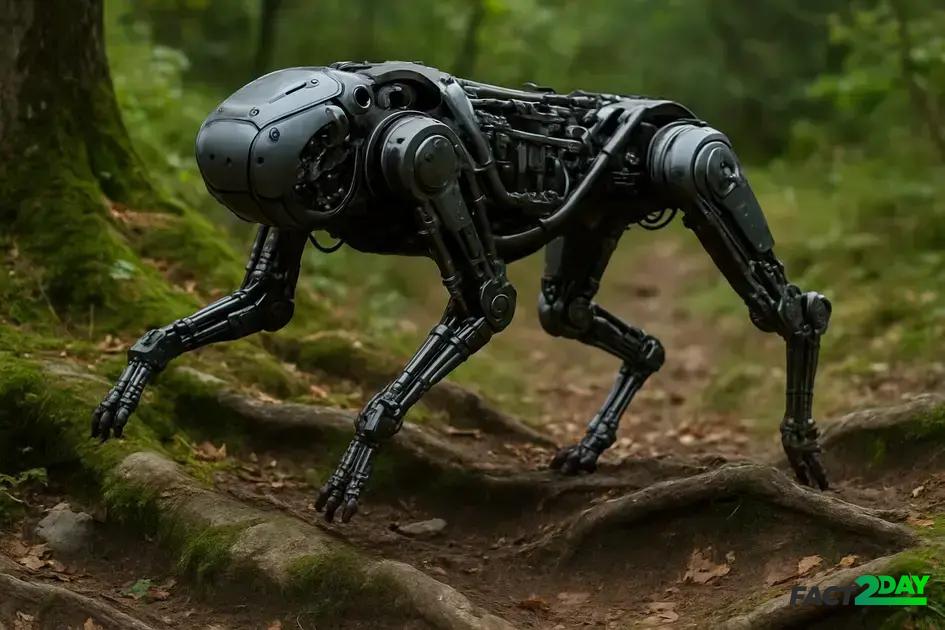
Several animal movements serve as inspiration for robotics, each offering unique solutions for different challenges. Walking and running patterns of quadrupeds like dogs and cheetahs inspire robots that require speed and balance on land. These animals provide insights into limb coordination and shock absorption.
Swimming movements of fish and aquatic mammals inspire underwater robots. Their streamlined bodies and efficient fin motions allow robots to glide smoothly through water while conserving energy.
Flight and climbing as robotic models
Birds’ wing flapping and soaring techniques guide the design of flying drones and robots capable of sustained flight and maneuverability. Meanwhile, climbing abilities seen in geckos and insects inspire robots that can adhere to and navigate vertical or uneven surfaces.
Other motions like burrowing and jumping have also influenced robot design, helping engineers develop machines capable of versatile and adaptable movement in complex environments. By studying these animal movements, roboticists create agile and multi-functional robots ready for various real-world applications.
Biomimicry principles applied to robotics
Biomimicry principles guide the design of robots by copying natural strategies that have been refined through evolution. This approach focuses on solving engineering problems by emulating biological forms, processes, and systems.
One key principle is adaptation, where robots are designed to adjust to different environments just like living organisms. For instance, soft robotics use flexible materials inspired by muscles and skin to handle delicate objects or move through tight spaces.
Efficiency and sustainability in design
Another principle is energy efficiency. Many animals use minimal energy to perform complex movements, so engineers aim to replicate these mechanics to reduce power consumption in robots.
Additionally, biomimicry encourages modularity and multifunctionality, enabling robots to perform various tasks by combining simple parts, much like how biological systems operate efficiently with few components.
Applying biomimicry leads to robots that are innovative, adaptable, and capable of functioning in diverse scenarios, pushing robotics closer to real-world usability.
Advantages of bio-inspired robotic movement
Bio-inspired robotic movement offers multiple advantages that enhance robot performance and versatility. One major benefit is increased agility, enabling robots to navigate complex environments and adapt to unforeseen obstacles much like real animals.
These robots also tend to be more energy-efficient. By mimicking natural movement patterns, they make better use of power, extending operational time and reducing the need for frequent recharging.
Improved durability and flexibility
Another advantage is the improved durability of robots that use flexible materials and bio-inspired mechanics. Such designs can absorb impacts and recover from falls, increasing lifespan and reliability in harsh conditions.
Bio-inspired movement also enhances the robot’s ability to perform multiple tasks. For example, robots that emulate insect-like legs can both walk and climb, while those inspired by fish can swim and maneuver in water current.
Overall, these advantages make bio-inspired robots highly suitable for applications like search and rescue, exploration, and environmental monitoring, where adaptability and efficiency are crucial.
Challenges in mimicking animal movement
Mimicking animal movement in robotics presents several challenges. First, the complexity of biological systems makes it difficult to replicate the precise coordination of muscles, joints, and sensory feedback that animals use to move fluidly.
Another challenge is material limitations. Biological tissues like muscles and tendons are highly adaptable and elastic, whereas robotic materials often lack this flexibility and responsiveness. Developing soft, durable materials remains a key focus in the field.
Control and energy efficiency issues
Robotic control systems must process large amounts of data in real time to adjust movement, which requires advanced sensors and powerful computing. Ensuring that robots respond quickly and accurately is complex and energy-intensive.
Finally, energy supply is an obstacle. Animals often use efficient biological systems for energy management, but robots depend on batteries that can be heavy and have limited capacity, restricting operational time and mobility.
Overall, these challenges demand ongoing research across disciplines such as biology, materials science, and engineering to bridge the gap between natural and artificial movement.
Technology enabling agile bio-inspired robots
Advanced technology plays a vital role in creating agile bio-inspired robots. Sensors, artificial intelligence (AI), and flexible materials work together to mimic natural movement and improve robot responsiveness.
High-precision sensors gather real-time data about the environment and the robot’s position. This information allows robots to adjust their movements and maintain balance, similar to how animals use their senses.
The impact of AI and machine learning
AI and machine learning algorithms analyze sensor data to predict the best movement strategies. These technologies enable robots to learn from experience, adapt to new situations, and improve efficiency over time.
Flexible materials, such as soft polymers and shape-memory alloys, give robots the ability to bend, stretch, and absorb impacts. These materials make robots more durable and capable of navigating uneven or complex surfaces.
Integration of lightweight motors and advanced control systems further enhances agility, allowing robots to perform complex tasks quickly and precisely.
Collectively, these technologies push the boundaries of what bio-inspired robots can achieve, opening new possibilities in fields like search and rescue, healthcare, and environmental monitoring.
Case studies of animal-inspired robots
Case studies of animal-inspired robots demonstrate how nature’s designs improve robot function across industries. One example is the Boston Dynamics’ Spot, a four-legged robot inspired by dogs. Spot navigates rough terrain with balance and agility, making it ideal for inspection and rescue missions.
Another case is the RoboBee project from Harvard, which mimics the flight of bees using tiny wings and flapping motions. These robots aim to assist in pollination and environmental monitoring on a micro scale.
Robots inspired by aquatic animals
The Robosub project uses fish-like swimming patterns to create efficient underwater robots. These mimic fish fin movements to achieve smooth propulsion and energy efficiency.
Each case study shows how understanding animal movement helps engineers build robots that are more adaptable and capable in real-world scenarios, pushing the limits of robotic technology.
Impact on industrial and service robotics
The impact of bio-inspired robotics on industrial and service sectors is growing rapidly. These robots offer enhanced agility and adaptability, which traditional robots often lack. In factories, this means machines can work alongside humans safely, handling unpredictable tasks with precision.
In service industries, bio-inspired robots assist in healthcare, hospitality, and customer service. Their lifelike movements make interactions with humans more natural and comfortable, improving efficiency and user experience.
Flexibility and cost-effectiveness
Because bio-inspired robots can adapt to different environments, they reduce the need for specialized equipment, lowering costs. Their energy-efficient designs also cut operating expenses.
Overall, bio-inspired robotics is transforming these fields by enabling robots to perform complex tasks with speed and reliability, paving the way for smarter, more responsive automation.
Future trends in bio-inspired robotics
Future trends in bio-inspired robotics point toward even greater integration of biological principles with cutting-edge technology. Emerging areas include soft robotics, AI-driven adaptability, and energy-efficient designs that mirror how animals conserve and use energy.
One exciting direction is the use of multifunctional materials that can change shape or stiffness, allowing robots to shift between different modes of movement like crawling, swimming, or flying.
Increased autonomy and environmental interaction
Advances in AI and machine learning will enable robots to better understand and interact with dynamic environments independently. This means smarter robots capable of decision-making on the spot, just like animals do in the wild.
Moreover, miniaturization will make it possible to deploy swarms of tiny bio-inspired robots for tasks like environmental monitoring, agriculture, or search and rescue.
These future trends promise to expand the capabilities of robots, making them more useful, versatile, and sustainable across many fields.
Ethical considerations in robotics design
Ethical considerations in robotics design are essential as robots become more integrated into daily life. Designers must address issues like privacy, safety, and accountability to protect users and society.
Privacy concerns arise when robots collect and process personal data. Ensuring transparent data handling and secure storage helps build trust and prevent misuse.
Safety and responsible behavior
Robots must be designed to avoid causing harm, especially when interacting with humans. This includes programming safety protocols and creating fail-safes to handle unexpected situations.
Another critical topic is accountability. Developers and manufacturers should be responsible for the behavior of their robots, establishing clear guidelines for liability in case of malfunctions or accidents.
Considering ethical implications also involves preventing biases in AI and ensuring equitable access to robotic technologies, promoting fairness and inclusivity.
Cross-disciplinary collaborations in bio-inspired robotics
Cross-disciplinary collaborations are key to advancing bio-inspired robotics. Experts from biology, engineering, computer science, and materials science work together to create robots that closely mimic natural systems.
Biologists provide insights into animal movement and behavior, while engineers translate these concepts into mechanical designs. Computer scientists develop algorithms that control robotic motion, and materials scientists create new flexible and durable materials for robot bodies.
Benefits of collaboration
This teamwork enables innovation by combining diverse knowledge and skills. It helps overcome complex challenges that no single discipline could solve alone, such as developing adaptable control systems or designing soft robotic components.
Collaborative projects often result in robots that are more efficient, resilient, and capable of performing complex tasks in varied environments. Such partnerships also foster educational growth and open new avenues for research and development.
The potential societal impact of agile bio-inspired robots
Agile bio-inspired robots have the potential to significantly impact society in many positive ways. They can assist in disaster response, healthcare, and environmental monitoring, improving safety and quality of life.
In disaster zones, robots with animal-like agility can navigate rubble and tight spaces to locate survivors or deliver supplies where humans cannot easily reach.
Healthcare and environmental benefits
In healthcare, these robots can perform delicate tasks such as surgery assistance or patient monitoring, offering precision and reducing human error.
Environmental monitoring robots can explore diverse terrains to track changes in ecosystems, helping scientists collect data crucial for conservation efforts.
While these benefits are promising, it is important to consider ethical uses and ensure that such technology is accessible and developed responsibly for the greater good.
Looking Ahead: The Future of Bio-Inspired Robotics
Bio-inspired robotics movement is changing how we think about machines and their capabilities. By learning from nature, engineers are designing robots that move with greater agility, efficiency, and adaptability.
These innovations hold vast potential for industries like healthcare, environmental monitoring, and disaster response. As technology advances, collaboration among scientists and careful ethical considerations will be key to maximizing benefits while minimizing risks.
Ultimately, agile bio-inspired robots promise to make our world safer, smarter, and more connected, opening exciting new possibilities for the future.