The Invisible Master: How AI Adaptive Difficulty Makes Games Always Challenging, Never Frustrating
Adaptive Difficulty AI Games cleverly balance challenge and fun by adjusting gameplay in real-time to keep you hooked without frustration.
Okay, so get this: ever stumbled across something super weird in a game that just… wasn’t supposed to be there? Well, back in the original Pokémon Red and Blue days, there was a glitch. Not just any glitch, but a legendary one: MissingNo.
You’d fish on Cinnabar Island, and suddenly, this messed-up block of pixels would pop up. It looked like static, sounded like a nightmare, and could literally break your game. Your Hall of Fame would corrupt, your graphics would go nuts – total chaos, man!
But here’s the wild part: players loved it. Why? Because if you caught this digital monstrosity, it’d duplicate items in your inventory. Suddenly, you had unlimited Rare Candies or Master Balls! It was a game-breaking bug that became a secret cheat code, an unofficial feature. Seriously, what other game turns a programming error into a fan-favorite legend? Mind. Blown.
Okay, so get this! Adaptive Difficulty AI Games are like having an invisible game master tweaking the challenge just for you. Ever wondered how some games stay challenging without making you rage-quit? Let’s dive into the mysterious tech that keeps games fun and fair!
What is Adaptive Difficulty in AI Games?
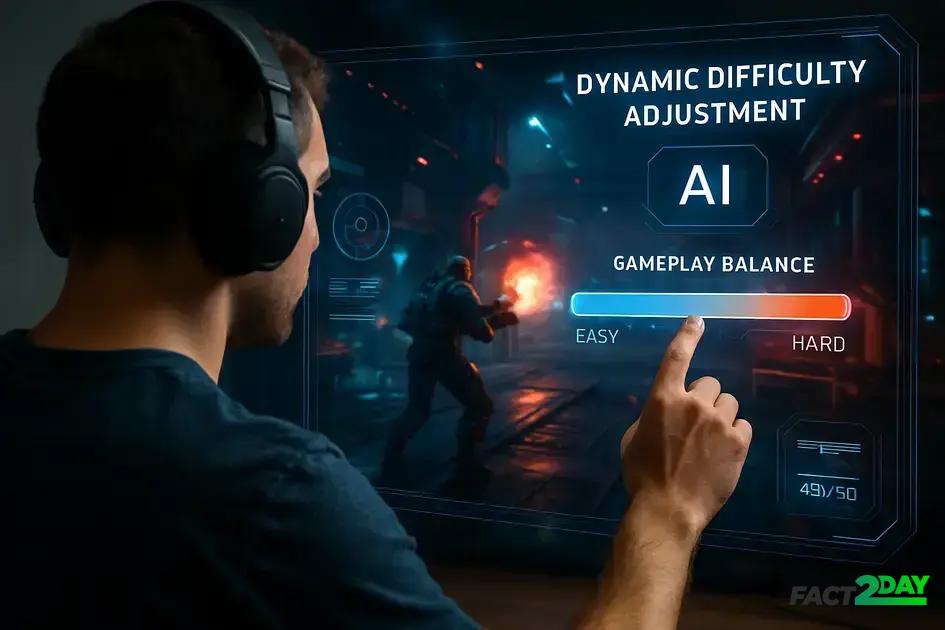
Adaptive difficulty in AI games refers to a system where the game adjusts its challenge level in real-time based on the player’s performance. Instead of sticking to a fixed difficulty setting, the game becomes easier or harder to match the player’s skill. This creates a personalized gaming experience that keeps players engaged and motivated.
Imagine a racing game that senses if you’re struggling to keep up and subtly slows down opponents. Or a puzzle game that offers hints if you get stuck for too long. These are examples of adaptive difficulty at work, helping players enjoy the game without feeling bored or overwhelmed.
The technology behind this involves monitoring player actions, success rates, and error frequency. The AI uses this data to decide when to increase or decrease the challenge. This not only improves game enjoyment but also extends replay value by catering to different skill levels.
How Adaptive Difficulty Benefits Players
Adaptive difficulty provides a smoother learning curve, allowing new players to stay interested while offering experienced players a tougher challenge. It avoids frustration that happens when the game feels too hard or too easy, which often leads to quitting.
By creating a balanced challenge, adaptive difficulty helps maintain a player’s focus and satisfaction, turning gaming into a more rewarding experience.
Benefits for Players
- Smoother Learning Curve: Keeps new players engaged and reduces frustration.
- Tailored Challenge: Offers experienced players a tougher, more rewarding experience.
- Increased Retention: Prevents quitting due to overly hard or easy gameplay.
- Enhanced Satisfaction: Creates a balanced challenge that maintains player focus.
How Adaptive Difficulty Enhances Player Engagement
Adaptive difficulty enhances player engagement by creating a gameplay experience tailored to each individual’s skill level. When a game responds to how a player performs, it keeps them in the so-called “flow state,” where the challenge feels just right—not too easy to cause boredom, nor too hard to cause frustration.
This dynamic adjustment helps maintain a player’s interest for longer periods. As the difficulty changes smoothly, players feel motivated to improve and explore the game more deeply. Rather than hitting a wall or breezing through, they experience a balanced sense of accomplishment.
Player Motivation and Sustained Interest
When games adapt to the player, every success feels earned. This encourages players to keep trying, which increases engagement and reduces early quitting rates. Adaptive difficulty can also introduce new challenges as the player grows, keeping the experience fresh and exciting.
By responding to real-time feedback, developers can foster stronger emotional connections between players and the game world. This leads to greater satisfaction and a sense of control over the gaming journey, making the experience memorable and enjoyable.
Engagement Enhancement Mechanisms
- Flow State Maintenance: Keeps challenge balanced to avoid boredom or frustration.
- Sustained Interest: Dynamic adjustment maintains player interest for longer periods.
- Sense of Accomplishment: Provides a balanced challenge, making successes feel earned.
- Reduced Quitting: Encourages perseverance and lowers early dropout rates.
- Fresh Challenges: Introduces new elements as player skills evolve.
- Stronger Emotional Connections: Fosters greater satisfaction and a sense of control.
Techniques Used for Adaptive Difficulty
Adaptive difficulty employs various techniques to adjust game challenge in real time. One common method is dynamic difficulty adjustment (DDA), where the game tracks player performance metrics like success rate, speed, and errors. Based on this data, the difficulty scales up or down to keep the experience engaging.
Another technique is player modeling, which involves creating a profile of a player’s habits and skill level. This model helps the AI predict how a player might perform and adjusts game mechanics accordingly, such as enemy strength or puzzle complexity.
Other Key Techniques for Adaptive Difficulty
Content adaptation changes the environment or story elements to suit difficulty, like offering alternative paths or modifying resource availability. Assistance systems can trigger hints or power-ups when the player is struggling to maintain flow.
Some games use reinforcement learning, where AI agents learn from player actions and optimize difficulty by trial and error. This approach makes difficulty tuning more personalized and responsive over time.
Together, these techniques combine to create a balanced, enjoyable experience that adapts to the player’s evolving skills and keeps gameplay fresh.
Core Adaptive Difficulty Techniques
- Dynamic Difficulty Adjustment (DDA): Tracks performance metrics to scale difficulty.
- Player Modeling: Creates player profiles to predict performance and adjust mechanics.
- Content Adaptation: Changes environment or story elements based on difficulty.
- Assistance Systems: Triggers hints or power-ups when players struggle.
- Reinforcement Learning: AI learns optimal difficulty settings through trial and error.
The Role of Player Behavior Analysis
Player behavior analysis plays a critical role in adaptive difficulty AI games. By monitoring how a player interacts with the game, such as their reaction times, success rates, and decision-making patterns, the AI gains valuable insights into the player’s skill level and preferences.
This analysis allows the game to make real-time adjustments tailored specifically to each player. For example, if the data shows a player struggles with timing-based challenges, the AI might slow down enemy attacks or increase the available reaction time.
Tracking Emotional and Gameplay Patterns
Some games also analyze subtle cues like hesitation or repeated failures to detect potential frustration. The AI can then offer hints or reduce difficulty temporarily to keep the player motivated. Conversely, if a player breezes through sections, the game can introduce more complex obstacles for a greater challenge.
Player behavior analysis goes beyond just difficulty. It can customize narrative branches, reward systems, and pacing to create a more immersive, personalized experience that feels responsive and alive.
Insights from Player Behavior Analysis
- Skill Level Assessment: Monitors reaction times, success rates, decision-making patterns.
- Real-time Adjustments: Tailors challenges based on identified player struggles (e.g., timing).
- Frustration Detection: Analyzes hesitation or repeated failures to offer hints or reduce difficulty.
- Challenge Escalation: Introduces complex obstacles for skilled players.
- Personalized Experience: Customizes narrative, rewards, and pacing for deeper immersion.
Examples of Popular Games Using Adaptive Difficulty
Many popular games use adaptive difficulty to keep players engaged and challenged. For instance, the Left 4 Dead series employs an AI director that dynamically adjusts enemy spawn rates and intensity based on player performance. If the team is doing well, the game becomes harder; if players struggle, it eases up.
Another example is Shadow of Mordor, which uses the Nemesis system to adapt enemy ranks and behavior relative to the player’s skill, creating a unique and evolving challenge each playthrough.
More Examples and Their Unique Approaches
Resident Evil 4 subtly adjusts enemy AI and resources to balance tension without overwhelming players. Similarly, Mario Kart features the rubber-band effect, where AI racers adjust their speed to keep races exciting for all skill levels.
Adaptive difficulty is also present in many mobile games, where challenge levels shift based on how quickly or slowly players progress, maintaining motivation and reducing frustration.
Notable Game Implementations
- Left 4 Dead Series: AI director adjusts enemy intensity based on team performance.
- Shadow of Mordor: Nemesis system adapts enemy behavior relative to player skill.
- Resident Evil 4: Subtly adjusts enemy AI and resources for tension balance.
- Mario Kart: “Rubber-band effect” on AI racers to maintain competitive races.
- Mobile Games: Shift challenge levels based on player progression speed.
Benefits for Novice and Expert Gamers
Adaptive difficulty offers significant benefits for both novice and expert gamers by customizing the challenge to their skill levels. For beginners, this system reduces frustration by providing a gentler learning curve. It allows them to gradually understand game mechanics without feeling overwhelmed.
For expert players, adaptive difficulty maintains engagement by introducing tougher challenges as their skills improve. This prevents boredom and encourages mastery, keeping the game exciting and rewarding.
How Adaptive Difficulty Balances Experience
Novice players benefit from receiving subtle hints, slower enemy reactions, or increased resources. Meanwhile, experts face smarter opponents, faster pace, and more complex puzzles that match their ability. This tailored approach ensures players are neither bored nor discouraged.
By adjusting in real time, adaptive difficulty creates a fair and fun environment where all players can enjoy the game at their own pace, boosting satisfaction and prolonging playtime.
Tailored Benefits for Different Skill Levels
- Novice Gamers: Gentler learning curve, subtle hints, slower enemies, increased resources.
- Expert Gamers: Tougher challenges, smarter opponents, faster pace, complex puzzles.
- Reduced Frustration: Prevents feelings of being overwhelmed for beginners.
- Prevents Boredom: Maintains engagement and encourages mastery for experts.
- Fair & Fun Environment: Ensures enjoyable experience for all skill levels.
- Increased Satisfaction: Boosts player contentment and prolongs playtime.
Challenges in Designing Adaptive Difficulty Systems
Designing adaptive difficulty systems poses several challenges. One major issue is balancing responsiveness and predictability. Games must adjust difficulty smoothly without sudden jumps that frustrate players or break immersion.
Another challenge lies in accurately interpreting player performance. Metrics can be misleading if a player tries out new strategies or experiments with gameplay, causing the AI to misjudge their skill and adjust improperly.
Technical and Ethical Challenges
Developers also face technical hurdles in implementing algorithms that run efficiently without draining system resources. Additionally, maintaining fairness is crucial; players should feel the game is challenging but never unfair or punishing.
There is also the risk of player dependency, where too much assistance reduces satisfaction and achievement. Striking the right balance between help and challenge remains a constant design concern.
Design Obstacles for Adaptive Difficulty
- Responsiveness vs. Predictability: Ensuring smooth, non-disruptive difficulty adjustments.
- Accurate Interpretation: Correctly assessing player skill despite varied gameplay.
- Technical Hurdles: Implementing efficient algorithms without resource drain.
- Maintaining Fairness: Ensuring challenges feel earned, not arbitrary or punishing.
- Player Dependency Risk: Avoiding over-assistance that diminishes player satisfaction.
AI Algorithms Behind Dynamic Difficulty Adjustment
Dynamic difficulty adjustment relies on advanced AI algorithms that analyze player data and modify game settings on the fly. One common approach is using machine learning models that predict player performance and adapt challenges accordingly.
Another key algorithm type is reinforcement learning, where the AI learns optimal difficulty settings by trial and error, improving the player experience over time. These algorithms constantly update based on new data to fine-tune gameplay balance.
Algorithms and Data Processing
Bayesian networks and decision trees help the system make quick decisions about difficulty changes based on observed player behavior. These methods ensure the adjustments feel natural and maintain game flow.
Neural networks are sometimes employed to recognize complex player patterns, making the adaptive system more accurate. Combining these algorithms allows games to offer personalized and responsive challenges that keep players engaged.
Core Algorithms & Processing
- Machine Learning: Predicts player performance to adapt challenges.
- Reinforcement Learning: Learns optimal settings through trial and error for continuous improvement.
- Bayesian Networks & Decision Trees: Enable quick, natural difficulty adjustments.
- Neural Networks: Recognize complex player patterns for increased accuracy.
- Data-Driven: Algorithms constantly update based on new data to fine-tune balance.
Impact on Game Replayability
Adaptive difficulty AI greatly enhances game replayability by providing a fresh challenge each time you play. Since the difficulty adjusts based on your performance, no two playthroughs feel exactly the same.
This keeps players curious and motivated to try again, as the game evolves with their skills. It prevents repetition and boredom by scaling enemies, puzzles, and scenarios to maintain interest.
Encouraging Exploration and Mastery
Adaptive difficulty also encourages players to explore different strategies and improve their abilities. It offers just the right level of challenge to push players without overwhelming them, which increases the desire to replay and master the game.
By personalizing the challenge, games become more engaging long-term, creating loyal players who return for new experiences.
Replayability Benefits
- Fresh Challenge: Difficulty adjusts, making each playthrough unique.
- Prevents Repetition: Scales enemies, puzzles, and scenarios to maintain interest.
- Skill Evolution: Game adapts as player skills improve, encouraging growth.
- Strategy Exploration: Promotes trying different approaches to challenges.
- Increased Mastery: Offers optimal challenge to encourage player improvement.
- Long-term Engagement: Personalization leads to loyal players and repeat experiences.
Player Frustration Reduction Strategies
Reducing player frustration is vital for keeping gamers engaged and satisfied. Adaptive difficulty AI incorporates several strategies to ensure players feel challenged but not overwhelmed.
One common method is the use of real-time difficulty scaling. If the AI detects repeated failures or hesitation, it lowers the challenge slightly by reducing enemy strength or providing more resources.
Additional Frustration Reduction Techniques
Games may also offer contextual hints or assistance when players seem stuck, helping them progress without feeling lost. Another approach is smoothing difficulty transitions to avoid sudden spikes that can disrupt the gaming experience.
Furthermore, some systems incorporate player feedback loops, adjusting based on emotional cues or in-game behavior to maintain a positive experience. These strategies help maintain players’ motivation, preventing premature quitting and encouraging longer play sessions.
Methods to Minimize Frustration
- Real-time Difficulty Scaling: Lowers challenge upon detecting failures or hesitation.
- Contextual Hints & Assistance: Helps players progress when stuck.
- Smooth Transitions: Avoids sudden spikes in difficulty.
- Player Feedback Loops: Adjusts based on emotional cues or in-game behavior.
- Motivation Maintenance: Prevents premature quitting and encourages longer play.
Future Trends in Adaptive Difficulty AI
The future of adaptive difficulty AI holds many exciting possibilities. One key trend is the integration of more advanced machine learning models that can understand player emotions and intentions better. This will allow games to adapt more naturally and deeply to player needs.
Another emerging trend is the use of cloud computing to collect vast amounts of gameplay data. This data can be analyzed to create global difficulty profiles and tailor experiences not just to individuals but entire player communities.
Immersive and Personalized Gameplay Experiences
Virtual reality (VR) and augmented reality (AR) games will also benefit from adaptive difficulty by providing real-time adjustments based on physical and emotional responses. This creates more immersive and accessible gameplay for diverse audiences.
Additionally, future systems may include cross-game learning, where AI remembers player performance across games and devices to offer consistent challenges and improve skill development.
Emerging Trends and Innovations
- Advanced Machine Learning: Better understanding of player emotions and intentions.
- Cloud Computing: Collection of vast gameplay data for global difficulty profiles.
- VR/AR Integration: Real-time adjustments based on physical/emotional responses.
- Cross-Game Learning: AI remembers performance across games/devices for consistent challenges.
- Deeper Personalization: More natural, immersive, and accessible experiences.
Balancing Fairness and Challenge
Balancing fairness and challenge is a key goal in designing adaptive difficulty systems. The game must remain tough enough to be rewarding, yet fair enough to avoid player frustration or feelings of unfairness.
Fairness means providing players with equal opportunities to succeed, where the challenge arises from skillful play, not from arbitrary or punishing game mechanics.
Methods to Achieve Balance
Adaptive difficulty algorithms track player performance closely to avoid making the game too hard or too easy too quickly. Gradual adjustments help maintain a steady challenge curve, preserving fairness.
Another important aspect is transparency. Giving players control over difficulty settings or providing feedback on adaptive changes can foster trust and improve their experience.
Ultimately, balancing fairness and challenge requires constant testing and tuning to create an enjoyable yet challenging environment that respects player effort and keeps them engaged.
Achieving Optimal Balance
- Rewarding Difficulty: Tough enough to be satisfying, fair enough to avoid frustration.
- Equal Opportunities: Challenge based on skill, not arbitrary mechanics.
- Gradual Adjustments: Prevents sudden difficulty spikes, preserves fairness.
- Transparency: Player control over settings and feedback fosters trust.
- Continuous Tuning: Requires constant testing to optimize challenge and engagement.
How Adaptive Difficulty Influences Game Storytelling
Adaptive difficulty can deeply influence game storytelling by shaping the player’s journey based on their skill and choices. When a game adjusts its challenge dynamically, it can modify narrative pacing to maintain engagement and emotional impact.
Story branches and character interactions may change, offering different dialogs, quests, or endings depending on how well the player progresses. This creates a personalized story that feels unique and responsive.
Enhancing Immersion and Player Agency
By aligning difficulty with storytelling, games ensure players don’t get stuck in frustrating sections, preserving narrative flow. Adaptive difficulty can also introduce new plot elements or challenges to keep the story exciting for skilled players.
This approach fosters a stronger connection to the game world as players influence both gameplay and story, making each experience feel more meaningful and tailored.
Storytelling Impact
- Narrative Pacing: Modifies story flow based on dynamic challenge for engagement.
- Personalized Story: Story branches, character interactions, dialogs, quests, and endings change with player progress.
- Preserved Flow: Prevents players from getting stuck, maintaining narrative momentum.
- New Plot Elements: Introduces challenges for skilled players to keep the story exciting.
- Enhanced Agency: Players influence both gameplay and narrative for meaningful experiences.
Wrapping Up Adaptive Difficulty in AI Games
Adaptive difficulty AI creates a gaming experience that adjusts to your skills, making challenges fair and fun. It keeps players engaged by balancing the right level of difficulty, reducing frustration, and enhancing storytelling.
As technology evolves, these systems will become even more personalized and immersive, offering players unique journeys every time they play. Whether you’re a beginner or a pro, adaptive difficulty ensures games stay exciting and rewarding.
So, the next time you play a game that feels just right, remember it’s likely the invisible hand of adaptive AI working to make your experience unforgettable.