Stargazers of Old: Unearthing the Advanced Astronomical Observatories of Ancient Civilizations
Ancient Astronomical Observatories reveal the genius of past civilizations in charting the cosmos with precision and wonder.
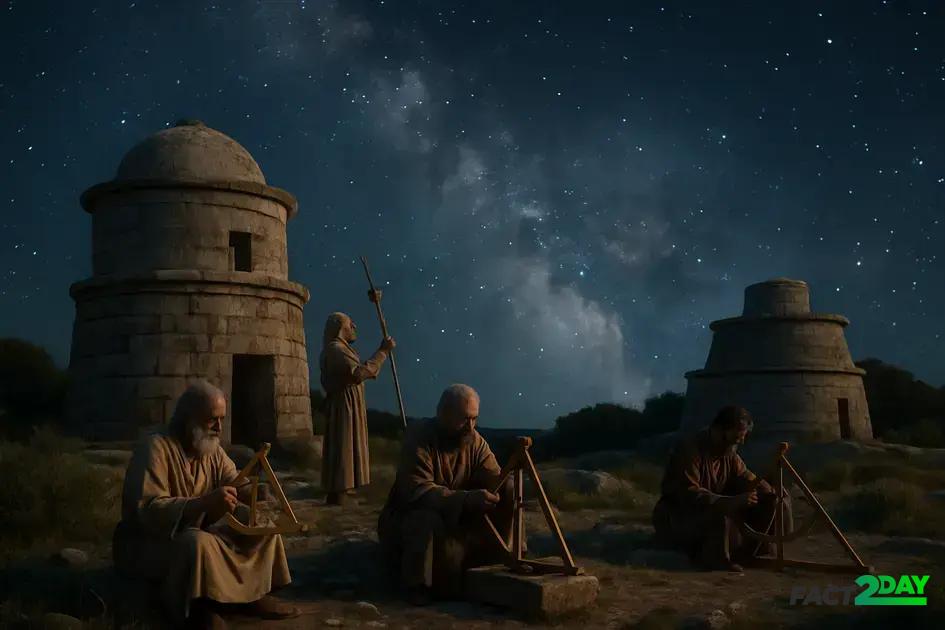
Ancient astronomical observatories showcase humanity’s early expertise in tracking celestial events, blending science and spirituality to shape our understanding of the cosmos.
Have you ever wondered how the smart minds of history studied the stars? Ancient Astronomical Observatories are fascinating clues left behind by civilizations eager to understand the cosmos. Let’s explore these marvels and the stories they tell.
The origins of ancient astronomical observatories
The origins of ancient astronomical observatories trace back thousands of years, when early civilizations began to watch the sky to understand natural cycles. These observatories were often simple structures aligned with the sun, moon, or stars to track time and seasons.
Early human groups noticed patterns like the change of seasons and phases of the moon, which were crucial for farming and ritual events. To mark these, they built stone circles, mounds, or pits that lined up with key celestial events such as solstices and equinoxes.
First known observatories
Sites like Stonehenge in England and Nabta Playa in Egypt show how ancient people engineered precise alignments for solar and lunar observations. These were not just for practical use but held spiritual meaning.
Ancient observers lacked modern tools but used natural landmarks and shadows to measure time. Their keen observations laid the foundation for astronomy and calendars.
Why these sites mattered
Understanding the sky helped ancient societies plan agriculture, navigation, and cultural festivals. Observatories became centers of knowledge and symbolized a deep connection to the cosmos.
By studying these origins, we see humanity’s early curiosity and intelligence in unlocking the secrets of the heavens, which still inspire science today.
How ancient cultures tracked celestial movements
Ancient cultures developed innovative ways to track celestial movements using natural landmarks, shadows, and primitive tools. They observed the sun’s path, moon phases, and star patterns to create calendars and predict seasonal changes.
Methods of observation
Many ancient societies built structures aligned with the rising and setting points of the sun or stars. For example, some built pillars or stones that cast shadows pinpointing solstices and equinoxes.
Others recorded the changing positions of stars throughout the year to guide navigation and timing of important events. Careful observation of the sky allowed them to notice patterns that repeat annually.
Tools and techniques
Without modern instruments, early astronomers used tools like gnomons (vertical sticks) to measure shadows, and sighting rods to track star positions. Some civilizations used water clocks and marked disks to represent celestial cycles.
These methods showed a combination of practical need and spiritual reverence. Their records helped societies focus on agriculture, hunting, and rituals tied to the heavens.
Significance of tracking
Tracking celestial movements was essential for survival and culture. It helped ancient peoples predict weather, plan crop planting, and celebrate festivals. Their insights laid groundwork for future scientific discoveries.
The role of observatories in agriculture and rituals
Ancient astronomical observatories played a crucial role in agriculture and rituals by helping societies track important celestial events. Farmers relied on the observations to know the best times to plant and harvest crops, ensuring they aligned with seasonal cycles.
Agricultural timing
Many ancient cultures used solstices and equinoxes marked by observatories to guide their farming calendars. For example, the rising of certain stars or the position of the sun signaled when to sow seeds or gather harvests, optimizing food production.
Ritual significance
Observatories were often places of spiritual importance. Ceremonies and festivals were timed to coincide with celestial events such as lunar phases or solstices, linking human life with cosmic rhythms.
Religious leaders and astronomers observed the heavens to predict these events, reinforcing their roles as community guides and connecting people to the universe.
Community and knowledge
These observatories became centers where knowledge about the sky was passed down through generations. They strengthened cultural identity and helped people understand their place in the world through star-based storytelling and rituals.
Famous ancient observatories around the world
Several famous ancient observatories around the world showcase the remarkable skill of early astronomers. Each site reflects unique cultural approaches to tracking celestial events.
Stonehenge, England
This prehistoric stone circle aligns with the sunrise of the summer solstice. Its massive stones were carefully placed to mark key astronomical events, believed to aid in calendar keeping and rituals.
Chichen Itza, Mexico
The Mayan observatory called El Caracol features windows oriented to track Venus and other planets. It shows how advanced Maya astronomy was in predicting celestial cycles.
Nabta Playa, Egypt
Older than Stonehenge, this site contains stone circles aligned with the summer solstice sunrise, indicating early Egyptian focus on solar events linked to agriculture and spirituality.
Jantar Mantar, India
Built in the 18th century, this complex combines large-scale stone instruments for measuring time and celestial positions with high precision, continuing the tradition of ancient observatories.
These observatories highlight ingenious engineering and deep understanding of astronomy in different cultures. They remain important historical and scientific landmarks today.
Architectural features of ancient observatories
Ancient observatories were built with distinct architectural features designed to enhance astronomical observations. These structures often combined practical precision with symbolic meaning.
Alignment with celestial bodies
Many observatories were carefully aligned with the sun, moon, or stars. This ensured that specific events like solstices, equinoxes, or star risings could be tracked accurately. Stone circles and windows were positioned to mark these alignments.
Use of natural materials
Builders typically used local stone, wood, or earth to create durable and lasting structures that blended with the environment. The materials were chosen not only for availability but also for spiritual significance in some cultures.
Open-air design
Many observatories were open to the sky, allowing clear views of the horizon and celestial movements. Platforms, terraces, and sighting towers provided elevated vantage points for better observation.
Geometric shapes
Geometrical forms like circles, rectangles, and spirals appear frequently. These shapes helped measure angles and time. Circular layouts often symbolized the cyclical nature of time and cosmos.
Incorporation of water
Some observatories included water features like reflecting pools to track celestial bodies by their reflection, enhancing accuracy and adding ritual importance.
Integration with landscape
Observatories were often built near natural landmarks such as mountains or rivers, which served as reference points for observations and were integral to cultural beliefs.
Tools and instruments used by ancient stargazers
Ancient stargazers developed various tools and instruments that helped them observe and record celestial movements with surprising accuracy. These devices were often simple yet effective, relying on natural materials and clever design.
Gnomons and shadow sticks
One of the earliest tools was the gnomon, a vertical stick used to cast shadows. By measuring the length and direction of shadows, ancient astronomers could track the sun’s position and determine important times of day and year.
Sighting rods and horizon markers
Straight rods or aligned stones served as sighting tools to locate where stars or the sun rose and set on the horizon. These markers helped identify key celestial events like solstices and equinoxes with precision.
Water clocks and clepsydras
To measure time intervals accurately, some cultures used water clocks where water dripped at a steady rate. This allowed them to time observations and rituals linked to celestial cycles.
Star charts and engraved tablets
Early stargazers carved star maps onto stones or created models of the night sky. These helped in memorization and prediction of star positions across the seasons.
Astronomical tubes and sighting devices
Later tools included tubes or narrow openings aligned to specific stars, improving focus and accuracy. These can be seen in some ancient observatories globally.
These instruments were crucial in the development of astronomy and highlight the deep curiosity and ingenuity of ancient peoples in understanding the cosmos.
Astronomical knowledge encoded in ancient monuments
Many ancient monuments hold hidden astronomical knowledge encoded in their design and layout. These structures acted as stone calendars and star maps, preserving valuable information about celestial patterns.
Stone alignments and geometry
The placement of stones, walls, and openings often aligns with the sun’s position during solstices or lunar cycles. This careful geometry allowed ancient peoples to track time and celestial events throughout the year.
Symbolism and carvings
Monuments feature carvings and symbols representing stars, planets, or cosmic events. These artistic elements were not decorative alone but served as educational tools and cultural records.
Calendrical functions
Structures like the Mayan pyramids or the Giza Plateau incorporate astronomical cycles into their architecture. This helped in predicting eclipses, seasons, and important ritual dates.
Encoded star maps
Some monuments act as physical star charts, with stones or structures placed to represent constellations or celestial paths. These helped ancient astronomers plan observations and understand the cosmos.
Decoding this knowledge provides insights into the scientific achievements and worldview of ancient civilizations, showing their remarkable connection to the sky and time.
Cultural and spiritual significance of sky watching
Sky watching held deep cultural and spiritual significance in ancient civilizations. Observing the heavens connected people to their gods, nature, and the universe, shaping their beliefs and practices.
A link to the divine
The sun, moon, stars, and planets were often seen as deities or messages from gods. Nightly sky patterns inspired myths and guided religious ceremonies, making astronomy a sacred activity.
Rituals and festivals
Many cultures timed their important rituals and festivals to align with celestial events like solstices, equinoxes, or eclipses. These events marked renewal, harvest, or the passage of time.
Social order and leadership
Priests and shamans who studied the skies often held powerful positions because they could interpret celestial signs. Their knowledge reinforced social hierarchy and community cohesion.
Guidance and hope
The stars helped travelers and farmers, but also offered hope and guidance, symbolizing order in the universe and human life’s cycles.
In all, sky watching was more than science; it was a vital part of ancient culture and spirituality that connected people to the cosmos and to each other.
Comparing ancient and modern astronomical methods
Ancient astronomical methods relied on observation, simple tools, and alignment with natural landmarks. Modern astronomy uses advanced technology but shares the same goal: understanding the cosmos.
Observation techniques
Ancient stargazers used naked-eye observations to track stars, planets, and the sun. They noted patterns and cycles to build calendars. Today, telescopes and satellites provide detailed views beyond human sight.
Instruments
Tools like gnomons and sighting rods helped ancient astronomers measure angles and time. Modern scientists use computerized telescopes, spectrometers, and space probes to gather precise data.
Accuracy and data
While ancient methods were surprisingly accurate for their time, modern methods offer far greater precision. However, the fundamental ideas, such as tracking celestial movements to understand time and seasons, remain unchanged.
Purpose and application
Both ancient and modern astronomy serve practical needs like navigation and agriculture. Ancient cultures also linked astronomy to spirituality, while today’s science focuses more on physics and cosmology.
Studying ancient methods helps us appreciate human curiosity and the roots of modern science. It reminds us that even without technology, early observers made significant discoveries about our place in the universe.
Challenges in preserving ancient observatory sites
Preserving ancient observatory sites faces several challenges that threaten their survival and historical value. These issues require attention to protect these cultural treasures.
Natural erosion and weathering
Stone structures and earthworks are vulnerable to wind, rain, and temperature changes. Over centuries, weather can erode surfaces, weaken foundations, and damage alignments crucial to the observatories’ function.
Human activity and development
Modern construction, tourism, and agriculture near ancient sites can cause damage. Sometimes, sites suffer from vandalism or looting, which destroys irreplaceable archaeological evidence.
Lack of awareness and funding
Many observatories are in remote locations or lesser-known regions. This leads to limited local awareness and insufficient funding for proper maintenance and research.
Environmental changes
Climate change and natural disasters like floods or earthquakes can drastically alter the landscape, threatening the stability and context of observatory sites.
Efforts to protect and study
Conservation programs work to document, stabilize, and restore sites. Researchers use modern technology like 3D scanning and satellite imaging to study observatories without causing damage.
Protecting these sites is essential to preserve the legacy of ancient astronomy and its contributions to human knowledge.
What ancient observatories teach us about human curiosity
Ancient observatories show us the deep human curiosity about the universe that stretches back thousands of years. These structures reveal how our ancestors sought to understand the world around them through careful observation.
The drive to explore
Building observatories required knowledge, patience, and creativity. Ancient people were driven by a desire to predict celestial events and interpret the sky’s patterns.
Connection to nature
By studying the heavens, early humans connected their daily lives to larger cosmic cycles, blending science with spirituality and culture.
Innovative thinking
The design and alignment of observatories demonstrate how ancient minds used geometry and natural materials to solve complex problems without modern tools.
Legacy of knowledge
These observatories passed down astronomical knowledge through generations, showing a commitment to education and discovery.
Their work reminds us that curiosity is a fundamental human trait, inspiring ongoing exploration and innovation in science and beyond.
Reflecting on the legacy of ancient astronomical observatories
Ancient astronomical observatories reveal the remarkable curiosity and intelligence of early civilizations. Their dedication to understanding the sky shows how deeply humans have always sought connection with the universe.
By studying these sites, we gain insight into the blend of science, culture, and spirituality that shaped human history. Their innovations laid the groundwork for modern astronomy and continue to inspire us today.
Preserving these ancient observatories helps keep this legacy alive, reminding us of the endless human desire to explore, learn, and reach for the stars.