Worlds Before Columbus: Evidence of Unexpected Global Connections in Pre-Columbian History
Explore surprising pre-Columbian global connections that challenge what we know about ancient civilizations and their interactions worldwide.
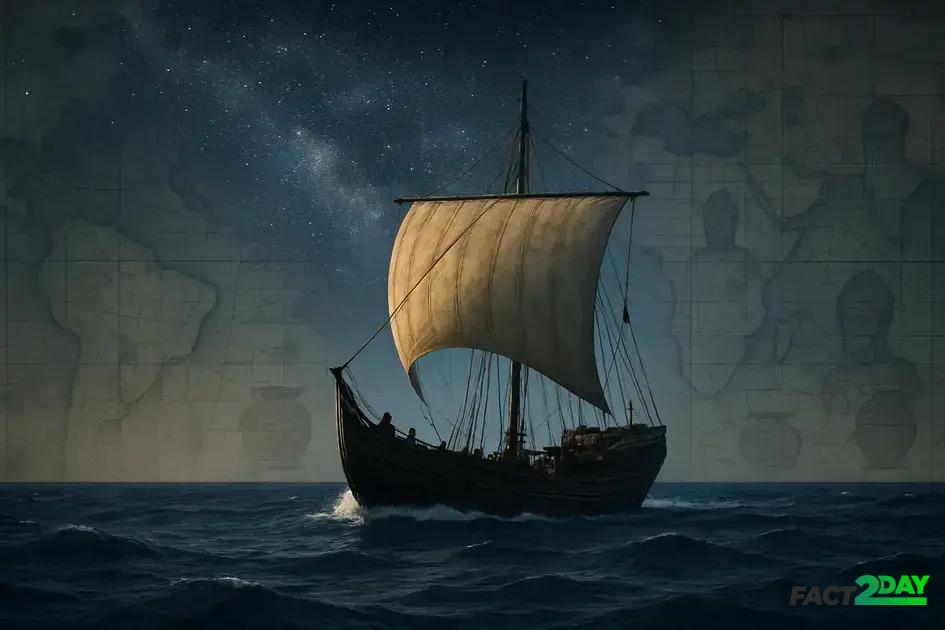
Pre-Columbian global connections reveal that ancient civilizations interacted through trade, migration, and cultural exchange long before Columbus, reshaping how we understand early human history.
Have you ever wondered about the mysterious Pre-Columbian Global Connections that suggest ancient civilizations may have interacted long before Columbus? This intriguing possibility invites us to rethink history and explore fascinating evidence of early global ties.
The concept of pre-Columbian global connections explained
The concept of pre-Columbian global connections refers to the idea that ancient civilizations across different continents may have interacted or shared knowledge before Christopher Columbus’s arrival in the Americas. This challenges the long-held belief that the New World was isolated from the Old World until the late 15th century.
Scholars explore various types of evidence, such as similarities in artifacts, architectural styles, and cultural practices, to understand these potential interactions. For example, some researchers point to the presence of crops like maize in regions outside the Americas, or the spread of technological innovations, as hints of ancient contact.
Understanding this concept requires looking beyond traditional historical narratives and considering archaeological, genetic, and botanical data. It opens up questions about how ancient people might have traveled vast distances, exchanged goods, and influenced one another’s development without modern technology.
Why It Matters
Recognizing possible pre-Columbian global connections helps us appreciate the complexity of human history and the ingenuity of ancient cultures. It suggests a world where exploration and exchange existed long before the well-documented Age of Discovery, shaping civilizations in ways only now being uncovered.
This perspective encourages ongoing research, inviting us to revise our understanding of history based on new findings from multiple disciplines.
Archaeological evidence supporting early intercontinental contact
Archaeological findings are key to understanding possible early intercontinental contact before Columbus. Excavations have uncovered artifacts that suggest ancient peoples might have traveled or traded across oceans and continents.
For instance, objects like beads, ceramics, and metal tools found in the Americas sometimes resemble those made in Africa, Asia, or Europe, raising questions about how they arrived so far from their origin. Some burial sites also show burial customs similar to those used on other continents, hinting at shared cultural influences or exchanges.
Maritime Artifacts and Shipwrecks
Evidence of advanced maritime technology, including remains of boats and navigation tools, supports the idea that long voyages were possible. Shipwrecks containing foreign goods help trace ancient trade routes that may have connected distant civilizations.
Dating and Scientific Analysis
Scientists use carbon dating, isotopic analysis, and other techniques to determine the age and origins of these artifacts. This data often challenges traditional timelines and suggests contact occurred much earlier than previously believed.
While not all findings are universally accepted, the archaeological record encourages a re-evaluation of human history and the extensive interactions early societies might have had across continents.
Cultural exchanges before Columbus’ arrival
Cultural exchanges before Columbus’ arrival indicate that ancient civilizations may have shared ideas, technologies, and customs across continents. These interactions likely influenced art, religion, and social structures in different parts of the world.
For example, similarities in pottery styles, textile patterns, and architectural features suggest that cultures borrowed from one another. Ancient crops like squash and maize, originally from the Americas, have been found in distant lands, pointing to early trade or exchange networks.
Evidence in Art and Religion
Symbols and motifs appearing in both New and Old World artifacts reflect shared beliefs or storytelling traditions. Some religious practices and ceremonial objects show parallels that may result from contact or diffusion of spiritual ideas.
Language and Technology
Certain words, agricultural techniques, and tool-making methods display resemblances among distant peoples. These connections imply communication or travel that transmitted knowledge well before modern exploration.
While the full extent of these cultural exchanges remains debated, growing evidence supports the idea that ancient societies were not isolated but part of a complex web of global interaction.
Maritime technologies enabling long-distance travel
Maritime technologies played a crucial role in enabling long-distance travel during pre-Columbian times. Ancient peoples developed advanced boats, navigation methods, and sailing techniques that allowed them to cross vast oceans and connect with distant lands.
Early watercraft ranged from simple rafts to sophisticated canoes and larger ships capable of carrying people and goods over long distances. Materials like wood, reeds, and animal skins were skillfully combined to build durable vessels suited for different waters.
Navigation Techniques
Ancient sailors relied on natural cues such as stars, ocean currents, wind patterns, and bird migrations to guide their journeys. These methods required deep knowledge of the environment and a keen sense of direction.
Maritime Innovations
Some cultures invented sails, outriggers, and rudders, which improved maneuverability and speed. Tools like the primitive compass or sun-based devices may have helped maintain course during open-sea voyages.
The development of these technologies made it possible for early explorers to travel beyond coastlines, exchange goods, and share ideas, laying the foundation for global connections long before Columbus.
Trade routes connecting civilizations across oceans
Trade routes connecting civilizations across oceans played a vital role in spreading goods, ideas, and cultures before Columbus. These networks linked distant societies through the exchange of valuable commodities and knowledge.
Maritime trade routes allowed ancient peoples to transport items such as spices, precious metals, textiles, and crops between continents. These connections facilitated economic growth and cultural interaction on a large scale.
Major Ancient Trade Networks
Routes like the Pacific Ocean pathways connected the Americas with Asia through island hopping. Similarly, transoceanic currents and winds were used to navigate between Africa, Europe, and the Americas.
Impact on Societies
Trade encouraged the development of ports and urban centers that became hubs of activity and innovation. It also led to the mixing of languages, religions, and technologies, enriching all cultures involved.
While some trade routes remain hypothetical, growing archaeological and linguistic evidence supports their existence, showing that intercontinental commerce helped shape the ancient world.
Genetic findings that suggest ancient population movements
Genetic findings provide important clues about ancient population movements and possible global connections before Columbus. DNA studies reveal links between distant groups that traditional history sometimes overlooks.
Modern genetic analysis compares DNA from ancient human remains with that of living populations. These comparisons show shared markers and traits that suggest migration and interbreeding events across continents.
Key Genetic Discoveries
For example, some studies suggest a connection between Native American peoples and populations from Asia, supporting theories of migration via the Bering Strait. Other evidence points to gene flow between oceanic islands and continental populations, indicating early long-distance travels.
Genetic data also reveals how people adapted to new environments by mixing with local groups, spreading traits advantageous for survival.
The Role of DNA in Rewriting History
These findings challenge old assumptions about isolated ancient civilizations. Instead, they suggest a dynamic and interconnected human past where movement and exchange were common.
As genetic research progresses, it continues to shed light on the complex web of relationships that shaped human history long before the Age of Exploration.
Mythologies and legends hinting at distant encounters
Many mythologies and legends from different parts of the world suggest that ancient peoples may have had distant encounters long before Columbus. Stories of strange travelers, gods from the sea, and mysterious lands appear in diverse cultures, hinting at real or imagined contacts.
For example, some Native American legends speak of visitors from faraway islands, while Polynesian myths often tell of epic voyages across the ocean to unknown realms.
Similarities Across Cultures
Several myths share common themes, such as flood stories, creation myths involving foreign beings, or tales of advanced knowledge brought by outsiders. These parallels suggest that tales might have traveled along ancient trade routes or been inspired by shared experiences.
Interpreting Mythical Evidence
While myths are not historical records, they reflect the values and memories of societies and might preserve fragments of real events. Analyzing these legends alongside archaeological and genetic evidence helps researchers build a fuller picture of early global interactions.
Such stories spark curiosity about the rich and interconnected past of human civilizations and encourage us to look beyond conventional history.
Artifacts that defy traditional origin theories
Certain artifacts found in various parts of the world challenge traditional theories about origins and ancient civilizations. These objects often show craftsmanship, materials, or styles that seem out of place based on established historical timelines.
Examples include tools made from unusual metals, sculptures resembling distant cultural motifs, and objects that appear technologically advanced for their age. Such findings raise questions about how these items were created or transported across vast distances.
Controversial Discoveries
Some artifacts, like the Olmec colossal heads, suggest influences or origins that differ from mainstream archaeological explanations. Other mysterious objects discovered in underwater sites or remote areas hint at forgotten connections between ancient peoples.
Implications for History
These artifacts encourage researchers to reconsider the extent of ancient interactions. They may indicate that knowledge and technology spread far earlier than documented, reshaping our understanding of pre-Columbian global connections.
While some claims remain debated, the study of these enigmatic artifacts continues to inspire new investigations into human history.
Impact of ancient global connections on modern cultures
Ancient global connections have left a lasting impact on modern cultures around the world. Shared technologies, crops, and ideas passed down through centuries influence art, cuisine, language, and traditions today.
For example, many staple foods like maize, potatoes, and cacao, originally cultivated in the Americas, have become integral to diets globally. These exchanges highlight how interconnected human societies have been long before modern globalization.
Cultural Influences and Hybrid Traditions
Artistic styles, religious practices, and social customs often show blends of indigenous and foreign elements. These combinations testify to ancient interactions and the exchange of knowledge across continents.
Language and Knowledge Transmission
Words, myths, and scientific understanding spread between civilizations, enriching languages and expanding worldviews. This cultural mixing fostered innovation and helped shape the development of many societies.
Understanding the impact of ancient global connections encourages appreciation of our shared human heritage and the deep roots of cultural diversity.
Challenges in studying pre-Columbian global links
Studying pre-Columbian global links presents numerous challenges for researchers. One major difficulty is the scarcity of direct evidence, as many ancient materials deteriorate over time or remain undiscovered.
Another challenge is the interpretation of artifacts and data. It can be hard to distinguish between similar items developed independently and those resulting from actual contact between cultures.
Methodological Obstacles
Techniques such as carbon dating, DNA analysis, and linguistic comparisons have limitations and sometimes produce conflicting results. This makes forming definitive conclusions tricky.
The Role of Bias and Controversy
Historical and cultural biases can affect how evidence is viewed. Skepticism among scholars sometimes leads to debates over the validity of proposed connections.
Political and ethical issues also arise when dealing with indigenous histories and artifacts, requiring respectful collaboration and careful consideration.
Despite these obstacles, ongoing advancements in technology and interdisciplinary research continue to shed light on ancient global interactions and help overcome these challenges.
Future perspectives on uncovering ancient global interactions
Future perspectives on uncovering ancient global interactions focus on the use of advanced technologies and interdisciplinary research to improve understanding. New methods in archaeology, genetics, and data analysis promise to reveal hidden connections that were previously impossible to detect.
Innovations such as satellite imaging and ground-penetrating radar allow scientists to explore sites without excavation, preserving delicate remains. Genetic sequencing technologies continue to evolve, providing deeper insights into ancient migrations and interbreeding patterns.
Collaboration Across Disciplines
Combining the expertise of historians, archaeologists, geneticists, and linguists helps create a more complete picture. This approach encourages the sharing of data and ideas, leading to fresh hypotheses and discoveries.
Ethical Considerations
Future research also emphasizes respectful treatment of indigenous communities and artifacts, ensuring that studies benefit all parties involved.
Overall, the future holds great promise for expanding knowledge about ancient global interactions, bridging gaps in history, and reshaping our understanding of humanity’s past.
Understanding pre-Columbian global connections changes how we see history
Exploring evidence of ancient interactions between distant civilizations shows us that the world was more connected than once believed. From archaeological finds to genetic data, these discoveries open new doors to our past.
While challenges remain in studying these links, ongoing research and new technologies continue to reveal surprising insights. Appreciating these connections helps us understand the shared human story and cultural diversity better.
The journey to uncover ancient global interactions invites curiosity and respect for the rich history that shapes our world today. Embracing this knowledge encourages us to look beyond traditional views and celebrate the complexity of humanity’s past.