Colored Nights: The Bizarre and Beautiful Science Behind Night Rainbows (Moonbows)
Discover the wonders of Science of Night Rainbows and why moonbows light up the night sky with mysterious beauty.
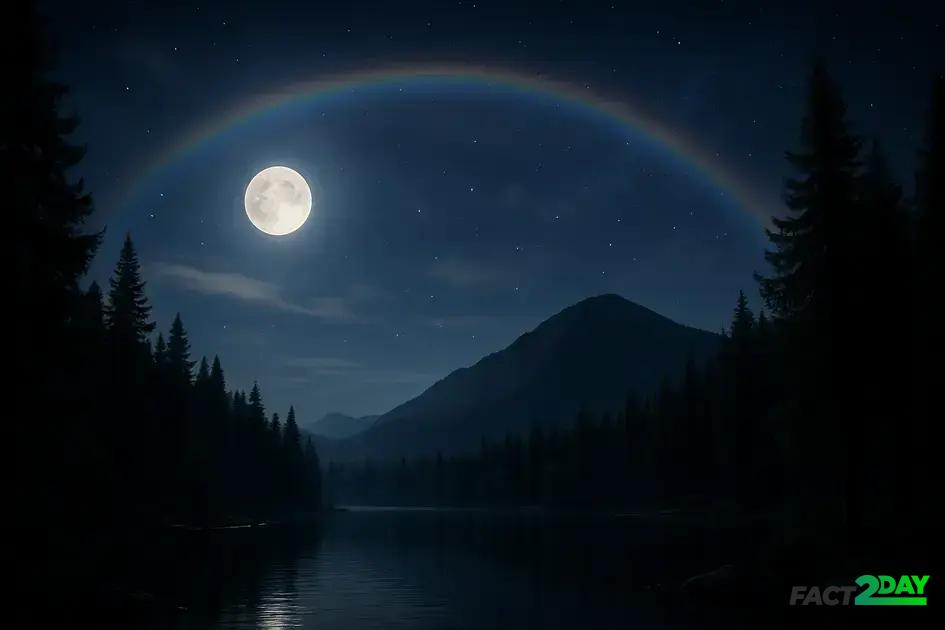
Night rainbows, or moonbows, are an incredible natural display that many people have never seen but would love to witness. These beautiful arcs form when moonlight refracts, reflects, and disperses through water droplets, creating a subtle spectacle in the night sky. Unlike regular rainbows, moonbows are faint and often appear white due to the low intensity of moonlight and how our eyes perceive color in darkness.
Understanding the science of moonbows reveals just how rare and special they are. You need just the right conditions: a bright full moon, plenty of mist or rain, clear skies, and the perfect angle between the observer and the moon. Factors like air pollution and weather can affect their appearance, making them an elusive but rewarding sight.
The history and technology behind moonbows show how people have been fascinated by them for centuries, turning natural phenomena into myths and now using advanced tools to capture their beauty. So, next time you find yourself at a waterfall under a full moon, keep an eye out—you might just catch a glimpse of these mysterious and magical night rainbows.
Okay, so get this! The Science of Night Rainbows isn\’t just some myth or optical trick—it\’s a seriously cool natural phenomenon. Ever wondered how a rainbow can glow under moonlight? Let\’s dive into why these moonbows are both bizarre and beautiful!
What are night rainbows and how do they form?
Night rainbows, also known as moonbows, are rare natural phenomena that occur when moonlight, rather than sunlight, refracts through water droplets in the atmosphere. Unlike regular rainbows visible during the day, moonbows are faint and often appear mostly white to the naked eye because the light source—the moon—is much dimmer than the sun.
Moonbows form under very specific conditions: a nearly full moon provides sufficient brightness, rain or mist must be falling opposite the moon, and the observer must be positioned with the moon behind them. The light entering the water droplets bends, reflects internally, and then exits, splitting into its spectrum of colors.
The physics behind moonbow formation
Just like day rainbows, moonbows are created through refraction, reflection, and dispersion of light in water droplets. The key difference lies in the intensity of the light source. Moonlight is sunlight reflected off the lunar surface, which is about 400,000 times less intense than direct sunlight.
The low light intensity results in a less vibrant color display, often making the bow look white or very pale. Long-exposure photography can capture the full, colorful spectrum by gathering more light over time.
Where and when to see moonbows
Moonbows can often be spotted near waterfalls, during rainy nights with a bright moon, or in misty coastal areas. Locations famous for moonbows include Yosemite National Park in the USA and Victoria Falls in Africa. Achieving the perfect viewing requires a dark sky, clear atmosphere, and the right alignment.
Challenges of observing moonbows
Due to their faintness, moonbows are elusive. The human eye is less sensitive to color in low light, which means many moonbows appear white or ghostly. Additionally, weather conditions such as clouds or pollution can diminish visibility.
The science behind moonbows’ unique colors
The unique colors of moonbows result from the way moonlight interacts with water droplets through refraction, reflection, and dispersion. Although moonlight is much dimmer than sunlight, it still contains a spectrum of colors that can be split when it passes through raindrops.
Moonlight is sunlight reflected off the surface of the moon, which means it retains the same range of wavelengths as sunlight but at a far lower intensity. This lower brightness causes moonbows to appear much fainter, often with subdued or nearly white colors to the human eye.
Light dispersion and color spectrum
When moonlight enters a water droplet, it bends (refracts), bounces inside the droplet (reflects), and then bends again when exiting. This process splits the light into a spectrum of colors, just like in a regular rainbow. However, the intensity of each color is much weaker, which is why moonbows do not display the vivid colors we see in daytime rainbows.
The colors of a moonbow are usually pastel and less saturated. The order of colors remains the same: red on the outside, followed by orange, yellow, green, blue, indigo, and violet in the inner part of the bow.
Why human eyes see moonbows differently
Human eyes have rod cells that detect light in low-light conditions but are not sensitive to color. This means that in the dim light of a moonbow, our eyes perceive mostly shades of gray or white instead of bright colors. Photographers using long exposures can capture the full color range which is invisible to the naked eye.
The role of moonlight in creating night rainbows
Moonlight plays a crucial role in the creation of night rainbows, also called moonbows. Unlike the bright sunlight that forms daytime rainbows, moonlight is much fainter because it is sunlight reflected off the moon’s surface. This reduced brightness means that moonbows are far subtler and often harder to see with the naked eye.
The intensity of moonlight must be high enough to illuminate water droplets in the air. This usually happens when the moon is nearly full, providing enough light to create the refraction and reflection effects that produce moonbows. The angle between the moon, the observer, and the water droplets is also key to seeing this phenomenon.
How moonlight interacts with water droplets
Moonlight entering a water droplet bends and reflects inside it, splitting into its component colors through dispersion. This process is the same as with sunlight in daytime rainbows but less intense. The weaker light causes the colors to be fainter and often appear mostly white due to the limits of human night vision.
Brightness and positioning are the two main factors affecting moonbow visibility. The right alignment means the observer sees light reflected directly from the water droplets, illuminated by the moon behind them. Variations in moonlight brightness due to lunar phases significantly impact whether a moonbow appears at all.
Environmental impact on moonlight’s effectiveness
Cloud cover, humidity, and air pollution can influence the amount and quality of moonlight reaching the droplets. Clear skies and clean air improve the chances of seeing a well-defined moonbow, while haze or fog can diffuse moonlight and reduce its intensity.
Where to see the best moonbows around the world
Moonbows are rare and magical, and spotting one requires the right combination of weather, location, and lunar conditions. Some places around the world are famous for their frequent and stunning moonbow displays, often near waterfalls or misty areas where water droplets are abundant.
Yosemite National Park, USA
Yosemite’s Bridalveil Fall is known for its spectacular moonbows during the full moon in spring and early summer. The waterfall’s mist provides the ideal water droplets for moonbows to form, attracting photographers and nature lovers.
Victoria Falls, Africa
Located on the border of Zambia and Zimbabwe, Victoria Falls is one of the world’s largest waterfalls. Its massive spray creates perfect conditions for moonbows, especially during the wet season when the moon is bright and the skies are clear.
Waimea, Hawaii
Island locations like Waimea offer great moonbow viewing opportunities due to the high humidity and frequent nighttime showers. The clear skies and bright moonlight in tropical regions enhance moonbow visibility.
Other notable locations
Places like Cumberland Falls in Kentucky, USA, and certain areas near waterfalls in the UK and New Zealand also offer chances to witness moonbows. The key factors include clean air, misty conditions, and a bright nearly full moon.
Timing is essential: moonbows typically appear on nights with little to no cloud cover and when the moon is at least 90% full. Planning visits around these conditions improves chances of seeing this rare phenomenon.
The difference between rainbows and moonbows
The primary difference between rainbows and moonbows lies in their light sources. Rainbows form when sunlight refracts, reflects, and disperses through water droplets, creating vivid colors in the sky. Moonbows, on the other hand, are formed through the same process but use moonlight—which is much dimmer—as the source, resulting in much fainter displays.
Light intensity and color visibility
Because sunlight is bright and intense, daytime rainbows are colorful and easy to see. Moonlight is approximately 400,000 times less bright than sunlight, so moonbows tend to appear white or very pale to the naked eye. The colors may only be visible in photographs with long exposure.
Timing and conditions
Rainbows are common during or after rain showers in daylight, while moonbows require a nearly full moon at night and rain or mist opposite the moon’s position. These strict conditions make moonbows rarer and more elusive.
Location and visibility
Rainbows can appear almost anywhere with rain and sunlight. Moonbows, due to their faintness, are often best seen near waterfalls or places with dense mist where water droplets are abundant and light scattering is enhanced.
Human perception differences
Our eyes detect colors differently under low light. At night, rod cells dominate, which are sensitive to light but not color. This physiological difference makes moonbows appear mostly white or ghostly compared to the vibrant colors of rainbows seen during the day.
How weather conditions affect night rainbow appearances
Weather plays a vital role in the appearance of night rainbows, or moonbows. For a moonbow to form, there must be water droplets in the air, typically from rain, mist, or waterfalls, combined with the right lunar conditions. The presence and amount of moisture directly impact the visibility and intensity of the moonbow.
Rain and humidity
Rain or mist must be falling opposite the moon for moonbows to appear. Higher humidity levels increase the number of water droplets suspended in the air, creating more opportunities for moonlight to refract and reflect, which enhances the moonbow’s visibility.
Cloud cover and moonlight
Clear skies are essential because clouds can block or diffuse moonlight. Even thin cloud layers can reduce the moon’s brightness significantly, making moonbows much harder or impossible to see. The brightest moon phases, such as the full moon, improve the chances of moonbow appearances.
Wind and atmospheric clarity
Strong winds may disperse water droplets too quickly or scatter mist unevenly, which can diminish the moonbow’s formation. Additionally, clear air without pollution or haze provides better conditions for light to travel and refract convincingly through water droplets.
Temperature effects
Temperature influences humidity and condensation. Cooler nights may increase dew and mist formation near waterfalls or lakes, aiding moonbow production. Conversely, very dry or hot conditions may limit moisture in the air and reduce the likelihood of moonbows.
Historical myths and legends about moonbows
Moonbows have inspired many myths and legends throughout history, symbolizing mystery and wonder. In various cultures, moonbows were often seen as supernatural signs or messages from the divine.
Myths from Native American cultures
Some Native American tribes believed moonbows were the spirits of ancestors or gateways between worlds. These glowing arches were respected and sometimes feared, thought to connect the earth with the spirit realm during special nights.
European folklore
In European folklore, moonbows were sometimes called “fairy rainbows” and were believed to mark places where fairies danced or hid treasure. They were considered magical but elusive phenomena that appeared only to the pure of heart or to those with special sight.
Asian legends
Certain Asian cultures viewed moonbows as omens of good fortune or love. For example, some stories associated moonbows with the meeting of star-crossed lovers or as messages from deities watching over the night.
The symbolic meaning of moonbows
Across cultures, moonbows commonly symbolize hope, mystery, and transformation. Their fleeting and faint nature added to their mystical reputation, reminding people of beauty in darkness and the subtle wonders of nature.
Technological tools used to study night rainbows
Scientists use various technological tools to study night rainbows or moonbows, helping to understand their formation and characteristics better. These tools enhance observations and data collection in conditions where moonbows are often faint and challenging to detect with the naked eye.
Long-exposure photography
This technique allows cameras to gather more light over time, capturing the full spectrum of colors in a moonbow that is often invisible to human eyes. Photographers and researchers use long exposures to document moonbows in detail.
Spectrometers
Spectrometers help analyze the light spectrum within moonbows, breaking down the different wavelengths of light. This assists in understanding the physics of how moonlight refracts and disperses through water droplets.
Radar and Lidar systems
Radar and Lidar devices measure the size and distribution of water droplets in the atmosphere. These instruments provide important data on atmospheric conditions needed for moonbow formation, such as droplet concentration and altitude.
Digital sensors and image processing software
Advanced sensors capture moonbow images, while image processing software enhances them to reveal details like faint colors and shapes. These technologies allow for better analysis and sharing of moonbow phenomena.
Weather monitoring tools
Instruments such as hygrometers and anemometers track humidity and wind conditions, which affect the appearance of moonbows. Accurate weather data helps predict the best times and locations to observe these rare events.
Famous moonbow sightings and their stories
Throughout history, several moonbow sightings have captivated observers and inspired stories due to their rarity and ethereal beauty. These sightings often occur near notable natural landmarks and have become part of local folklore and scientific interest.
Yosemite National Park Moonbow
One of the most famous moonbow locations is Yosemite National Park in California. The moonbows here, especially near Bridalveil Fall, have been witnessed and photographed by many visitors. They occur mostly in spring, attracting tourists and photographers who believe the natural spectacle connects them to the mystical side of nature.
Victoria Falls Moonbow
Victoria Falls, situated between Zambia and Zimbabwe, is renowned for its powerful cascade creating immense mist that forms frequent moonbows. Local legends describe the moonbow as a bridge from the earthly world to the spirit realm, making it a place of cultural and spiritual significance.
Cumberland Falls Moonbow
Cumberland Falls in Kentucky, USA, is known as the “Niagara of the South” and hosts regular moonbow appearances. Stories from settlers and Native Americans speak of moonbows as signs of protection and good fortune. The unique geology of the falls creates perfect mist conditions, ensuring regular sightings.
Other notable sightings
Moonbows have also been reported near waterfalls in Scotland, New Zealand, and Hawaii, each with its own local tales and scientific observations, illustrating the widespread fascination with this nighttime phenomenon.
The physics of light refraction in moonbows
Moonbows form through the physics of light refraction, reflection, and dispersion within water droplets suspended in the air. When moonlight hits a droplet, it bends, bounces inside, and splits into its component colors, creating the moonbow effect.
Refraction explained
Refraction occurs when light passes from one medium to another and changes speed, causing the light to bend. In moonbows, moonlight slows down as it enters a water droplet and bends at the boundary between air and water, altering its path.
Internal reflection
Once inside the droplet, the light reflects off the inner surface. This internal reflection is crucial for directing the light back out of the droplet toward the observer, contributing to the bow’s visibility.
Dispersion of light
As light exits the droplet, it refracts again and splits into different wavelengths or colors. This process, called dispersion, separates white moonlight into a spectrum, forming the characteristic colors of the moonbow. The angle of about 42 degrees between the incoming moonlight and the observer’s line of sight determines the bow’s radius.
Why moonbows look faint
The key difference from daytime rainbows is the light’s intensity. Moonlight is much weaker than sunlight resulting in dimmer refraction and a fainter bow. The reduced brightness and our eye’s limited color perception at night make moonbows appear mostly pale or white.
How to photograph and capture moonbows
Photographing moonbows can be challenging due to their faint nature and the low light conditions at night. However, with the right equipment and techniques, you can capture stunning images of moonbows and reveal their subtle colors.
Use a camera with manual settings and a sturdy tripod
Nighttime photography requires slow shutter speeds to collect enough light. A camera that allows manual control of exposure, ISO, and aperture is essential. A tripod keeps the camera steady during long exposures, preventing blur.
Set a long exposure time
To capture the full spectrum of colors in a moonbow, use a long exposure time ranging from 10 seconds to several minutes depending on the brightness of the moon and surrounding light conditions. This helps collect more light and render the faint colors visible.
Adjust aperture and ISO
A wider aperture (small f-number) lets in more light, essential for night shots. Set ISO to a higher value but avoid too much noise; typically ISO 800-1600 works well. Experiment with settings to find the balance between brightness and image quality.
Position yourself correctly
Moonbows appear opposite the moon, so keep the moon behind you. Look for areas with mist or fine rain like near waterfalls. The angle between your line of sight and the moonlight should be about 40-42 degrees to catch the moonbow arc.
Use remote shutter release or timer
To avoid camera shake, use a remote shutter release or the camera’s timer function. Small vibrations can blur long exposure photographs.
Practice patience and experiment with different settings and locations. Moonbows are rare and conditions must be just right to capture them beautifully.
Environmental factors influencing moonbow visibility
Several environmental factors play a critical role in the visibility of moonbows. Understanding these conditions can help enthusiasts and scientists predict and observe moonbows more effectively.
Air clarity and pollution
Clear air with minimal pollution is essential for seeing moonbows vividly. Dust, smoke, and smog scatter light and reduce the intensity of moonlight reaching water droplets, making moonbows faint or invisible.
Humidity and moisture
High humidity and the presence of mist or rain are necessary for moonbows to form. Water droplets must be suspended in the air to refract and reflect moonlight. Areas near waterfalls, lakes, or after rain showers often provide the best conditions.
Cloud cover and sky visibility
Clouds can block or diffuse the moonlight needed for moonbows. A clear sky with an unobstructed view of a bright moon is critical. Partial cloud cover may still allow moonbow formation if the moonlight is strong enough.
Wind and atmospheric stability
Calm or gentle wind conditions help maintain stable mist or water droplet formations. Strong winds disperse droplets quickly, reducing the likelihood of a visible moonbow.
Temperature effects
Cooler temperatures often increase atmospheric moisture through dew or fog formation, aiding moonbow visibility. Conversely, very warm or dry conditions reduce atmospheric water content, limiting moonbow occurrences.
Why moonbows are rarer than regular rainbows
Moonbows are much rarer than regular rainbows mainly due to the differences in their light sources and the specific conditions needed for their formation. While rainbows are created by sunlight, moonbows rely on the much dimmer light of the moon.
Brightness of light source
Sunlight is vastly brighter than moonlight—approximately 400,000 times stronger. This intense brightness makes daytime rainbows vivid and easy to see. Moonlight’s faintness means moonbows are often subtle, making them harder to detect and appreciate with the naked eye.
Specific lunar conditions
For a moonbow to appear, the moon typically must be nearly full and positioned low in the sky to provide sufficient light and the right angle. Such lunar conditions don’t occur every night, limiting when moonbows can form.
Weather and atmospheric requirements
Moonbows also need clear skies so the moonlight can shine on water droplets. Additionally, there must be rain or mist opposite the moon to refract and reflect the moonlight. These precise conditions are less common at night compared to daytime rain showers and sunlight, further reducing moonbow occurrences.
Human eye sensitivity
The human eye is less sensitive to color in low light due to the dominance of rod cells, which detect light but not color. This means moonbows often look white or faint, making them harder to spot and less frequent in documented sightings.
The impact of pollution on night rainbows
Pollution significantly affects the visibility and quality of night rainbows, also known as moonbows. Particles from air pollution scatter and absorb moonlight, reducing the light intensity essential for moonbow formation.
How pollution disrupts moonbows
Pollutants like smoke, dust, and chemical aerosols in the atmosphere interfere with the path of moonlight. This scattering effect diminishes the amount of light reaching water droplets, making moonbows less bright and often causing them to disappear entirely.
Reduced air clarity
Air clarity is vital for moonbows because clean, transparent air allows moonlight to pass through without significant distortion. Pollution decreases air clarity, lowering the chances of moonbow visibility, especially in urban and industrial areas.
Effect on water droplets
Pollution can also affect the size and distribution of water droplets in mist or rain. Changes in droplet size can alter how light refracts and reflects, leading to dimmer or distorted moonbows.
Environmental and health implications
The presence of pollution not only harms the beauty of natural phenomena like moonbows but also indicates broader environmental issues. Efforts to reduce air pollution contribute positively to both public health and the preservation of delicate natural wonders.
Wrapping up the science behind night rainbows
Moonbows are fascinating natural wonders that blend light, water, and the night sky in a rare and beautiful way. Their formation depends on delicate conditions like moonlight intensity, water droplets, and clear air.
While moonbows are hard to see with the naked eye due to their faint colors, understanding the science and environmental factors helps us appreciate their magic even more. Advances in technology allow us to capture and study moonbows, revealing their subtle colors and secrets.
Protecting our environment and reducing pollution can help preserve moonbows for future generations to witness. Next time you’re near a waterfall or mist on a bright moonlit night, keep an eye out—you might just catch a glimpse of this enchanting phenomenon.