Lost Knowledge: The Greatest Ancient Libraries Destroyed and Their Secrets
Destroyed Libraries reveal lost knowledge that shaped civilizations. Discover the secrets and stories behind these catastrophic losses of wisdom.
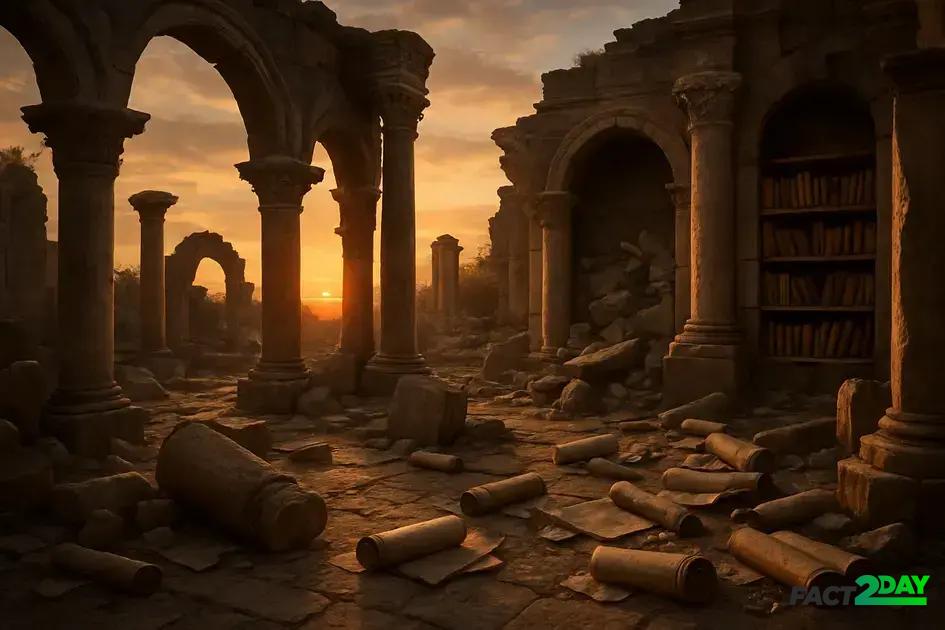
Destroyed Libraries are historical centers of knowledge lost through war, fire, and neglect, reminding us of the fragility of human wisdom and the ongoing importance of preserving cultural heritage.
Destroyed Libraries carry stories of lost wisdom that shaped human history. Have you ever wondered what secrets vanished when these giant repositories were lost? Join me as we explore their fascinating pasts and enduring mysteries.
The rise and importance of ancient libraries
Ancient libraries were more than just buildings filled with scrolls and texts; they were centers of knowledge and culture. These institutions played a crucial role in preserving history, science, philosophy, and literature. The rise of ancient libraries marked an important step in human civilization, allowing societies to collect and share information across generations.
From early clay tablets in Mesopotamia to vast collections in Egypt and Greece, libraries served as hubs for scholars and thinkers. They helped develop written language and fostered educational growth. Many ancient libraries were attached to temples or palaces, reflecting their significance to governance and religion.
Preserving Wisdom
One major reason ancient libraries were important was their function in preserving knowledge against time. Without these libraries, many ideas and discoveries would have been lost. The meticulous copying of manuscripts and texts ensured that valuable information survived, contributing to the progress of human thought over centuries.
Centers for Learning and Debate
Ancient libraries were often places where scholars gathered to debate and expand on knowledge. These gatherings helped improve understanding in many areas such as mathematics, astronomy, and medicine. This collaborative environment accelerated learning and inspired innovations.
Overall, the rise of ancient libraries symbolizes humanity’s desire to learn and communicate. They laid the foundation for modern libraries and continue to inspire how we value and protect knowledge today.
Famous destroyed libraries and their histories
Throughout history, several libraries have gained fame not only for their vast collections but also for their tragic destruction. These events led to the loss of invaluable knowledge and cultural heritage. The Library of Alexandria is perhaps the most well-known example, often symbolizing the loss of ancient knowledge. Established in Egypt, it held countless scrolls from around the ancient world before being destroyed by fire, though the exact details and timing remain debated.
Another notable example is the Library of Nalanda in India, a famous center of learning that was burned down in the 12th century during invasions. This destruction erased a significant part of Buddhist and Indian scholarly work.
The Royal Library of Ashurbanipal
Located in ancient Assyria, this library contained thousands of clay tablets with cuneiform script, covering topics from medicine to astronomy. Though largely preserved by archaeologists, it faced damage during various conflicts, emphasizing the fragility of knowledge.
The Imperial Library of Constantinople
This library housed a vast collection of Greek and Roman literature. It suffered damage and loss following the city’s sieges, particularly during the Fourth Crusade, which contributed to the cultural decline of the Byzantine Empire.
These famous destroyed libraries highlight the vulnerability of knowledge to war, fire, and neglect. Each loss represents a gap in human understanding and echoes the importance of protecting cultural treasures today.
The Library of Alexandria: myths and truths
The Library of Alexandria is surrounded by myths that have grown over centuries. Many believe it housed every book ever written in the ancient world, but the truth is more complex. Founded in the 3rd century BCE in Egypt, it was part of a larger research institution called the Mouseion, attracting scholars worldwide.
While its collection was vast, acquiring texts from different cultures, the library likely focused on Greek works along with significant foreign manuscripts. The idea that the library was destroyed all at once by a single event is also a myth. Instead, it suffered damage multiple times over centuries, including fires during Julius Caesar’s siege and later conflicts.
Facts About the Library
Archaeological evidence and historical records reveal the library was a center for learning and preservation. Scholars translated texts, copied manuscripts, and made advances in science and philosophy.
Myths Versus Reality
Legends often exaggerate the scale and sudden loss of the library. In reality, the decline was gradual, influenced by political instability and shifting centers of power.
Understanding these myths and truths helps us appreciate the Library of Alexandria not just as a lost treasure, but as a symbol of human curiosity and the pursuit of knowledge despite adversity.
Cultural impact of lost libraries on civilization
The destruction of ancient libraries had a profound cultural impact on civilizations across history. These libraries were not just storage spaces for books; they were centers of knowledge, education, and cultural exchange. When lost, entire traditions, philosophies, and scientific advancements were wiped out or delayed for centuries.
Many ancient societies depended on libraries to preserve their heritage and identity. Losses like the Library of Alexandria meant losing access to key texts in medicine, astronomy, and literature, which could have changed the course of history if preserved. Without these sources, civilizations often faced setbacks in knowledge and innovation.
Ripple Effects on Society
The disappearance of books and manuscripts disrupted learning and slowed the progress of arts and sciences. Cultural connections between different regions weakened because shared knowledge was lost, affecting education and political power.
Modern Reflection
Today, the stories of lost libraries remind us of the vital importance of preserving cultural heritage. It highlights the fragility of knowledge and emphasizes how modern libraries work tirelessly to protect information against disasters.
The cultural void left by these destroyed libraries continues to spark curiosity and inspires efforts to rediscover and rebuild lost wisdom in our global society.
The destruction of libraries in wars and conquests
Throughout history, libraries have often been victims during wars and conquests, leading to the loss of priceless knowledge. When armies invaded cities, libraries were targeted either accidentally or deliberately to break the spirit and memory of the conquered people. The destruction of libraries in these conflicts meant not only physical loss but also a cultural and intellectual setback.
Intentional Destruction as a Weapon
Some conquering armies purposely destroyed libraries to erase histories and cultures. For example, the burning of the Library of Alexandria is linked to various military and political events, symbolizing a devastating loss. Similar acts were repeated in later centuries when invaders burned libraries and manuscripts to weaken enemy civilizations.
Collateral Damage
Other times, libraries were caught in the crossfire or damaged during sieges and bombings. The imperial Library of Constantinople, for instance, suffered massive losses during the Fourth Crusade when the city was sacked.
Long-Term Effects
These devastations delayed progress in science, literature, and culture. Important discoveries and works vanished, sometimes forever. Such cultural losses remind us how fragile human knowledge can be when conflict arises.
Preserving libraries today is critical as they continue to face threats from war and unrest, emphasizing the need to protect our collective history and wisdom for future generations.
Preservation challenges faced by ancient texts
Ancient texts faced many preservation challenges that made keeping knowledge safe difficult. Materials like papyrus, parchment, and paper were fragile and prone to damage from moisture, insects, and time. Environmental factors such as humidity and temperature fluctuations often caused deterioration, fading ink, and brittleness.
Physical Damage and Decay
Many texts were handwritten on delicate materials vulnerable to tears, mold, and pests. Fires and floods also destroyed numerous collections over the centuries. The lack of advanced preservation techniques meant texts needed constant care and protection.
Human Factors
Wars, invasions, and neglect led to deliberate or accidental destruction. Some texts were lost when libraries fell into disrepair or when cultural shifts devalued certain works. Copying texts by hand was time-consuming and prone to errors, leading to loss of original content over time.
Efforts to Preserve Knowledge
Ancient civilizations developed storage methods like clay jars, sealed rooms, and controlled environments to protect texts. Monasteries later played a vital role by carefully copying manuscripts, helping knowledge survive through turbulent times.
Despite these challenges, the efforts to preserve ancient texts highlight the value placed on knowledge and the human drive to pass learning to future generations.
Rediscovering knowledge from destroyed libraries
Despite many ancient libraries being destroyed, the knowledge they held has been partially rediscovered through various means. Archaeologists have uncovered fragments of manuscripts, inscriptions, and artifacts that shed light on lost civilizations and their wisdom.
Manuscript Copies and Translations
Many ancient works survived because they were copied and translated by later cultures. For example, Greek texts were preserved by Arab scholars during the Middle Ages, allowing important ideas in science and philosophy to re-enter Europe centuries later.
Excavations and Libraries’ Ruins
Excavations of historical sites have revealed remnants of libraries, including clay tablets and scrolls. These findings help researchers reconstruct the past knowledge and understand cultural exchange between ancient societies.
Modern Technology’s Role
Today, technologies like digital scanning and imaging help preserve fragile texts and enable scholars worldwide to study them. This has accelerated the rediscovery and preservation process, helping recover lost knowledge from destroyed libraries.
The ongoing efforts to recover and study these remnants remind us that even lost knowledge can inspire new understanding and discovery.
Technological advancements in safeguarding knowledge today
Modern technology has revolutionized how we safeguard knowledge, making preservation more effective and accessible. Digital archives and cloud storage allow vast amounts of information to be stored safely and accessed worldwide instantly. These advancements protect data from damage or loss due to physical disasters.
Digitization of Ancient Texts
Experts use high-resolution scanners and imaging techniques to convert fragile ancient manuscripts into digital formats. This process preserves the original content while allowing scholars to study texts without handling delicate materials.
Artificial Intelligence in Preservation
AI helps by analyzing damaged texts, filling in gaps, and restoring readability. Machine learning algorithms can translate and interpret ancient languages, improving our understanding of historical documents.
3D Printing and Replication
Technologies like 3D printing create physical replicas of artifacts and manuscripts, supporting education and research without risking the original items.
Today’s technological tools ensure that knowledge from the past is protected and shared, bridging history with our digital future.
Lessons learned from the loss of ancient libraries
The loss of ancient libraries taught important lessons about the value of knowledge and the need for preservation. One key lesson is that knowledge is fragile and can be lost forever without proper care. This has influenced how modern societies prioritize protecting books and manuscripts.
The Importance of Multiple Copies
Ancient losses showed that having only one copy of a text is risky. Today, creating multiple copies and storing them in different places helps ensure survival in case of disasters.
Preservation as Cultural Responsibility
The destruction of libraries emphasized that preserving knowledge is a shared cultural duty. Protecting heritage safeguards a civilization’s identity and history for future generations.
The Role of Technology and Collaboration
Modern lessons include using technology to preserve texts and fostering global collaboration among institutions to share and protect knowledge worldwide.
These lessons encourage ongoing efforts to prevent repeating the mistakes of the past and to keep human wisdom alive.
The role of human curiosity in preserving history
Human curiosity has played a vital role in preserving history throughout the ages. This innate desire to learn and understand the past drives people to seek out, protect, and study ancient texts, artifacts, and ruins. Without this curiosity, much of our shared heritage might have been lost.
Discovery and Exploration
Curiosity pushes archaeologists, historians, and researchers to explore forgotten sites and uncover buried histories. Their discoveries reveal stories that were once lost and help rebuild knowledge from destroyed libraries and civilizations.
Documentation and Preservation
Human curiosity motivates efforts to document and preserve findings. Museums, archives, and libraries exist because people value the past and want to keep it alive for future generations.
Continuous Learning and Innovation
This curiosity also fuels innovations in preservation technology, such as digital archiving and restoration methods, ensuring that history remains accessible even as materials age and deteriorate.
In essence, curiosity is the spark that ignites the preservation of history, connecting us to our roots and informing our future.
How lost libraries inspire modern storytelling
The stories of lost libraries have become powerful sources of inspiration in modern storytelling. These tales often evoke mystery, adventure, and the pursuit of hidden knowledge. Many books, movies, and games use the idea of destroyed or forgotten libraries as settings for exploring secrets and ancient wisdom.
Symbolism and Themes
Lost libraries symbolize the fragility of knowledge and the human desire to preserve history. They often represent lost civilizations, forgotten truths, and the consequences of cultural destruction.
Popular Culture Examples
From the quest narratives in adventure films to the magical libraries in fantasy novels, the theme of rediscovering or protecting lost knowledge connects audiences with a sense of wonder and discovery.
Influence on Education and Imagination
These stories inspire curiosity and encourage learning by highlighting the importance of history and memory. They remind us that knowledge can shape or reshape societies.
Overall, lost libraries continue to captivate imaginations and influence how we tell stories about the past and future.
Reflecting on the importance of lost libraries
The destruction of ancient libraries reminds us how fragile knowledge can be and how much it shapes our world. These losses teach valuable lessons about preserving history and the cultural treasures that connect us.
Modern technology and human curiosity continue to safeguard and rediscover lost knowledge, keeping the spirit of these great libraries alive. Through storytelling and preservation efforts, we honor the past and inspire future generations to value and protect their heritage.
By understanding and learning from the history of lost libraries, we can ensure that the wisdom of today remains safe and accessible for tomorrow.