The Propaganda Game: How Games Were Bizarrely Used to Spread Ideologies
Games Propaganda reveals the strange ways video games once spread powerful ideologies, blending play with persuasion in unexpected ways.
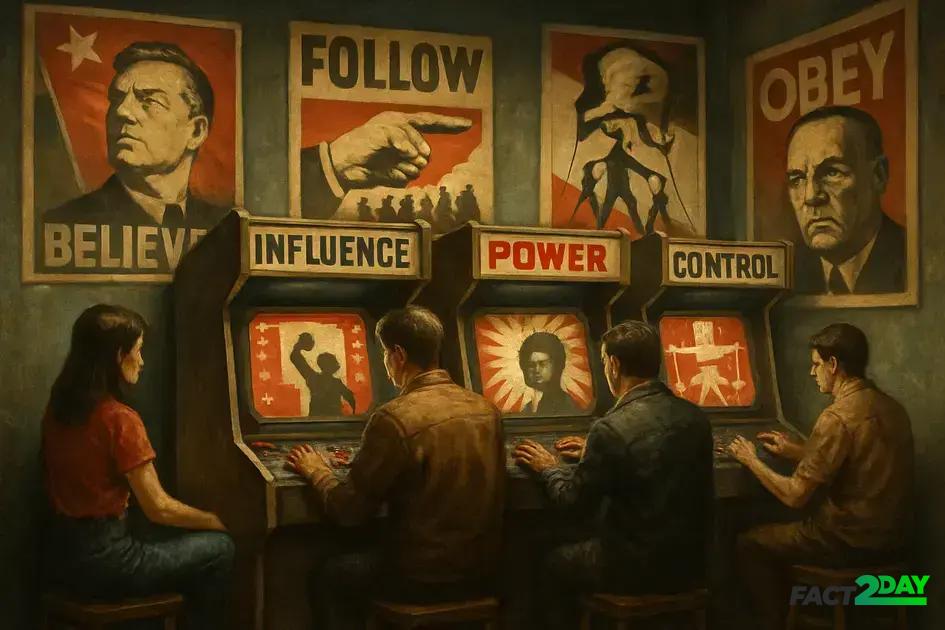
Games Propaganda refers to the use of video games as tools to spread ideological messages, influencing players’ beliefs and shaping public opinion through immersive and interactive experiences.
Games Propaganda might sound like an odd combination, but it’s a fascinating chapter in gaming history. Have you ever wondered how games were used as unusual channels to persuade and spread ideologies? This article invites you to explore that unusual intersection between play and propaganda.
The origins of propaganda in early video games
The origins of propaganda in early video games can be traced back to the 1980s and 1990s, when governments and organizations saw this new medium as a powerful tool to convey messages. Early games often incorporated nationalistic themes and simplified narratives to influence players’ perceptions.
Government Involvement
During the Cold War, governments realized that video games could reach younger audiences in a captivating way. They sponsored games that promoted patriotism or depicted adversaries in a negative light. These games served as subtle forms of propaganda, wrapped in entertainment.
Simple Messaging Through Gameplay
Propaganda in early games relied heavily on symbolism and gameplay mechanics that reinforced ideological messages. Characters and missions were designed to reflect particular political viewpoints, often without overtly stating them but guiding players’ emotional responses.
Notably, the limited graphics and storytelling capabilities meant messages needed to be clear and direct. This simplicity made the ideology accessible and easily absorbed by players, especially children and teens.
Commercial and Educational Overlaps
Besides direct government influence, some educational games also conveyed ideological messages, promoting values like cooperation or patriotism under the guise of learning. These games blurred the line between education, entertainment, and propaganda.
Overall, early video games marked a unique intersection where emerging digital entertainment was harnessed for ideological influence, paving the way for future uses of the medium in propaganda.
How governments used games to shape public opinion
Governments quickly recognized the potential of video games to shape public opinion by embedding political messages and ideologies within gameplay. These games often aimed to influence national identity, foster patriotism, or portray opposing nations negatively.
Strategic Partnerships with Game Developers
In some cases, governments collaborated directly with game developers to produce content aligned with official narratives. These partnerships ensured that the games conveyed specific messages, whether promoting military strength or ideological superiority.
Examples of Government-Driven Propaganda Games
During the Cold War, numerous games were produced depicting the struggle between superpowers, often simplifying complex conflicts into good-versus-evil gameplay. Similarly, some educational games were funded to promote civic virtues and loyalty.
Targeting Youth Audiences
By targeting younger players, governments aimed to instill values early on. Games served as tools for socialization, subtly shaping attitudes through engaging stories and goals. Player immersion helped reinforce these messages more deeply than traditional media.
Overall, governments leveraged the interactive nature of games to create compelling experiences that doubled as ideological tools, subtly influencing public perception without overt persuasion.
Examples of Cold War era propaganda games
During the Cold War, video games became a subtle yet powerful medium for propaganda. Several games from this era reflected the intense geopolitical tensions between the Eastern and Western blocs.
Iconic Cold War Propaganda Games
“Missile Command” is a classic example. Players defend cities from incoming missile attacks, symbolizing the anxiety surrounding nuclear warfare. The game’s simple yet tense gameplay echoed the era’s fears.
Another notable title is “Command & Conquer: Red Alert”, which, although released later, draws heavily on Cold War themes, portraying exaggerated conflicts between superpowers with clear ideological divides.
Use of Symbols and Narratives
These games often used familiar symbols such as missiles, flags, and military hardware to evoke national pride or fear of the enemy. The narratives were designed to simplify complex political conflicts, making players feel involved in the defense of their country or ideology.
Through interactive challenges, players not only received entertainment but also absorbed a specific worldview, making these games potent propaganda tools embedded in popular culture.
The role of education games in ideological messaging
Educational games have often been used as tools for ideological messaging, blending learning with subtle persuasion. These games aim to teach concepts while embedding values or political viewpoints.
Promoting Nationalism and Civic Values
Many educational games include lessons that promote patriotism, social responsibility, or government-approved narratives. Players may complete tasks that reinforce loyalty, cooperation, or specific historical perspectives favored by those in power.
Shaping Beliefs Through Interactive Learning
By engaging players actively, educational games influence beliefs more effectively than passive media. Players don’t just receive information; they participate in scenarios that encourage them to adopt particular viewpoints or behaviors.
For example, games teaching history might emphasize certain events or figures while omitting others, subtly guiding players to a particular interpretation.
Balancing Education and Propaganda Risks
While educational games can be effective learning tools, they sometimes blur the line with propaganda when they omit alternative perspectives or promote biased messages. This makes it important to critically assess the content and intentions behind these games.
Overall, the role of education games in ideological messaging demonstrates how interactive media can be harnessed to shape values and opinions under the guise of teaching.
How propaganda games influenced player beliefs
Propaganda games influence player beliefs by immersing them in narratives that promote specific ideologies. Through repeated exposure to these messages, players can internalize the values or viewpoints presented within the game.
Emotional Engagement and Persuasion
Games use emotional storytelling and interactive challenges to create strong connections with players. This engagement makes it easier for propaganda to alter perceptions or reinforce existing biases.
Repetition and Reinforcement
By repeatedly exposing players to certain ideas, propaganda games strengthen belief systems in subtle ways. For example, games that frame a particular group as the enemy encourage suspicion or distrust toward them.
Player Agency and Identification
Allowing players to take on roles aligned with the propaganda gives them a sense of involvement and ownership. This identification with in-game characters or causes deepens the impact of the ideological messages.
Through these techniques, propaganda games shape attitudes and beliefs by making ideological content a natural part of the gaming experience, influencing thoughts beyond the screen.
The rise of propaganda in digital and social games
The rise of propaganda in digital and social games marks a new era where ideological messages spread quickly through interconnected platforms. These games often use real-time interactions and social networks to amplify their reach.
Integration of Propaganda in Social Gameplay
Unlike traditional games, digital and social games allow players to communicate and collaborate, making propaganda more organic. Messages can spread through chat, shared content, or group missions, embedding ideology within social interactions.
Use of Microtargeting and Data Analytics
Advanced data analytics enable game creators to tailor propaganda to specific audiences. By analyzing player behavior, developers can customize messages for maximum impact, increasing the effectiveness of ideological persuasion.
The Role of Influencers and Community Leaders
Influencers and community leaders within gaming platforms can perpetuate propaganda by endorsing certain views or games. Their large followings help spread messages far beyond the game itself, blurring lines between entertainment and ideology.
The rise of propaganda in digital and social games shows how interactive and social elements combine to create powerful tools for shaping beliefs on a wide scale.
Controversies surrounding propaganda content in games
Propaganda content in games has sparked many controversies over the years, raising concerns about ethics, censorship, and the impact on players. These debates often revolve around the fine line between artistic expression and ideological manipulation.
Ethical Concerns
Critics argue that embedding propaganda in games can mislead players, especially younger audiences, by presenting biased or one-sided views. This raises questions about the responsibility of developers and publishers in shaping public opinion.
Censorship and Regulation
Some governments and organizations have called for stricter regulation of games containing propaganda. This includes demands for clearer labeling or even bans on games that promote harmful or extremist ideologies.
Player Backlash and Community Response
Many players and communities push back against propaganda in games, advocating for more balanced narratives. Online forums and social media often become battlegrounds where the presence of propaganda is heavily debated and critiqued.
These controversies highlight the ongoing tension between creative freedom and the societal impact of ideological messaging in interactive entertainment.
The psychological impact of propaganda through gaming
Propaganda through gaming can have deep psychological impacts on players, subtly shaping their beliefs and attitudes over time. Because games are interactive, they engage players more deeply than passive media, increasing the potential influence.
Emotional Conditioning and Immersion
Games use immersive environments and emotional storytelling to condition players’ responses to ideological messages. When players identify with characters or missions that promote propaganda, their emotions align with the intended viewpoint.
Reinforcement Through Repetition
Repeated exposure to certain narratives or symbols within games strengthens cognitive associations. This reinforcement can make the propagated ideas feel more natural or acceptable, affecting players’ worldview.
Behavioral Influence and Norm Formation
By rewarding behaviors that align with the propaganda and punishing opposing actions, games subtly influence players’ perceptions of right and wrong. This helps form social and cultural norms consistent with the ideological message.
The psychological framing within games makes them powerful tools for influencing attitudes beyond the screen, raising important questions about the ethics of propaganda in interactive media.
How modern games address or avoid propaganda
Modern games often take conscious steps to address or avoid propaganda, focusing on providing balanced narratives and fostering critical thinking rather than promoting specific ideologies.
Emphasis on Diversity and Multiple Perspectives
Many contemporary games strive to present diverse viewpoints, allowing players to explore complex issues without pushing a single political agenda. This approach helps avoid propaganda by encouraging players to form their own opinions.
Intentional Neutrality and Open-Ended Stories
Some developers design games with open-ended stories that avoid clear-cut heroes and villains. This strategy limits ideological bias and invites players to interpret the story on their own terms, reducing the risk of propaganda.
Community Feedback and Ethical Standards
Game studios increasingly listen to player communities and incorporate ethical standards in development. Criticism of propaganda elements often leads to revisions, promoting transparency and more responsible content creation.
By embracing nuanced storytelling and ethical awareness, modern games seek to engage players thoughtfully, moving away from overt propaganda towards interactive experiences that respect player intelligence.
The future of games as tools for ideological influence
The future of games as tools for ideological influence is likely to involve more sophisticated and subtle techniques, as technology and player engagement continue to evolve. Games will become even more immersive, making ideological messaging harder to detect.
Advancements in AI and Personalization
Artificial intelligence will allow games to tailor ideological content specifically to individual players. This personalization could make propaganda more effective by addressing personal beliefs and biases directly.
Virtual Reality and Deep Immersion
With the rise of virtual and augmented reality, players will experience ideologies in highly immersive environments. This deep engagement can strengthen emotional connections and make persuasive messages more impactful.
Ethical Challenges and Regulation
As games become powerful tools for influence, ethical questions will intensify. Developers, policymakers, and communities will need to balance creative freedom with the potential risks of manipulation and misinformation.
Ultimately, the future landscape of gaming as an ideological tool will be shaped by technology, ethics, and society’s response to the challenges and opportunities this medium presents.
Understanding the power of games in spreading ideas
Games have a unique ability to reach and influence players through immersive experiences and interactive storytelling. While they can be used to spread propaganda, modern games often aim to provide balanced views and encourage critical thinking.
As technology advances, the potential for games to shape beliefs will grow, but so will the responsibility of creators and players to recognize and question these influences.
Being aware of how games can convey messages helps us enjoy them thoughtfully and stay informed about the ideas we encounter in virtual worlds.