The Abyss Lights: The Most Bizarre and Fascinating Bioluminescence in the Ocean Depths
Underwater Bioluminescence reveals eerie, mesmerizing lights deep in oceans, illuminating bizarre creatures and mysteries few have glimpsed.
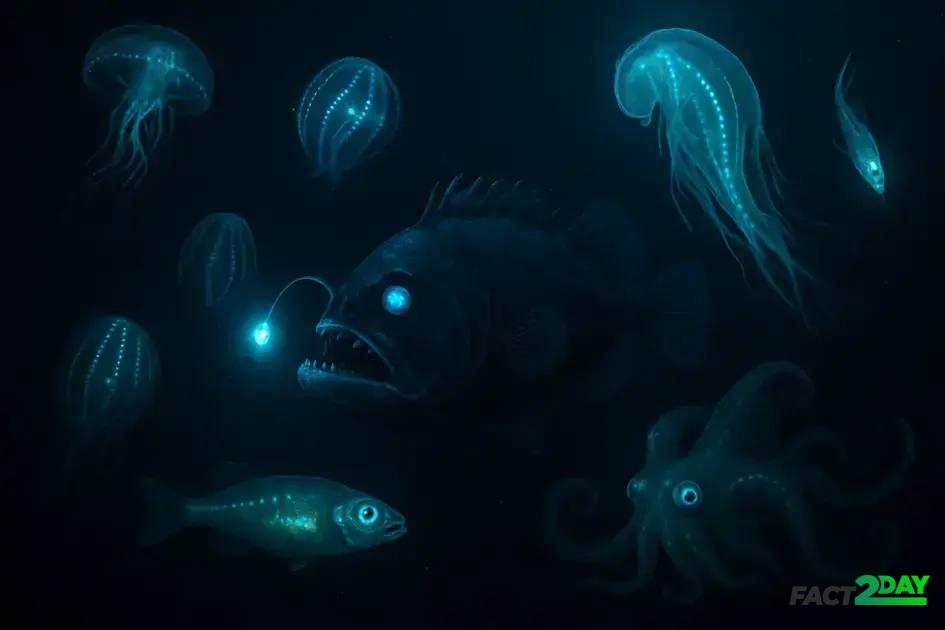
Underwater bioluminescence is the natural light produced by ocean organisms through chemical reactions, serving purposes like communication, camouflage, and predation in dark ocean depths.
Have you ever noticed the mysterious glow that flickers deep in the ocean? Underwater Bioluminescence lights up the abyss with an eerie but captivating dance of colors, revealing one of nature’s most fascinating secrets. Let’s dive into these glowing wonders and discover why they mesmerize scientists and dreamers alike.
What is underwater bioluminescence?
Underwater bioluminescence is a natural phenomenon where living organisms in the ocean produce and emit light. This light is usually blue or green, colors that travel well underwater. The glow comes from a chemical reaction inside the organisms, involving a molecule called luciferin and an enzyme called luciferase. When these two react with oxygen, they release light without heat.
This fascinating ability is found mainly in deep-sea creatures but also in some species near the surface. It helps them in different ways: some use it to attract mates, others to lure prey or confuse predators. Because sunlight can’t reach the darkest parts of the sea, bioluminescence becomes a vital form of communication and survival in those depths.
Types of bioluminescent organisms
Various life forms create light, including fish, jellyfish, plankton, and bacteria. Each species has developed unique patterns and intensity of light depending on their habitat and needs. For example, some tiny plankton flash when disturbed, creating glowing waves in the ocean.
The science behind the glow
The key chemicals, luciferin and luciferase, produce light through an energy-efficient process. This makes bioluminescence an exciting research topic for innovations in lighting and medical imaging. Studying these natural lights can inspire new technologies on land.
How do deep-sea creatures produce light?
Deep-sea creatures produce light through a natural chemical reaction called bioluminescence. Inside their bodies, a substance called luciferin reacts with oxygen, thanks to an enzyme named luciferase. This reaction releases energy in the form of light without creating heat, which is rare in nature.
Many species have specialized organs known as photophores that control where and when the light is produced. By adjusting these organs, creatures can blink, flash, or create steady glows. This ability helps them communicate, hunt, or avoid predators in the dark ocean depths.
Symbiotic bacteria and bioluminescence
Some deep-sea animals rely on bioluminescent bacteria living inside them. These bacteria produce light that helps their hosts survive. For example, the anglerfish has a glowing lure powered by these bacteria to attract prey.
Adaptations for light production
Over millions of years, deep-sea creatures evolved light-producing mechanisms suited for their needs. Some can control the color and intensity of their glow, making it a versatile tool for survival. This natural light is often blue or green, as these colors travel best through seawater.
The most bizarre bioluminescent species
The ocean depths are home to some of the most bizarre bioluminescent species that seem almost alien. One example is the vampire squid, which produces a ghostly blue light and displays red eyes that glow in the dark. Despite its name, it’s a gentle creature that uses light to confuse predators.
Another strange resident is the hatchetfish, with ultra-thin bodies and light-producing organs along their bellies. These organs help the fish blend perfectly with faint light from above, hiding them from predators below in a process called counterillumination.
The dragonfish and its fierce glow
The fierce dragonfish uses a bright red bioluminescent light to hunt prey in the pitch-black ocean. Red light is rare in the deep sea, making the dragonfish’s glow almost invisible to most other creatures.
Jellyfish species like the Atolla flare brightly when threatened, producing spectacular light shows to startle attackers or call for help. These dazzling displays highlight the diversity and bizarre beauty of ocean light.
Why do some fish glow in the ocean depths?
Some fish glow in the ocean depths to survive in the dark and hostile environment. This glowing ability, called bioluminescence, helps them in many ways. One key reason is to avoid predators. By producing light on their bodies, fish can confuse or scare away enemies. Some even use sudden flashes to startle attackers and escape.
Camouflage through counterillumination
Many deep-sea fish use bioluminescence to blend in with faint light from above. This is called counterillumination. Light-producing organs on their bellies match the brightness of the surface light, making them nearly invisible from below.
Glowing can also help fish find mates in the dark or communicate within their species. Certain patterns of light signals can carry important messages, like warnings or invitations.
Attracting prey
Certain glowing fish use light as bait. For example, anglerfish have a glowing lure on their heads that attracts smaller animals. When curious prey come close to the light, the anglerfish can catch them easily.
Overall, the glow helps fish adapt to a challenging, lightless world by aiding in defense, hunting, and communication, ensuring their survival in the deep ocean.
The role of bioluminescence in ocean communication
Bioluminescence serves as a vital communication tool in the vast and dark ocean depths. Many marine animals use light signals to convey messages for mating, warning, or coordination. Since sunlight cannot reach these depths, glowing lights become an effective language among creatures.
Mating signals
Some species display specific light patterns to attract mates. These flashing signals help individuals find partners in the darkness and can indicate readiness to reproduce. For example, certain deep-sea squid produce rhythmic light pulses to catch the attention of potential mates.
Warning and defense
Glowing bursts also act as alarms. When threatened, some animals emit sudden flashes to startle predators or alert others nearby. Others display continuous glowing to warn that they are toxic or dangerous, discouraging attacks.
Coordination and hunting
Groups of animals use bioluminescence to coordinate movements during hunting or migration. Light patterns can help them stay together or lure prey into traps. For example, flashlight fish flash their lights to communicate while hunting in schools.
In the deep ocean, where silence and darkness dominate, bioluminescent communication provides a critical connection between creatures, helping them survive and thrive in their unique environment.
Predator and prey: bioluminescence as a defense
Bioluminescence is a powerful tool used by both predators and prey in the ocean depths. Many creatures use glowing light to defend themselves or to hunt more effectively. For prey, light can be a way to confuse or scare predators, while predators use it to lure or spot their targets.
Defense mechanisms using light
Some animals produce a sudden flash of light to startle attackers and escape. Others release glowing chemicals into the water, creating a bright cloud that distracts predators while the prey swims away. This glowing ‘smoke screen’ is known as bioluminescent ink.
Predators using light to hunt
Certain predators, like the anglerfish, have specialized light organs that act as lures. They produce a steady glow that attracts smaller fish curious about the light. This strategy helps the predator catch prey more easily in the dark.
Camouflage and deception
Bioluminescence also helps some animals blend into their environment. For example, counterillumination allows prey to match the light coming from above, making it hard for predators below to see them. In some cases, predators use deceptive light signals to trick prey into coming closer.
The interaction of bioluminescence between predator and prey showcases an evolutionary arms race, where light becomes a vital weapon for survival in the deep, dark ocean.
How bioluminescence affects ocean ecosystems
Bioluminescence plays a significant role in maintaining balance within ocean ecosystems. It influences food chains, helps with predator-prey interactions, and supports biodiversity in deep and shallow waters.
Impact on food chains
Bioluminescent organisms serve as both predators and prey, creating a dynamic web of interactions. Small glowing plankton attract larger animals, which in turn support even bigger predators. This constant exchange helps regulate population sizes and energy flow.
Supporting biodiversity
The presence of bioluminescence allows unique species to thrive in dark ocean environments. Many creatures depend on light signals for mating, feeding, or defense. This diversity boosts ecosystem resilience and promotes healthy habitats.
Influence on behaviors
Bioluminescence affects behaviors like migration, hunting, and communication. Many deep-sea animals travel or hunt based on light cues, allowing better coordination and survival. It also aids in forming symbiotic relationships between species, such as glowing bacteria living inside host animals.
Overall, bioluminescence shapes ocean life in profound ways, making it a key factor in ecosystem health and function.
The chemistry behind bioluminescent light
The glowing light seen in bioluminescent creatures comes from a chemical reaction inside their bodies. The key players in this reaction are a molecule called luciferin and an enzyme known as luciferase. When luciferin reacts with oxygen in the presence of luciferase, a burst of light is produced without heat.
The role of luciferin and luciferase
Luciferin is the light-emitting molecule, while luciferase acts as a catalyst, speeding up the reaction. Different species have unique types of luciferin and luciferase, producing various colors of light, commonly blue or green, which travel best underwater.
Additional factors affecting light production
Other components like proteins and ions can influence the intensity and color of the light. Some organisms have photoproteins that help control when and how the light is emitted. The process is highly efficient, using almost all energy to produce visible light.
This chemistry fascinates scientists and inspires innovations in fields like medicine and technology, where bioluminescent markers help in imaging and diagnostics.
Notable deep-sea bioluminescent events
Deep-sea bioluminescent events are spectacular natural displays where large groups of glowing organisms light up the dark ocean. These events can happen due to environmental triggers, such as changes in water temperature or chemical composition, or biological causes like mating seasons.
Mass bioluminescent waves
Sometimes, billions of tiny bioluminescent plankton called dinoflagellates produce glowing waves when disturbed by currents or swimming creatures. These glowing waves create an otherworldly blue light that can stretch for miles along coastlines.
Bioluminescent blooms
Similar to algal blooms, some bioluminescent organisms gather densely, causing the water to shimmer with light. These blooms often happen in specific seasons and places and can last for days, creating breathtaking glowing waters.
Unexpected flashes and patterns
Deep in the ocean, some deep-sea creatures perform sudden flashes or light patterns. These flashing events may serve to attract mates, communicate danger, or confuse predators in the pitch-black environment.
Witnessing these incredible bioluminescent events offers a glimpse into the mysterious world under the sea and shows how life thrives with light in total darkness.
Technologies inspired by underwater bioluminescence
Underwater bioluminescence has inspired a range of innovative technologies in fields like medicine, communication, and energy. Scientists study the natural light-producing processes to develop efficient and eco-friendly solutions.
Bioluminescent sensors and imaging
Researchers use bioluminescent proteins to create sensitive sensors for detecting diseases and monitoring cellular activity. These proteins glow in response to specific chemicals or changes, allowing doctors to see inside the body without harmful radiation.
Lighting and display technologies
Bioluminescence inspires new types of lighting that use less energy. Scientists explore methods to replicate marine organisms’ light production for creating sustainable, soft light in homes or devices.
Communication and signaling
Inspired by deep-sea creatures that communicate with light, engineers develop underwater communication systems using bioluminescent-like signals. These could improve data transmission in areas where radio waves fail.
The study of underwater bioluminescence pushes the boundaries of technology, merging nature’s brilliance with human innovation to solve real-world problems.
How researchers study bioluminescence in extreme environments
Studying bioluminescence in extreme ocean environments requires advanced tools and specialized methods. Researchers use deep-sea submersibles and remotely operated vehicles (ROVs) to reach dark, high-pressure depths where bioluminescent creatures live. These vehicles carry sensitive cameras that can capture the faint glow without disturbing the animals.
Advanced imaging techniques
Scientists rely on low-light and infrared cameras to observe bioluminescence naturally. These technologies help record glow patterns without artificial light interference, preserving true behavior.
Sampling and laboratory analysis
Once samples are collected, researchers analyze bioluminescent tissues and chemicals in the lab. They study molecules like luciferin and enzymes to understand how light is produced. Genetic studies also reveal how bioluminescence evolved in different species.
Simulating extreme conditions
Lab experiments often recreate pressure, temperature, and chemical conditions of the deep sea to observe bioluminescence in realistic settings. This helps scientists explore how environmental factors affect light production.
Studying bioluminescence in extreme environments uncovers nature’s secrets, advancing knowledge about life under challenging conditions and inspiring new technological applications.
The cultural impact of ocean bioluminescence
Ocean bioluminescence has inspired cultures worldwide through history, symbolizing mystery, magic, and life’s hidden wonders. Many coastal communities consider glowing seas as sacred or mystical, incorporating them into myths and folklore.
Myths and legends
Bioluminescence often appears in stories as spirits, ghosts, or supernatural beings lighting the ocean. For example, some cultures viewed the glowing plankton as souls of departed ancestors or as signs from the gods.
Art and literature
The mesmerizing glow has sparked creativity in art, music, and literature. Writers use bioluminescence to create enchanting scenes, while artists mimic its colors and patterns in paintings and designs, capturing ocean mystery.
Tourism and modern culture
Bioluminescent bays and beaches attract tourists seeking to experience the natural light show. This has boosted local economies and raised awareness about ocean conservation through eco-tourism.
Ocean bioluminescence connects people with the sea’s deep secrets, shaping culture, inspiring stories, and offering a glowing symbol of nature’s beauty and mystery.
Future discoveries and mysteries of abyssal lights
The abyssal depths of the ocean hold countless secrets about bioluminescence that remain unexplored. Scientists believe many mysteries of abyssal lights await discovery as technology advances, allowing deeper and longer exploration.
Unknown species and new light mechanisms
Research continues to uncover new bioluminescent species with unique light-producing abilities. Some may use bioluminescence in ways yet unseen, revealing innovative biological strategies for survival.
Impact of climate change on bioluminescence
Future studies may show how warming oceans and pollution affect bioluminescent organisms. Understanding these changes is vital to protect deep-sea ecosystems and their glowing inhabitants.
Technological advances in exploration
Innovations like better deep-sea vehicles, sensors, and imaging techniques will provide clearer insights into bioluminescent displays and behaviors. This will open doors for scientific breakthroughs and practical applications inspired by nature.
The future promises exciting discoveries about the glowing abyss, expanding our knowledge of life in the ocean’s darkest places and the wonders of underwater bioluminescence.
Understanding the marvels of underwater bioluminescence
Underwater bioluminescence reveals the ocean’s most fascinating secrets, lighting up the dark depths with vibrant life. From strange glowing creatures to complex communication, this natural light shapes how ocean life survives.
As research and technology advance, new discoveries will continue to deepen our understanding of these glowing wonders. Protecting these unique ecosystems is essential for preserving the beauty and mystery of the abyssal world.
Exploring bioluminescence invites us to appreciate nature’s creativity and inspires innovations that benefit humans. The glowing ocean reminds us that even in darkness, life finds a way to shine.