The Forest Internet: The Bizarre Discoveries About Tree Consciousness and Communication
Explore Tree Consciousness and uncover how trees communicate in their own secret forest internet, revealing a hidden world beneath our feet.
In the original Pokémon Red and Blue, there was a glitch called MissingNo that appeared when fishing on Cinnabar Island. It looked like a strange block of pixels, produced creepy sounds, and could cause game corruption, such as messing up the Hall of Fame and graphics. Despite this, players loved the glitch because catching MissingNo would duplicate items like Rare Candies and Master Balls, effectively turning the glitch into a popular cheat code and fan-favorite feature.
Okay, so get this! Have you ever wondered if trees can actually “talk” to each other? Tree Consciousness might sound like some wild sci-fi idea, but the truth is even stranger and more fascinating. Let’s dive into how trees communicate and what that means for our forests!
What is tree consciousness?
Tree consciousness refers to the idea that trees are more than just passive plants. They have complex systems that allow them to sense, react, and communicate with their surroundings. Scientists have discovered that trees can send signals to each other, helping them warn about dangers or share resources.
How Trees Sense Their Environment
Trees detect changes in light, temperature, and moisture, adjusting their growth accordingly. Their roots and leaves act like sensors, gathering information from the environment.
The Idea of Tree Awareness
Though trees don’t have brains, their network-like systems inside help distribute signals, almost like a nervous system. This has led to the concept of them being “aware” in a natural sense.
Why Tree Consciousness Matters
Understanding tree consciousness helps us appreciate forest ecosystems as living communities. It changes how we think about nature, showing that trees play active roles in supporting each other and the environment.
How do trees communicate underground?
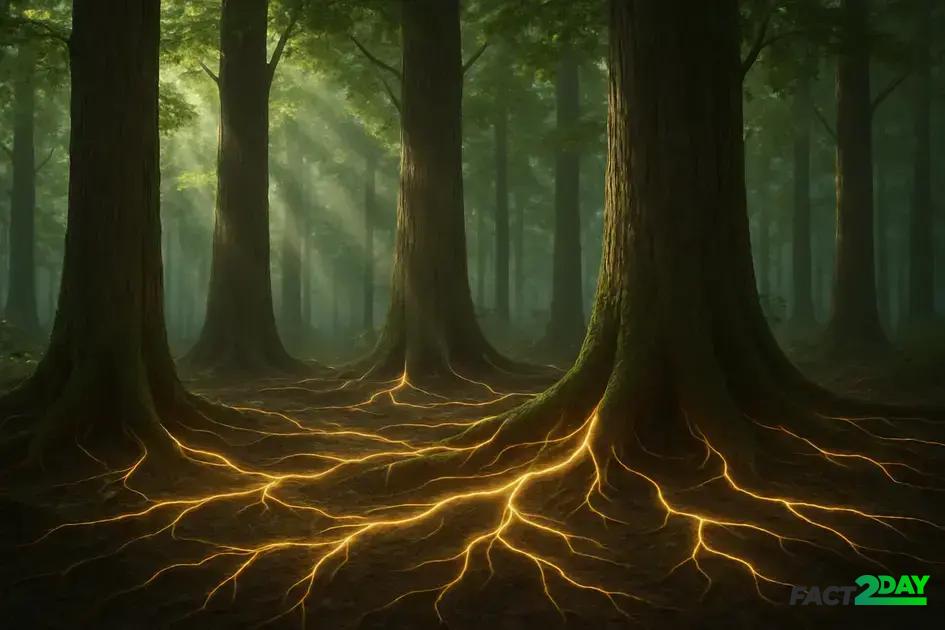
Trees communicate underground primarily through a network of roots and fungi called the mycorrhizal network. This intricate web allows trees to exchange information and resources, much like an internet system for the forest. When a tree is stressed by drought or pests, it can send warning signals through this network to nearby trees.
The Role of Mycorrhizal Fungi
Mycorrhizal fungi form symbiotic relationships with tree roots. They extend far beyond the roots themselves, connecting multiple trees. These fungi help trees absorb water and nutrients while transmitting chemical signals between them.
Signal Types Sent Underground
Trees use chemical signals, such as sugars and defensive compounds, to communicate underground. For example, a tree attacked by insects may release natural pesticides and alert others to prepare their defenses.
Resource Sharing Among Trees
Underground communication also helps trees share resources. Older or stronger trees might pass nutrients to younger or weaker ones, ensuring the survival of the entire forest community.
The role of mycorrhizal networks
Mycorrhizal networks are underground fungal systems that connect the roots of different trees and plants. These fungi form symbiotic relationships where both the fungi and trees benefit. The fungi increase the tree’s ability to absorb water and nutrients, while the tree provides the fungi with sugars produced through photosynthesis.
How Mycorrhizal Networks Work
The fungal threads, called hyphae, spread throughout the soil, linking multiple trees together. This network acts like an information highway, allowing trees to share resources and communicate chemical signals.
Benefits to Forest Health
Through these networks, stronger trees can supply nutrients to weaker or younger trees, helping them survive tough conditions. Trees can also alert each other about threats like pests or diseases using chemical signals sent via the fungi.
Impact on Ecosystem Balance
The mycorrhizal connections contribute to the overall health and balance of the forest. They support biodiversity by helping many different species thrive in the same environment, creating a resilient ecosystem.
Scientific studies that changed our view
Over the last few decades, several scientific studies have drastically changed how we understand tree consciousness and communication. Early research underestimated trees as simple organisms, but new findings reveal complex behaviors previously thought unique to animals.
Groundbreaking Work by Suzanne Simard
One major study by ecologist Suzanne Simard uncovered how trees use mycorrhizal networks to exchange carbon and nutrients. Her research showed that older “mother trees” support younger ones, highlighting cooperation in forests.
Studies on Tree Signaling
Experiments have demonstrated that trees release chemical signals when under attack by pests. Neighboring trees respond by boosting their defenses, proving that trees can “warn” each other.
Research on Electrical Signaling
Some scientists discovered that trees also use electrical impulses through their roots and stems to send rapid messages, similar to a nervous system. This points to an unexpected level of communication within forests.
Implications for Ecology
These studies have reshaped ecology, showing forests as interconnected communities rather than mere collections of individual trees. This insight encourages more sustainable forest management practices.
The impact on forest ecology
Forest ecology depends heavily on the communication and cooperation between trees. When trees share nutrients and information, they help maintain a balanced ecosystem. This mutual support keeps forests healthy and resilient against threats like disease, drought, and pests.
Supporting Biodiversity
Tree networks promote biodiversity by creating habitats and food sources for many plants, animals, and insects. Healthy forests support a wide range of species, contributing to the overall stability of the ecosystem.
Enhancing Soil Quality
Through cooperation with fungi and other organisms, trees improve soil health. This process helps retain moisture and nutrients, allowing more plants to thrive and preventing soil erosion.
Response to Environmental Stress
Trees can communicate stress signals, which triggers protective responses among neighboring plants. This early warning system helps forests adapt to changing environments and survive harsh conditions.
Role in Carbon Sequestration
Healthy, interconnected forests are better at storing carbon dioxide, which helps fight climate change. This function is critical for maintaining global ecological balance.
Communication signals between tree species
Trees communicate using a variety of chemical signals that travel through the air, roots, or fungal networks. Different species can send and receive these signals to warn each other of danger or to share information about the environment.
Airborne Chemical Signals
When trees are attacked by insects, they release specific chemicals called volatile organic compounds (VOCs) into the air. Nearby trees detect these VOCs and respond by boosting their own defenses, such as producing bitter chemicals to deter pests.
Root-Based Communication
Some tree species communicate through root exudates—chemicals released by roots into the soil. These substances can influence the growth and health of neighboring plants, encouraging cooperation or competition depending on the situation.
Fungal Networks as Communication Channels
The mycorrhizal fungi connecting different species act as communication pathways. This network allows for the transfer of nutrients and warning signals, enabling trees to support one another across species lines.
Examples of Inter-species Communication
Research shows that pine trees can warn oak trees of specific pests by emitting unique chemical signals. These interactions highlight how forests operate as complex, interconnected communities.
How tree consciousness influences nature’s balance
Tree consciousness plays a vital role in maintaining nature’s balance by enabling forests to act as interconnected communities. Through communication and resource sharing, trees help stabilize ecosystems and support other life forms.
Regulating Forest Health
Trees can detect environmental changes and communicate stress signals to neighbors. This early warning helps reduce damage caused by pests, diseases, or harsh weather, keeping the forest healthy and balanced.
Supporting Wildlife
Healthy, conscious forests provide food, shelter, and protection to diverse animals. Trees influence the availability of resources like nuts, fruits, and nesting sites, affecting the survival of many species.
Maintaining Soil and Water Quality
Communication between trees supports root growth and soil structure, which helps prevent erosion and retains moisture. This balance is crucial for sustaining plant and animal life in the area.
Impact on Climate Regulation
By coordinating growth and carbon storage through mutual aid, trees contribute to climate regulation. They absorb carbon dioxide and release oxygen, helping moderate global temperatures.
The mystery of tree memory and learning
Trees exhibit behaviors that suggest they possess a form of memory and learning. While they don’t have brains like animals, trees can store information about their environment and adjust their responses accordingly.
How Trees Remember
Trees can remember past events such as droughts or pest attacks by chemically storing this information. This memory helps them prepare for future challenges by strengthening defenses or altering growth patterns.
Learning from Experience
Some studies show that trees adapt to repeated stress and improve their responses over time. This process resembles learning, allowing trees to survive better in changing conditions.
Communication of Learned Information
Through underground fungal networks, trees can share learned information with neighbors. For example, a tree that has faced disease may send warning signals that help others prepare defenses.
Implications for Forest Resilience
This ability to remember and learn strengthens forest resilience. It enables communities of trees to adapt to environmental changes collectively, supporting the overall health of the ecosystem.
Human impact on forest communication
Human activities have significantly affected forest communication networks. Logging, pollution, and land development disrupt the delicate balance of underground fungal networks and tree root systems, impairing natural communication.
Effects of Deforestation
Removing large numbers of trees breaks the mycorrhizal connections that link forest communities. This disruption reduces the ability of trees to share nutrients and warning signals, weakening the entire ecosystem.
Pollution and Soil Health
Chemicals from agriculture, industry, and urban areas contaminate the soil, harming fungi and microorganisms crucial for tree communication. Poor soil health limits tree growth and communication effectiveness.
Climate Change Impact
Climate change alters temperature and rainfall patterns, stressing trees and affecting their communication signals. These changes can make it harder for forests to adapt and survive environmental challenges.
Conservation Efforts
Protecting forests and restoring damaged areas help preserve communication networks. Sustainable logging, reforestation, and reducing pollution are essential to maintain forest health and resilience.
Can we harness tree intelligence?
Scientists and innovators are exploring ways to harness tree intelligence to benefit humans and the environment. Understanding how trees communicate could lead to new technologies and sustainable practices.
Using Tree Communication for Forest Management
By monitoring chemical signals and mycorrhizal networks, researchers can detect forest health issues early. This allows for timely interventions to prevent widespread damage from pests or diseases.
Bio-Inspired Technology
Tree networks inspire new designs in communication and computing. For example, the way trees share resources and signals has influenced development in decentralized networks and sensor technology.
Enhancing Agriculture
Farmers can apply knowledge of tree communication to improve crop resilience. Intercropping with certain trees can boost soil health and protect plants through natural signaling.
Promoting Conservation Efforts
Understanding tree intelligence highlights the importance of preserving forests. Protecting these natural networks supports biodiversity and climate stability, benefitting the entire planet.
Technological advances in studying trees
Technological advances have revolutionized the study of trees and their communication systems. Modern tools allow scientists to observe and understand complex interactions within forests like never before.
Remote Sensing and Drones
Remote sensing technologies, including drones equipped with cameras and sensors, help map forests and monitor tree health over large areas. These tools detect changes in tree growth, stress, and disease from above.
Sensors and Data Loggers
Sensors placed in soil and on trees measure moisture levels, nutrient flow, and chemical signals in real time. Data loggers collect this information to analyze how trees communicate and respond to their environment.
Imaging Techniques
Advanced imaging, like MRI and tomography, allows researchers to see inside trees without cutting them down. This helps study water and nutrient movement, revealing the inner workings of tree networks.
Computer Modeling and AI
Computer models simulate forest ecosystems, predicting how trees interact and respond to changes. Artificial intelligence processes large datasets to identify patterns in tree communication and behavior.
Impact on Conservation
These technologies improve conservation efforts by providing detailed insight into forest dynamics. Better understanding helps protect forests, manage resources, and combat the effects of climate change.
Future possibilities for forest conservation
The future of forest conservation looks promising thanks to advances in science and technology. New methods aim to protect forests more effectively by understanding and supporting their natural communication and cooperation systems.
Leveraging Tree Communication Networks
Scientists plan to use knowledge of tree signaling and fungal networks to monitor forest health in real time. This can help detect early signs of stress or disease and guide targeted conservation efforts.
Restoration Through Reforestation
Future conservation will focus on restoring damaged forests using native trees that naturally connect through mycorrhizal networks. Reforestation strategies will consider tree species relationships to rebuild resilient ecosystems.
Integration of AI and Remote Sensing
Artificial intelligence combined with satellite and drone imagery will enable precise mapping and analysis of forests. This technology supports better decision-making and efficient resource allocation in conservation projects.
Community and Policy Involvement
Effective conservation also depends on local communities and governments. Educating and involving people in protecting forests ensures sustainable practices and long-term commitment.
Climate Change Mitigation
Protecting forests through advanced conservation helps combat climate change by preserving carbon sinks. Healthy forests play a key role in regulating the Earth’s climate balance.
Understanding Tree Consciousness Changes How We See Forests
Exploring tree consciousness reveals that forests are vibrant communities where trees communicate and support each other. This understanding helps us value forests beyond just groups of trees.
By learning how trees share nutrients and signals, we can protect these natural networks better. Advances in technology and science make it easier to study and conserve forests effectively.
Protecting tree communication is not only vital for forest health but also for maintaining balance in nature and fighting climate change. We all have a role in preserving these living systems for future generations.