The Emu War: The Strangest and Most Hilarious Battles in World History
Discover the bizarre story of Unusual Battles, starting with the Emu War — history's funniest and most unexpected conflict.
Exoplanets are worlds orbiting stars beyond our solar system, discovered through subtle dips in starlight, revealing the vast diversity and mystery of our galaxy.
Unusual Battles like the Emu War are not just odd tales—they show how reality can sometimes be stranger than fiction. Ever wondered how a country’s military ended up battling birds? Let’s dive into this hilarious chapter of world history together.
What was the Emu War?
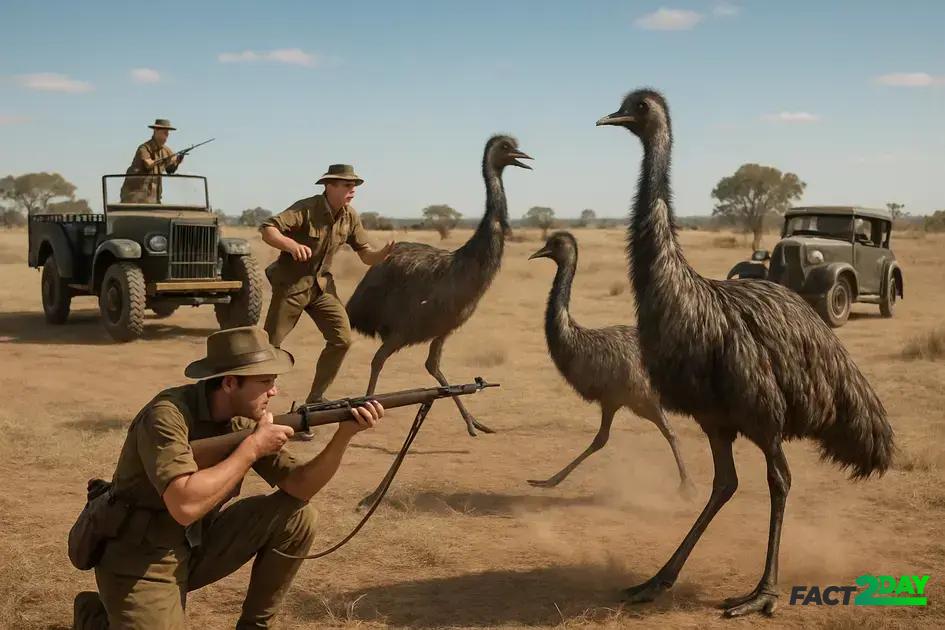
The Emu War was a strange and real conflict that took place in Western Australia in 1932. It involved the Australian military attempting to control a large population of emus — large, flightless birds — that were damaging crops. The birds had migrated to farmland areas, causing significant destruction to wheat fields, which threatened the livelihoods of local farmers.
Australian soldiers armed with machine guns were deployed to reduce the emu numbers, making this one of the few conflicts in history where wildlife was viewed as the enemy. Despite their efforts, the emus proved to be surprisingly resilient, swift, and difficult targets, often evading capture and gunfire.
The impact of the Emu War
The operation was largely unsuccessful and became a source of humor and frustration. The birds managed to survive and continue their impact on the region. This unusual battle became a legendary example of how nature can resist human intervention, highlighting the challenges of controlling wildlife populations using military force.
The Emu War remains a fascinating and unusual battle in world history, showing that sometimes war is fought in the most unexpected ways and places.
The origins of the Emu War in Australia
During the late 1920s and early 1930s, Western Australia faced severe economic challenges, worsened by the Great Depression. Farmers struggled to protect their wheat crops from various threats, including invasive wildlife. One of the most unexpected problems came from emus, native large birds that began migrating in large flocks into agricultural regions.
The origins of the Emu War can be traced to these environmental and economic pressures. As emus searched for food and water after their natural habitats were disturbed, they entered farmland, trampling crops and fences. Farmers reported significant agricultural damage that threatened their ability to sustain their livelihoods.
Government response and military involvement
Initially, local farmers sought help from the government. In response, the Australian government approved a military operation to cull the emu population and protect crops. This led to an unusual deployment of soldiers armed with machine guns, marking the start of what would become known as the Emu War.
This event reflects how environmental factors combined with economic hardship led to a unique and bizarre conflict in Australian history.
Why Emus became a threat to farmers
Emus became a serious threat to farmers in Western Australia primarily because of their size, numbers, and feeding habits. These large birds are fast runners and can cover long distances, making them difficult to control. After migrating into farming areas, emus started feeding on the wheat crops and trampling fences, which caused extensive damage.
The destruction was not only physical – the birds ate the seeds and young plants, reducing the harvest potential drastically. Farmers estimated that emu flocks could consume thousands of pounds of grain daily, severely impacting the agricultural output. This threat worsened during droughts when natural food was scarce, pushing emus deeper into farmlands.
Challenges faced by farmers
Farmers also struggled because emus moved in large groups, making it tough to control their population by traditional means. Barriers and fences were often ineffective since emus could easily break or go around them. As a result, agricultural losses mounted, leading farmers to seek government intervention.
The combination of relentless crop damage and ineffective deterrents transformed the emu population into a significant economic and operational threat for the farming communities during this period.
The Australian military’s involvement
In response to the escalating damage caused by emus, the Australian government decided to deploy the military in late 1932. Soldiers equipped with Lewis machine guns were sent to Western Australia to reduce the emu population and protect the farmers’ crops.
The operation involved military personnel trying to hunt down and cull the emus using mounted guns and vehicles. However, the birds’ surprising speed and agility made the task difficult. The emus often scattered into smaller groups, eluding the soldiers’ fire and making it hard to achieve significant results.
Challenges of the military campaign
The terrain was also a major obstacle. The open and rough farmland, with scattered vegetation, gave emus plenty of places to hide or escape quickly. Additionally, the military faced logistical problems, such as ammunition running low and mechanical issues with their equipment.
Despite the military’s efforts, the campaign was met with limited success, and it quickly gained notoriety as one of history’s most unusual and somewhat embarrassing military operations. Nevertheless, it remains a memorable example of the Australian military’s involvement in managing wildlife threats.
How the battle unfolded step by step
The Emu War unfolded over several weeks between November and December 1932. The operation began with soldiers setting up machine guns and ambush points in the affected farmlands. Their goal was to significantly reduce the emu population and protect crops from further damage.
Step one involved initial attempts to herd and shoot emus, but the birds’ speed and erratic movements made them difficult targets. The soldiers often found themselves chasing fast-moving emus across rough terrain, with limited success.
Repeated attempts and tactical challenges
The military tried different tactics, such as using trucks to chase the birds and deploying multiple firing positions. Despite firing thousands of rounds, many emus escaped unscathed. The birds quickly learned to avoid the soldiers’ positions by running in small groups or at full speed across open fields.
After a few days, the equipment even suffered mechanical failures, making it hard to continue the operation effectively. The soldiers reported frustration due to the emus’ surprising resilience and agility, which ultimately rendered the campaign ineffective.
Throughout the battle, emus proved elusive and more difficult to control than anticipated, making the entire campaign a unique and somewhat comical episode in military history.
The surprising tactics used against the Emus
The tactics used by the Australian military during the Emu War were unusual and often ineffective. They mainly involved using Lewis machine guns mounted on trucks to chase and shoot the emus. Soldiers hoped to quickly reduce the population by targeting large groups at once.
One surprising tactic was the attempt to ambush emus by waiting at watering holes where the birds gathered, aiming to catch them off guard. However, the emus proved smarter, often spotting the soldiers and escaping before any shots were fired.
Use of vehicles and machine guns
Military vehicles were used to chase the fast-running emus across open fields. The idea was to herd the birds towards the soldiers who would then open fire. But the terrain made it hard to maneuver vehicles effectively, and emus could outrun them.
Because of the scattered and unpredictable movement of emus, the machine guns often fired many rounds but had limited success hitting the birds. This led to wasted ammunition and added to the operation’s overall frustration.
These surprising, yet flawed tactics highlight how difficult it was to control the emu population using military methods and why the campaign became legendary as an odd and comical chapter in history.
Public reaction to the Emu War
The public reaction to the Emu War was a mix of amusement, disbelief, and criticism. Many people found the idea of a military operation against birds to be absurd and even comical. Newspapers around the world reported on the event with humorous headlines, turning the war into a global joke and a symbol of unexpected warfare.
Some critics questioned the government’s decision to use military resources against emus, arguing that it was a misuse of funds during tough economic times. Others felt sympathy for the farmers, understanding the difficulties they faced but doubting the effectiveness of the approach.
Media coverage and legacy
The media played a significant role in shaping public perception. Satirical articles and cartoons highlighted the futility of the campaign, often comparing it to a farce. Despite the failed military efforts, the Emu War became a beloved piece of Australian folklore and a unique chapter in history.
This public reaction has kept the story alive, serving as both a funny anecdote and a cautionary tale about the limits of human control over nature.
Lessons learned from this unusual battle
The Emu War teaches us valuable lessons about the complexity of dealing with wildlife and the limits of human intervention. One key takeaway is that using military force against nature can be ineffective and even counterproductive.
Understanding animal behavior is crucial—the emus’ speed, agility, and ability to adapt made them difficult targets, showing that controlling wildlife requires strategies beyond brute force.
The importance of alternative solutions
This event also highlights the need for sustainable and humane solutions when managing environmental challenges. Rather than relying on force, methods like fencing improvements, controlled hunting, or habitat management can be more effective and less controversial.
Moreover, the Emu War reminds us to consider the broader ecological impacts of our actions. Attempting to solve problems with quick military fixes can overlook environmental balance and lead to unintended consequences.
Overall, this unusual battle emphasizes humility and respect for nature, encouraging us to find smarter ways to coexist with wildlife.
Other strange battles in world history
History is full of strange and unusual battles that defy traditional expectations. Besides the Emu War, there are many other examples where conflicts involved unexpected opponents or bizarre circumstances.
One famous example is the Pig War of 1859, a standoff between the United States and Britain triggered by the shooting of a pig on disputed territory. Luckily, it was resolved without actual fighting, but it highlights how minor incidents can escalate.
Other notable strange battles
The Dancing Plague of 1518 in Europe, where people literally danced uncontrollably for days, is sometimes considered a form of strange social conflict. Another example is the Football War between El Salvador and Honduras in 1969, where tensions from a soccer match fueled a brief military conflict.
These unusual battles show how human conflict can arise from odd causes and involve unique circumstances. They remind us that warfare is not always about armies clashing on battlefields; sometimes, it’s about unpredictable events and surprising issues.
Exploring these strange battles allows us to appreciate the diversity and complexity of world history beyond typical war stories.
The role of animals in warfare
Animals have played various roles in warfare throughout history, serving as soldiers, messengers, and symbols. They have been used for transportation, communication, and even combat, reflecting the diverse ways humans have utilized wildlife and domesticated species during conflicts.
Horses and elephants, for example, were essential in many ancient battles, providing mobility and strength. Horses allowed armies to move quickly and strike unexpectedly, while war elephants intimidated enemies and caused chaos on the battlefield.
Animals as messengers and scouts
Doves and pigeons have been used to carry messages over long distances, especially before modern communication methods existed. During World Wars, carrier pigeons delivered critical information, sometimes saving lives with their resilience.
Dogs have been employed for their keen senses, assisting in detecting enemies, carrying supplies, or even attacking. Their loyalty and intelligence made them invaluable companions in numerous military operations.
The use of animals in warfare shows both human ingenuity and the strong bond between humans and animals. It also raises ethical questions about the treatment of animals in conflict zones.
How humor and history combine in the Emu War
The Emu War is a rare example where humor and history intersect in a military conflict. The story’s absurdity—a formal military campaign against birds—has made it a popular subject for jokes and memes worldwide. This blend of humor with serious history offers a unique perspective on how we remember and interpret past events.
Humor arises from the unexpected nature of the battle and the fact that the ‘enemy’ was virtually impossible to defeat using traditional military methods. The failed attempts and the emus’ ability to outsmart soldiers add a comedic layer to what was essentially a real struggle for survival and economic protection.
The role of media and popular culture
Media coverage at the time, including satirical newspapers and cartoons, amplified the humorous perception of the Emu War. Over the years, it has inspired books, documentaries, and online content that playfully recount the story while preserving its historical facts.
This combination of humor and history makes the Emu War memorable and accessible, reminding us that even serious events can have lighthearted sides.
What the Emu War tells us about human nature
The Emu War reveals a lot about human nature, especially our attempts to control and manage the environment. It shows that sometimes, despite our best efforts and technology, nature can outsmart us, reminding us of our limits.
Human persistence and creativity are evident in the way the military developed strategies to deal with the emu problem. However, the story also highlights human folly—our tendency to sometimes apply inappropriate solutions to complex problems without fully understanding them.
Lessons on humility and adaptability
The Emu War teaches us humility, encouraging respect for wildlife and ecosystems. It also shows the importance of adapting our methods and being open to unexpected outcomes instead of relying solely on force.
Ultimately, this odd historical event reflects the broader human experience: our constant struggle to balance ambition with nature, knowledge with ignorance, and effort with acceptance.
Comparing bizarre battles across different cultures
Bizarre battles have occurred across many cultures, each reflecting unique historical and cultural contexts. These conflicts often involve unusual circumstances, odd opponents, or surprising tactics that challenge conventional ideas about warfare.
For instance, in Japan, there was the Battle of Kawanakajima where samurai warriors fought fiercely in close quarters, known for its complex strategies and unusual timing. In Africa, the Zulu warriors’ use of the “horns of the buffalo” formation was both unique and highly effective.
Examples of bizarre battles worldwide
In Europe, events like the Chicken War in Poland featured conflict sparked by seemingly trivial causes but had political consequences. The Pig War in North America was a standoff caused by an incident involving a pig on disputed land, which almost led to war between the US and Britain.
These battles illustrate how conflict often goes beyond the expected clash of armies. They highlight how culture, geography, and individual circumstances shape warfare in strange and fascinating ways.
Understanding these diverse battles helps us appreciate the wide range of human experiences in conflict and how history is full of surprises.
Why unusual battles still capture our imaginations
Unusual battles continue to captivate our imaginations because they break the mold of what we expect from war. These conflicts often involve unexpected elements, strange opponents, or bizarre circumstances that make the stories memorable and intriguing.
Such battles highlight human creativity and the unpredictability of conflict. They often carry lessons about resilience, adaptation, and the limits of technology or strategy in the face of nature or unique challenges.
The appeal of the unexpected
People are drawn to unusual battles because they challenge conventional narratives, blending humor, mystery, or oddity with real historical events. They offer a fresh perspective on history and remind us that truth can be as strange as fiction.
These stories are often retold with a mix of awe and amusement, making them powerful tools for education and entertainment.
Ultimately, unusual battles remain fascinating because they reveal the complexity and unpredictability of human experience in warfare.
The lasting impact of the Emu War and unusual battles
The Emu War stands out as one of history’s most unique conflicts, reminding us that not all battles are fought between traditional armies. It shows the challenges humans face when trying to control nature and the unexpected outcomes that can result.
These unusual battles continue to capture our attention because they reveal human creativity, resilience, and sometimes our missteps. They teach valuable lessons about respecting the natural world and thinking creatively when solving problems.
Remembering these stories helps us appreciate the rich variety of history and the surprising ways people and animals have interacted over time.
In the end, the Emu War is more than a quirky tale; it is a powerful reminder of the complex and unpredictable nature of human conflict.