Life from Space? The Bizarre Debate About Microbial Organisms Found in Meteorites
Explore the fascinating debate on Life in Meteorites and the mysterious microbial organisms that might have traveled from space.
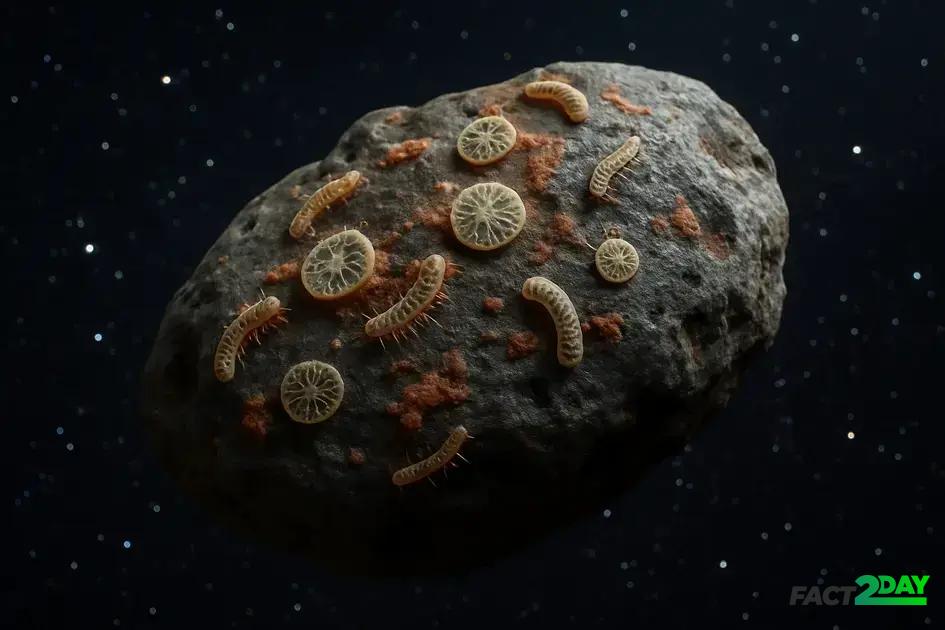
Life in Meteorites explores the controversial evidence and scientific methods behind detecting possible microbial organisms in space rocks, challenging our understanding of life’s cosmic origins and fueling the search for extraterrestrial life.
Have you ever wondered about Life in Meteorites? Imagine tiny microbes hitching a ride through space, sparking debates among scientists. This article explores these fascinating mysteries and what they mean for us all.
Understanding meteorites: cosmic time capsules
Meteorites act as cosmic time capsules that hold valuable clues about the early solar system. These space rocks are fragments of asteroids, comets, or even planets that have survived their journey through Earth’s atmosphere. By studying meteorites, scientists can unlock information about the materials present when our solar system formed over 4.5 billion years ago.
Most meteorites consist of minerals and metals not commonly found on Earth’s surface, which makes them unique samples of ancient cosmic matter. Their chemical makeup and age can reveal the processes that shaped planets and other celestial bodies. For example, chondrites—one of the most common types—contain tiny spherical particles called chondrules, formed in the early solar nebula.
How Meteorites Are Classified
Meteorites are classified based on their composition: stony, iron, and stony-iron. Each type tells different stories about their origin. Stony meteorites are mostly silicate minerals, while iron meteorites consist mainly of metallic iron and nickel. Stony-iron meteorites are a mix of both. Understanding these differences helps unravel the conditions in space where they came from.
Analyzing isotopes in meteorites provides insight into the timeline of solar system formation. Radioactive dating techniques can pinpoint when the rock solidified, offering a window into events billions of years ago. This information is crucial for piecing together how our planetary neighborhood evolved.
In short, meteorites are natural archives from space, preserving history that can’t be found on Earth. Their study continues to enrich our understanding of the cosmos and the origins of life itself.
What is astrobiology and why it matters
Astrobiology is the scientific study of life in the universe, including its origin, evolution, distribution, and future. It combines biology, astronomy, geology, and chemistry to explore the possibility of life beyond Earth. This interdisciplinary field seeks to answer one of humanity’s biggest questions: Are we alone in the cosmos?
Astrobiologists examine extreme environments on Earth where life thrives, such as deep ocean vents and acidic lakes, to understand how life might survive on other planets. Studying these extreme conditions helps scientists identify potential habitats on worlds like Mars, Europa, and Enceladus.
Why Astrobiology Matters
This field is crucial because it guides space missions in the search for extraterrestrial life. It shapes how we design experiments to detect signs of life, such as microbial organisms in meteorites or biosignatures in planetary atmospheres.
Astrobiology also enriches our understanding of life’s resilience and adaptability. By studying how life began and evolved on Earth, scientists gain insights into planetary habitability and the potential for discovering new forms of life. This knowledge could transform our view of biology and our place in the universe.
Advancements in astrobiology drive innovation in technology and inspire curiosity about space exploration. It encourages collaboration across scientific disciplines and fosters a deeper appreciation for the delicate conditions that support life.
The discovery of microbial life claims in meteorites
The discovery of microbial life claims in meteorites has sparked intense interest and debate among scientists. Certain meteorites, particularly the Allan Hills 84001 from Mars, have shown structures resembling microscopic fossils. These findings suggest that microbial organisms may have once existed on other planets.
Scientists use advanced microscopes and chemical analysis to identify these possible microbial features. For instance, tiny carbonate crystals and organic molecules within meteorites have been interpreted as evidence of past life. However, distinguishing between biological and non-biological formations remains challenging.
Scientific Evidence and Techniques
Researchers analyze isotopic ratios, mineral compositions, and morphological structures to support their claims. Some studies report magnetite crystals similar to those produced by bacteria on Earth. These detailed examinations aim to rule out contamination and terrestrial origin.
The field remains controversial due to the complexity of confirming life in space rocks. Critics argue that abiotic processes might create similar features, emphasizing the need for caution. Despite this, the possibility of life outside Earth continues to motivate further investigation.
This discovery impacts how we think about life’s distribution in the universe. It opens new avenues for astrobiology and the search for life on Mars, moons, and beyond.
Scientific methods used to study meteorite samples
Meteorite samples are studied using a variety of scientific methods that reveal their composition, structure, and potential signs of life. One common approach is electron microscopy, which allows scientists to view minerals and tiny structures at extremely high magnification.
Chemical and Isotopic Analysis
Techniques such as mass spectrometry measure the isotopic ratios of elements in meteorites. These measurements help determine the sample’s age and the processes it has undergone. Isotopic signatures can also hint at biological activity if they deviate from typical inorganic patterns.
Another important method is X-ray diffraction, which identifies the crystal structures within the meteorite, revealing its mineral content. This helps researchers classify meteorite types and understand their origins.
Spectroscopy and Imaging
Infrared and Raman spectroscopy analyze the molecular makeup, detecting organic compounds that could be linked to past life. Imaging techniques capture detailed pictures of meteorite surfaces to spot unusual features or fossil-like structures.
Strict contamination controls are crucial throughout all methods to ensure that findings reflect the meteorite’s true nature, not Earth-based impurities. Together, these techniques form a comprehensive toolkit for uncovering the secrets locked within space rocks.
Debates and controversies around microbial life in space
The claim of microbial life existing in meteorites has sparked significant debates and controversies within the scientific community. Skeptics argue that many alleged signs of life could be explained by non-biological processes or contamination from Earth.
One major point of contention is whether the features observed in meteorites are true fossils or simply mineral structures that mimic life forms. Some critics suggest these patterns could form through chemical reactions unrelated to biology.
Contamination Concerns
Contamination is a serious challenge, as meteorites often spend time on Earth before study. Microbes from our planet can infiltrate samples, making it difficult to conclusively prove extraterrestrial origins for any findings. Strict lab protocols are needed to minimize this risk.
Another debate focuses on the interpretation of chemical signatures like organic molecules. While their presence is intriguing, such molecules can arise from non-living processes as well.
Supporters of microbial life claims highlight multiple lines of evidence, including unique isotopic ratios and magnetite crystals similar to those produced by terrestrial bacteria. They argue that combined evidence strengthens the case for past life in space.
Overall, these controversies underscore the complexity of astrobiological research and the need for continued investigation using advanced technologies and rigorous scientific methods.
The implications for Earth’s origin theories
The possibility of microbial life in meteorites challenges traditional ideas about Earth’s origin and how life began on our planet. If life’s building blocks or microorganisms can survive space travel, it raises questions about whether life on Earth started here or came from elsewhere in the universe.
Panspermia Theory
This theory suggests that life could have been seeded on Earth from comets, asteroids, or meteorites carrying microbial life. The discovery of organic molecules and signs of ancient microbes in meteorites supports this idea, implying that life might be widespread in space.
If panspermia is true, it changes the way scientists think about the origins of life—no longer as a unique event on Earth but part of a larger cosmic process. This could explain how life appeared so quickly after Earth’s formation.
The study of meteorites also helps us understand conditions of the early solar system. These space rocks contain materials that formed before the Earth itself, offering clues about the environment where life could have originated or been delivered.
These implications extend beyond Earth, suggesting that life might exist on other planets with similar conditions. It encourages looking outward with new perspectives on life’s resilience and distribution in the universe.
Technological advances in detecting extraterrestrial life
Technological advances have significantly improved our ability to detect extraterrestrial life. Instruments on spacecraft and in laboratories are now more sensitive and precise than ever, enabling the search for life beyond Earth to reach new heights.
Sophisticated Spacecraft Instruments
Rovers, landers, and orbiters are equipped with advanced tools like spectrometers, microscopes, and chemical analyzers. These tools help identify organic molecules, minerals, and possible microbial fossils on planets and moons.
For example, NASA’s Mars rovers use laser-induced breakdown spectroscopy (LIBS) to analyze rock composition from a distance. This technique helps detect elements essential for life, such as carbon, hydrogen, and nitrogen.
Improved Telescopes and Remote Sensing
Space-based and Earth-based telescopes now scan exoplanet atmospheres for biosignatures — gases like oxygen and methane that might indicate life. High-resolution imaging also allows the study of planetary surfaces and helps select promising targets for exploration.
Laboratory techniques have evolved too. DNA sequencing and biomarker detection methods have become more sensitive, allowing researchers to analyze even tiny samples from meteorites or spacecraft.
Artificial intelligence and machine learning are increasingly used to process vast amounts of data, identify patterns, and prioritize areas to explore.
These technological innovations bring us closer to answering the age-old question: is there life beyond Earth?
The role of space missions in studying meteorites
Space missions play a crucial role in studying meteorites by providing access to pristine samples and valuable data beyond what can be collected on Earth. These missions collect meteorites directly from space or bring back samples from asteroids and comets.
Sample-Return Missions
Missions like Japan’s Hayabusa and NASA’s OSIRIS-REx have successfully landed on asteroids, gathered surface material, and returned it to Earth. These samples offer uncontaminated meteorite material, allowing scientists to study the composition and potential signs of extraterrestrial life more accurately.
Space missions also carry instruments designed to analyze meteorites in situ. Landers and rovers on planets and moons use tools like spectrometers and microscopes to examine incoming meteoritic material right on the surface.
Orbiters and Telescopes
Orbiters and space telescopes help identify and track meteoroid paths, origins, and composition remotely. They provide context on the environment and conditions meteorites endure in space, informing hypotheses about their formation and potential for hosting life.
These missions enhance our understanding of meteorites as carriers of organic compounds and microbial life, helping to answer fundamental questions about life’s origins and distribution in the universe.
How meteorite life impacts our search for aliens
The idea that meteorites may carry signs of life transforms how we search for aliens. If microbial life or organic compounds can survive space travel, it means life could be widespread across the universe, not just confined to Earth.
Expanding Search Areas
This possibility pushes scientists to explore not only planets but also comets, asteroids, and moons as potential habitats or sources of life. It broadens the focus from traditional targets to many kinds of celestial bodies.
Meteorites serve as natural delivery systems, carrying life or its precursors between worlds. Recognizing this, research includes studying samples from meteorites to find clues that might hint at alien biology.
Advanced instruments now seek biosignatures—chemical indicators of life—in meteorites and planetary surfaces, improving our ability to detect alien life even if it differs from Earthly organisms.
This approach encourages interplanetary missions and sample-return efforts to collect and study extraterrestrial materials directly. Each discovery refines search strategies and technologies, accelerating progress in astrobiology.
Skepticism and challenges in proving life from space
Skepticism surrounds claims of life from space due to the difficulty in proving these assertions beyond doubt. Scientists face numerous challenges in confirming that microbial life found in meteorites truly originates from extraterrestrial sources.
Potential Contamination
A major concern is contamination from Earth. Meteorites often spend time on Earth’s surface before study, allowing terrestrial microbes to infiltrate the samples. Strict laboratory protocols are essential but cannot always completely eliminate this risk.
Another challenge is distinguishing biological features from non-biological ones. Some mineral formations can closely resemble microbial fossils, making it hard to confirm their true nature.
Analytical limitations also complicate interpretation. Many techniques require destructive sampling, and the tiny size of suspected structures limits the amount of information that can be gathered.
Moreover, the absence of widely accepted criteria for defining extraterrestrial life leads to debates about the validity of evidence. Some scientists argue for more rigorous standards before confirming life beyond Earth.
Despite these hurdles, ongoing improvements in technology and methodologies continue to refine the search, keeping the possibility open and driving further research.
Future prospects in meteorite research and astrobiology
Future prospects in meteorite research and astrobiology look promising as technology and scientific methods continue to advance. Researchers aim to uncover more about the origins of life and the potential for life beyond Earth through ongoing and upcoming missions.
Next-Generation Space Missions
Missions planned to collect samples from asteroids and comets will bring back pristine materials that could hold better clues about early life. These missions will use more sensitive instruments to detect organic compounds and microbial fossils.
Improved remote sensing and robotic explorers will expand our reach to moons like Europa and Enceladus, where subsurface oceans may harbor life. These efforts will deepen our understanding of habitable environments in space.
Advances in Laboratory Techniques
Cutting-edge tools, such as ultra-high-resolution microscopes and advanced chemical analyzers, will allow scientists to study meteorites in greater detail. New methods to detect biomarkers and isotopic patterns will increase the accuracy of life detection.
Collaboration across disciplines—including biology, geology, chemistry, and planetary science—will enhance research quality and lead to new discoveries. Data analysis powered by artificial intelligence will help interpret complex results faster and more accurately.
As research progresses, it holds the potential to answer fundamental questions about life’s distribution in the universe and inspire future generations of explorers and scientists.
Wrapping Up the Debate on Life in Meteorites
The search for life in meteorites challenges our understanding of life’s origins and the universe itself. Advances in technology and space missions continue to improve our ability to explore these cosmic time capsules for signs of microbial life.
While skepticism remains, the ongoing research fuels hope and curiosity about finding life beyond Earth. As we learn more about meteorites and astrobiology, we get closer to answering one of humanity’s biggest questions: are we alone?
The future holds exciting possibilities, with new tools and missions set to deepen our knowledge. Staying open-minded and scientifically rigorous will be key to unveiling the secrets meteorites may hold about life in space.