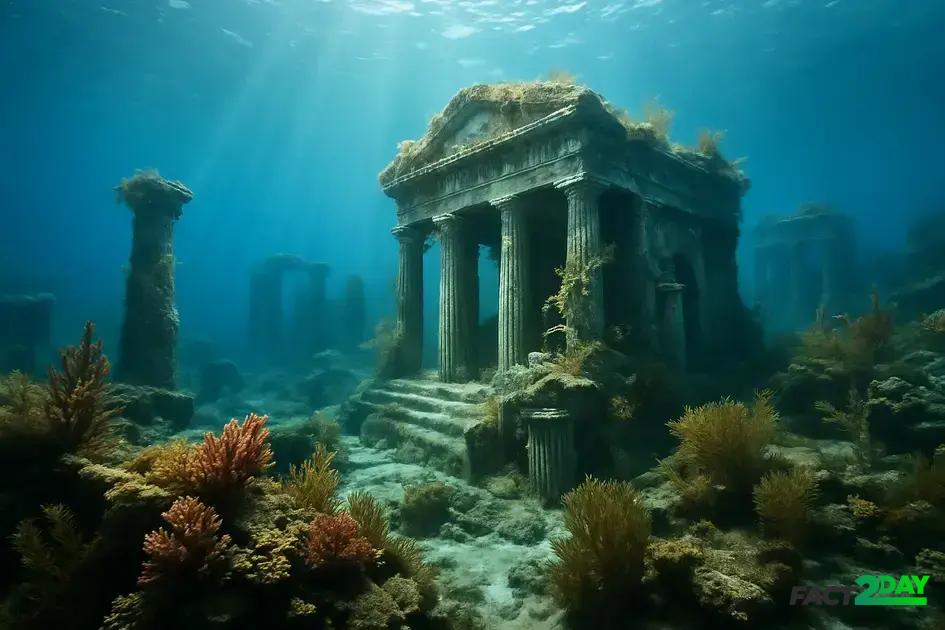
Is Atlantis Real? The Legendary Lost Cities Believed to Be Submerged
Explore the mysteries of Lost Underwater Cities and the legends surrounding Atlantis, unlocking secrets beneath the waves today.
Imagine a courtroom where the defendant is not a person but an animal. This strange reality was common in medieval Europe, where animals were put on trial for crimes.
From pigs accused of murder to beetles blamed for crop damage, these trials were serious events. Animals could have lawyers, witnesses, and even appeal their case. This shows how people back then saw animals as more than just property — they considered them capable of making moral choices.
While it may seem odd today, this practice reveals how closely law and spirituality were connected in the past. It challenges us to think about justice, responsibility, and who deserves a fair trial — ideas that humans have debated for centuries.
Consider for a moment the allure of Lost Underwater Cities. Are these mere myths, or do they hold truths buried beneath ocean waves that we are only beginning to understand? Join us as we dive into this captivating enigma.
The myth and origin of Atlantis
The story of Atlantis originates from the works of the ancient Greek philosopher Plato, who described it as a powerful and advanced island civilization that disappeared beneath the ocean in a single day and night. While some see this as pure myth, others believe Plato’s accounts could be based on real events or ancient knowledge. Atlantis symbolizes humanity’s fascination with lost civilizations and serves as a compelling legend that has inspired countless explorations and theories. The myth blends elements of divine punishment, advanced technology, and moral lessons, making it a rich cultural tale that has endured for centuries. These tales ignite curiosity and invite us to consider what lies beneath the waves, blending imagination with historical possibility.
Plato’s influence on the myth
Plato’s dialogues, especially “Timaeus” and “Critias,” are the primary sources of the Atlantis myth. He described Atlantis as a mighty naval power beyond the Pillars of Hercules, often identified with the Strait of Gibraltar. The vivid descriptions of its wealth, architecture, and society captured the imaginations of many, but the lack of corroborating evidence keeps the story in the realm of legend for most scholars.
Possible inspirations for the story
Some researchers propose that Atlantis was inspired by real ancient civilizations affected by natural disasters like the volcanic eruption of Thera or the sinking of islands in the Mediterranean. These ideas suggest the myth could be a distorted memory of real historical events passed down through oral traditions.
Why the myth persists
The enduring interest in Atlantis comes from its mysterious disappearance and the allure of hidden knowledge. The idea of a lost civilization with advanced knowledge sparks imaginations and encourages exploration, blending fact and fiction in ways that keep the myth alive across generations.
Historical records of underwater cities
Historical records of underwater cities are scarce but fascinating, often relying on ancient texts, maritime logs, and oral traditions. Civilizations near coasts and rivers commonly faced natural disasters like floods and earthquakes, which sometimes submerged entire settlements. Scholars have studied various ancient manuscripts and maps that hint at the existence of such cities under the sea.
Ancient texts and maps
Documents from civilizations such as the Egyptians, Greeks, and Indians contain references to cities lost to waters. For example, the Epic of Gilgamesh mentions flood myths that might relate to submerged places. Early nautical charts occasionally marked regions thought to hide sunken ruins, reflecting ancient sailors’ rumors and experiences.
Archaeological evidence from historical records
Some underwater ruins corroborate historical records, lending credibility to these tales. For example, the sunken city of Heracleion off Egypt’s coast matches descriptions in Egyptian texts. Such discoveries help bridge ancient accounts with physical evidence, enriching our understanding of history and geography.
Challenges in interpreting records
Interpreting these records is complex due to mythical storytelling, language translations, and loss of context over time. Sometimes, what was metaphorical may be mistaken for factual, leading to debates among historians. Yet, continuing research and technology improvements keep unveiling more about our submerged past.
Archaeological discoveries supporting submerged ruins
Archaeological discoveries of submerged ruins have uncovered fascinating insights into ancient civilizations once lost beneath the water. Using advanced diving technology and underwater robotics, researchers have found entire cities, temples, and artifacts preserved underwater.
Notable submerged sites
One of the most famous discoveries is the city of Heracleion near Egypt, which was found intact with statues, buildings, and even ships dating back to 600 BCE. Similarly, the ancient city of Dwarka off India’s coast reveals complex urban planning and ancient artifacts, suggesting a thriving civilization long submerged.
Techniques in underwater archaeology
Modern technology like sonar mapping, remotely operated vehicles (ROVs), and underwater photography allows detailed exploration without damaging sites. These tools help create accurate maps and 3D models, revealing the city layouts and enabling preservation planning.
Significance of these discoveries
These findings offer tangible evidence supporting legends of lost underwater cities. They provide a window into the past, illustrating how ancient people lived, traded, and adapted to environmental changes. Each discovery helps historians rewrite parts of history that were once only known through myths.
Archaeological work continues as technology evolves, aiming to uncover more about submerged civilizations around the globe. These efforts fuel ongoing debates about the accuracy of historical accounts and myths like Atlantis.
Geological phenomena causing submersion
Various geological phenomena are responsible for the submersion of ancient cities, turning thriving societies into underwater mysteries. Natural events like earthquakes, tsunamis, volcanic eruptions, and gradual sea-level rise have played key roles in the disappearance of coastal civilizations. Understanding these processes helps explain why many ancient settlements are now beneath the waves.
Earthquakes and tectonic shifts
Earthquakes can cause ground subsidence, where the land sinks suddenly, flooding cities close to shorelines. Tectonic plate movements also reshape the Earth’s surface over time, sometimes causing entire regions to sink below sea level.
Tsunamis and sudden flooding
Tsunamis, triggered by underwater earthquakes or volcanic eruptions, unleash massive waves that can inundate coastal settlements. These powerful floods often cause lasting damage and can submerge cities for centuries.
Volcanic activity
Volcanic eruptions can drastically change landscapes by causing land to collapse or be covered by lava and ash. For example, the eruption of Thera (Santorini) is believed to have caused the submersion of nearby Minoan settlements.
Sea level rise and climate change
Long-term climate changes lead to rising sea levels, slowly swallowing coastlines and ancient cities over centuries. Melting glaciers and thermal expansion of oceans contribute to this gradual submersion, altering habitats and archaeological sites alike.
Cultural impact of lost underwater cities
Lost underwater cities have a profound cultural impact, inspiring art, literature, and even modern media. These submerged ruins fuel imaginations, becoming symbols of mystery, adventure, and the unknown. Legends like Atlantis shape how societies view history and human potential.
Inspiration for literature and art
Many authors and artists have drawn upon stories of lost cities beneath the sea. From classic novels to modern films, these tales explore themes of discovery, loss, and the power of nature. The symbolic use of underwater cities often reflects human hopes and fears about civilization and progress.
Influence on tourism and education
Regions near submerged ruins often develop cultural tourism, attracting visitors interested in history and archeology. Educational programs also highlight these cities to teach about ancient societies, environmental changes, and preservation efforts.
Modern interpretations and myths
Today, lost underwater cities continue to inspire myths and theories about ancient technologies and civilizations. These stories can promote cultural identity and pride or sometimes lead to misconceptions, making it important to balance myth with scientific understanding.
Overall, the cultural significance of lost underwater cities extends beyond their physical remains, influencing how people connect with history and the mysteries beneath the ocean.
Modern explorations and underwater technology
Modern explorations of lost underwater cities rely heavily on advanced underwater technology that allows researchers to dive deep and explore difficult environments safely and efficiently. This technology has opened new frontiers in marine archaeology and helped uncover many hidden treasures beneath the sea.
Use of sonar and remote sensing
Sonar systems create detailed maps of the ocean floor by bouncing sound waves off underwater objects. These maps help locate potential archaeological sites without disturbing the seabed. Remote sensing technologies, including satellite imagery and drones, also assist in identifying changes in coastal landscapes that might signal submerged ruins.
Remotely operated vehicles (ROVs) and submersibles
ROVs are underwater robots controlled remotely from the surface. They can reach great depths, capture high-resolution images, and collect samples, making them invaluable for exploring delicate sites inaccessible by human divers. Manned submersibles allow researchers to directly observe and investigate underwater ruins with greater precision.
Advancements in diving equipment
Modern diving suits and rebreathers extend dive time and improve safety for archaeologists exploring submerged sites. These innovations allow more thorough investigations and delicate artifact retrieval while minimizing environmental impact.
Role of digital technology
Digital photography and 3D modeling enable detailed recording of underwater structures. This technology helps researchers share findings, recreate ancient cities virtually, and plan preservation efforts more effectively.
Famous lost cities aside from Atlantis
Besides Atlantis, many famous lost cities are believed to have sunk beneath the waters, each with its unique history and mysteries. These cities attract researchers and explorers eager to uncover their secrets and understand the past.
Heracleion and Canopus
Located off the coast of Egypt, Heracleion was a bustling port city that disappeared under the Mediterranean Sea around 1,200 years ago. Canopus, nearby, was also submerged. Both cities have been uncovered through underwater archaeology, revealing temples, statues, and artifacts.
Pavlopetri
Discovered off the coast of Greece, Pavlopetri is believed to be the oldest known submerged city, dating back over 5,000 years. The site features well-preserved buildings, streets, and tombs, offering insights into early urban life in the region.
Dwarka
Off the coast of India, the ancient city of Dwarka is tied to Hindu mythology. Underwater explorations have revealed structures thought to belong to this legendary city, sparking both archaeological interest and cultural significance.
Port Royal
Known as the ‘wickedest city on earth’ in the 17th century, Port Royal in Jamaica sank after an earthquake in 1692. Today, it offers an underwater glimpse into colonial history and piracy legends.
These cities broaden our understanding of how diverse civilizations interacted with the environment and faced natural challenges that led to their submersion. They also inspire ongoing exploration and study of lost underwater worlds.
Debates: myth versus scientific evidence
The discussion over lost underwater cities often stirs heated debates between myth and scientific evidence. Many legends like Atlantis inspire curiosity, but the lack of concrete proof challenges their acceptance in scientific communities.
The myth side
Myths are powerful stories passed down through generations. They often include vivid descriptions of advanced civilizations, sudden disappearances, and hidden knowledge. These tales capture the imagination but may mix facts with fiction, making it difficult to separate history from storytelling.
Scientific investigation
Scientists rely on archaeological evidence, geology, and underwater exploration to verify claims about submerged cities. Using advanced technology, researchers examine artifacts, dated ruins, and geological changes to establish facts. Scientific methods emphasize verifiable proof over speculation.
Challenges in evidence
One major challenge is that underwater sites can be difficult to access and preserve, leading to incomplete data. Additionally, natural events might distort remains, making interpretation tough. Sometimes, real discoveries are mistaken for myths, or myths are interpreted as facts.
Bridging the gap
Some researchers advocate for a balanced approach, valuing both cultural stories and scientific inquiry. Myths can guide exploration, while science provides tools to confirm or refute these stories. Together, they enrich our understanding of lost underwater cities.
The role of storytelling in preserving legends
Storytelling has been crucial in preserving the legends of lost underwater cities across generations. These oral and written accounts pass down cultural heritage, keeping mysteries alive even when physical evidence is scarce or lost.
The power of oral tradition
Oral storytelling allows communities to share histories, beliefs, and lessons connected to lost cities. These stories often evolve over time, blending factual events with symbolism, which helps maintain interest and relevance.
Written records and literature
Ancient texts, myths, and later literature translate oral traditions into forms that reach wider audiences. By documenting stories like Atlantis, writers ensure these legends persist globally, influencing cultures far beyond their origins.
Cultural identity and values
Storytelling strengthens cultural identity by linking people to their history and environment. Lost city legends embody values such as caution, curiosity, and respect for nature, encouraging reflection on human achievements and failures.
Modern media and reinterpretations
Today, films, books, and digital media continue the storytelling tradition, reimagining lost cities for new generations. These reinterpretations keep legends relevant, sparking interest in exploration and preservation.
Future prospects in underwater archaeology
Future prospects in underwater archaeology look promising thanks to rapid advances in technology and growing interest in submerged cultural heritage. Innovations allow deeper, safer, and more detailed explorations of underwater sites around the world.
Emerging technologies
Technologies like autonomous underwater vehicles (AUVs), enhanced sonar imaging, and AI-powered data analysis are revolutionizing underwater exploration. These tools enable archaeologists to map and study sites with higher precision and less environmental impact.
Preservation efforts
Future research emphasizes not only discovery but also preservation. New conservation methods are being developed to protect delicate underwater structures and artifacts from decay caused by water and human activity.
Collaborative research
The future of underwater archaeology involves interdisciplinary collaboration among archaeologists, marine biologists, geologists, and historians. Combining expertise enhances understanding of submerged sites within broader environmental and historical contexts.
Public engagement and education
Innovative virtual reality (VR) and augmented reality (AR) experiences bring underwater discoveries to the public, increasing awareness and support for preservation. Educational programs will play a crucial role in encouraging stewardship of underwater cultural heritage.
Overall, the field is poised for exciting discoveries that will deepen our knowledge of human history beneath the waves.
How lost underwater cities inspire literature and media
Lost underwater cities have long been a rich source of inspiration for literature and media, captivating audiences with their blend of mystery, history, and legend. These submerged worlds provide a dramatic backdrop for stories about exploration, disaster, and forgotten civilizations.
Influence on literature
Many authors use lost underwater cities as settings or themes in novels, ranging from adventure tales to science fiction and fantasy. These stories often explore human curiosity and the quest for knowledge, tapping into the universal fascination with what lies beneath the sea.
Role in films and television
Movies and TV shows dramatize lost underwater cities with stunning visuals and thrilling plots. From documentaries to blockbuster films, these depictions shape public imagination and keep the legends alive for new generations.
Video games and interactive media
Modern interactive media, including video games and virtual reality, immerse players in underwater worlds inspired by lost cities. This allows a hands-on experience with exploration and discovery, making ancient mysteries accessible and engaging.
Cultural symbolism
In literature and media, lost underwater cities often symbolize themes such as the rise and fall of civilizations, the power of nature, and the mysteries of the unknown. These symbols resonate deeply, encouraging reflection on humanity’s place in history and the environment.
Understanding the allure of lost underwater cities
Lost underwater cities continue to fascinate us because they blend history, mystery, and legend. These submerged places offer a glimpse into ancient worlds and spark curiosity about what lies beneath the waves.
Advances in technology and exploration help turn myths into discoveries, enriching our knowledge of the past. Whether through storytelling, science, or media, the legends of submerged cities inspire us to learn and explore.
As research progresses, these lost cities will keep captivating imaginations and shedding light on human history. Exploring them further offers exciting opportunities to connect with our shared heritage beneath the sea.