The Invisible Universe: Hunting for Dark Matter and Dark Energy
Dark matter and energy shape our universe in unseen ways, revealing cosmic mysteries that invite deeper exploration and wonder.
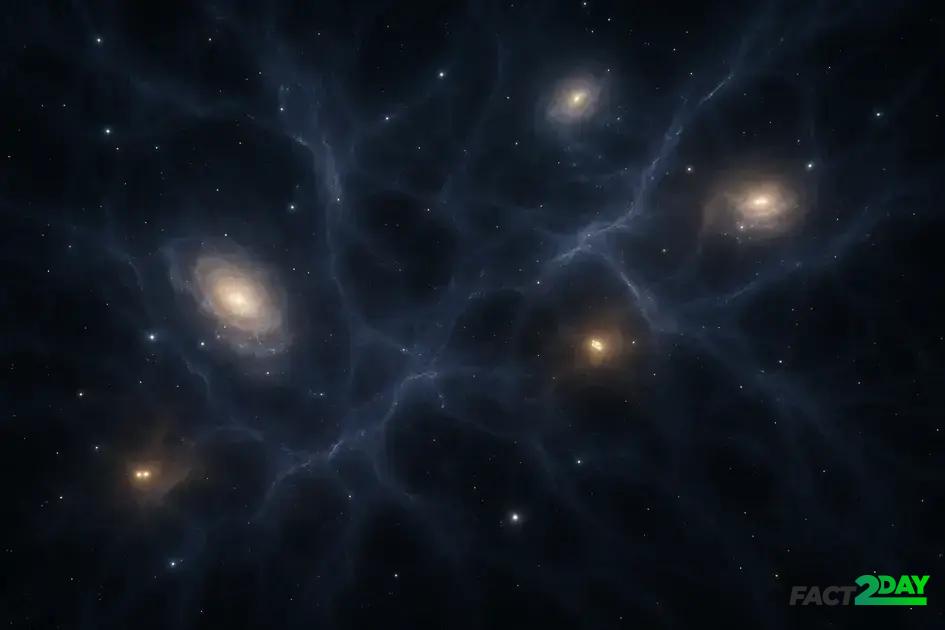
Dark matter and energy are invisible substances that shape the universe by providing gravity to hold galaxies together and driving the universe’s accelerated expansion.
Have you ever wondered what fills the vast emptiness of space? Dark matter and energy are mysterious forces that make up most of our universe, yet remain unseen. Join me as we explore this invisible realm together.
understanding dark matter and energy
Dark matter and dark energy are two of the most mysterious components of our universe. Dark matter refers to an unseen mass that does not emit, absorb, or reflect light, making it invisible to current instruments. However, scientists can detect its presence through its gravitational effects on visible matter, like stars and galaxies.
Dark energy, on the other hand, is thought to be a force driving the accelerated expansion of the universe. Unlike dark matter, it is a form of energy that fills all of space and counteracts the force of gravity on large scales.
Together, dark matter and dark energy are believed to make up about 95% of the total energy content of the universe. Their elusive nature challenges our understanding of physics and astronomy, pushing researchers to develop advanced theories and experiments.
Scientists study galactic rotation rates, gravitational lensing, and cosmic microwave background radiation to infer the existence and properties of dark matter and dark energy. These efforts help piece together the invisible framework that supports the cosmos.
methods used to detect the invisible universe
Detecting the invisible universe relies on advanced methods that reveal the presence of dark matter and energy. One key technique is gravitational lensing, where massive objects like galaxies bend light from background objects. This bending effect helps scientists map dark matter’s distribution, even though it cannot be seen directly.
Another important method involves studying galactic rotation curves. Stars in galaxies rotate at speeds that suggest there is more mass present than what we observe, pointing to dark matter as the invisible source of extra gravity holding galaxies together.
Scientists also analyze the cosmic microwave background (CMB), the faint afterglow of the Big Bang. Variations in the CMB provide clues about the amount and influence of dark energy early in the universe’s history.
Additionally, particle detectors and underground experiments aim to capture rare interactions with hypothetical dark matter particles, although none have yet yielded direct detection. Together, these methods provide a comprehensive toolkit for exploring the invisible forces shaping our cosmos.
the cosmic impact of dark matter and energy
Dark matter and dark energy have a profound impact on the structure and fate of the universe. Dark matter acts as the cosmic glue that holds galaxies and clusters together. Without it, visible matter alone would not have enough gravitational pull to form the complex structures we observe today.
Dark energy influences the universe on a much larger scale. It drives the accelerated expansion of the universe, pushing galaxies apart faster over time. This expansion affects how the cosmos evolves and could determine its ultimate destiny.
The interplay between dark matter’s gravitational attraction and dark energy’s repulsive force shapes the large-scale cosmic web. This web consists of filaments and voids where galaxies cluster along the dark matter scaffolding.
Understanding this balance is key to learning how the universe has evolved since the Big Bang and how it might change billions of years from now. It also helps researchers test fundamental physics theories and models of cosmology.
Understanding the invisible forces that shape our universe
Dark matter and dark energy remain some of the biggest mysteries in science. They play crucial roles in how galaxies form and how the universe expands.
By studying these unseen forces, scientists continue to uncover important clues about the origin and future of everything around us. Although much is still unknown, each discovery brings us closer to understanding the vast, invisible universe we live in.
Exploring these cosmic mysteries helps us see the universe in a new light and sparks curiosity for what lies beyond what we can observe.