Worlds Beyond: The Thrilling Quest for Habitable Exoplanets
Exoplanet hunting reveals distant worlds that might host life. Dive into this cosmic search and uncover the mysteries beyond our solar system.
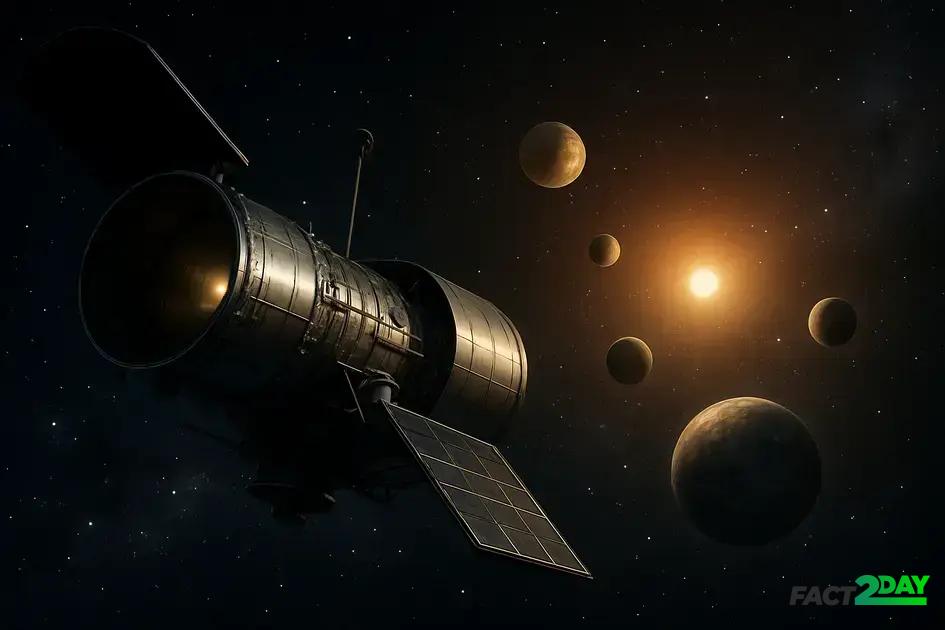
Exoplanet hunting uses advanced telescopes and detection methods like transits and radial velocity to find and study distant planets, focusing on identifying those in habitable zones with conditions that might support life.
Exoplanet hunting feels like a journey into the unknown, a cosmic treasure hunt for worlds that might harbor life. Have you ever wondered how we spot these distant planets, so far away yet so full of possibility?
how exoplanets are discovered and studied
Discovering exoplanets, planets outside our solar system, is a major achievement in astronomy. Scientists use various methods to find these distant worlds, but two stand out: the transit method and radial velocity. The transit method observes the dimming of a star’s light as a planet passes in front of it. This tiny drop in brightness reveals the planet’s size and orbit.
The radial velocity method measures changes in a star’s speed caused by the gravitational pull of an orbiting planet. This helps determine the planet’s mass and orbit shape. Together, these methods provide valuable data about exoplanets’ characteristics.
Studying Exoplanet Atmospheres
Beyond detection, scientists analyze exoplanet atmospheres using spectrum analysis. When a planet transits, some starlight passes through its atmosphere, allowing us to identify gases like oxygen, methane, or water vapor. These signs could hint at habitability.
Telescopes such as the James Webb Space Telescope enhance these studies with high precision. They enable astronomers to explore exoplanets in detail, searching for worlds that might support life.
Continuous advancements in technology and observation techniques open new doors to learning about these mysterious planets. Each discovery brings us closer to understanding our place in the universe.
the search for habitable conditions on distant worlds
The search for habitable conditions on distant worlds focuses on finding planets where life as we know it could exist. Scientists look for the habitable zone, the area around a star where temperatures allow liquid water to exist on a planet’s surface.
Beyond location, atmospheric composition is key. Detecting gases like oxygen, carbon dioxide, and methane can offer clues about a planet’s potential to support life. Some planets show signs of a protective atmosphere that blocks harmful radiation, making habitability more likely.
Water and Surface Conditions
Water is essential for life, so finding signs of water vapor or oceans is a major goal. Advanced telescopes and spectrometers help identify these features from light years away. Surface temperature and pressure also matter and are studied through climate models based on gathered data.
Research also explores how planets’ sizes and compositions affect their ability to maintain stable environments. Larger planets might hold atmospheres longer, while rocky planets can support complex geologic processes important for life.
Overall, finding a truly habitable exoplanet requires combining data from multiple sources and ongoing observation, pushing the limits of current technology.
technologies advancing the exoplanet hunting journey
The quest for exoplanets has been greatly accelerated by cutting-edge technologies. Space telescopes like the Kepler Space Telescope and the James Webb Space Telescope have transformed our ability to detect and analyze distant worlds with remarkable detail.
Kepler used the transit method to identify thousands of exoplanet candidates by measuring tiny dips in star brightness caused by orbiting planets. James Webb goes further by capturing detailed spectra of exoplanet atmospheres, revealing their composition and potential habitability.
Ground-Based Technologies
Advanced ground-based observatories also play a major role. Instruments equipped with adaptive optics help correct atmospheric distortions, enabling sharper images of star systems. Radial velocity spectrometers measure stellar motion to detect planets through gravitational effects.
Additionally, increasing computing power supports complex simulations and data analysis, improving detection accuracy. Machine learning algorithms are being developed to sift through massive datasets, identifying potential exoplanets faster than ever before.
Collaborations between space and ground technologies create a comprehensive toolkit for astronomers. Together, these advances propel the hunt for new worlds, refining our understanding of the universe.
Looking Ahead in Exoplanet Hunting
The search for exoplanets has opened new doors to understanding our universe and the possibility of life beyond Earth. With advanced technologies improving every day, scientists continue to discover fascinating worlds that challenge our knowledge.
As tools become more sophisticated, the chances of finding truly habitable planets grow, bringing us closer to answering big questions about our place in the cosmos.
This thrilling journey reminds us that exploration and discovery are at the heart of science, inspiring future generations to look up and wonder what lies beyond.