Blades to Bombs: The Transformative Evolution of Warfare Across Human History
The evolution of warfare reveals humanity's deep shift from blades to bombs, shaping societies and strategies across centuries.
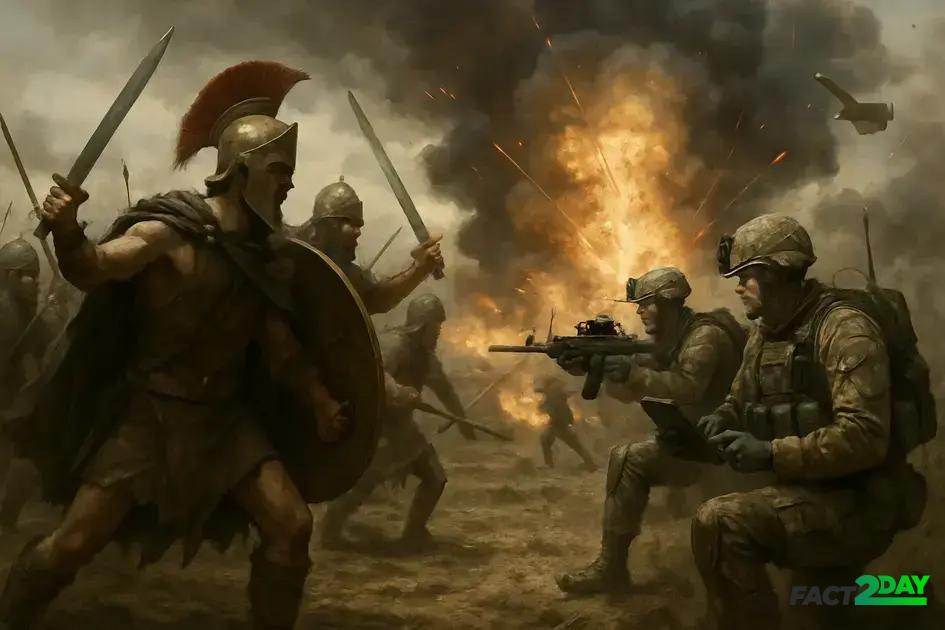
The evolution of warfare traces the development from early blades and simple tools to advanced bombs and technology, profoundly shaping military tactics, societies, and cultures throughout human history.
The evolution of warfare winds through history like a vast river, carrying countless stories of changing tools and tactics. Have you ever wondered how swords gave way to bombs, reshaping not just battles but entire societies? Let’s walk this path together, peeling back layers of time.
the origins and early tools of warfare
The origins and early tools of warfare trace back to prehistoric times when humans first used simple weapons like sticks, stones, and sharpened bones. As societies evolved, primitive tools such as spears, bows, and arrows became essential for hunting and defense. Over time, these weapons grew more sophisticated, crafted from metals like bronze and iron.
The development of metallurgy marked a significant leap, enabling stronger and more durable blades and armor. Early civilizations, including the Egyptians, Mesopotamians, and Greeks, began organizing armies and creating tactical formations to maximize the effectiveness of their weapons.
Early fortifications and strategies
Alongside weapons, the need for protection led to the construction of walls, moats, and other fortifications. Early strategies emphasized surprise attacks, ambushes, and using the terrain to an army’s advantage.
Communication methods like signal fires and drums also emerged to coordinate troops during battle. These foundations laid the groundwork for the complex and strategic nature of warfare that would continue to evolve throughout history.
technology’s impact on modern combat
Technology’s impact on modern combat has transformed the face of warfare, introducing new weapons and tactics that vastly increase efficiency and reach. From the introduction of firearms to advanced missile systems, technology has made battles faster and deadlier.
Drones and unmanned vehicles now play critical roles in reconnaissance, precision strikes, and reducing soldier risk. These tools provide real-time intelligence and the ability to engage targets from afar.
Cyber warfare and communication
Modern combat also depends heavily on secure and rapid communication. Cyber warfare, involving hacking and disrupting enemy systems, has added a new battlefield dimension. Protecting data networks and command structures is as vital as physical defense.
Furthermore, advancements in surveillance technology, like satellites and night vision, give militaries a persistent eye on the battlefield. Together, these innovations have reshaped military strategies and increased the importance of technological superiority in conflicts.
the social and cultural effects of warfare evolution
The social and cultural effects of warfare evolution have influenced societies beyond the battlefield. War has shaped national identities, altered population structures, and driven technological and economic changes. Military conflicts often accelerate social transformations, including shifts in gender roles when women take on new responsibilities during wartime.
Impact on culture and society
Warfare has left deep marks on art, literature, and collective memory, inspiring works that reflect the trauma, heroism, and consequences of conflicts. Societies often use these narratives to build a shared sense of purpose or caution.
Moreover, prolonged wars can lead to political reforms and new social contracts. The aftermath might bring about movements for peace, human rights, and international cooperation, showing how warfare’s influence extends far beyond the immediate destruction.
Understanding the importance of warfare evolution
The evolution of warfare has shaped human history in profound ways—from early blades to modern bombs, its impact reaches far beyond the battlefield. It has driven technological advances, changed societies, and influenced cultures worldwide.
By studying this transformation, we gain insight into how conflicts have molded our past and continue to affect the present. Recognizing these changes helps us appreciate the complexity of war and its role in shaping our world.
Embracing this knowledge encourages thoughtful reflection on the future of warfare and peace.