Beyond Our Senses: Animals That See, Hear, and Feel the World Differently
Explore fascinating animals with unexpected senses and discover how they perceive the world in unique ways beyond human understanding.
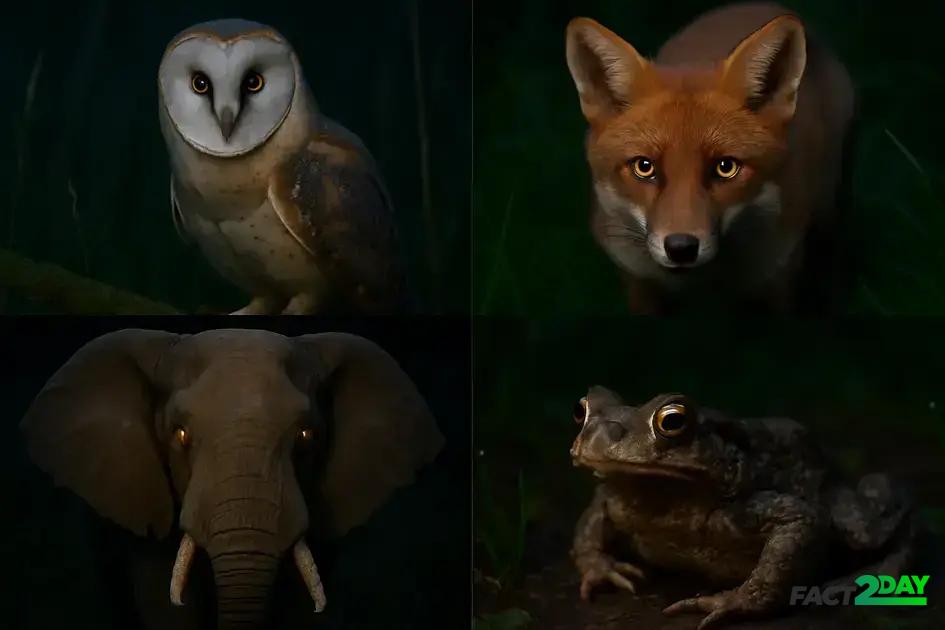
Animals with unexpected senses perceive the world through unique abilities like ultraviolet vision, infrared detection, advanced hearing, and specialized touch, enabling them to navigate, hunt, and communicate beyond human capabilities.
Have you ever wondered about animals with unexpected senses? Some creatures perceive the world in ways that challenge our understanding, using abilities that extend far beyond human sight, hearing, or touch. Let’s explore these fascinating differences together.
Animals that see beyond human vision
Many animals possess the ability to see beyond the human visual spectrum, allowing them to detect ultraviolet (UV) light, infrared radiation, and polarized light. For example, some birds can spot UV patterns on feathers that are invisible to our eyes, which helps them in finding mates and identifying territory.
Snakes, like pit vipers, have specialized heat-sensing pits that enable them to see infrared radiation, effectively allowing them to “see” the heat emitted by warm-blooded prey even in complete darkness. This unique sense complements their vision and hunting techniques.
Another fascinating ability is polarization vision, seen in creatures such as mantis shrimp and certain insects. These animals perceive the angle of polarized light waves reflected off surfaces, which enhances their contrast detection and helps in navigation, communication, and spotting prey or predators.
How seeing beyond human vision benefits animals
The expanded visual spectrum helps animals survive and thrive in diverse environments. It aids in finding food, avoiding predators, choosing mates, and navigating complex terrains. These enhanced senses provide a distinct advantage that showcases the extraordinary adaptations in nature.
Unusual hearing abilities in the animal kingdom
Many animals have hearing abilities far beyond the human range. Bats, for example, use echolocation, emitting high-frequency sounds that bounce off objects and return as echoes, helping them navigate and find prey in total darkness. This ability allows bats to “see” with sound in ways humans cannot imagine.
Elephants possess an extraordinary sense of hearing that extends to infrasonic sounds—frequencies below human hearing—that can travel miles through the ground and air. These low-frequency rumbles enable elephants to communicate over vast distances, coordinating movements and social behaviors.
Dolphins also use echolocation similar to bats, creating clicks and whistles to detect fish and navigate murky waters. Their complex hearing system is finely tuned to perceive subtle differences in sound waves, providing detailed information about their environment.
How unusual hearing benefits survival
These extraordinary hearing skills allow animals to thrive by detecting predators, coordinating group activities, and hunting efficiently. Their specialized ears and brain adaptations illustrate nature’s amazing inventiveness in overcoming environmental challenges.
How animals feel and sense differently
Animals rely on a variety of unique sensory systems to feel and interpret their surroundings beyond what humans experience. For example, sharks have specialized organs called ampullae of Lorenzini that detect electric fields generated by other animals, allowing them to sense prey hidden beneath the sand.
Some insects, like bees, sense vibrations through their legs and antennae to communicate and navigate. This ability helps them detect danger and locate flowers with nectar by feeling minute environmental changes.
Touch is another crucial sense that varies widely. Octopuses possess sensitive skin covered in receptors that allow them to taste and feel chemicals directly through their arms. This unique sense guides their movements and hunting tactics in complex underwater environments.
The role of unique senses in animal survival
These diverse senses enhance animals’ ability to find food, communicate, avoid threats, and adapt to their habitats. Understanding how animals feel and sense differently reveals the richness of life and the evolutionary innovations that shape survival.
Understanding the extraordinary senses of animals
Animals with unexpected senses show us how diverse and amazing life on Earth truly is. Their unique abilities to see, hear, and feel the world differently help them survive and thrive in ways humans can hardly imagine.
Exploring these senses not only fascinates us but also deepens our appreciation for nature’s creativity and adaptability. By learning more about these animals, we gain insight into the complex web of life around us.
Recognizing and protecting these incredible creatures is key to preserving the balance of our planet’s ecosystems.