Echoes in the Sand: The Most Mysterious Lost Cities Rediscovered
Historical lost cities hold secrets of ancient civilizations, inviting you to uncover their stories buried beneath time and sand with captivating mystery.
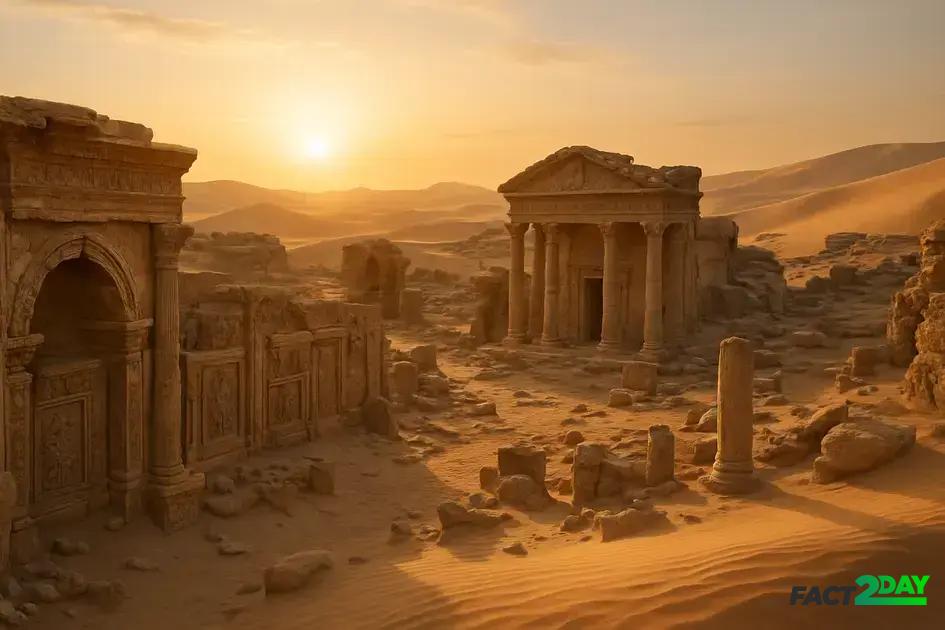
Historical lost cities reveal ancient civilizations’ achievements and failures, offering vital insights into sustainability, innovation, and cultural development that guide modern archaeology and cultural understanding.
Have you ever wondered about the historical lost cities that time forgot? These places, hidden beneath layers of earth and stories, invite us to explore mysteries that still echo through the ages. Join me as we uncover the tales that sand has kept secret.
remnants of ancient civilizations and their discovery
Exploring the remnants of ancient civilizations reveals fascinating insights into how early humans lived, built, and interacted with their environment. These remnants often include ruins of cities, tools, pottery, and artifacts that help archaeologists piece together historical narratives lost to time.
Archaeological Discoveries
Discoveries of lost cities like Machu Picchu, Pompeii, and Angkor Wat showcase the rich legacy of past societies. These sites uncover complex urban planning, advanced architecture, and cultural practices. Excavations often start with satellite imagery or local legends, leading to painstaking digs that expose layers of human history.
The Importance of Preservation
Protecting these remnants is critical for understanding human progress. Preservation techniques, such as controlled excavation and environmental protection, ensure that future generations can learn from these sites. Some cities remain hidden under sand or jungle, waiting to be rediscovered with modern technology.
Each discovery not only fills gaps in our historical knowledge but also challenges assumptions about ancient technology and society organization. Remnants of ancient civilizations serve as time capsules, offering clues about trade, religion, and daily life that are vital to understanding our shared past.
the impact of lost cities on modern archaeology
The rediscovery of lost cities has profoundly shaped modern archaeology by offering fresh insights and new techniques for exploration. These ancient urban centers provide priceless data about human history, social structure, and technological advancement.
Advances in Archaeological Methods
Lost cities have driven the adoption of cutting-edge methods like satellite imaging, LiDAR scanning, and ground-penetrating radar. These tools allow archaeologists to detect buried structures without invasive digging, preserving the sites while expanding knowledge.
Re-evaluating Historical Narratives
The study of lost cities often challenges existing beliefs about ancient civilizations. For example, discovering intricate road networks and advanced infrastructure in these sites has revised how historians view early urban development and cultural interactions across regions.
Lost cities also emphasize the importance of multidisciplinary collaboration between historians, geologists, and anthropologists, making archaeology a richer and more dynamic field. This impact continues to propel new discoveries and deepen our understanding of past human civilizations.
lessons learned from lost cities for today’s culture
Lost cities provide valuable lessons for today’s culture by highlighting the rise and fall of civilizations, offering warnings and inspirations. They teach us about urban planning, environmental impact, and the resilience needed to overcome challenges.
Understanding Sustainability and Collapse
Many lost cities declined due to environmental mismanagement or resource depletion. Studying these cases helps modern societies recognize the importance of sustainable development and preserving natural resources to avoid repeating past mistakes.
The Power of Innovation and Adaptation
These ancient urban centers often thrived through innovation in agriculture, architecture, and governance. Their successes remind us that adaptability and creativity are crucial for cultural survival and growth.
By examining the social structures, technologies, and cultural values of lost cities, we gain insight into how societies evolve and what factors contribute to their longevity or decline. This historical perspective encourages us to foster strong communities, respect our environment, and value cultural heritage today.
Reflecting on the lessons from lost cities
Lost cities offer us a unique window into the past, showing both the achievements and mistakes of ancient societies. By learning from their experiences, we can better understand the importance of sustainability, innovation, and cultural preservation.
These stories remind us to carefully balance progress with respect for our environment and heritage. Embracing the wisdom found in these forgotten places can guide us toward building stronger, more resilient communities today.
Ultimately, the echoes of lost cities teach valuable lessons that remain relevant and inspiring for our modern world.