The Hidden Echo: The Life and Mysteries of the World’s Deepest Cave
Descobertas na caverna mais profunda revelam segredos incríveis e mistérios que desafiam nossa compreensão da vida subterrânea.
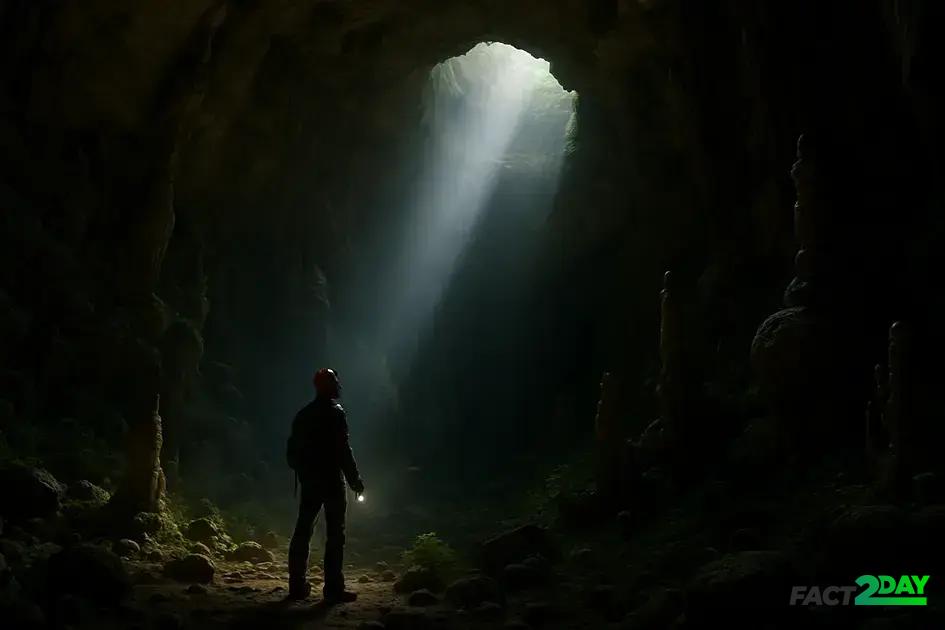
Discoveries in the deepest cave reveal unique geological formations, species adapted to total darkness, and new scientific data that expand our knowledge of subterranean ecosystems and the history of the planet.
Ever wondered what lurks in the shadows of the earth? Discoveries in the deepest cave guide us on a journey where life reveals itself in surprising ways and mysteries await unraveling.
The geography and formation of the deepest cave
The geography of the world’s deepest cave is a fascinating subject that reveals the wonders of underground formations. These caves are usually formed over thousands of years through processes like water erosion and chemical reactions that dissolve limestone and other soluble rocks. The resulting structures can be vast chambers, narrow tunnels, or intricate networks that challenge explorers.
In the deepest caves, the geological formations often include magnificent stalactites and stalagmites shaped by mineral-rich water dripping over centuries. Speleothems like these give clues about the cave’s history and the environmental conditions that prevailed as it formed. Understanding the cave’s layers helps scientists map its growth and predict where new passages might be found.
Factors Influencing Cave Formation
Cave formation is influenced by several natural elements, including the type of rock, climate, and underground water flow. Areas rich in limestone tend to develop more extensive cave systems. The presence of underground rivers can carve deep channels, sometimes connecting multiple caves or leading to hidden chambers.
The complex geography of these caves poses challenges for mapping and exploration. Modern technology, such as 3D mapping and remote sensors, is increasingly used to create detailed images of cave interiors without disturbing fragile ecosystems. These tools are vital to understanding the cave’s formation and aiding future explorations.
the living beings that inhabit the interior of the earth
The creatures living inside the deepest caves are often unlike any found on the surface. These unique ecosystems host specialized organisms that have adapted to extreme dark, humidity, and nutrient-poor environments. Many cave dwellers have lost their eyesight, relying on other senses to navigate and find food.
Bacteria and fungi form the base of most cave food chains, breaking down minerals and organic matter to sustain other life forms. In turn, small invertebrates like cave shrimp, beetles, and spiders feed on these microbes or each other, creating a delicate balance.
Adaptations to the Underground World
Many cave animals feature traits such as elongated limbs and antennae to sense their surroundings in total darkness. Their metabolism is often slower to cope with scarce food sources. Some fish and amphibians have evolved to live solely in subterranean waters, displaying unique behaviors and survival strategies.
Scientists continue to discover new species in these hidden habitats, broadening our understanding of life’s resilience. Studying cave fauna can also shed light on evolution, environmental changes, and the health of underground ecosystems.
scientific mysteries and recent discoveries
Scientific mysteries surrounding the deepest caves continue to intrigue researchers worldwide. These environments hold clues about Earth’s geological past, undiscovered species, and unique chemical processes. New technologies have allowed scientists to explore previously unreachable depths, uncovering surprising facts.
One recent discovery is the role of caves in preserving ancient climate records. Mineral formations like stalactites contain layers that reveal changes in temperature and rainfall over thousands of years. These findings help build a clearer picture of how our planet’s climate has evolved.
Groundbreaking Discoveries
Explorers have identified new species adapted to extreme conditions, broadening our understanding of biodiversity. Some bacteria found in caves are capable of surviving without sunlight by using unusual energy sources. These microorganisms could inspire advances in medicine and biotechnology.
Additionally, studies of cave acoustics and the echo phenomena have provided insights into sound propagation in enclosed spaces. This research could lead to improvements in architectural design and acoustic engineering.
Unlocking the Secrets of the Deepest Caves
The study of the deepest caves reveals fascinating geological formations, unique life forms, and ongoing scientific mysteries. These discoveries help us understand Earth’s history, biodiversity, and the limits of life in extreme environments.
As technology advances, explorers and scientists continue to uncover new insights that inspire curiosity and innovation. Exploring these hidden worlds challenges our knowledge and expands what is possible in science.
By appreciating the wonders beneath the surface, we can better protect these fragile ecosystems and encourage further research to unlock their many secrets.