The Underground Enigma: The Most Challenging Archaeological Mysteries That Still Perplex Us
Mistérios arqueológicos intrigam pela complexidade e segredos escondidos em ruínas antigas, convidando exploradores a desvendar o passado oculto da humanidade.
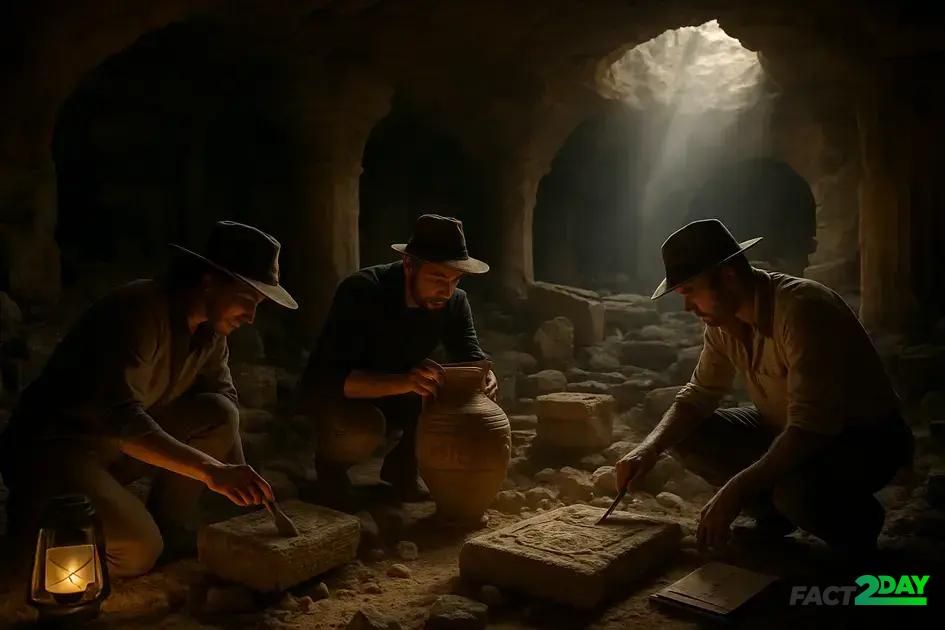
Archaeological mysteries refer to hidden ancient structures and artifacts uncovered through advanced technologies, revealing insights into past civilizations that continue to challenge and enrich our understanding of human history today.
Archaeological mysteries always arouse a silent curiosity, as if the ground beneath our feet concealed ancient secrets waiting to be revealed. Have you ever wondered about those structures that defy immediate explanation? Let’s walk among these stories and try to feel the echo of the past in every stone.
Underground enigmas and their recent discoveries
Subterranean enigmas often reveal forgotten civilizations and hidden chambers beneath layers of earth. Recent discoveries have uncovered underground cities and labyrinths that challenge our understanding of ancient societies. Archaeologists use advanced tools like ground-penetrating radar and 3D mapping to locate these secrets without disturbing the sites.
One exciting find includes vast networks of tunnels carved into rock, showing remarkable engineering skills unknown for their time. These structures sometimes contain artifacts suggesting rituals, trade routes, or shelter during conflicts. The complexity of these underground systems points to sophisticated cultural practices that still puzzle experts today.
Exploration of these mysteries requires careful excavation and preservation efforts. Every new uncovering deepens our connection to human history and offers clues about how our ancestors lived beneath the surface. These discoveries inspire fresh questions and drive ongoing research into the depths hidden just below our feet.
technologies that revolutionize archaeology today
Modern archaeology is transformed by cutting-edge technologies that allow researchers to explore ancient sites with incredible precision and care. Tools like drones provide aerial views that reveal hidden structures and patterns not visible from the ground. These images help archaeologists plan their digs more effectively.
Ground-penetrating radar (GPR) is another powerful technology. It sends radio waves into the soil and reflects signals back to identify buried objects or voids. This method helps find tombs, walls, and artifacts without disturbing the soil, preserving delicate sites for future study.
3D scanning and modeling allow experts to create detailed digital replicas of artifacts and ruins. These models enable virtual exploration and analysis, making it easier to share findings with the global community and educate the public. They also assist in restoration projects by offering accurate references.
Furthermore, advances in DNA analysis and radiocarbon dating provide new insights into the origins and timelines of discoveries. These techniques uncover information on ancient diets, migrations, and species, enriching the context of archaeological finds.
Together, these technologies are revolutionizing archaeology, making the study of the past more precise and less invasive.
how to interpret archaeological mysteries in contemporary life
Interpreting archaeological mysteries in today’s world helps us connect with our cultural roots and understand how history shapes modern society. Artifacts and ancient sites offer insights into past behaviors, beliefs, and technologies, which often reflect values still present in contemporary life.
Context is key when analyzing these mysteries. Understanding the environment, purpose, and symbolism behind artifacts allows historians and archaeologists to build narratives that make sense today. This process often challenges previous assumptions and opens new perspectives on human development.
For example, studying ancient farming tools can reveal early agricultural practices that influenced food production systems we use now. Similarly, exploring ancient trade routes helps explain the spread of cultures and ideas that continue to impact globalization.
Moreover, archaeological mysteries encourage us to appreciate the complexity of human adaptation and creativity. They remind us that innovation is not exclusive to our time, but a continuous thread running through history.
By interpreting these enigmas, we gain valuable lessons and inspiration for addressing modern challenges, making history a living guide rather than a distant record.
Understanding the value of archaeological mysteries today
Archaeological mysteries connect us to our past and help explain how history influences modern life. By studying ancient artifacts and sites, we learn important lessons about culture, innovation, and human adaptation.
Interpreting these enigmas encourages curiosity and respect for our shared heritage. It shows us that progress is built on the knowledge and creativity of those who came before us.
Embracing these insights can inspire us to solve today’s challenges with a deeper appreciation for history’s role in shaping our world.